
In photos: Huge groups of humpback whales return to West Coast
A wildlife photographer recorded 304 humpback whales on 30 December
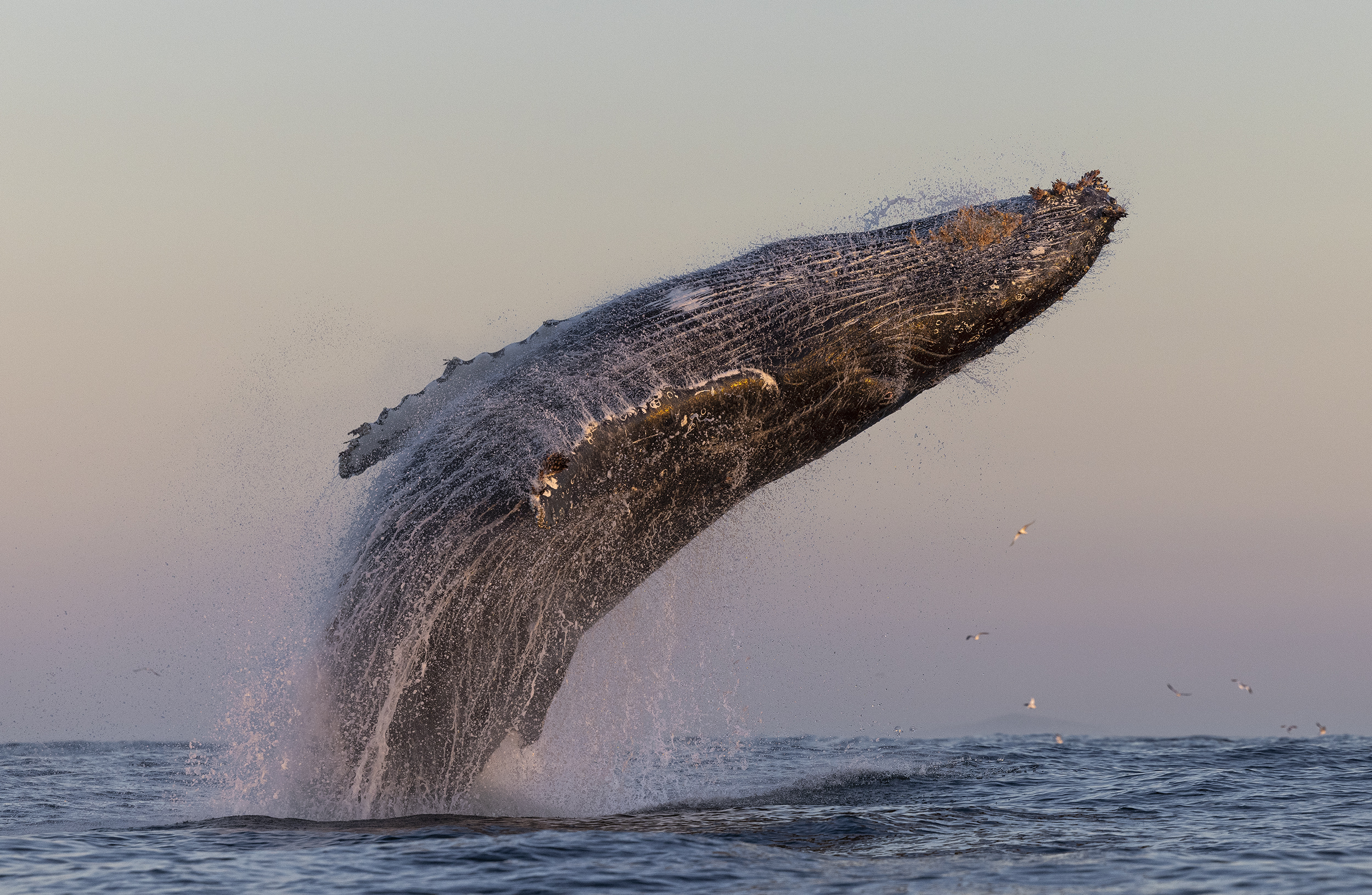
A humpback whale breaching off the West Coast. Photos: Chris Fallows (© Chris Fallows. All rights reserved by the photographer. This is not published under GroundUp’s usual Creative Commons licence.)
- Wildlife photographer Chris Fallows photographed 304 humpback whales on 30 December near Dassen Island, after encountering 208 whales the day before in areas between Llandudno and north of Dassen Island.
- Up to 2,000 humpbacks are estimated to be feeding along the West Coast this summer, according to the Happywhale project.
- Humpback whales may have declined to as low as 5,000 globally after industrial whaling killed as many as 50,000 whales annually for meat and oil, until a ban was imposed in 1986.
The songs of vast congregations of humpback whales on the West Coast in recent weeks has been music to the ears of marine biologists, scientists, photographers and fishermen.
Once threatened with extinction by relentless whale hunting across the globe, these magnificent creatures are back in encouraging numbers.
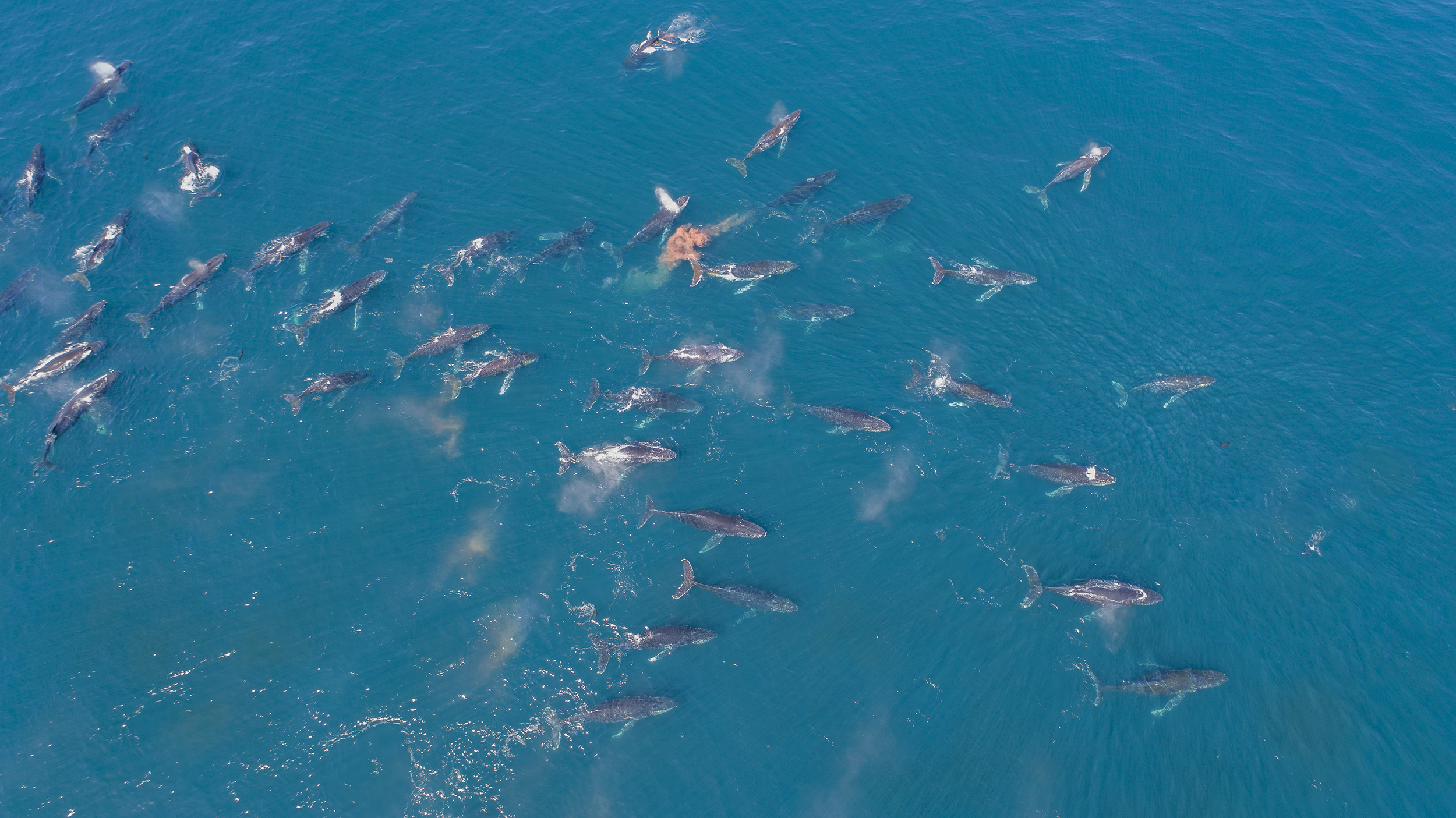
Supergroups of humpbacks are large, surface-active feeding aggregations. (© Chris Fallows. All rights reserved by the photographer.)
Dr Simon Elwen, research fellow at the Mammal Research Institute at the University of Pretoria and principal scientist and director of Sea Search Africa said, “the nature of the supergroups – the very high density of feeding whales – is striking”.
He said recent sightings “range from the hundreds to the low thousands”.
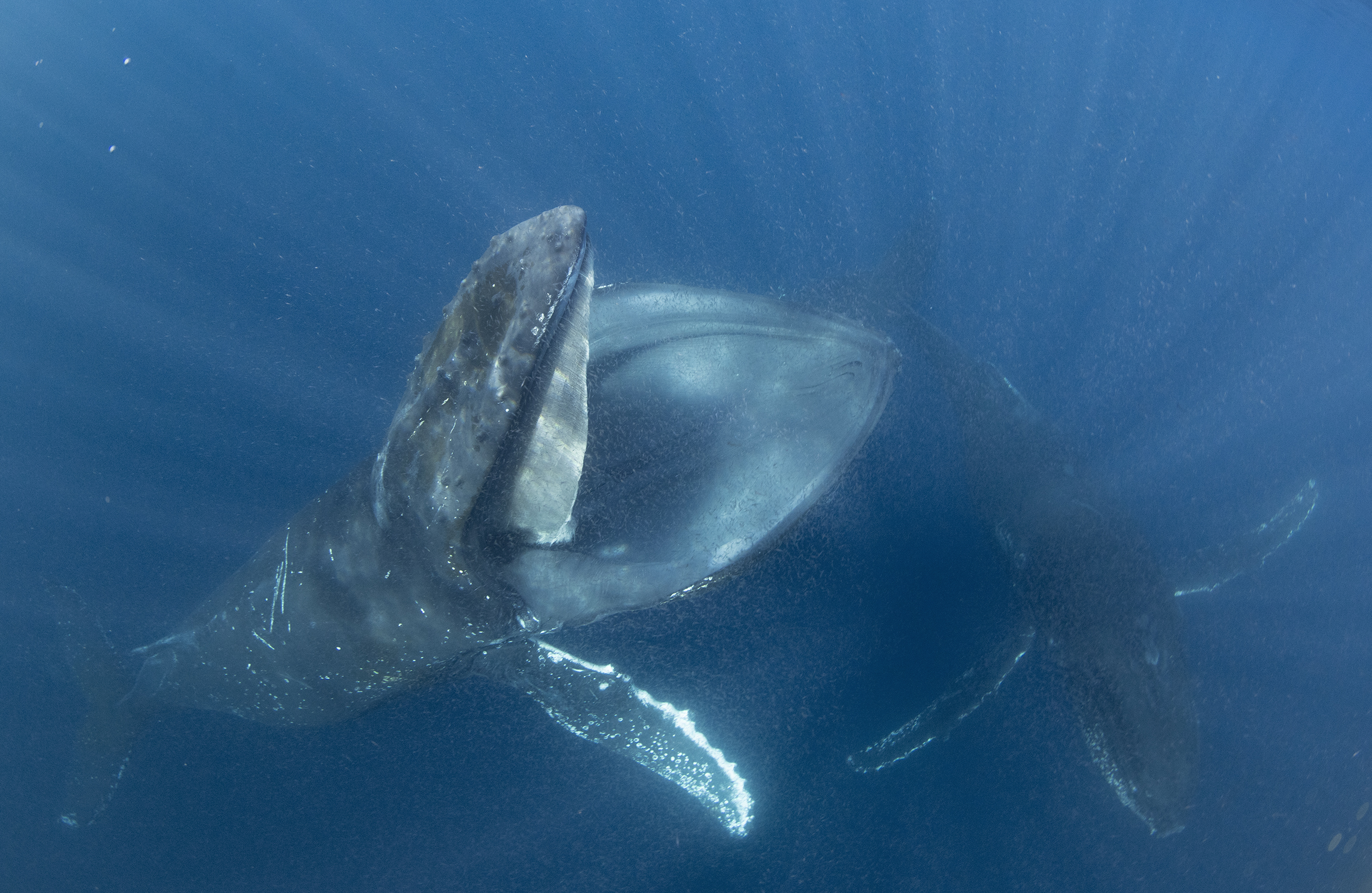
A humpback whale feeding. (© Chris Fallows. All rights reserved by the photographer.)
Wildlife photographer and naturalist Chris Fallows, who has been photographing humpbacks for thirty years, said he encountered huge pods in December.
“My most recent encounter with humpback supergroups occurred in the areas between Llandudno and North of Dassen Island,” he said.
He said the largest concentrations were recorded on 29, 30 and 31 December, within ten nautical miles of Dassen Island.
On 29 December, Fallows said he photographed 208 humpback whales.
“And then the 30th came along and we photographically recorded 304 humpback whales,” he said.
He said seeing such vast pods “is a sensory overload. It is also an incredibly emotional experience to see these sentient creatures in such numbers, knowing we came so close to wiping them out just a few decades ago”.
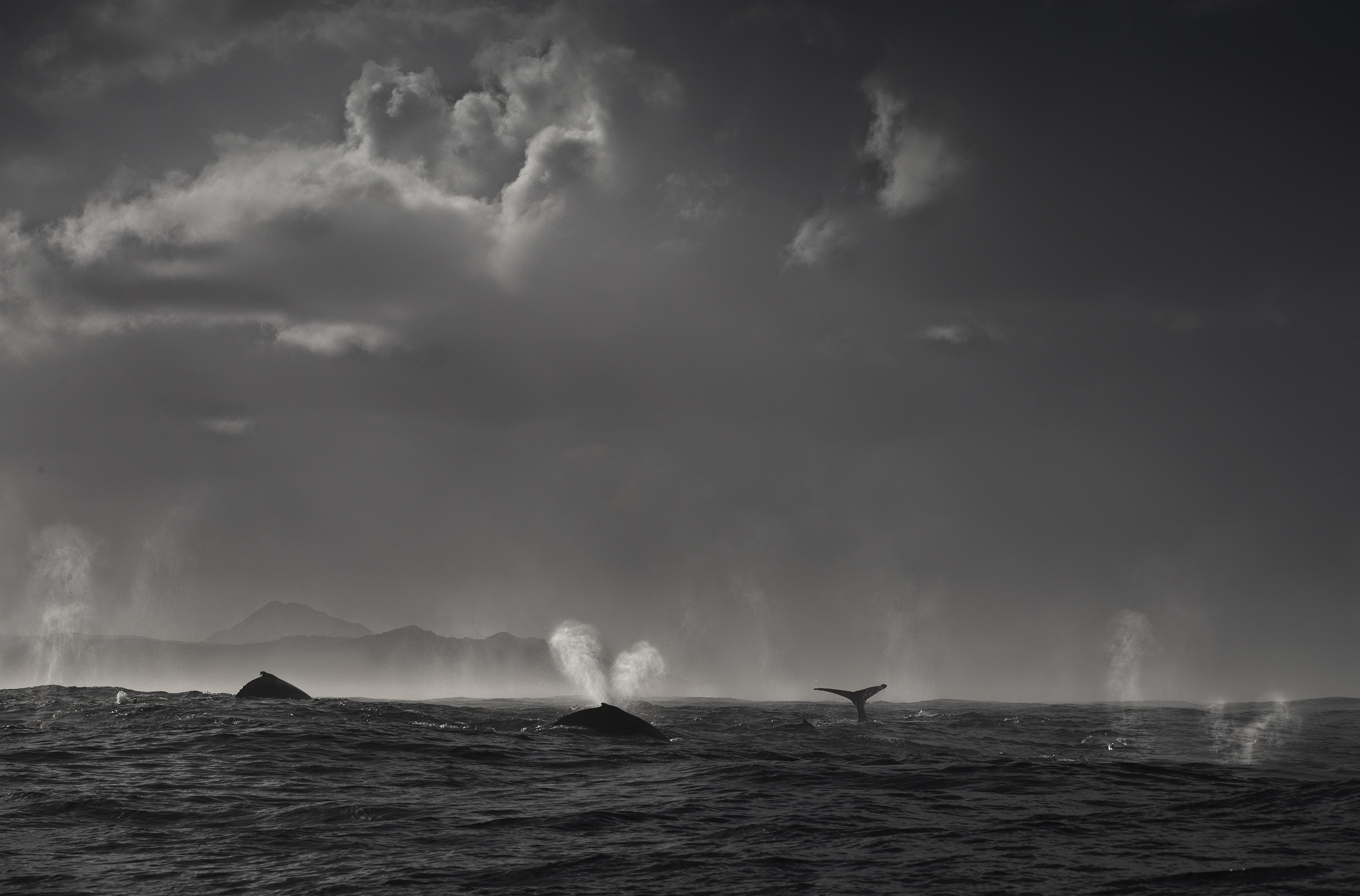
Spouts from a groups of whales. (© Chris Fallows. All rights reserved by the photographer.)
Since the 1930s, as many as 50,000 whales were killed annually for meat and oil. Humpback whales may have declined to as low as 5,000 globally. A ban on industrial whaling was imposed in 1986, and the number of whales killed has dropped substantially since then.
Fallows said the feeding groups were linked to productive West Coast waters rich in krill, shrimp-like crustaceans that form an important part of the whales’ diet.
Mududuzi Seakamela, chief marine scientist and principal investigator for marine mammal research at the Department of Forestry, Fisheries and Environment, said the 2025/26 season has been unique, with the reported sighting of 304 humpback whales feeding together on 30 December.
“The last record of the highest number of humpbacks feeding off the West Coast was 200 whales we encountered during our 2014 cruise, southwest of Dassen Island, Yzerfontein.”
“We believe this is driven by ecosystem changes, amongst other factors.”
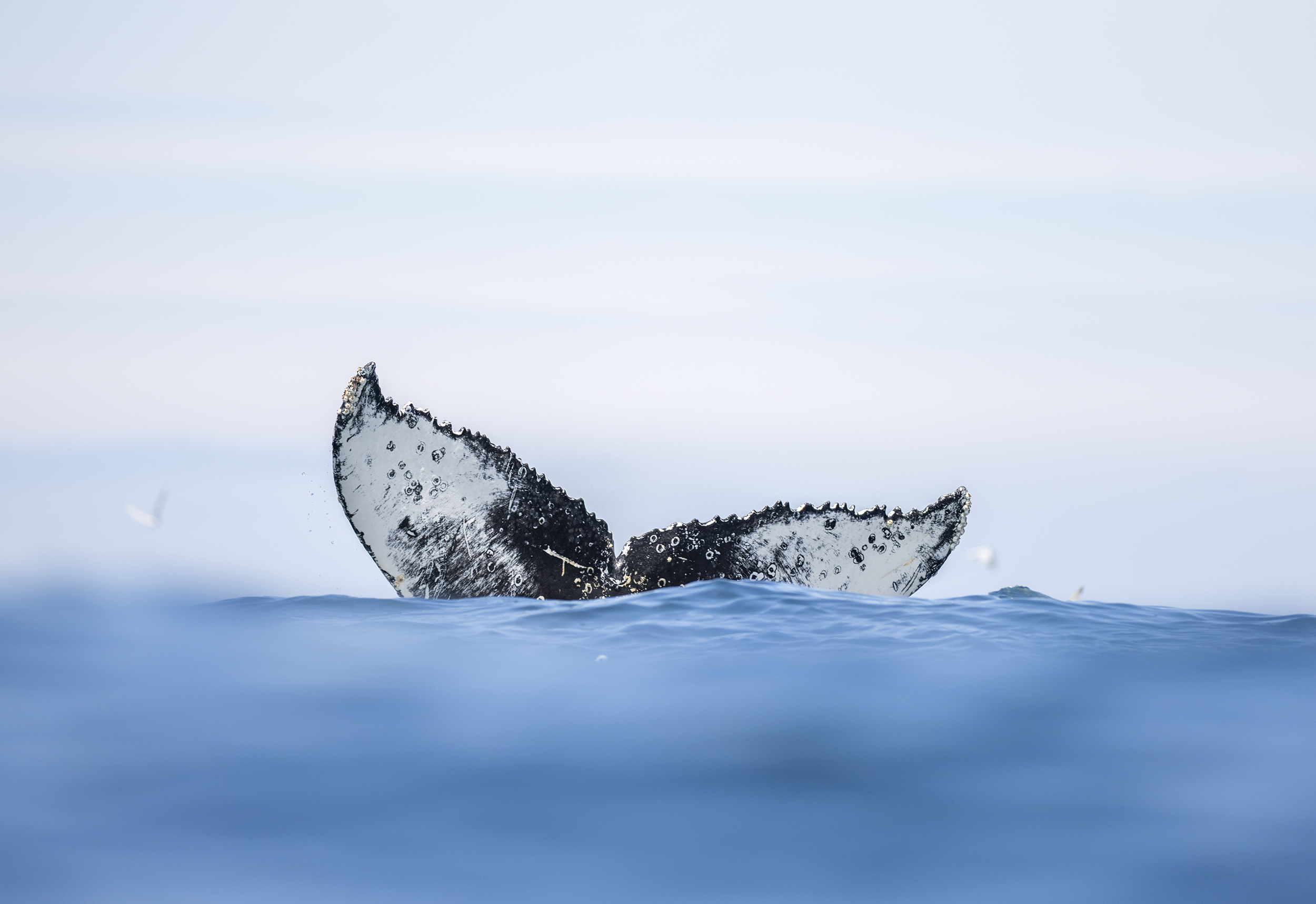
The tale flukes of whales are used to identify individuals. (© Chris Fallows. All rights reserved by the photographer.)
Alex Vogel, southern Africa data manager for Happywhale, which has been documenting these humpback supergroups for several years, said humpback movements are typically linked to feeding and breeding.
He said the whales are “important nutrient movers”. Their feeding in such great numbers and the waste they produce boosts phytoplankton which supports local fisheries and sardine, hake and anchovy populations.
He said it shows “how resilient the ecosystem is, because it is able to support such a large migratory predator after decades of extremely low numbers”.
Vogel estimates that up to 2,000 will be feeding along the West Coast this summer.
South Africa’s oceans, says Vogel, are resilient. “They haven’t collapsed – yet.”
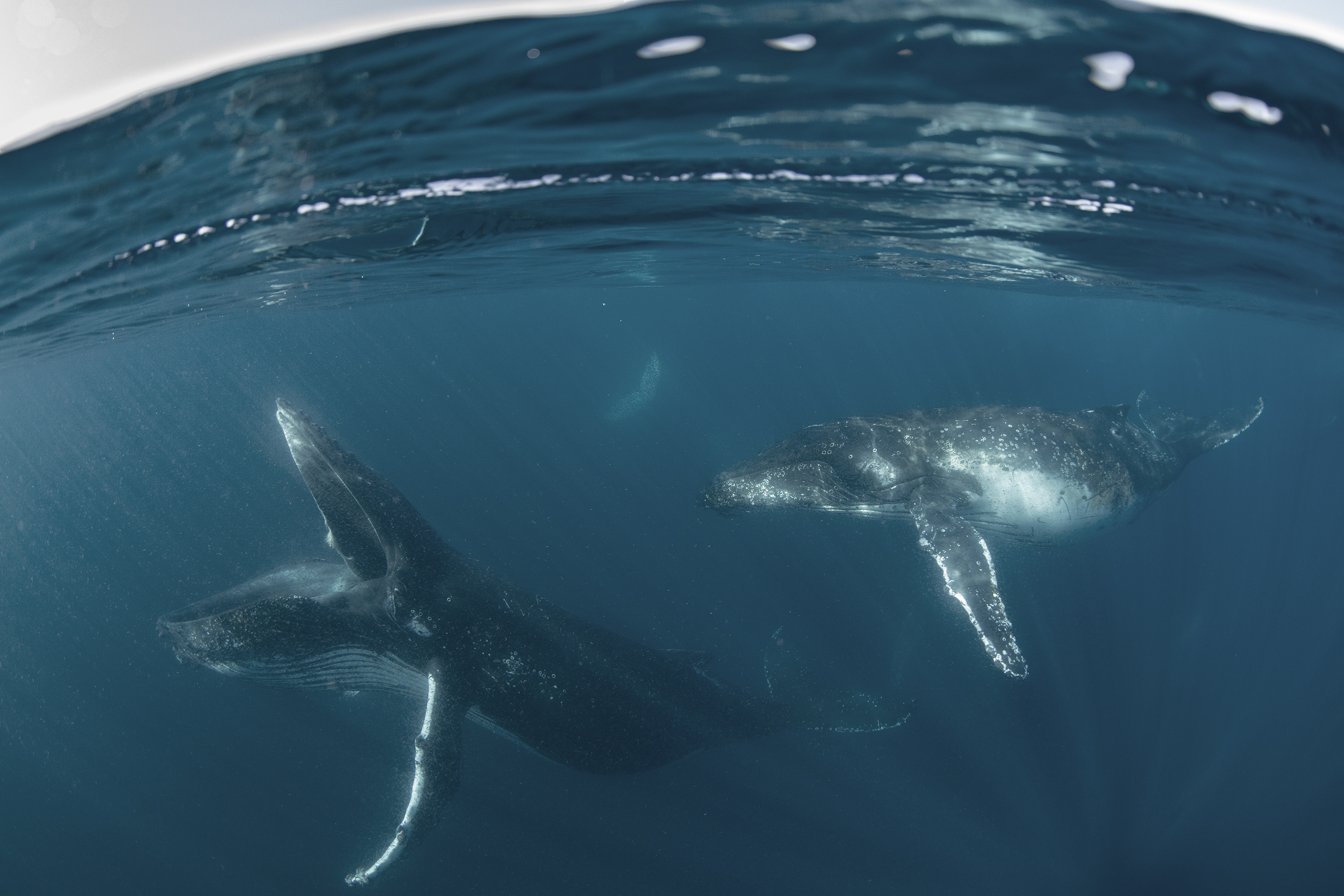
Humpbacks off the Cape’s west coast. (© Chris Fallows. All rights reserved by the photographer.)
Professor Ken Findlay, a marine mammal biologists with extensive experience in whale population demographics and dynamics, said an estimated two million whales were killed by whaling over the last 300 years.
He said the humpbacks are uncharacteristically feeding in summer in the Southern Benguela current region off the west coast as they were generally believed to feed in summer only in the Southern Ocean.
“The return of humpback whales to local waters is evidence of the resilience of the oceans. Removal of pressures means that oceans often bounce back … which gives me great hope.”
For now, the songs of the humpbacks are bringing joy – and relief – to marine experts and conservationists, who hope humpback numbers will continue to rise.
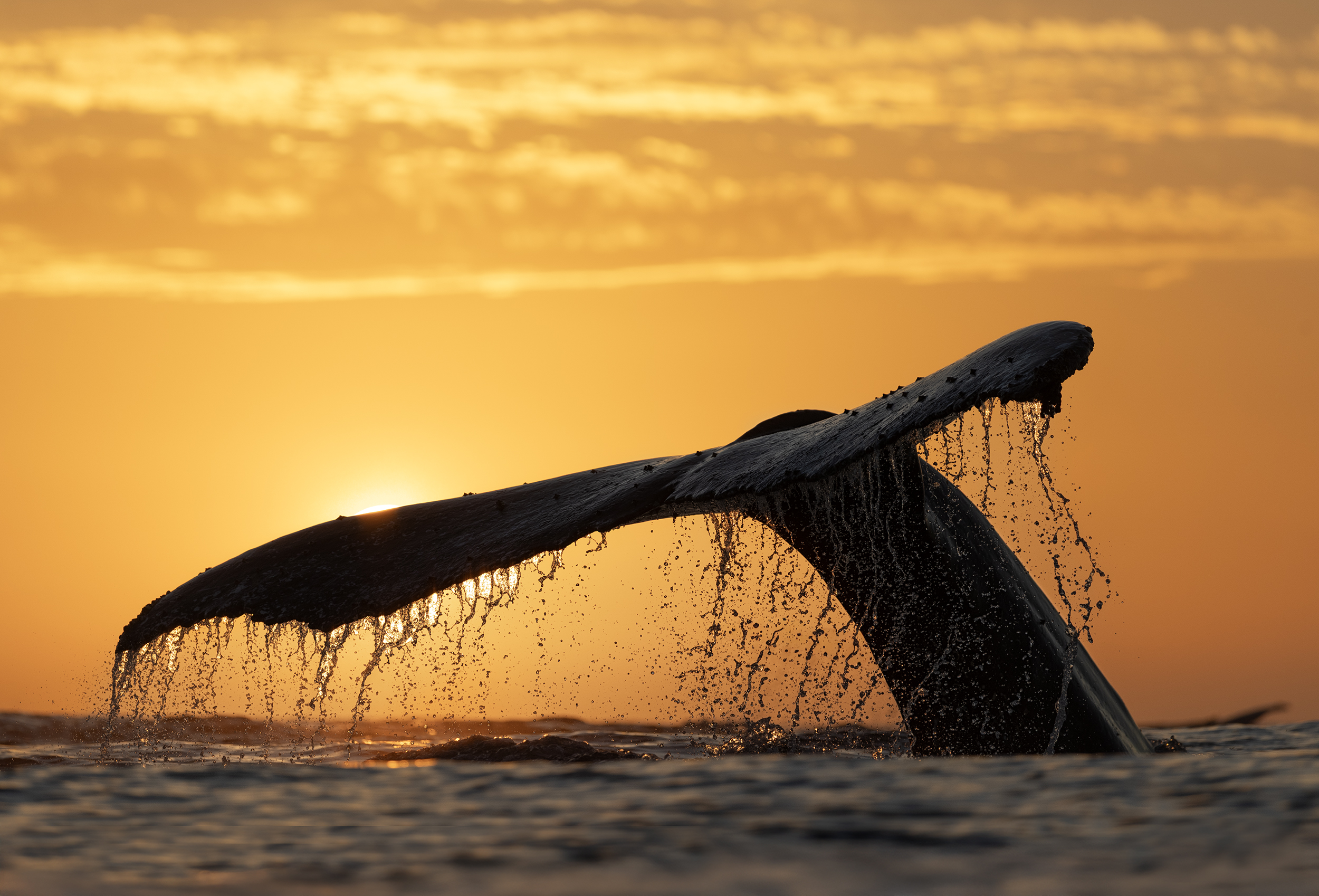
Humpback numbers are encouraging after the whales faced near extinction. (© Chris Fallows. All rights reserved by the photographer.)
Support independent journalism
Donate using Payfast

Don't miss out on the latest news
We respect your privacy, and promise we won't spam you.
© 2026 GroundUp. The text of this article is licensed under a Creative Commons Attribution-NoDerivatives 4.0 International License but the photographer retains the exclusive licence over the photographs which can only be reproduced with his permission. The photographs are published here with permission.
You may republish the text of this article, so long as you credit the author and GroundUp, and do not change the text. Please include a link back to the original article.
Please obtain permission directly from the photographer if you wish to republish the photographs.