
Famous Joburg shopping hub closed after demolitions
Hundreds of immigrant traders lose their livelihoods after City moves against Marble Towers
 Add GroundUp on Google
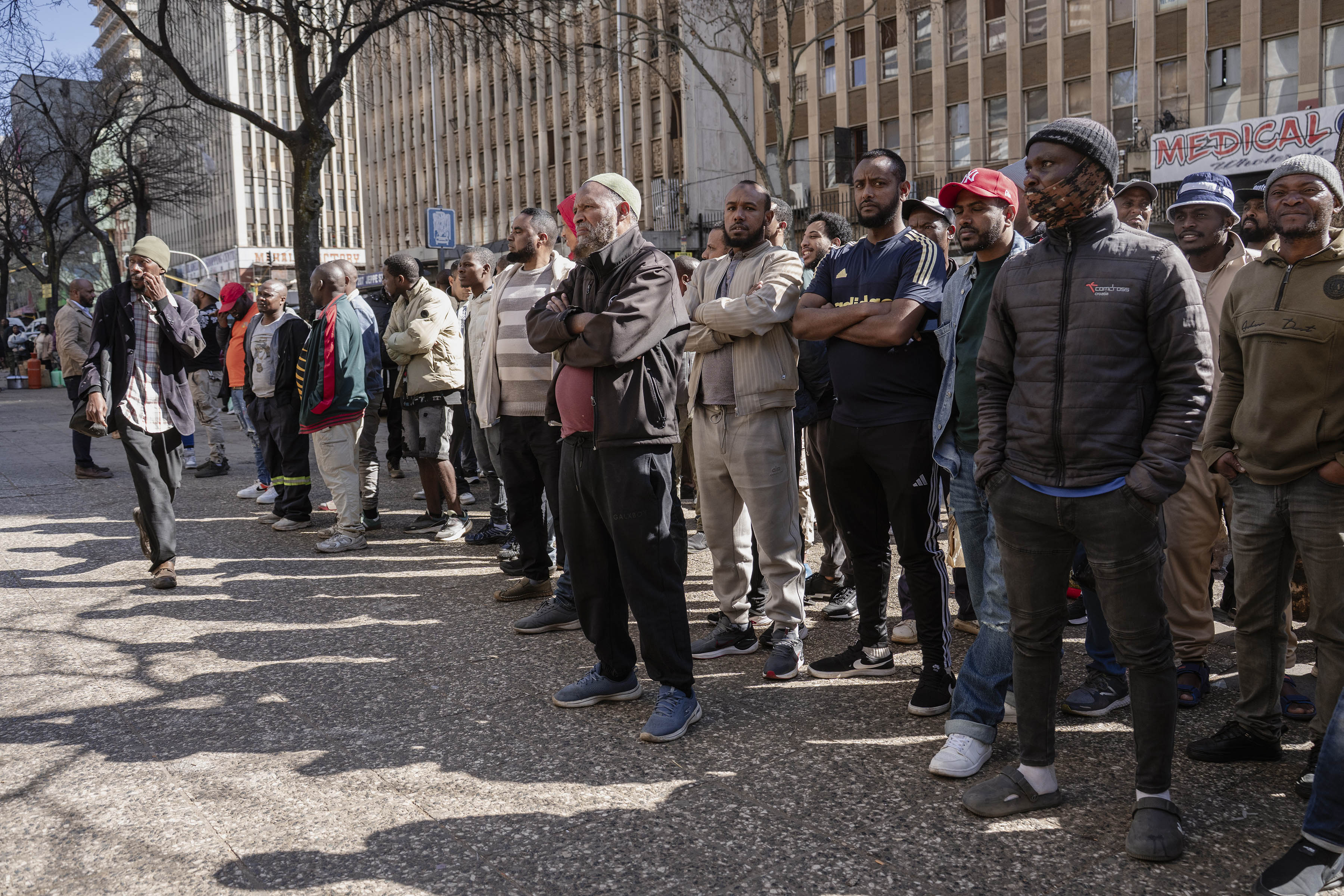
Shopkeepers watch anxiously as City officials and the owners of the Marble Towers complex in Johannesburg conduct a joint inspection of the shops on the property. Photos: Ihsaan Haffejee
- The future of hundreds of traders whose shops in Johannesburg’s inner city were closed down on 15 July will depend on the owner of the property, says the City of Johannesburg.
- The container shops at the Marble Towers precinct, where researchers have estimated a turnover of billions of rands a year, were not compliant with municipal safety bylaws, according to the City.
- A court has told the property owners, Goldenrod Group, to take the necessary steps to make the premises compliant.
The future of hundreds of Ethiopian traders whose businesses were closed down last week at the Marble Towers precinct in central Johannesburg will depend on the owner of the property, the City of Johannesburg says.
The traders sold Chinese fast fashion, shoes, braids, wigs, cosmetics, food and other goods on the corner of Von Wielligh and Rahima Moosa streets.
On 15 July, the containers from which they operated were demolished by the City, which says the structures were illegal and unsafe.

Mayor Dada Morero said on the day, “We are implementing the City’s decision at Marble Towers by removing illegal structures that have been erected in violation of the law and in defiance of court orders.”
He said the City would go after “those who continue to erect or operate illegal structures”.
“This is about restoring order, protecting public safety, and rebuilding an inner city that works for its residents, businesses, and visitors. We will not turn back. We remain committed to reclaiming the city one precinct at a time,” said Morero.
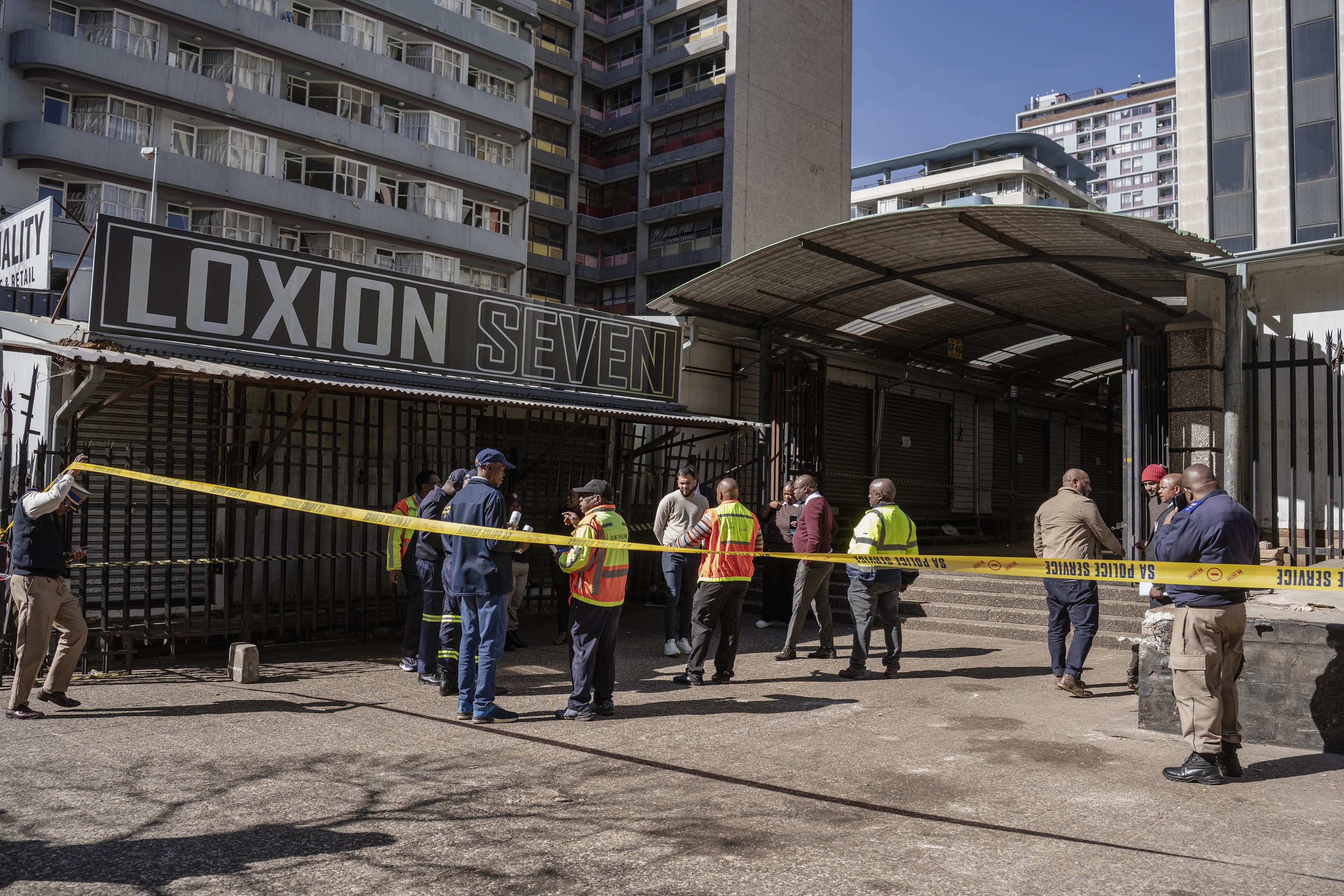
Johannesburg City officials and the owners of the Marble Towers complex conducted a joint inspection on Tuesday.
The demolitions followed years of battles between property owners Goldenrod Group and the City, which has been warning Goldenrod since 2022 to comply with building and fire safety regulations.
In May this year, Goldenrod went to court to prevent the City from demolishing structures at Marble Towers. But on 28 May, Judge Leicester Adams refused the interdict, noting Goldenrod “has had four years to submit building plans for approval and to regularise the container structures” but “it failed to do so”.
Adams said the City had “a constitutional obligation to ensure that buildings are safe for occupation”.
He ruled that Goldenrod must stop anyone occupying or using structures identified by the City as non-compliant, seal off such structures within 72 hours, erect warnings, and remove any structures on pavements or municipal property.
The judge said Goldenrod must, within 20 days, submit building plans for all structures and make the building compliant with fire safety, emergency exits, lighting, fire detection and protection and evacuation procedures, and provide written proof to the City.
The City would be entitled to inspect and take steps if Goldenrod was not compliant.
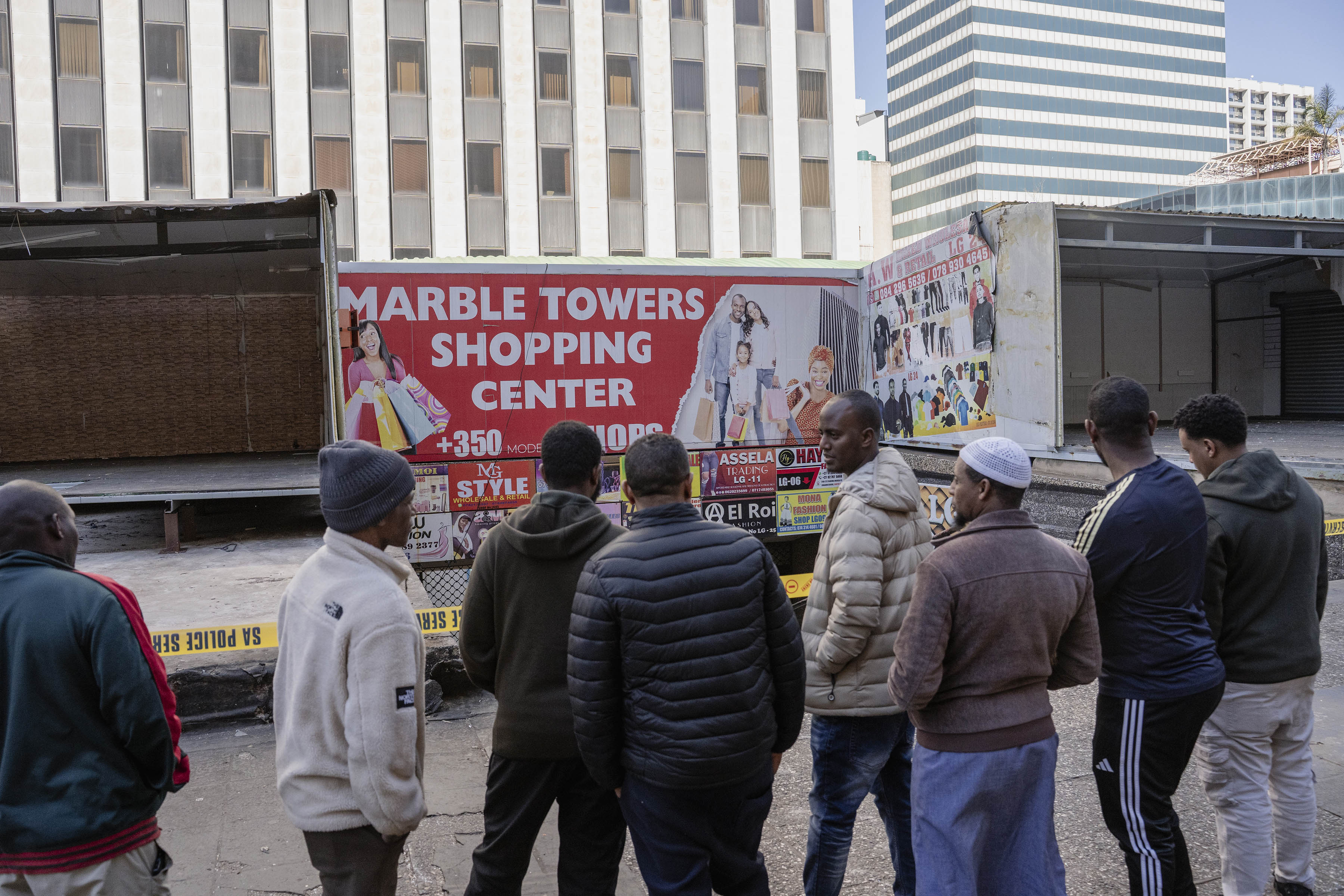
The closure of the shops followed years of warnings by the City of Johannesburg to the property owners.
On Tuesday, dozens of traders, mostly Ethiopian and some from Congo and Nigeria, gathered outside Marble Towers, waiting to be addressed by the mayor, who was scheduled to speak. Meanwhile, officials and representatives of Goldenrod conducted an inspection.
But the mayor did not arrive. Spokesperson Khathutshelo Mulaudzi said he was meeting the Minister of Finance.
Chairperson of the Ethiopian Association in South Africa, which represents the majority of the traders, Jhon Kebede, said the demolitions were done without prior notice. He said 90% of the shops were run by Ethiopian nationals and close to 300 traders had been affected. Few people had managed to rescue their stock; many had lost stock worth millions of rands.
Kebede said one trader had been arrested when he tried to retrieve stock from during the demolitions.
“Our traders are refugees and asylum seekers who are legally in the country. The City has treated us harshly, and we feel as if we have been selectively prosecuted. We are part of the economy in South Africa, and the City should allow us to run our business,” Kedebe said.

Jhon Kebede, chairperson of the Ethiopian Association in South Africa.
Shop owners told GroundUp that since the demolitions there has been no further communication. Many said they have lost their source of livelihood and hope to reopen their shops.
Joseph Balech, who imported clothes from China for sale for more than ten years, said he can barely manage to put food on the table since his shop was shut over a month ago. He had managed to rescue his stock but has not found an alternative site to trade.
Balech said the Marble Towers is a busy fast fashion hub, loved by local and cross-border traders.
“I can’t wait for a chance to re-open my shop and to start selling clothes again,” he said.
Uche Ezeokafor, from Nigeria, said he lost around R50,000 in stock. He sold clothes and shoes and paid rent of R4,000.
He now sells socks from a small box on the street and barely makes enough.
“The City should reopen our shops. Even though I lost lots of money in stock, I am not afraid to start again from scratch,” he said.
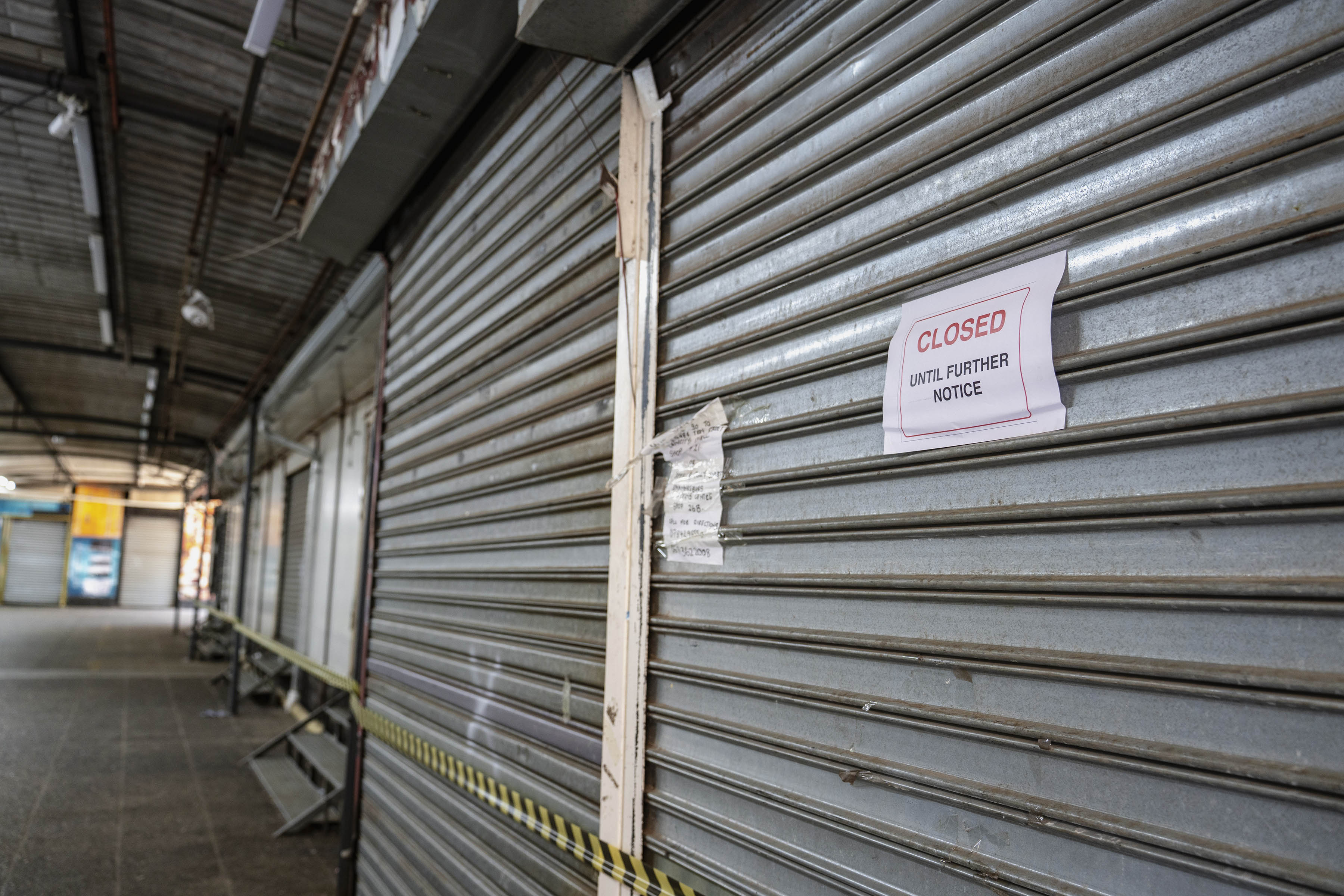
Signs pasted on shuttered shops around the Marble Tower complex read “Closed until further notice”.
Asked what would happen to the precinct and its traders, Mulaudzi said occupancy would “depend on the property owner’s compliance with the court order, rectification of all fire safety and regulatory deficiencies, and approval of all necessary building plans”.
“The City recognises the potential hardship caused to traders. Nevertheless, public safety and legal compliance must take precedence.
“The City cannot authorise occupancy or operation of structures that have not been regularised and approved.”
Asked about the lack of notice to the traders, he said: “The City’s engagement and enforcement processes have been directed primarily at the property owner, who bears the legal responsibility for ensuring the property’s compliance with building legislation, municipal by-laws, and fire safety standards.”
Goldenrod did not respond to repeated requests for comment.
Tanya Zack, an urban planner and author of “The Chaos Precinct: Johannesburg as a Port City”, said Marble Towers and the surrounding area had served as “an inland port”, with immigrant traders having transformed it into a cross-border and local shopping hub.
“When we did a study in 2017, cross-border shoppers alone accounted for 70% of shoppers in the area, and they were spending R10-billion a year, which was twice the annual turnover of Sandton City shopping centre, which at that stage was the biggest shopping centre in Africa,” said Zack.
She said the City should do more to build infrastructure to support traders in the inner city.
Zack said traders at the precinct had consistently been under pressure from authorities, with goods being confiscated, whether counterfeit or not.
She said while some of the buildings could be categorised as illegal and irregular, the City should make space for traders in a regularised and organised way.
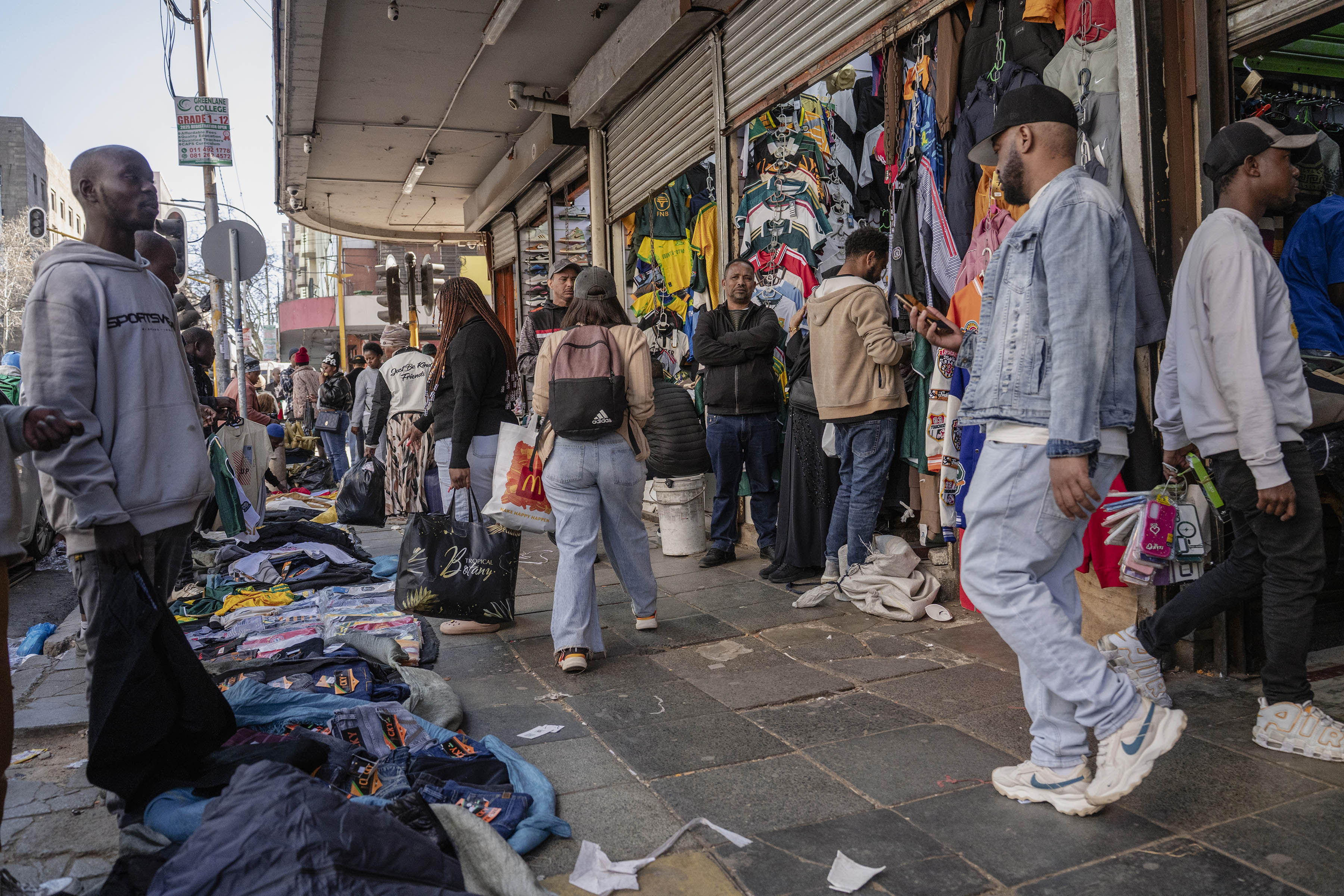
The area around Lilian Ngoyi (formerly Bree) and Rahima Moosa (formerly Jeppe) streets is bustling with small shops.
Support independent journalism
Donate using Payfast

Don't miss out on the latest news
We respect your privacy, and promise we won't spam you.
Next: Elections 2026: Dawid Kruiper Municipality battling water leaks and sewage spills
Previous: Streets flooded with raw sewage for months in Motherwell
© 2026 GroundUp. This article is published under the GroundUp Republication Licence Version 1.0. Email [email protected] to request permission to republish.