
In photos: Meet the tiny hoppers saving Hartbeespoort Dam
The Centre for Biological Control releases about 20,000 water hyacinth hoppers as part of their biological control strategy
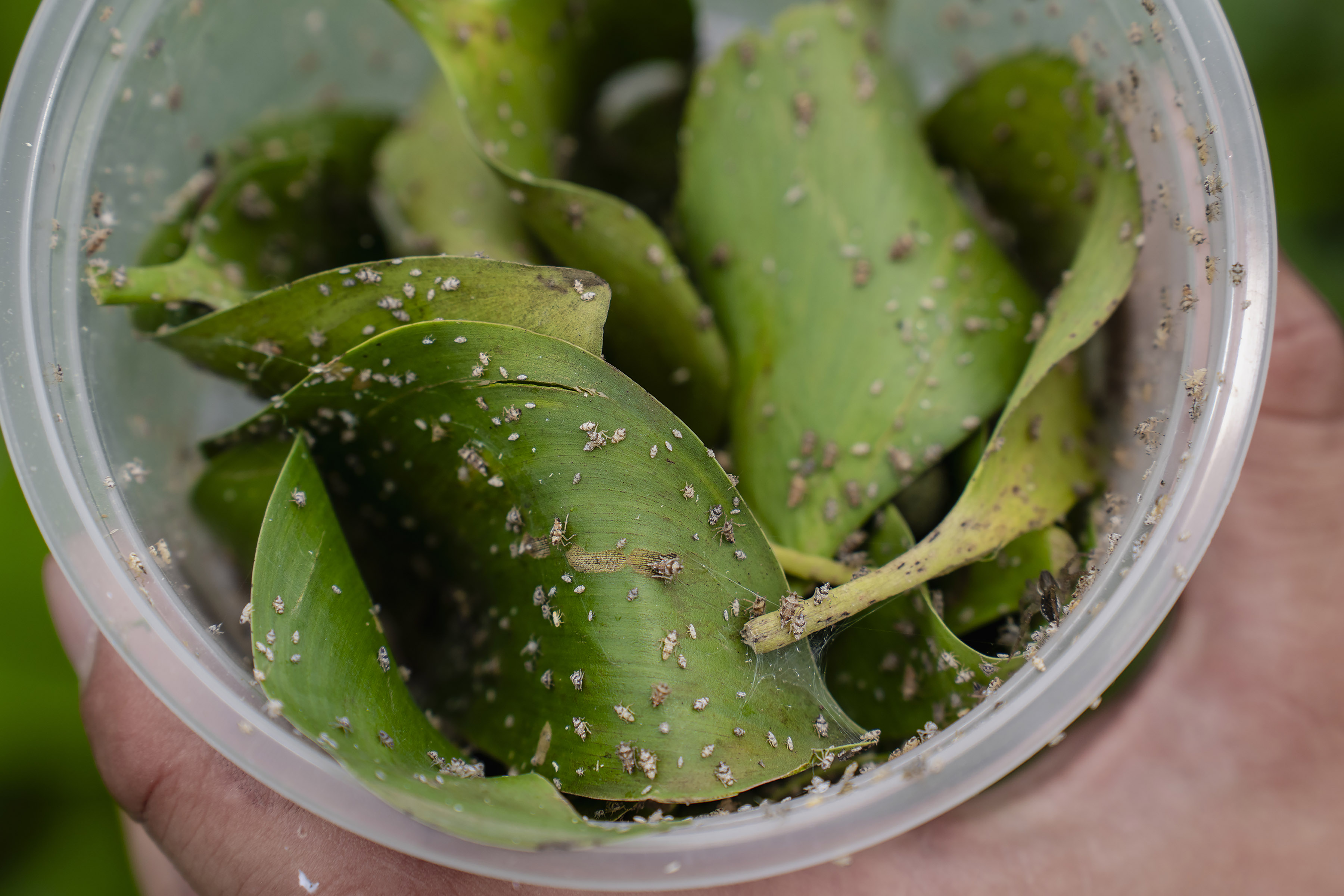
Megamelus scutellaris, commonly known as the water hyacinth planthopper, inside a container brought to the dam by Dr Kelby English. She releases thousands of them onto the water hyacinth to kill the invasive weed on the Hartbeespoort Dam. Photos: Ihsaan Haffejee
Every Thursday Dr Kelby English makes her way to the Hartbeespoort Dam with 20,000 tiny insects packaged carefully in translucent containers. She, along with some local residents, then release the tiny insects onto the green carpet of invasive water hyacinth, which now covers almost 40% of the dam.
English is a post-doctoral research fellow at Rhodes University. She works at the Centre for Biological Control (CBC), a research centre based in the Department of Zoology and Entomology at Rhodes. Their research focuses on the ecological dynamics of invasive pests, aquatic weeds and terrestrial weeds. The CBC has been releasing bugs into Hartbeespoort Dam since 2019.
The Megamelus scutellaris, commonly known as the water hyacinth planthopper, feed on the hyacinth. It is native to South America.
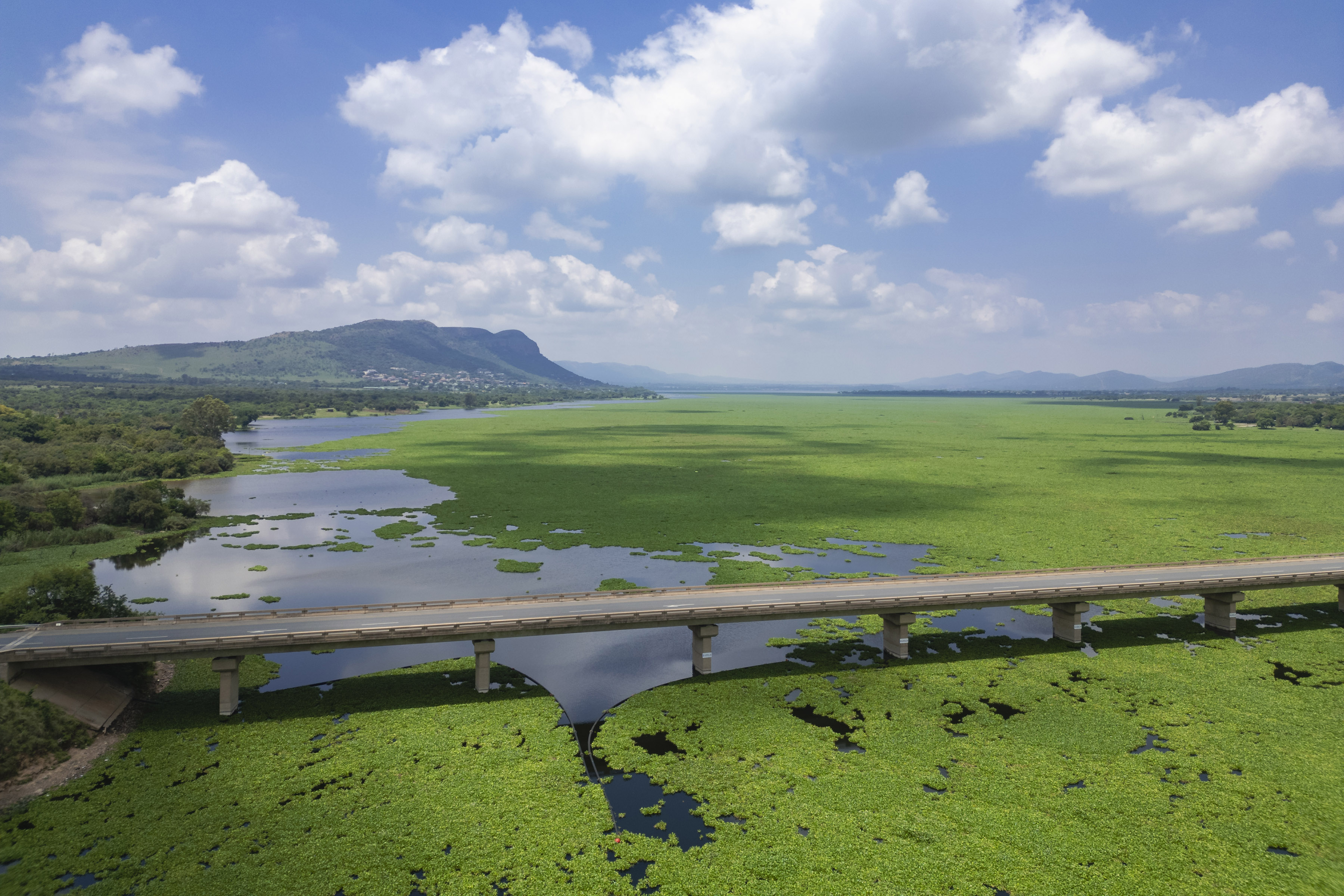
A view of the Pontederia crassipes, commonly known as water hyacinth, which during the warm spring and summer seasons covers a large section of the Hartbeespoort dam.
The water hyacinth planthoppers measure around 3mm. They pierce the invasive plant tissue, damaging cells, which reduces the plant’s buoyancy and causes it to rot. The insects render the invasive plant unable to produce flowers, reducing the seed bank in the dam.
Water hyacinth, an invasive aquatic plant, is native to South America and has been present on Hartbeespoort Dam since the 1960s.
Polluted water flowing into the dam has increased nutrient levels creating a fertile environment for these invasive plants.
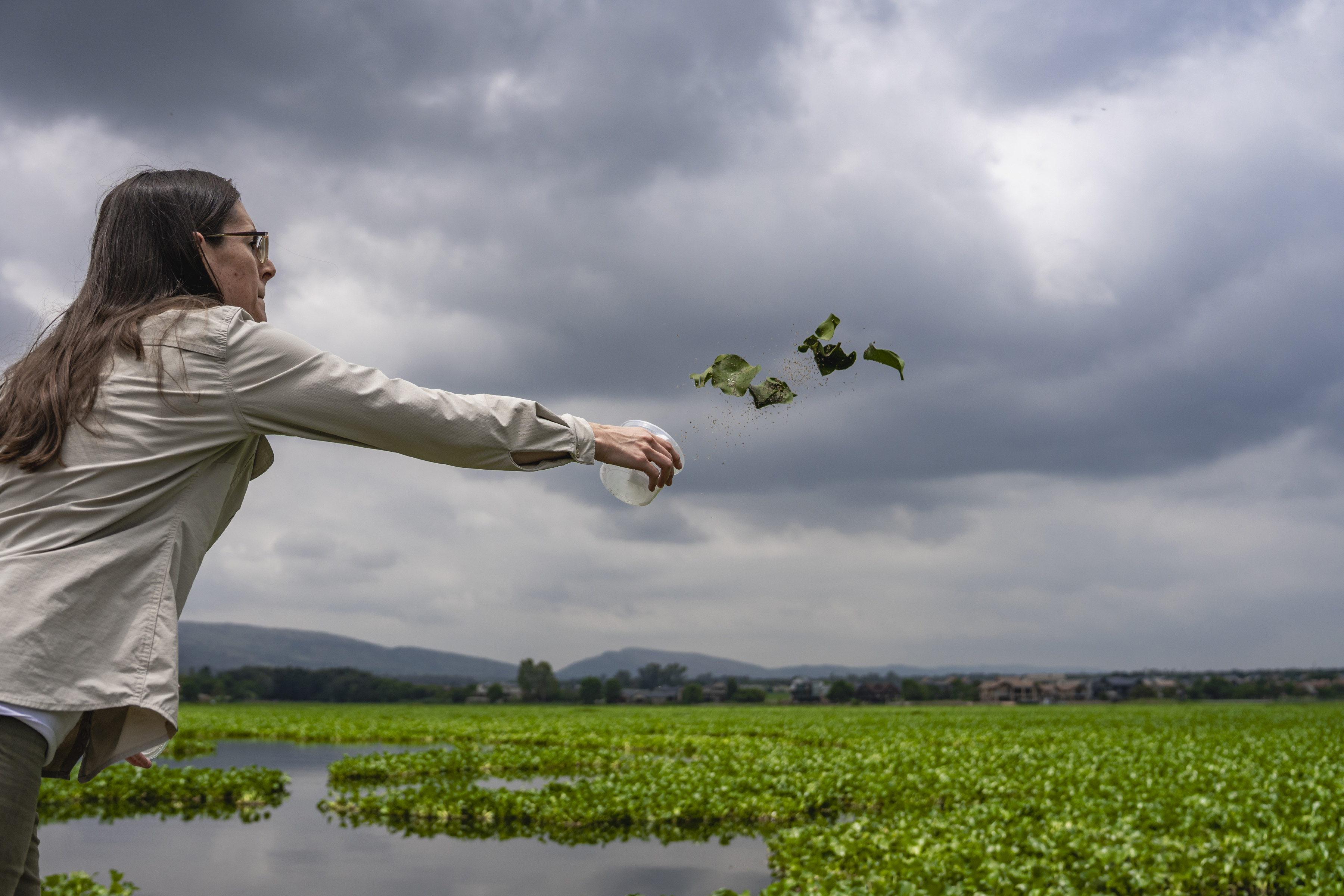
Kelby English releases hundreds of planthoppers onto the water hyacinth at Hartbeespoort Dam.
Millions of seeds have been deposited into the dam by flowering hyacinth. These seeds, which remain viable for about 20 years, germinate during spring, when warmer temperatures and increased rainfall create ideal conditions.
“Stopping the seed bank from growing is one of our main aims and we are succeeding because the biocontrol agents are preventing the plants from flowering. But this is a process that will take years, so people need to be aware of that,” said English.
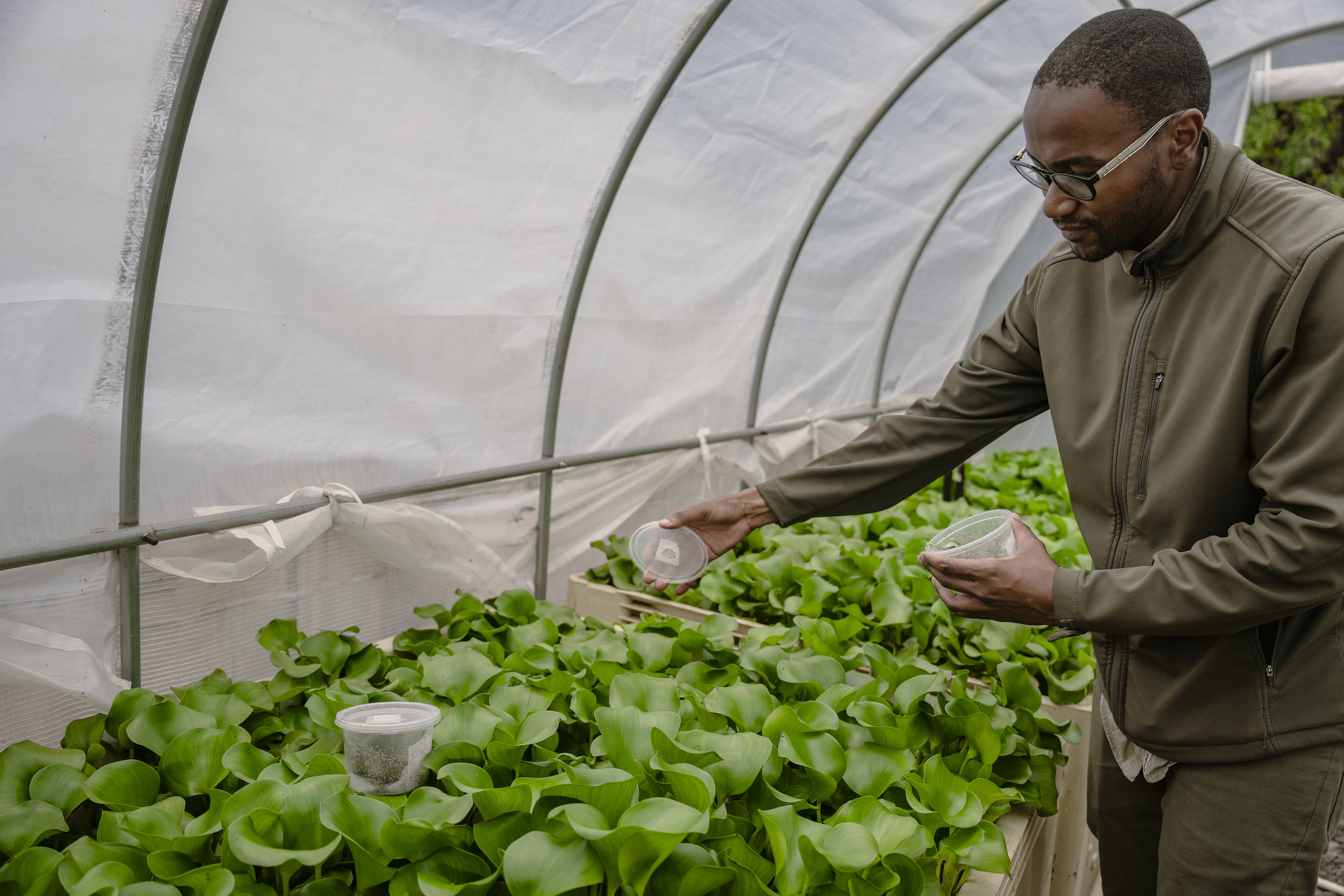
Ronald Mampshika, a housing estate manager, places some planthoppers into a rearing station.
Magalies Water was appointed by the Department of Water and Sanitation to develop a remedial program to rehabilitate Hartbeespoort dam. It has now officially contracted the CBC to scale up its biocontrol program.
The CBC, working with communities near the dam, has established ten rearing stations where thousands of planthoppers are bred close to the dam and released onto the hyacinth regularly by the communities.
“People often question how these tiny bugs can help with what seems like a massive problem. They even ask if the biocontrol is actually working. But they are the most effective, environmentally friendly and cost-effective solution. We are seeing reduction in the hyacinth cover as well as the seed bank,” said English.
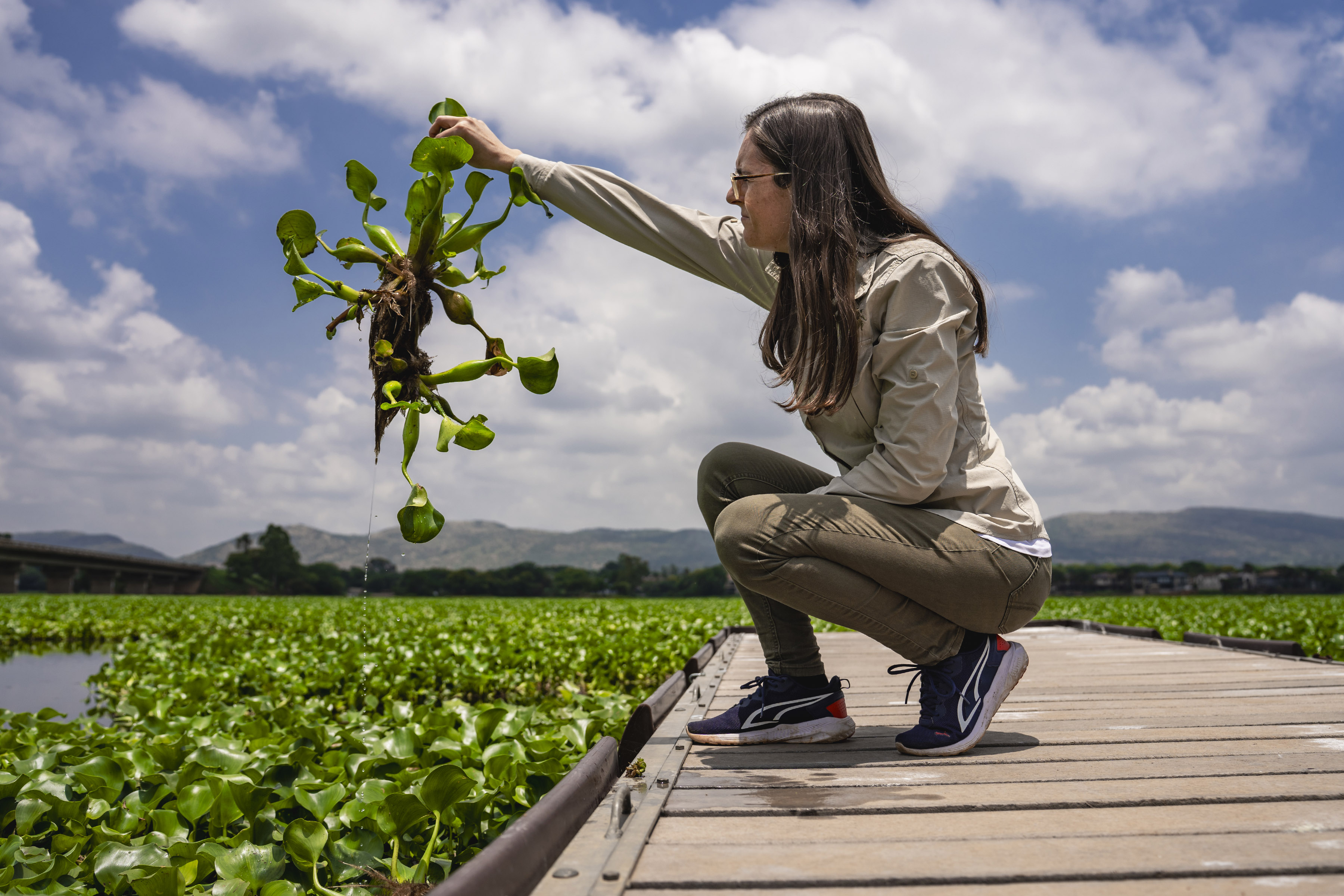
Kelby English with some of the invasive water hyacinth that covers the Hartbeespoort dam.
The increased growth of the hyacinth has prompted the National Sea Rescue Institute (NSRI) to issue a warning to the public about going to the dam with boats as the hyacinth can damage motors.
“We are asking the public to carefully consider whether it is safe to go out on the water,” said Arthur Crewe, NSRI Hartbeespoort Station Commander. “If your craft becomes trapped in the hyacinth, your rescue options are limited. Even our rescue vessels suffer damage attempting to get through, and in some cases, rescues are extremely challenging.”
Upstream pollution flowing into the dam from municipalities dumping sewage as well as industrial and agricultural pollution remain the biggest challenge to the health of the water and aquatic life at the Hartbeespoort dam.
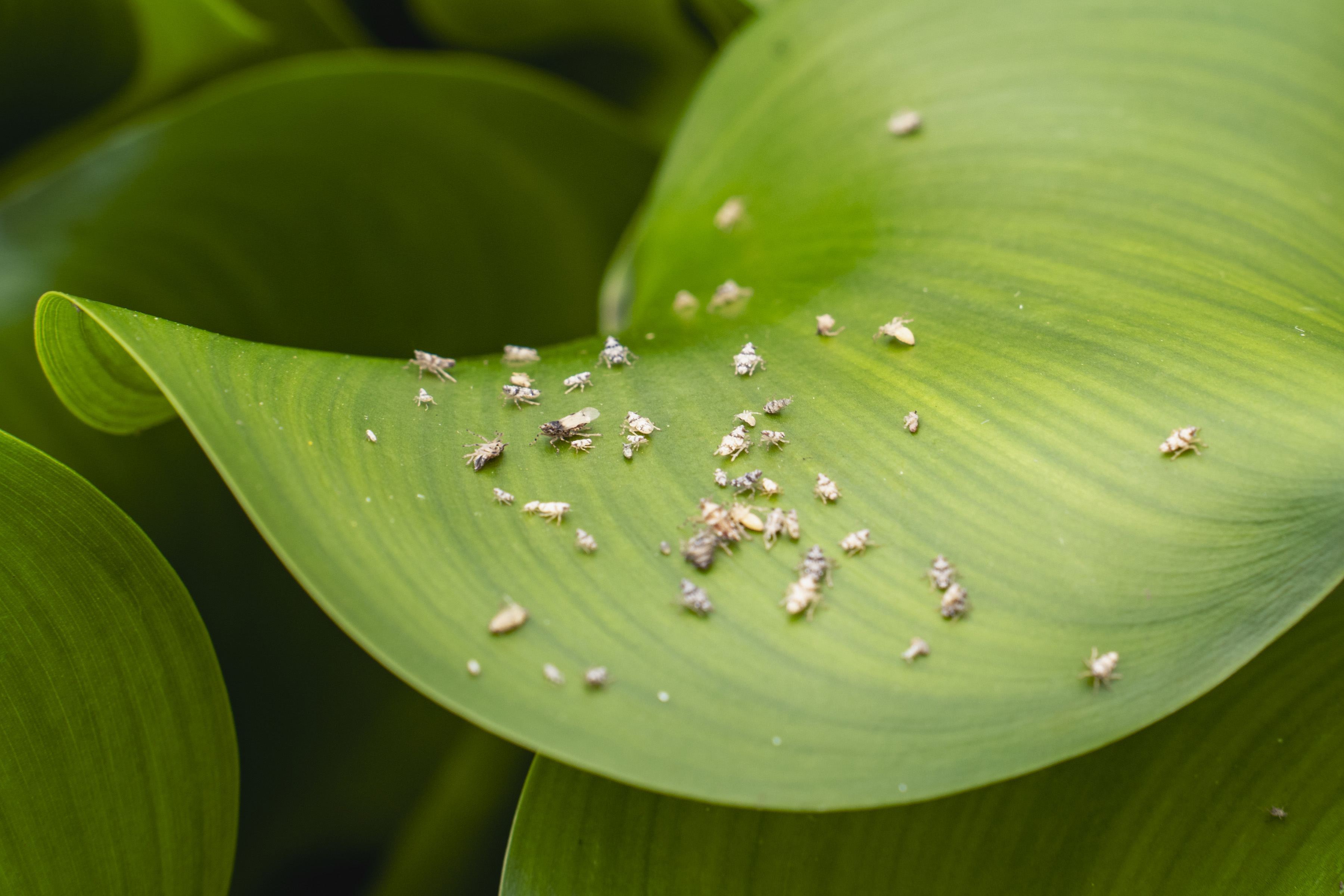
Hoppers on a hyacinth leaf.
David Magae from Magalies Water said that the water entity is continuing its work on rehabilitating the dam.
“It is common cause that the current situation of the growth of the hyacinth and salvinia have an adverse effect on the amount of oxygen on the waterbody, which can also result in the death of other aquatic species, such as the fish found in the dam.
“Magalies Water has previously commented publicly on the high levels of loaded pollutants that enter the dam, which also contributes to the sprawling growth of the hyacinth water plant,” said Magae.
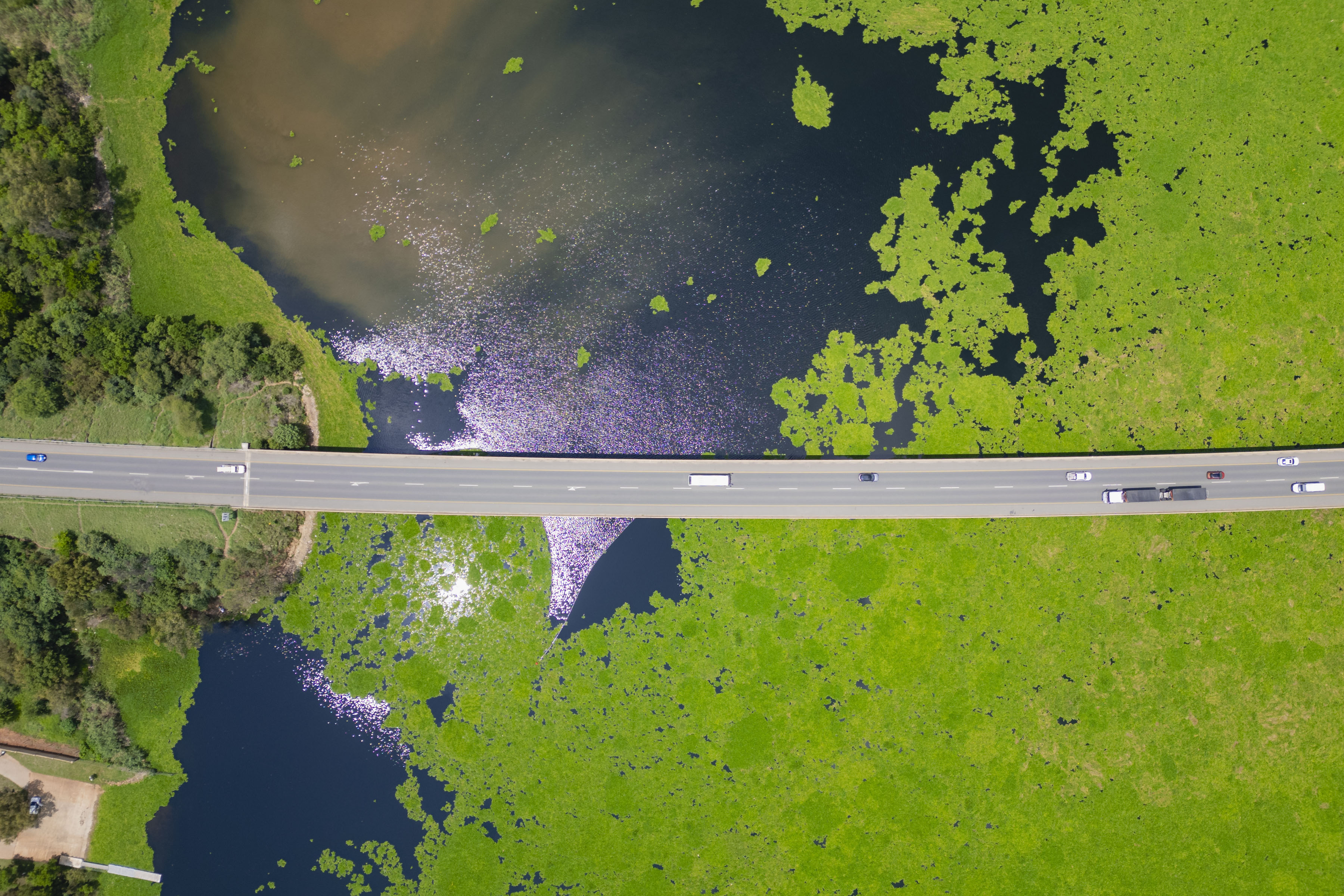
During the peak season for water hyacinth growth, the invasive species can cover about 40% of the dam’s water surface.
Video: Ihsaan Haffejee
Support independent journalism
Donate using Payfast

Don't miss out on the latest news
We respect your privacy, and promise we won't spam you.
Letters
Dear Editor
It's good to see an eradication program that is working.
I remember when water hyacinth arrived on Lake Chivero (then Lake McIlwaine) in Zimbabwe. All that was available to clear it was a team of men with rakes and a boat. Fish numbers reduced, crocs left and we couldn't swim.
High school kids should be encouraged to volunteer to help as part of their ecological education. A school might even breed hoppers and release them under direction. It would encourage some to take up biological sciences.
Dear Editor
Another massive challenge is the shot hole and other borers that are destroying trees in and around Johannesburg. It targets numerous indigenous species, in paticular many of the acacia species, with the Acacia Karoo being especially vulnerable. Is any research being done on biological or chemical methods that will effectively eradicate these pests and save our trees?
© 2025 GroundUp. This article is licensed under a Creative Commons Attribution-NoDerivatives 4.0 International License.
You may republish this article, so long as you credit the authors and GroundUp, and do not change the text. Please include a link back to the original article.
We put an invisible pixel in the article so that we can count traffic to republishers. All analytics tools are solely on our servers. We do not give our logs to any third party. Logs are deleted after two weeks. We do not use any IP address identifying information except to count regional traffic. We are solely interested in counting hits, not tracking users. If you republish, please do not delete the invisible pixel.