
Joburg residents protest as water supply is throttled
The city’s water systems are under severe strain
 Add GroundUp on Google
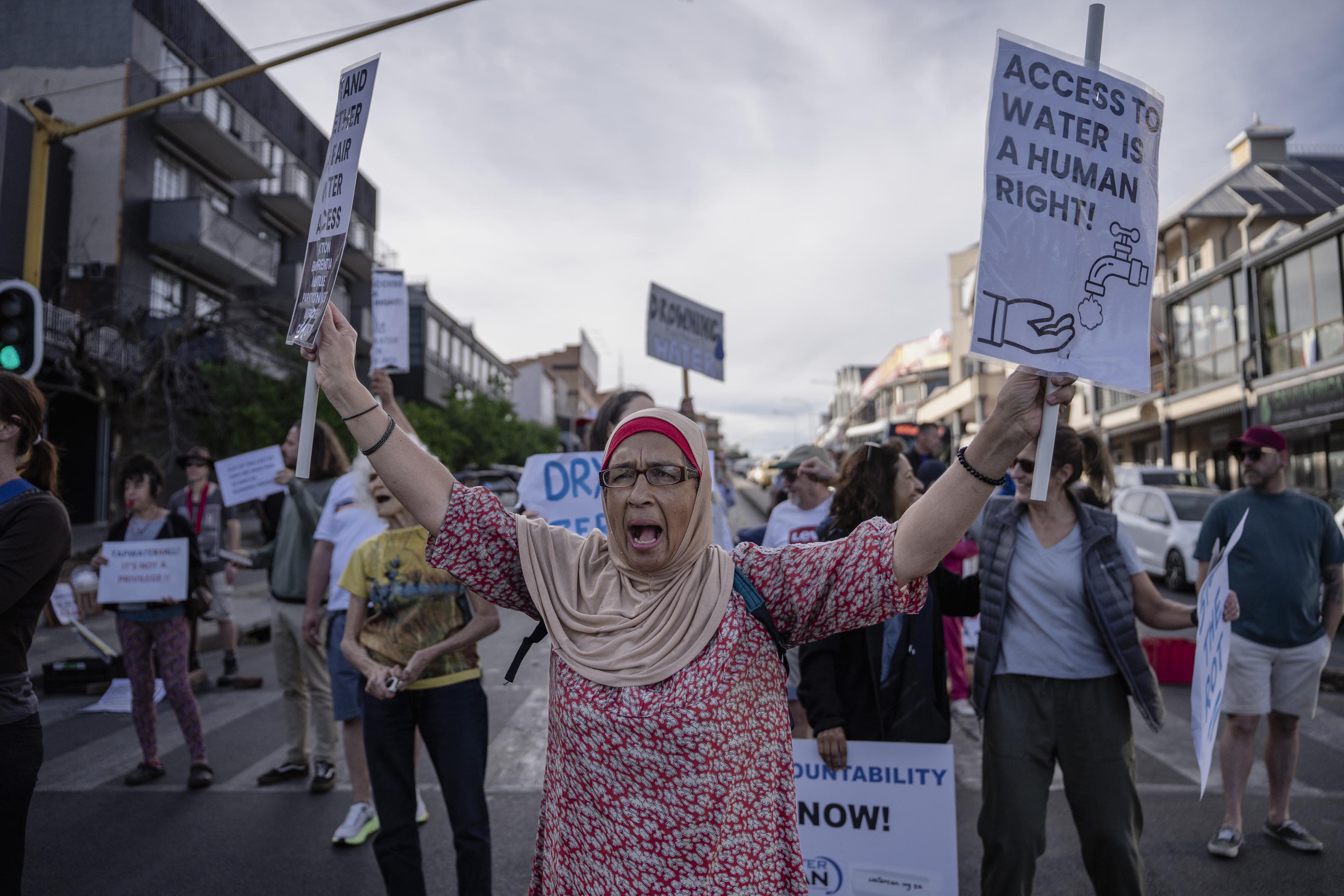
Rashida Mather from Brixton, participating in a water protest in Melville on Wednesday. Mather looks after elderly people with dementia and says that the lack of reliable water supply has become unbearable. Photos: Ihsaan Haffejee
- Residents across Johannesburg have taken to the streets, demanding a permanent fix to the city’s water crisis.
- Protests come amid warnings from Rand Water and Johannesburg Water that the system is under severe strain, with decreased pressure and planned throttling expected.
- Residents in areas with long outages want throttling applied fairly across the city.
“Amanzi, awethu! Amanzi, awethu!” (Water is ours!). These were chants of protesters across Johannesburg this week, protesting against recurring water outages, a lack of communication and planned water throttling.
From Brixton to Kensington, Melville to Parktown, Ormonde to Midrand, residents took to the streets a week before the local government elections to vent their frustration over years of ongoing problems with Johannesburg’s water supply.
“I cannot remember the last time I had consecutive days of running water,” said Brixton resident Rashida Mather, who joined two protests this week.
Mather, a dementia care specialist, said she has to haul heavy buckets of water up and down her street to care for a patient. She has recently had three strokes, so cannot carry more than 10 litres of water at a time.
It is a daily “nightmare” to get enough water for bed laundry and keep up basic hygiene, she said.
In Parktown, we met 93-year-old Gilly Pirrow, a Johannesburg resident since 1955. She was among several dozen people protesting on Jan Smuts Avenue about prolonged water outages. The current outage started in early August.
Pirrow is physically unable to carry water from tankers during these outages.
In Kensington, protesters gathered on busy Queen Street, objecting to water throttling. The area has been without water for over a week, a regular occurrence in the past few years.
“Our kids are studying for exams without water. They cannot bathe,” said Nonie Zulu, who had joined the protest.
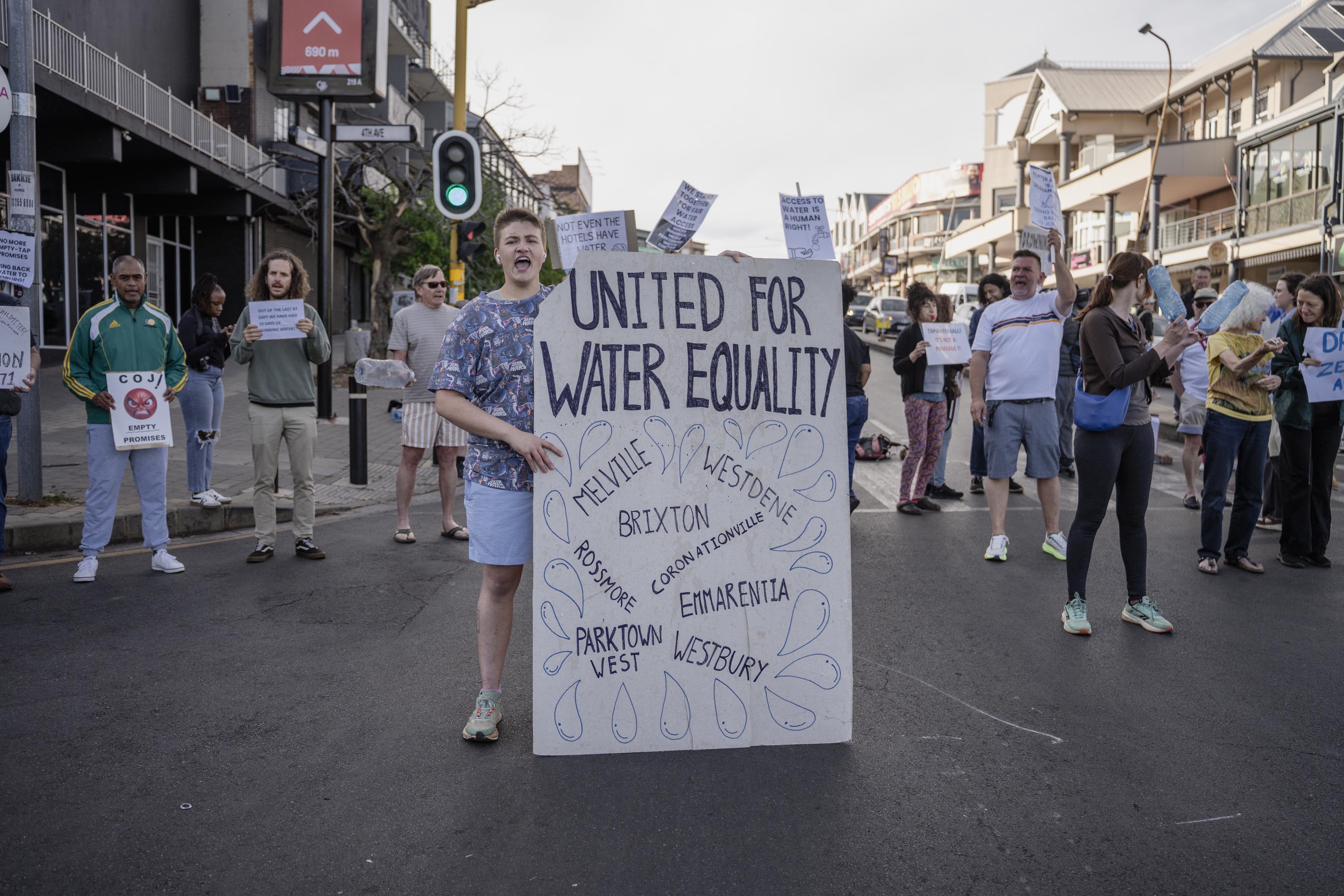
Residents supplied by the high-lying Commando System, including Melville, Brixton and Mayfair, blocked Melville’s Main Road during a water protest on Wednesday.
This past week, Johannesburg Water (JW) and Rand Water (RW), the entity’s bulk water supplier, have issued warnings about water shortages.
On Thursday, JW said water supply systems are “severely constrained”, with high household, commercial and municipal demand stopping reservoirs and towers from recovering.
This is resulting in low water pressure, intermittent supply and prolonged outages in various areas. It said that it is implementing targeted throttling to balance available supply, support reservoir recovery and stabilise distribution across affected systems.
“Customers may experience reduced pressure or temporary supply interruptions while these measures are underway,” said JW.
The systems affected include:
- Commando: Crosby, Brixton and Hursthill supply areas.
- Central: Parktown, Berea, Yeoville, Randjieslaagte, Linksfield and Alexander Park systems.
- Sandton: Bryanston, Illovo and Morningside.
- Midrand: Grand Central, President Park and Erand systems.
- Randburg–Roodepoort: Honeydew, Cosmo City and Waterval Tower.
- Soweto and southern areas: Power Park, Chiawelo, Meadowlands, Zondi, Crown Gardens and Eagles Nest.
- Deep South: Lawley, Ennerdale, Lenasia and Orange Farm systems.
To reduce consumption, JW has said proposed restrictions include banning irrigation of public parks and gardens, requiring hosepipe spray nozzles, and prohibiting the hosing down of hard surfaces and dampening of building sand.
JW said that the throttling is targeted towards “high-consumption areas”, while delivering basic water access.
If demand continued to rise, it would consider Level 2 restrictions. Level 1 restrictions are currently in place.
It added that it was continuing leak detection, burst-pipe repairs, pressure management and infrastructure rehabilitation to reduce water losses.
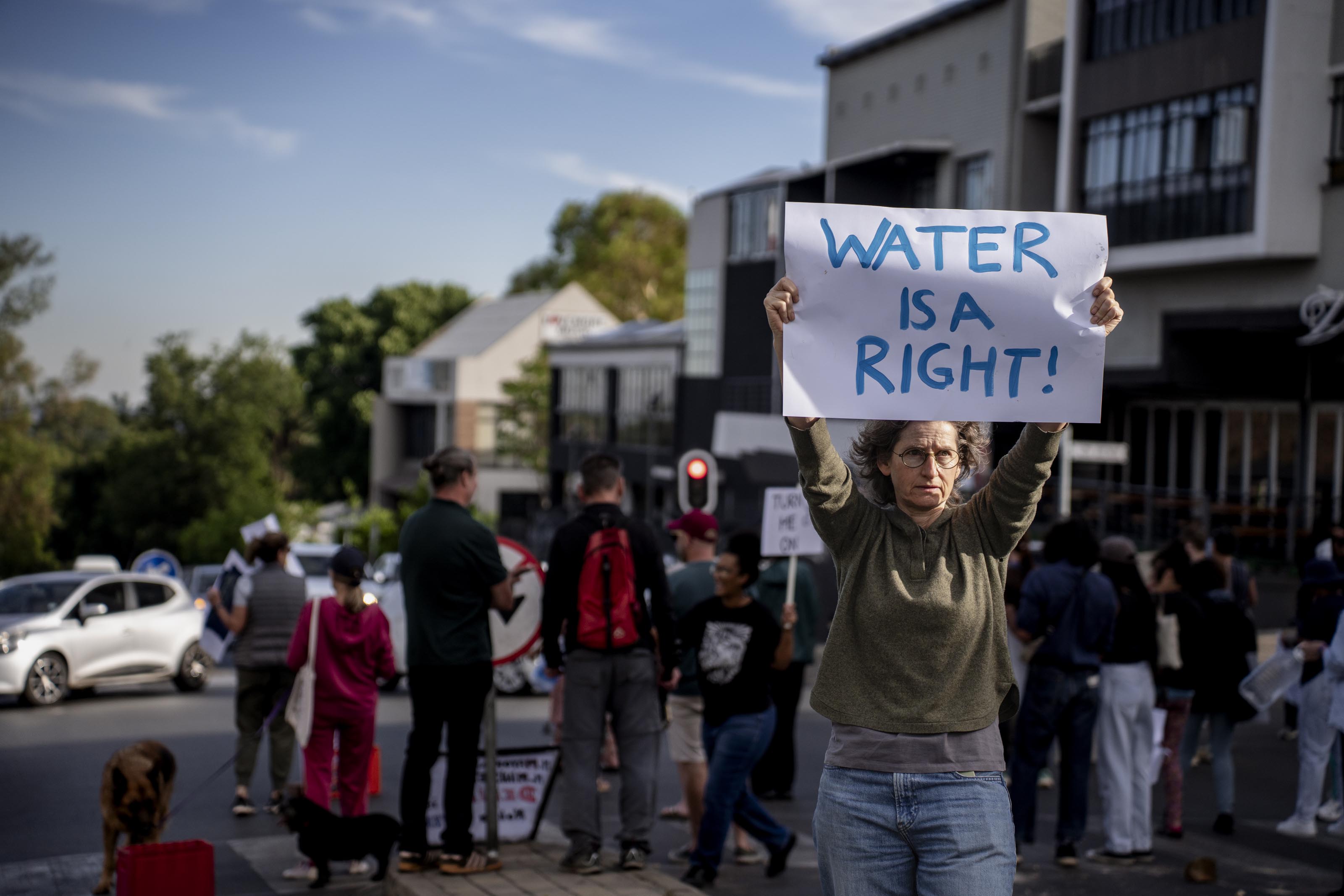
At a water protest in Melville on Wednesday, many demonstrators said that the municipality is denying them their constitutional right to water.
This follows a notice on 23 October, when RW warned that Johannesburg had exceeded its temporary water-use target every month from January to September 2026. RW said it is already pumping at full capacity and will hold municipalities that keep overconsuming to their limits.
The target for Johannesburg is 1,528 megalitres (ML) per day, but consumption peaked at 1,765ML/day in January and was still above the limit at 1,724ML/day in September.
After repeated calls to reduce consumption failed, RW said it will begin restricting bulk water supplies to municipalities exceeding their allocations. It warned that this could result in low pressure and intermittent outages.
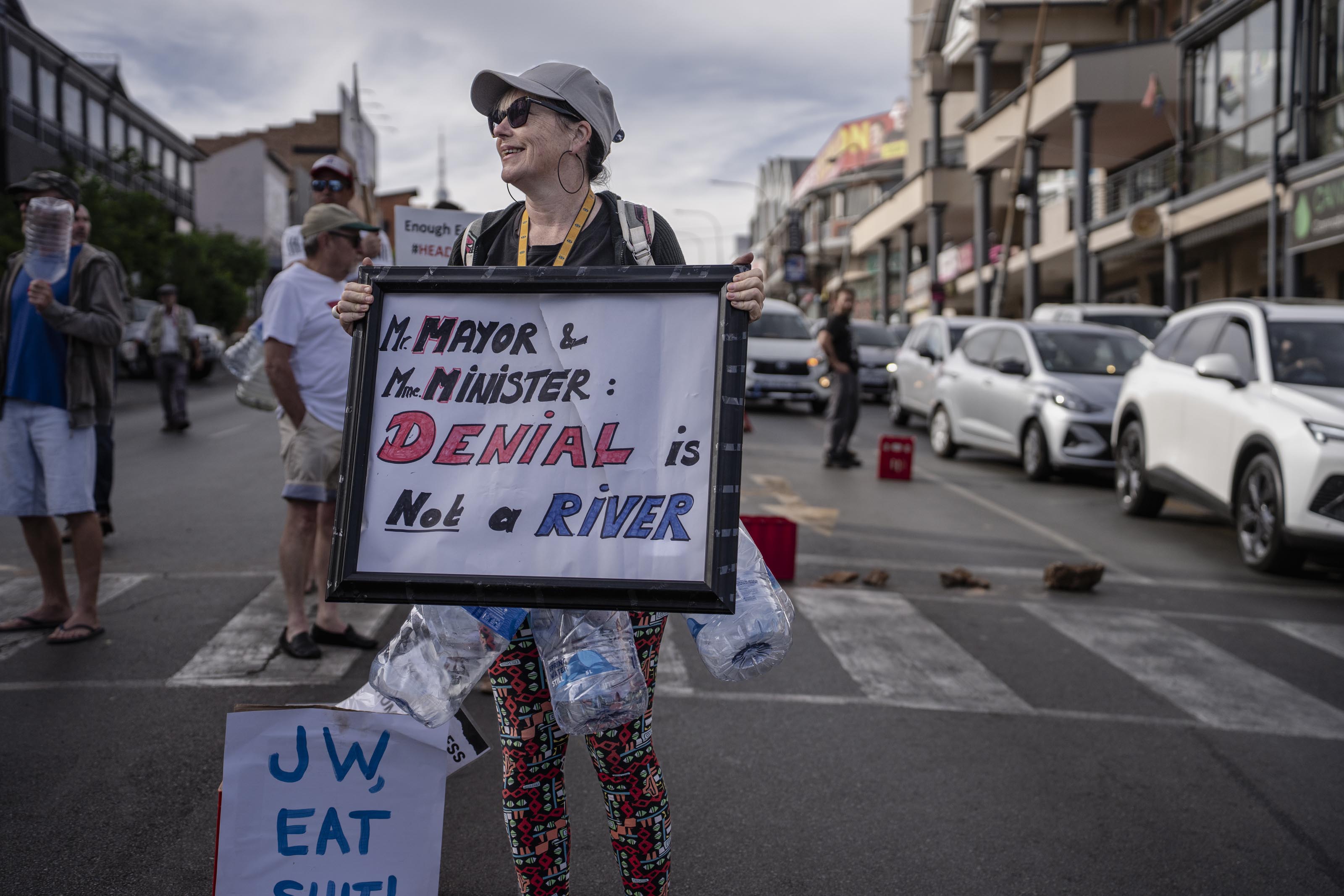
Westdene resident Zsofia Borsanyi said that she has now been without water for weeks and when the water does return the supply is erratic and unreliable.
An uphill battle
Supplying water in Johannesburg is geographically difficult. Water expert Richard Holden said Johannesburg’s position makes supplying water to higher-lying areas particularly challenging. Water must be pumped through several stages at high pressure, from the Vaal system by RW and then to JW-operated reservoirs and towers.
This makes the system vulnerable to power failures, pump breakdowns and leaking reservoirs. If storage facilities cannot fill properly or are bypassed, they cannot meet peak household demand, causing pressure to drop and elevated areas to lose supply.
Ingrid Bester, a Kensington resident and member of the Johannesburg Water Crisis Committee, said some reservoirs are currently bypassed because they are cracked and leaking.
Bester said the new Brixton reservoir and water tower have not resolved shortages.
Bester said that “there are very qualified people” working at JW, but the entity lacks operational funds because the City of Johannesburg historically starved JW of funds.
The City began returning 70% of water revenue to JW in July, but massive funding is required to address accumulated backlogs.
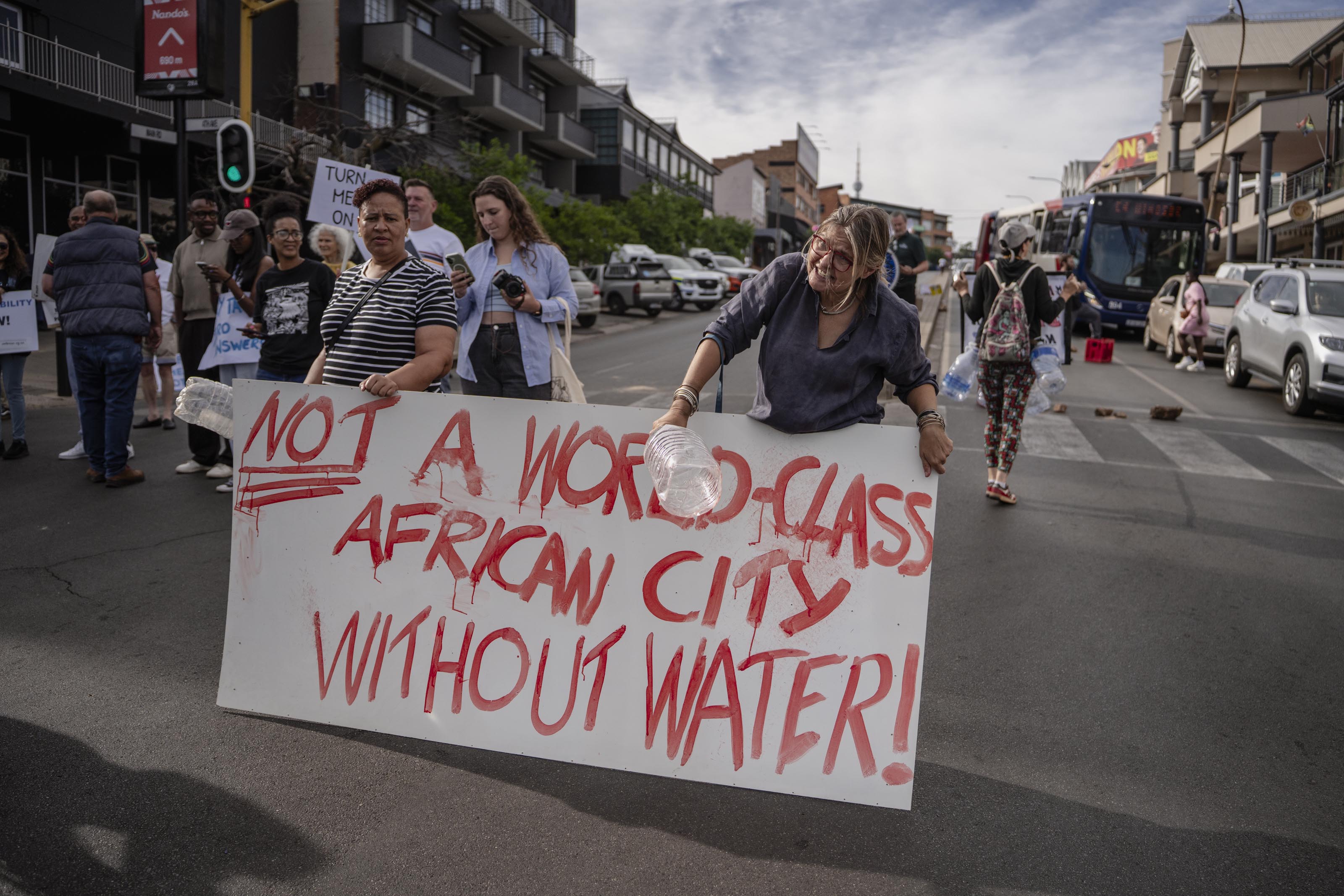
Demonstrators in Melville make their voices heard as they block Main Road to traffic during an early morning protest.
The City is also undercollecting, due to leaks and problems with the billing system. In the 2025 financial year, Johannesburg reported to the Auditor-General (AG) that it had lost more than 207-billion litres of water. This amounted to about R2.8-billion of lost revenue. Over the past four years, R10.3-billion has been lost, which could have gone towards fixing and upgrading the network.
Actual losses could be even higher, because the AG noted “unreliable system-generated information” at JW. It noted that the metro spent just 0.3% of its asset value on repairs and maintenance, far below National Treasury’s recommended minimum of 8%.
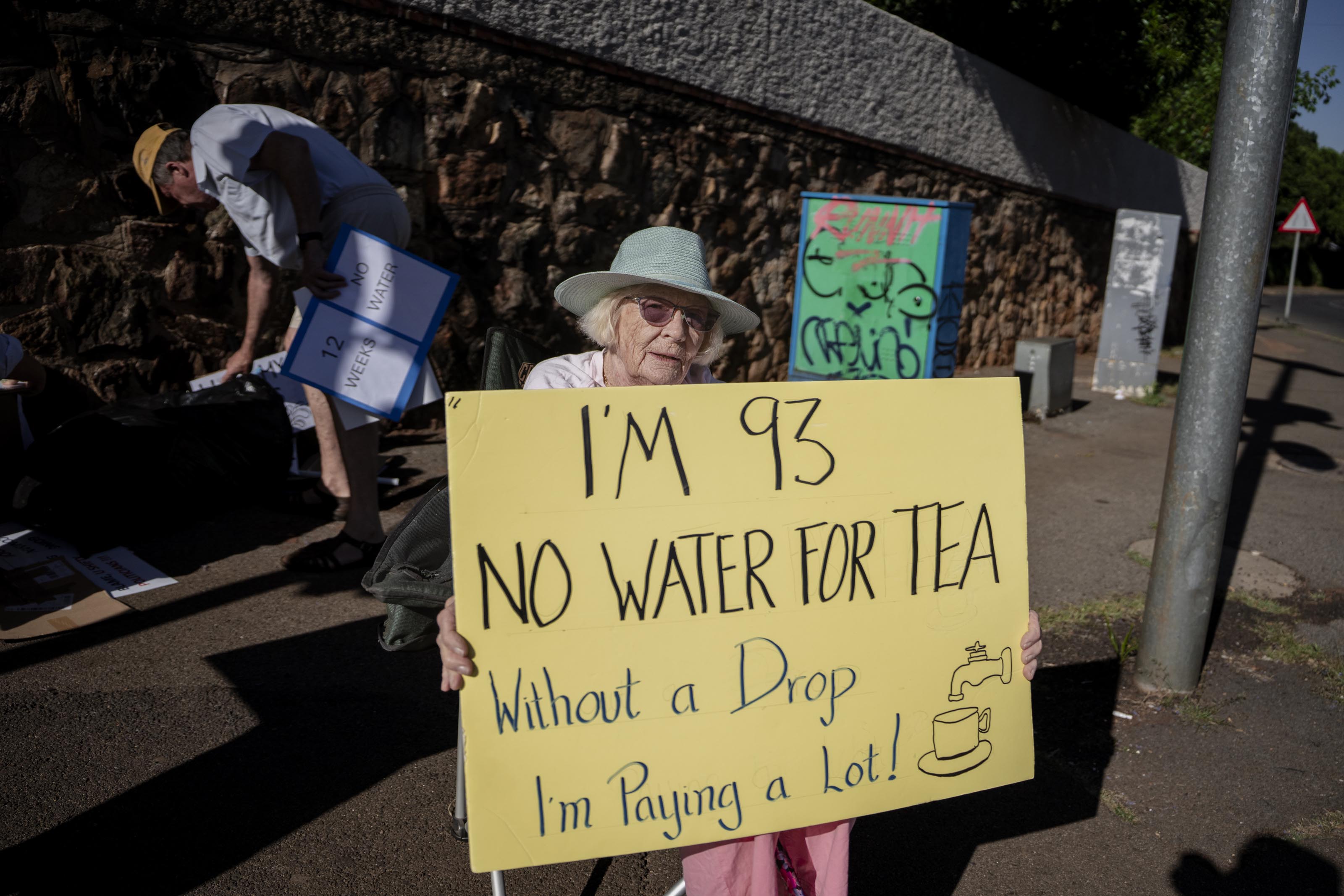
Long-time Parktown resident Gilly Pirrow, who is now 93, joined a water protest on Friday morning.
Dr Ferrial Adam, executive director of WaterCAN, criticised the authorities for “not progressing fast enough” and for blaming high consumer demand while largely “ignoring” widespread leaks. Bester echoed this, stressing the necessity of extensive, citywide pipe replacements rather than temporary fixes.
Holden described the current crisis as a “perfect storm”, with leaking pipes and reservoirs and “people not paying for water so they don’t care about their consumption, and people who are paying for water who don’t fix leaks on their property and fill their pools”.
“Each bit adds up,” he said.
Holden said that in order to safeguard water security, citywide physical restrictions and mandatory water-demand management devices, as introduced during Cape Town’s Day Zero crisis, are needed in Johannesburg.
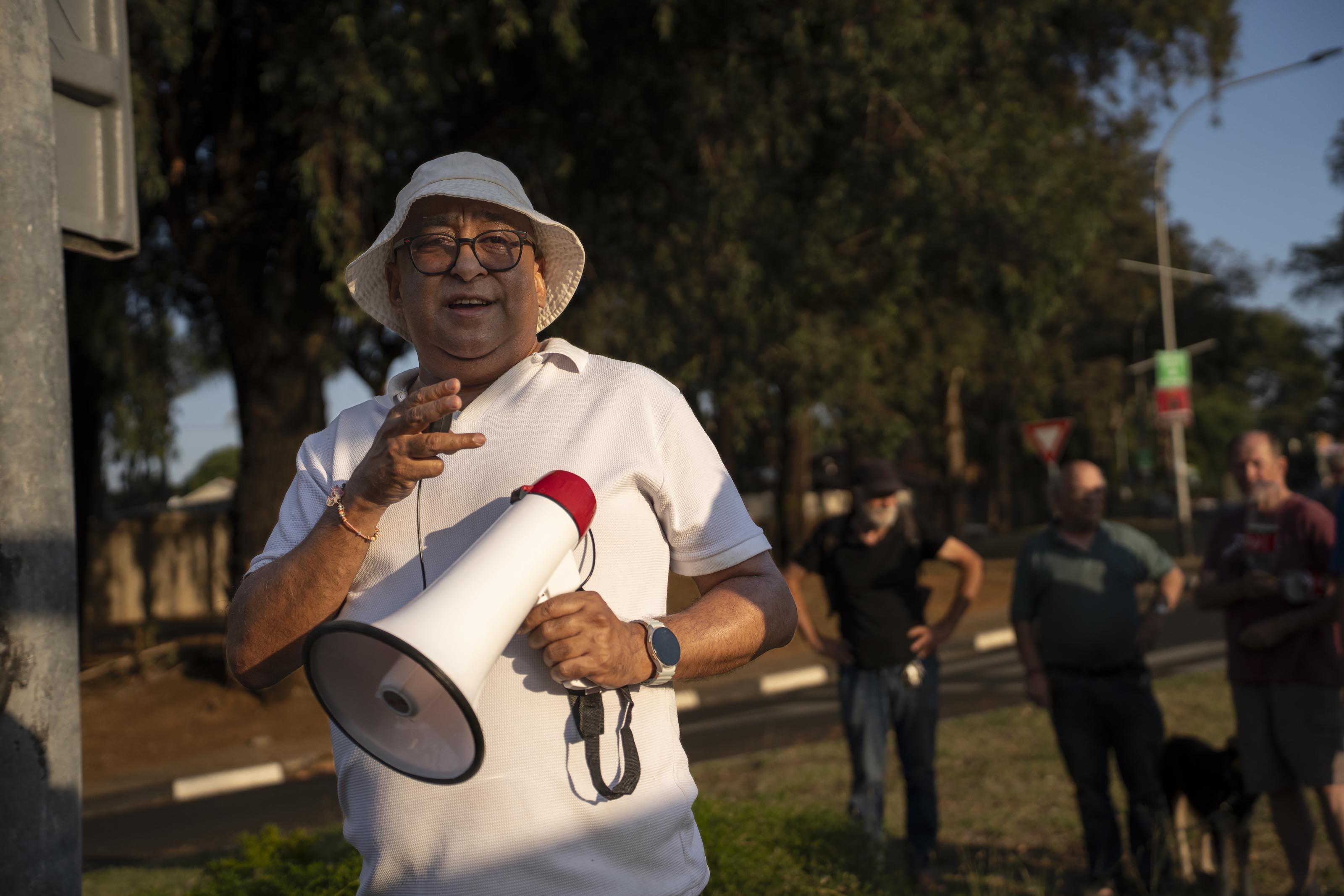
Ravin Singh, a leader in the Johannesburg Water Crisis Committee, addresses protesters at a demonstration for water in Kensington on Thursday.
Ravin Singh, convenor of the Johannesburg Water Crisis Committee, welcomed JW’s proposed measures to stabilise supply. However, he said, questions remained about when water would be restored to households without water.
He said that “restrictions must be applied fairly”, adding that communities already without water should not bear the same burden as areas with uninterrupted supply.
“Those in the north water their gardens, fill their pools and wash down cement with hosepipes while those in the east [and other areas] do not get a drop. This must change,” said Singh.
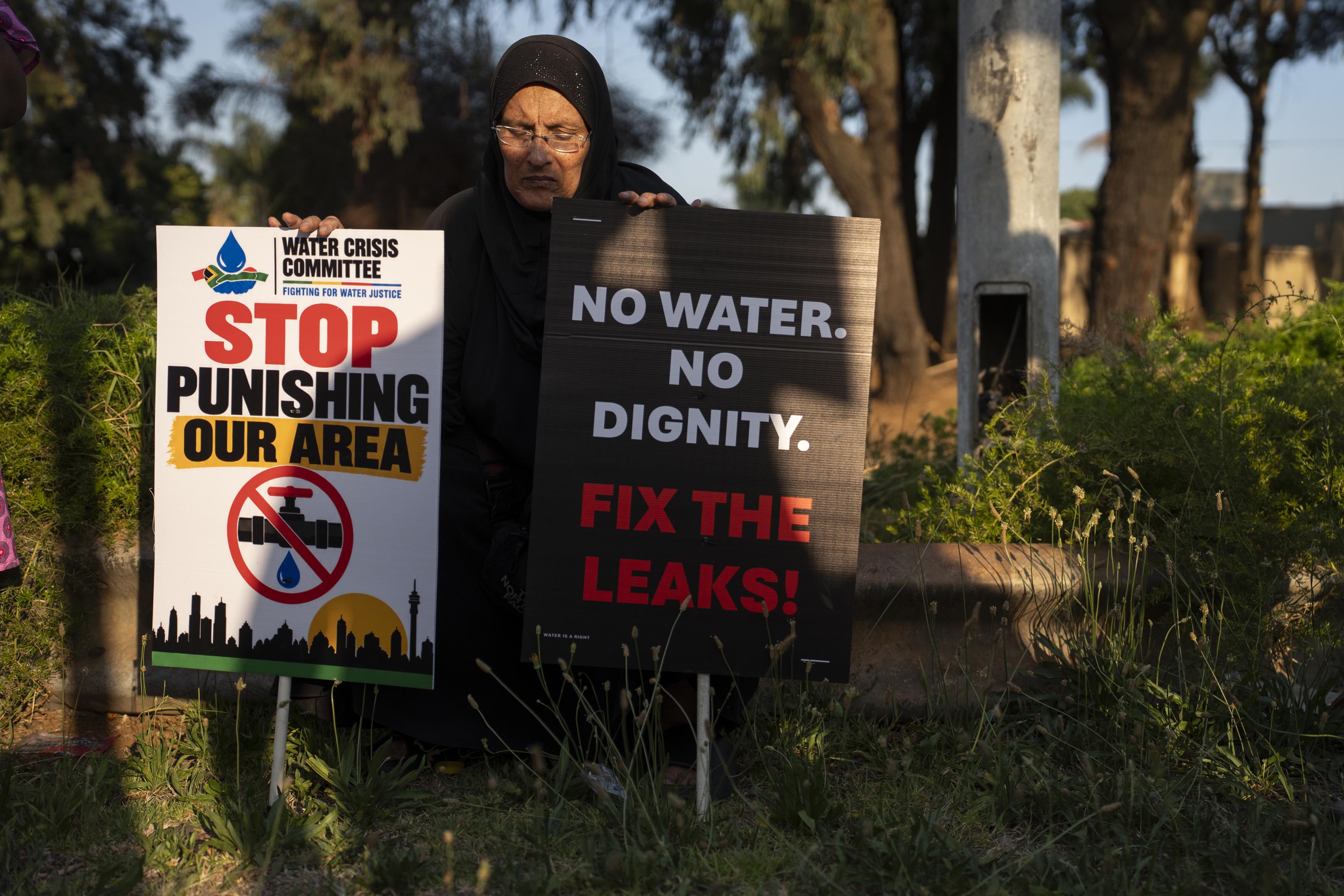
Protesters gathered at the corner of Queen and Albertina Sisulu streets in Kensington on Thursday to voice their frustration at the lack of water supply in their neighbourhoods.
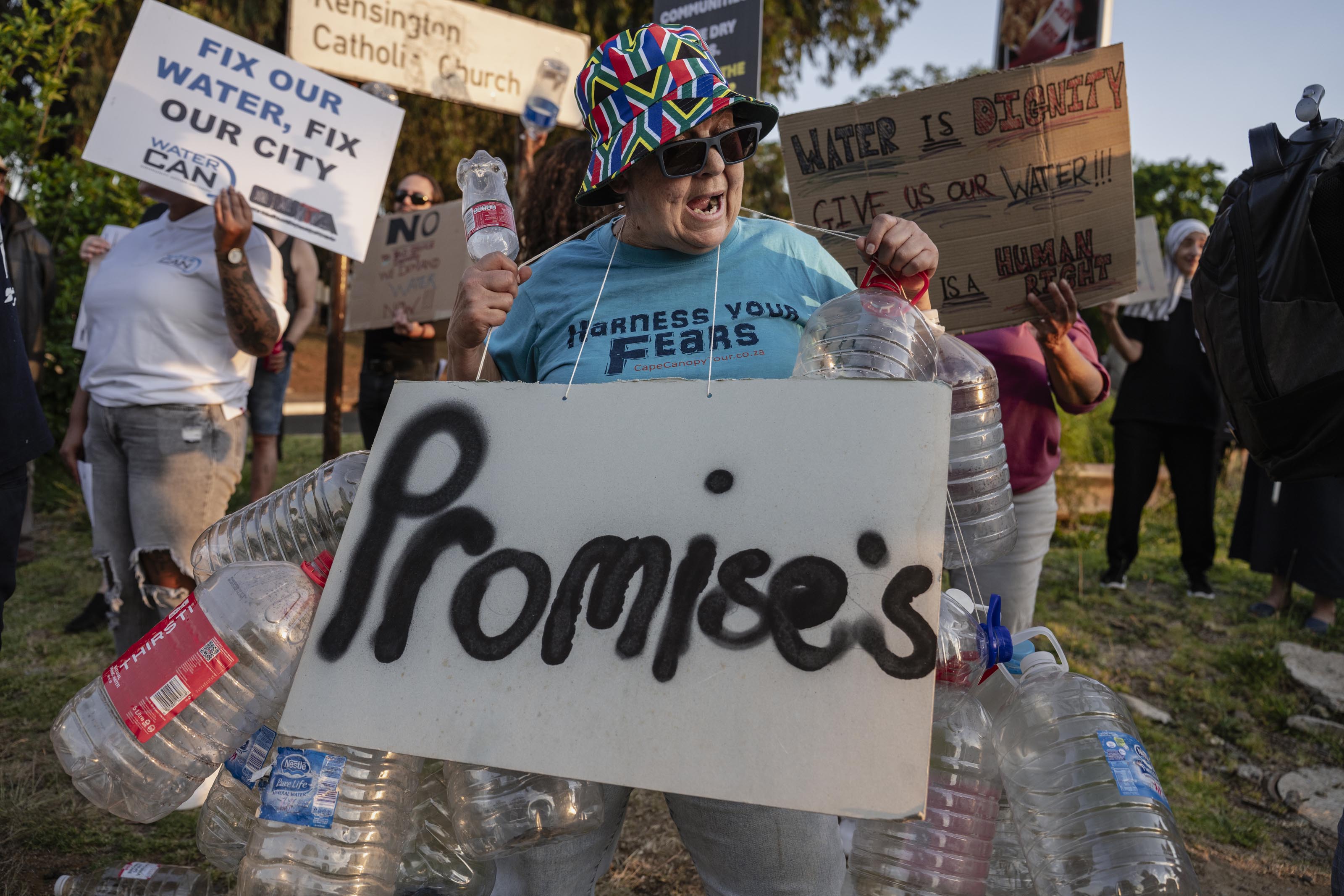
Charmaine Partridge brought all the plastic bottles she uses to collect and store water at her home in Kensington to the protest. She said problems with water have been ongoing for more than four years in her area.
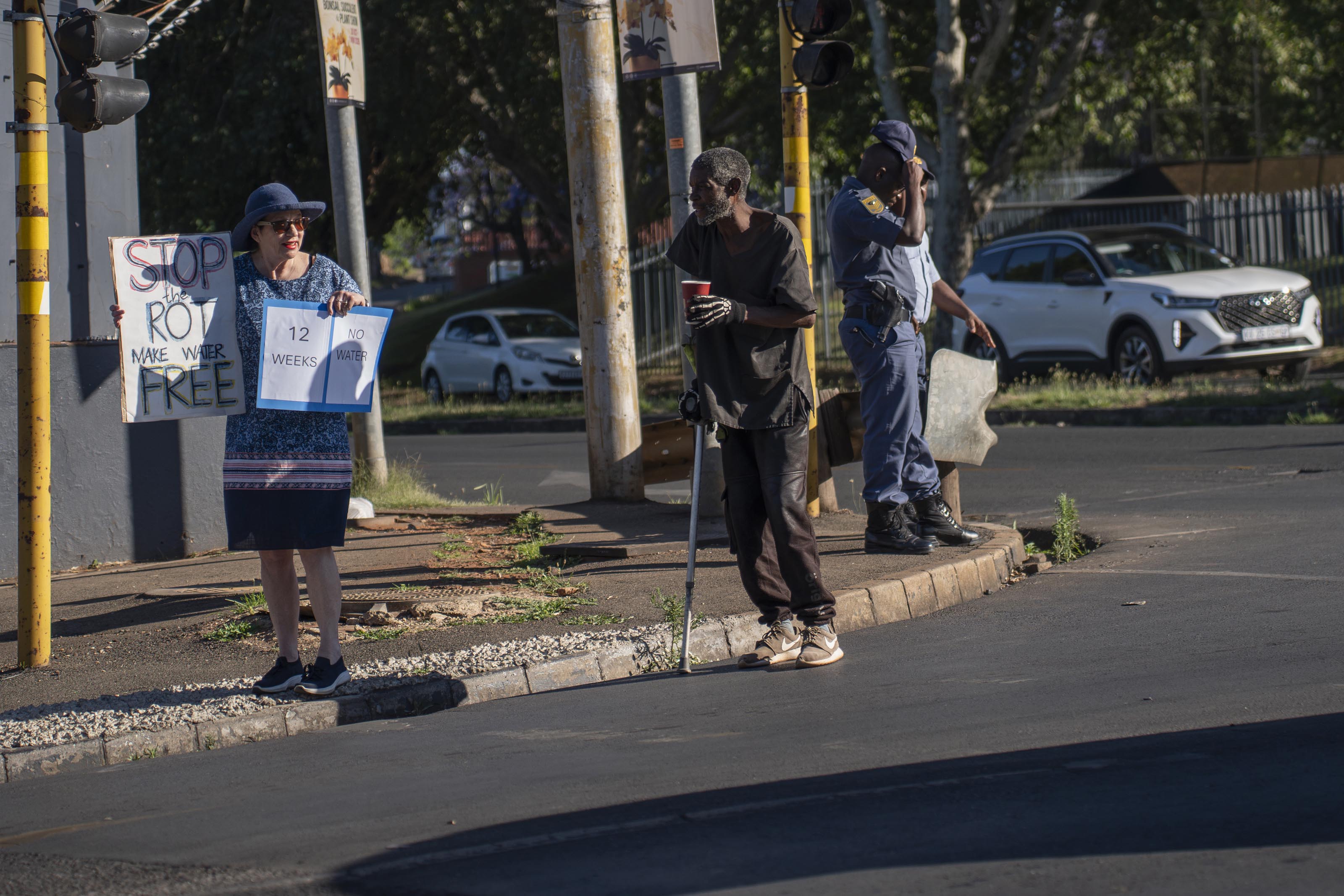
In Parktown on Friday, a resident protests for water as a man begs for change at a traffic light while police monitor the demonstration.
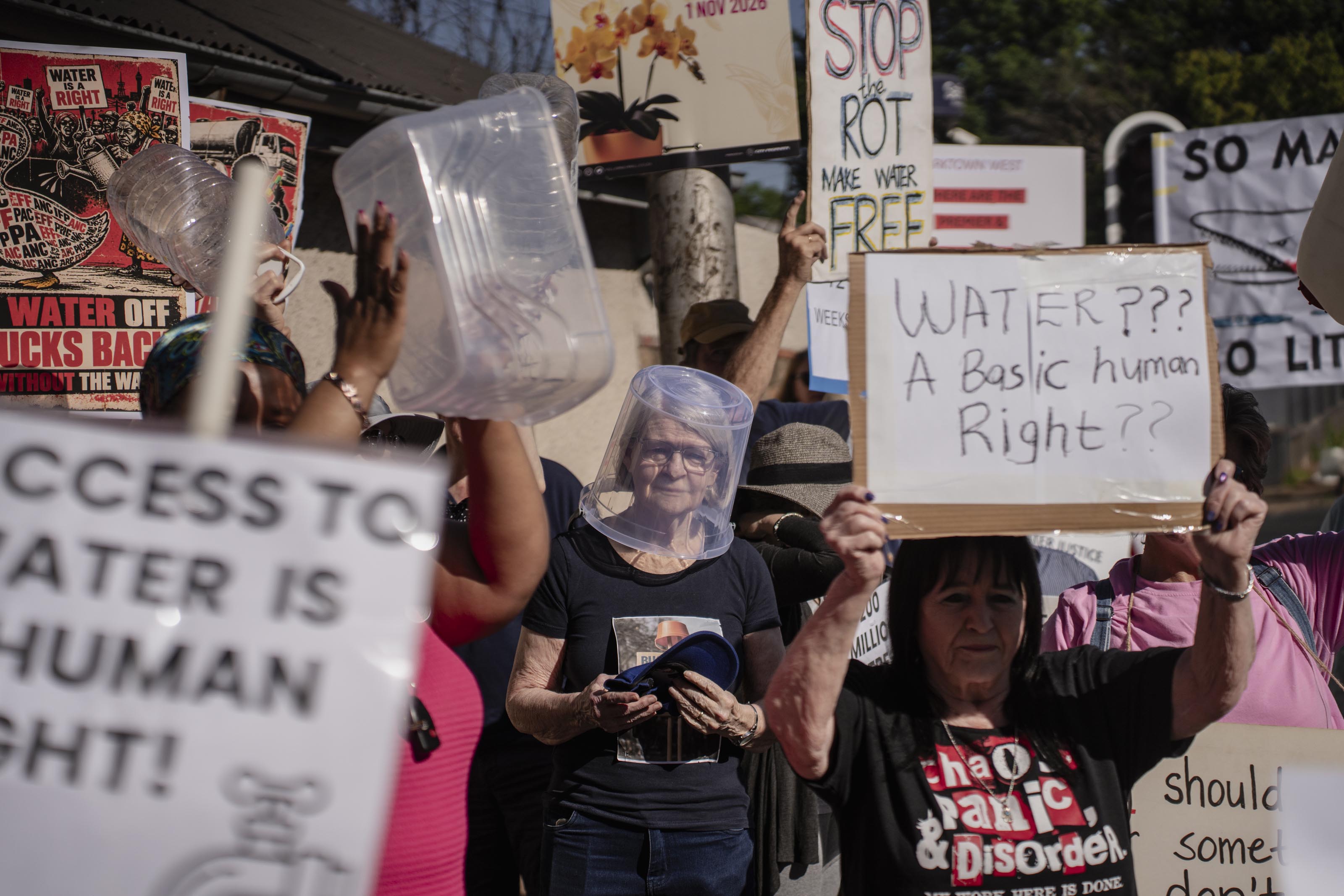
A woman wears a water bucket as a hat as residents from Parktown stage a demonstration for water on Friday morning.
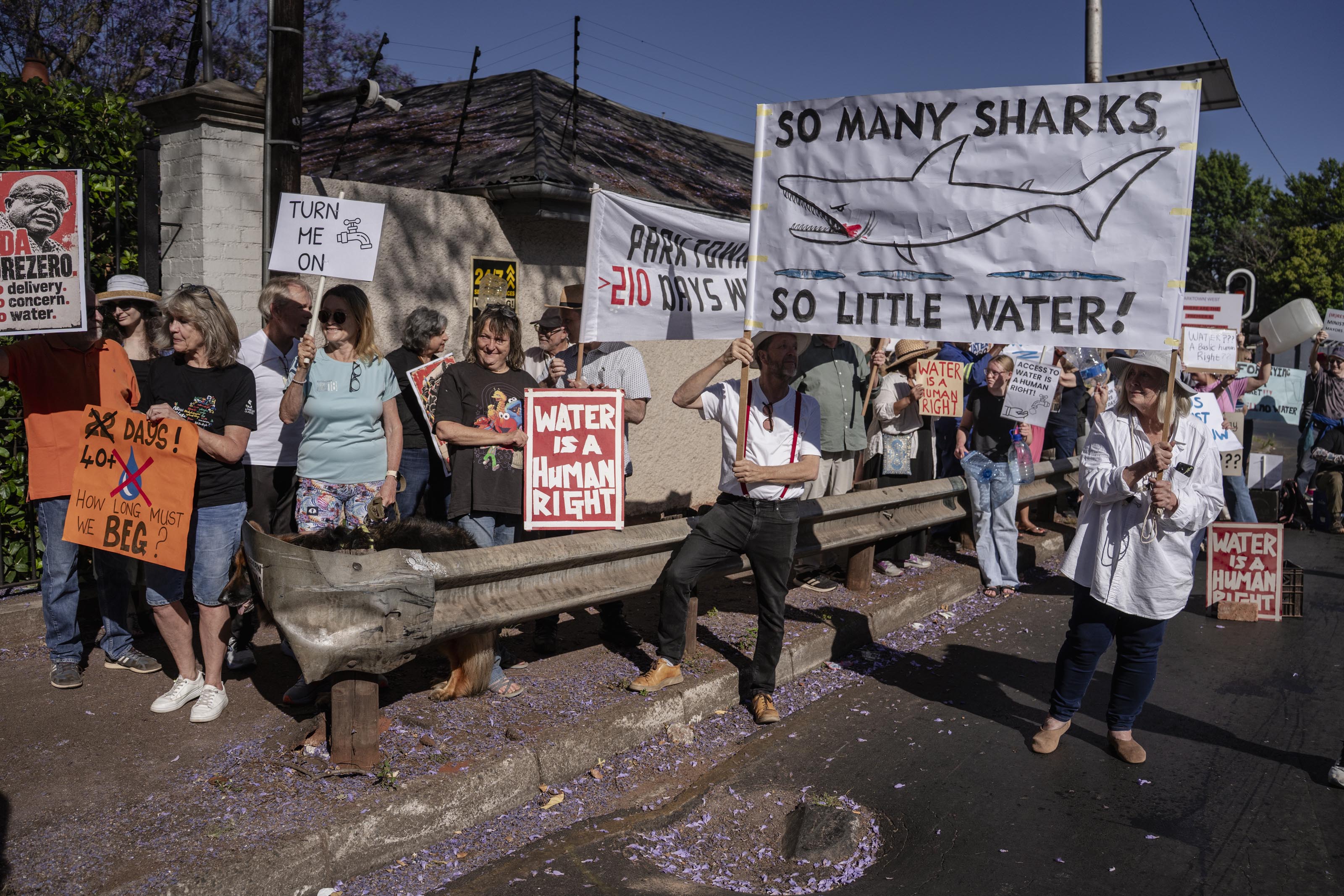
Residents of Parktown protested on Jan Smuts Avenue as water supply in their area remains unreliable.
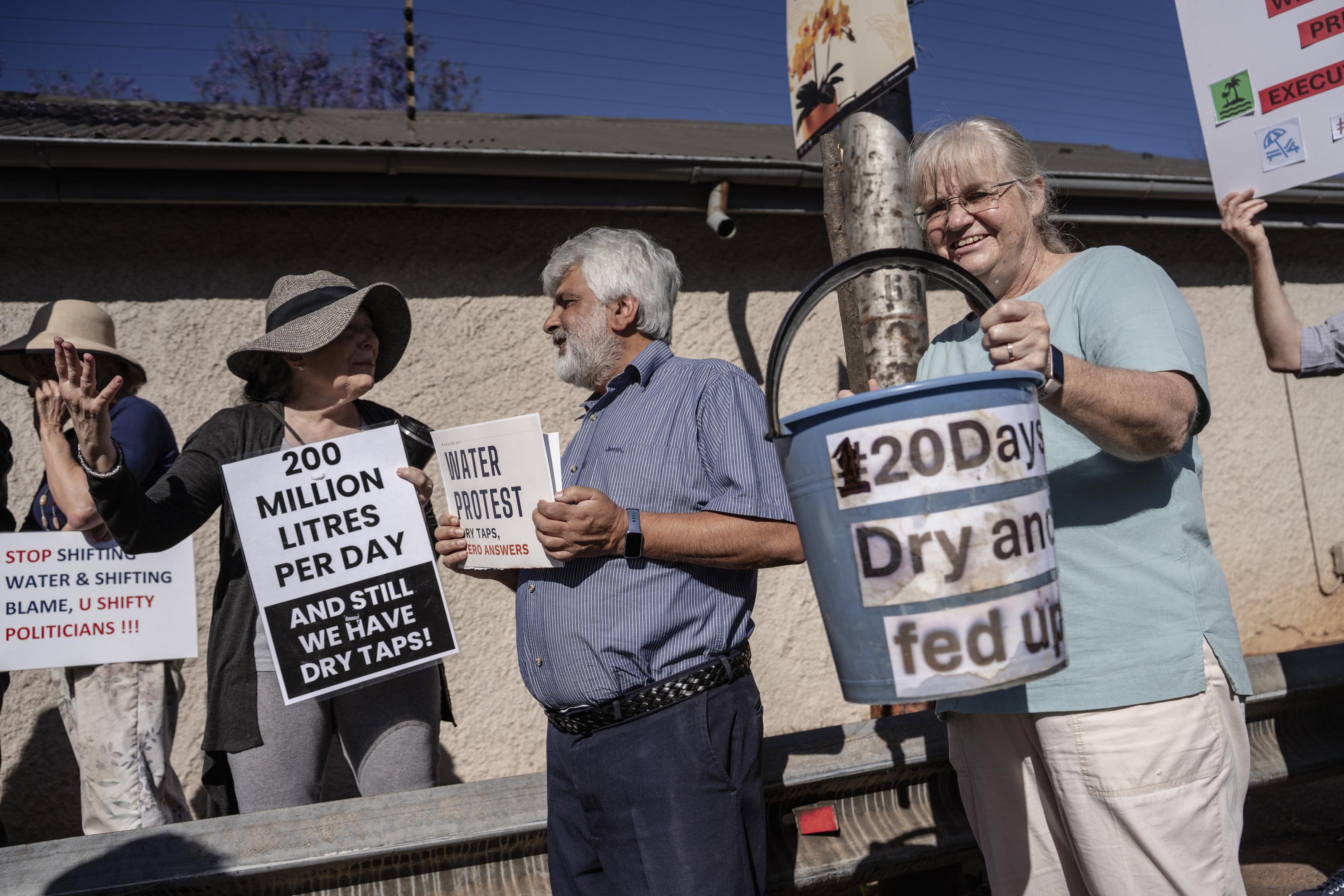
Many residents have been without a reliable water supply for weeks in the Parktown area.
Support independent journalism
Donate using Payfast

Don't miss out on the latest news
We respect your privacy, and promise we won't spam you.
© 2026 GroundUp. This article is published under the GroundUp Republication Licence Version 1.0. Email [email protected] to request permission to republish.