
Joburg’s old Drill Hall now an arts sanctuary
Once the site of the 1956 Treason Trial and later a prosthetic limb factory, the building has been brought to life with art installations and greenery
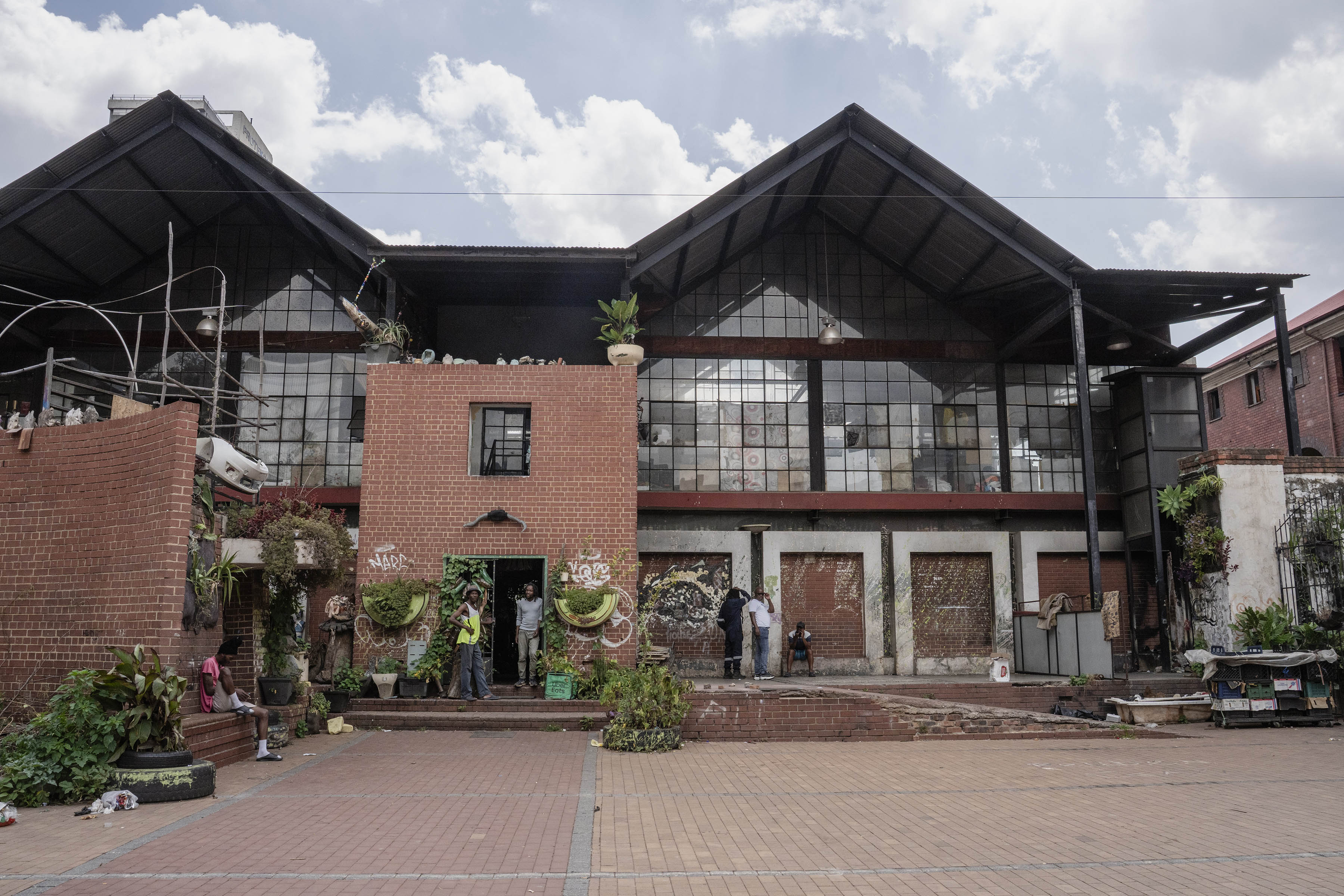
The abandoned Drill Hall building in Joburg’s city centre is being transformed by a group of artists. The site was used for the 1956 Treason Trial. It underwent a R10-million refurbishment before falling into ruin years later. Photos: Ihsaan Haffejee
Once the site used for the 1956 Treason Trial and later a prosthetic limb factory, the old Drill Hall in Joburg’s city centre has been brought to life with vibrant art installations and greenery.
Rows of fruit trees have been planted along the boundary wall facing the busy Noord Taxi rank in Hillbrow. Inside, pineapples grown out of repurposed plastic bottles and brightly coloured artworks made with recycled materials fill the corridors.
Paying homage to the building’s history, artists have placed a row of mannequin legs near the entrance with plants sprouting from them. The installation was inspired by watching women waiting for taxis, says artist and custodian of the building Kganyapa Kganyapa.
Kganyapa, with a group of artists from Exotically Divine Pulse, have been turning the abandoned heritage building into a green space.
“We view planting trees and the creations that follow as a form of activism. To protect and reclaim this space from being hijacked,” says Kganyapa.
“Lots of unfortunate events happened in this building so we are planting everywhere to give the walls a chance to breathe. This building is in need of healing,” he says.
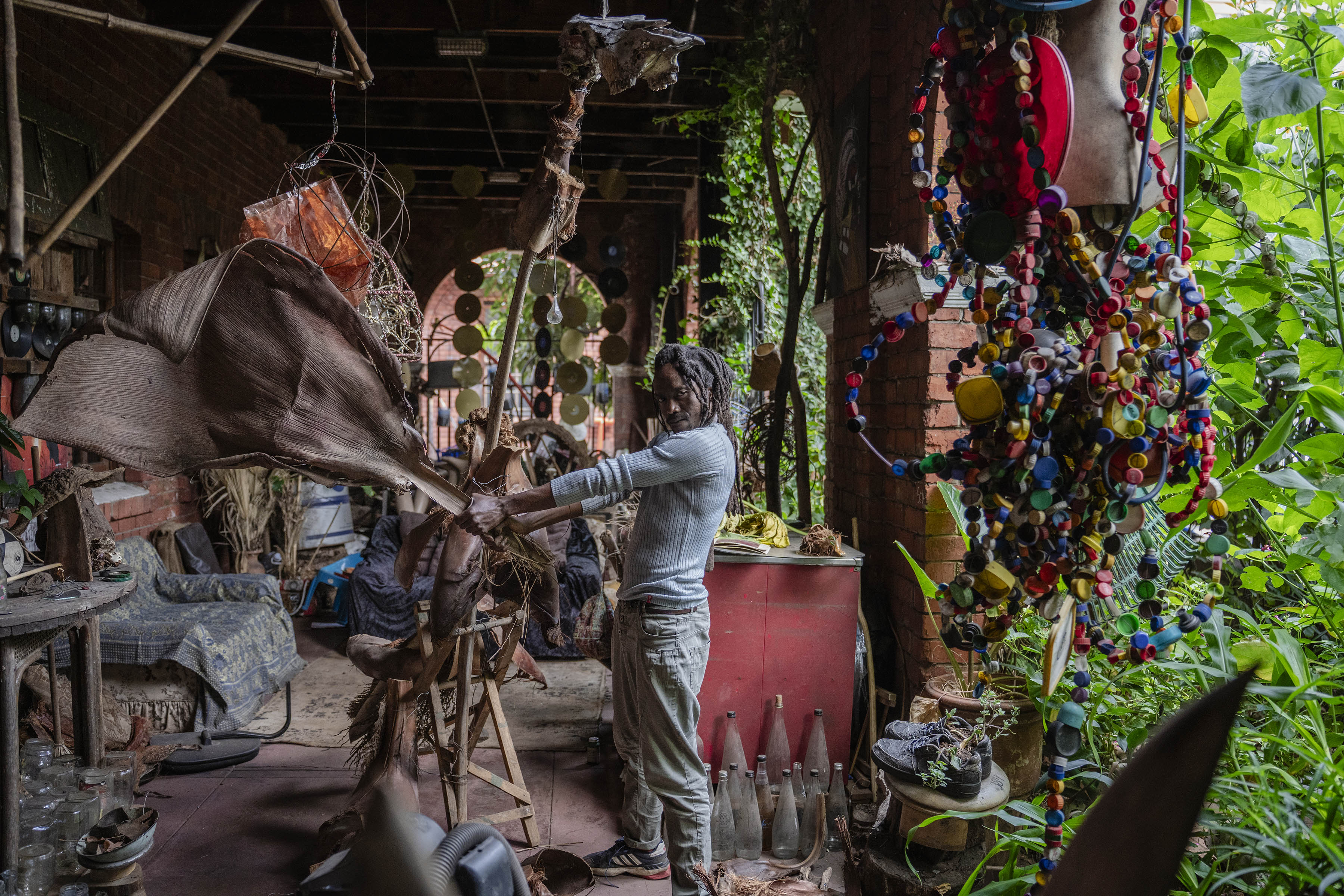
Artist Kganyapa Kganyapa from Exotically Divine Pulse with a huge, dried leaf which he will use for a new artwork.
Located on Twist Street, the Drill Hall was built on a former “non-whites” prison in 1904. It hosted the 1956 Treason Trial, when 156 people, including Nelson Mandela, were arrested and accused of treason. Later, Drill Hall became the site for a prosthetic limb factory.
The building eventually fell into disrepair. It was occupied by homeless people.
After two fatal fires, the Johannesburg Development Agency renovated the site in 2004 at a cost of R10-million to create an open, public, cultural space in the inner city.
Lucky Sindane, spokesperson for the Johannesburg Property Company, told GroundUp that the building is still owned by the department. He said no City department or entity expressed any interest in using the building, so it was not transferred to the municipality. There are currently no negotiations to have the property transferred.
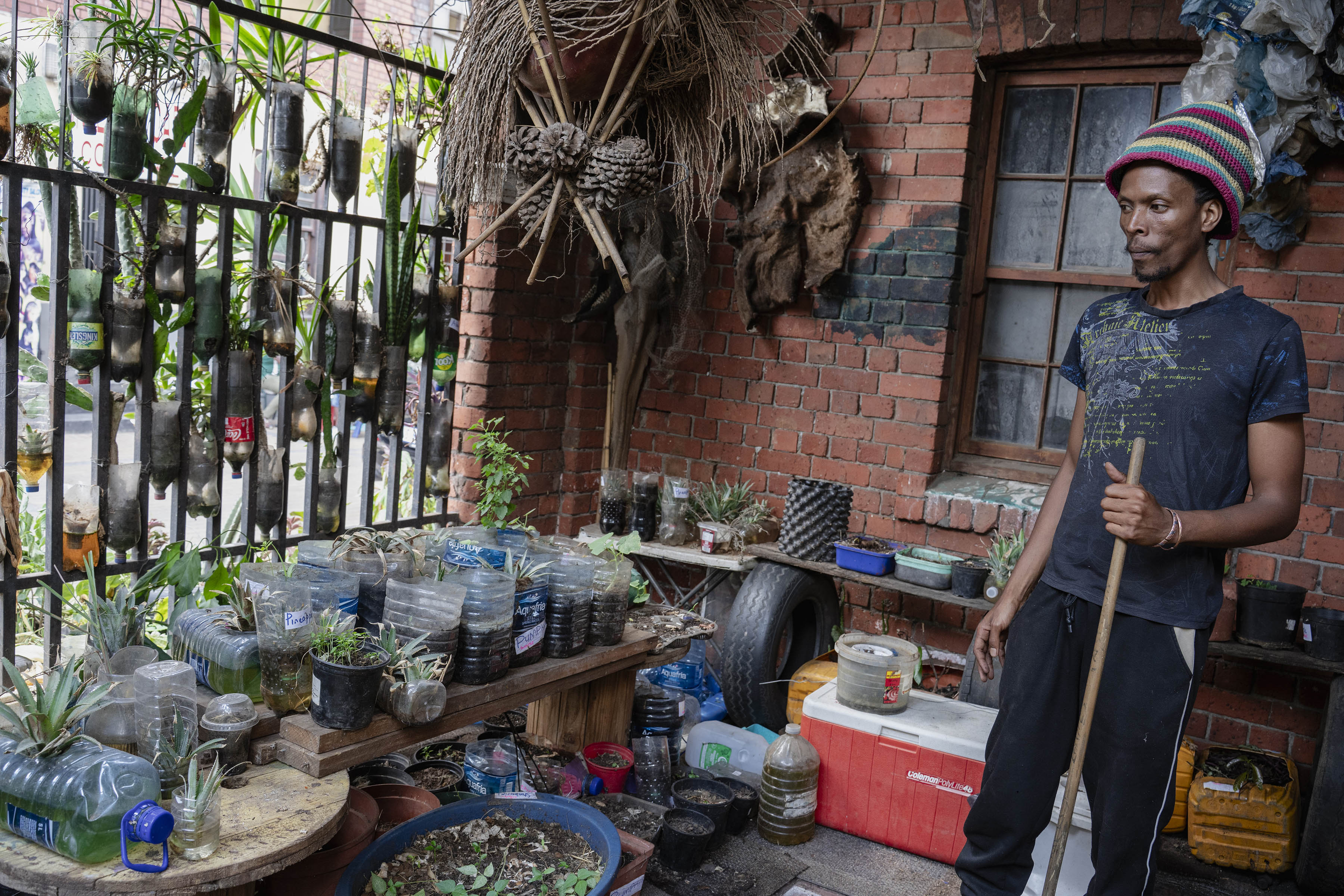
Artist Siyabonga Ntsizwane creates art using recycled waste and plant materials.
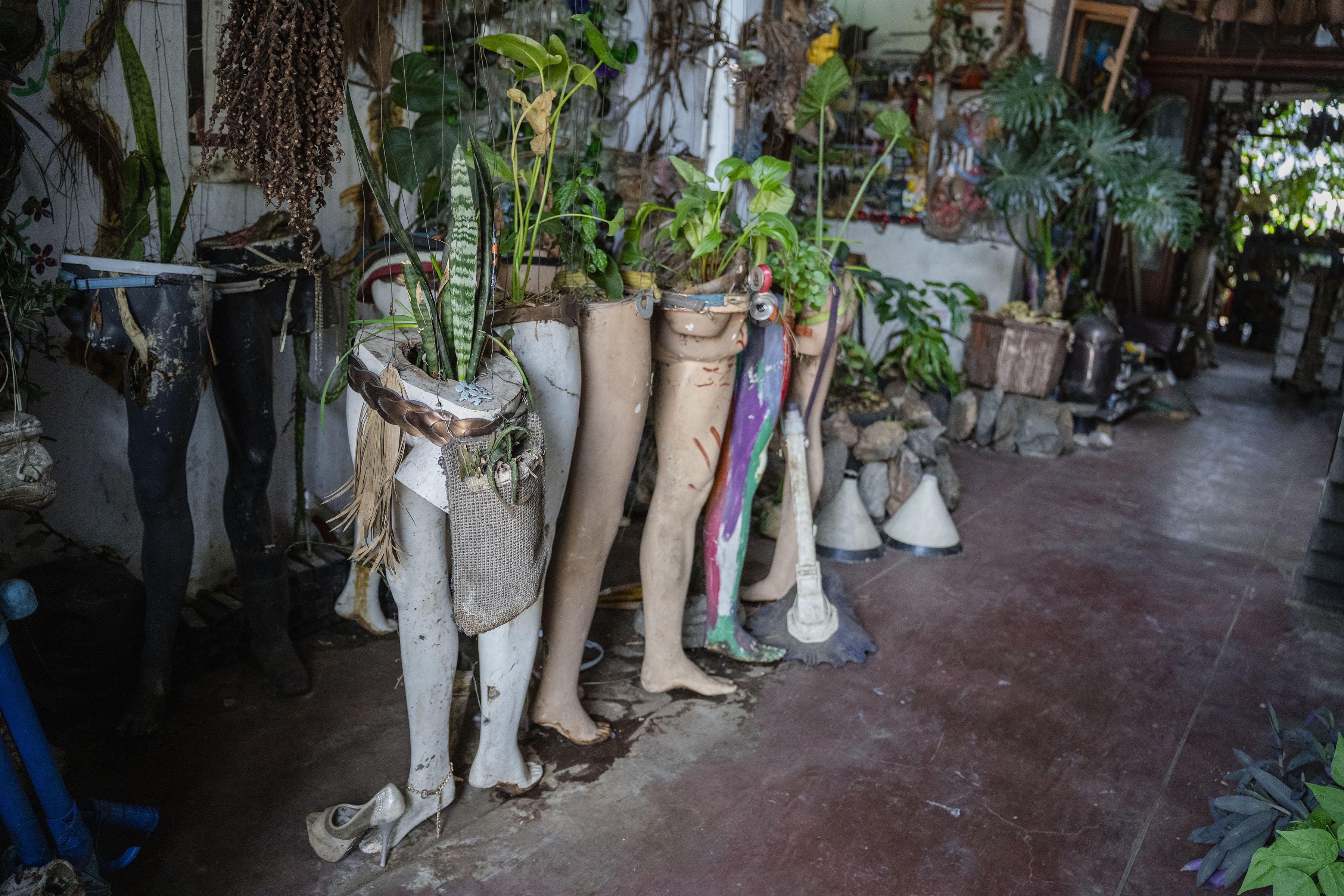
Plants sprout from the top of a row of mannequin legs as part of an art installation that greets visitors at the entrance to Drill Hall.
For some years, Keleketla!, an artists’ organisation, operated from Drill Hall. It ran a series of successful cultural programmes with artists and children from the inner city. However, they too were forced to leave the premises in 2015.
In 2025, marking ten years since leaving Drill Hall, Keleketla! stated that they left due to health and safety concerns.
Artists like Kganyapa and others at Exotically Divine Pulse say they began filling the space with greenery and their artwork.
Today, the building is occupied by a mix of artists, homeless people and waste recyclers.
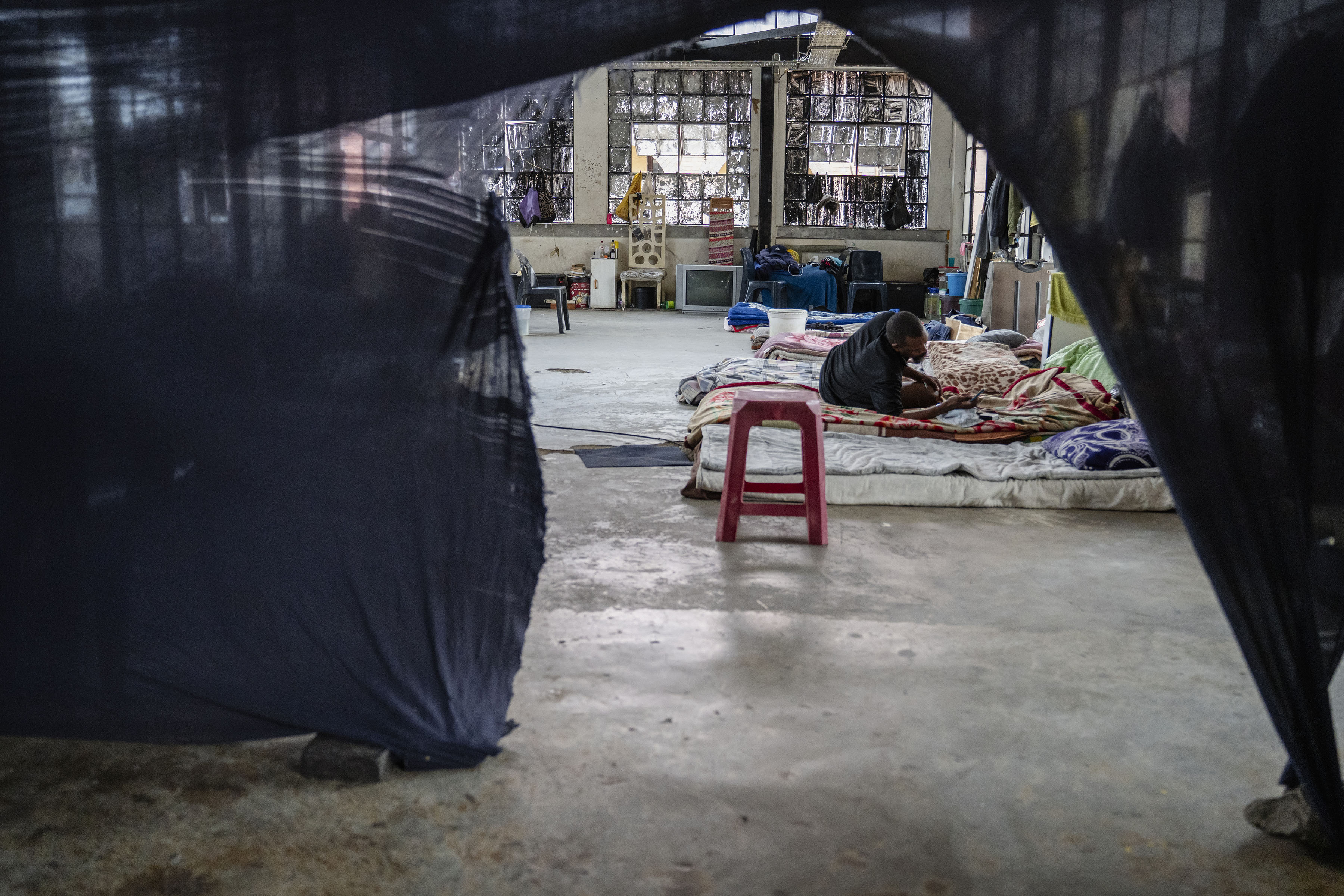
The first floor space at the Drill Hall has been occupied by a few homeless people.
“We try to respect everyone and ensure that the building remains what it was set out to be. But we also don’t want people sleeping on the street, so it’s a delicate balance trying to navigate the space and what it is used for,” says Kganyapa.
Artist David Gara creates all his art from recycled materials. His work, mainly model ships, were a highlight at the Brixton Light Festival in 2023. He sleeps on a small mattress on the floor of the balcony at the Drill Hall.
“It is difficult sometimes, especially in winter because it’s cold sleeping here. But as long as I am allowed to work and earn a living I can’t complain,” says Gara.
Ayanda Dludla, another artist from Exotically Divine Pulse, says, “There is a lot of potential in this space. We just need the people who are responsible for the building to come to the table and work with us to create something that can serve as a cultural hub in the inner city.”
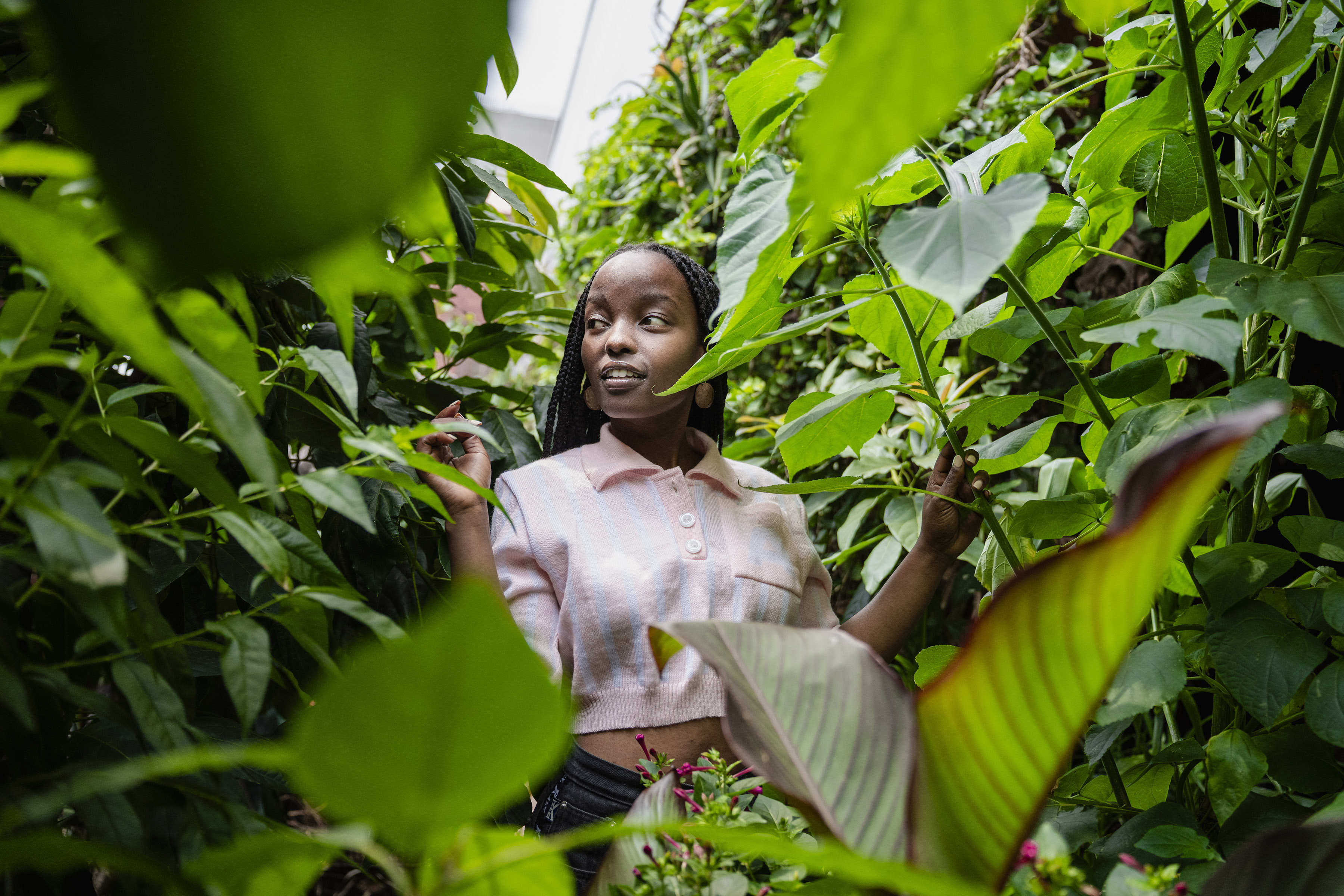
Ayanda Dludla, an artist from Exotically Divine Pulse, walks through a row of fruit trees planted alongside the wall facing the Noord Taxi rank.
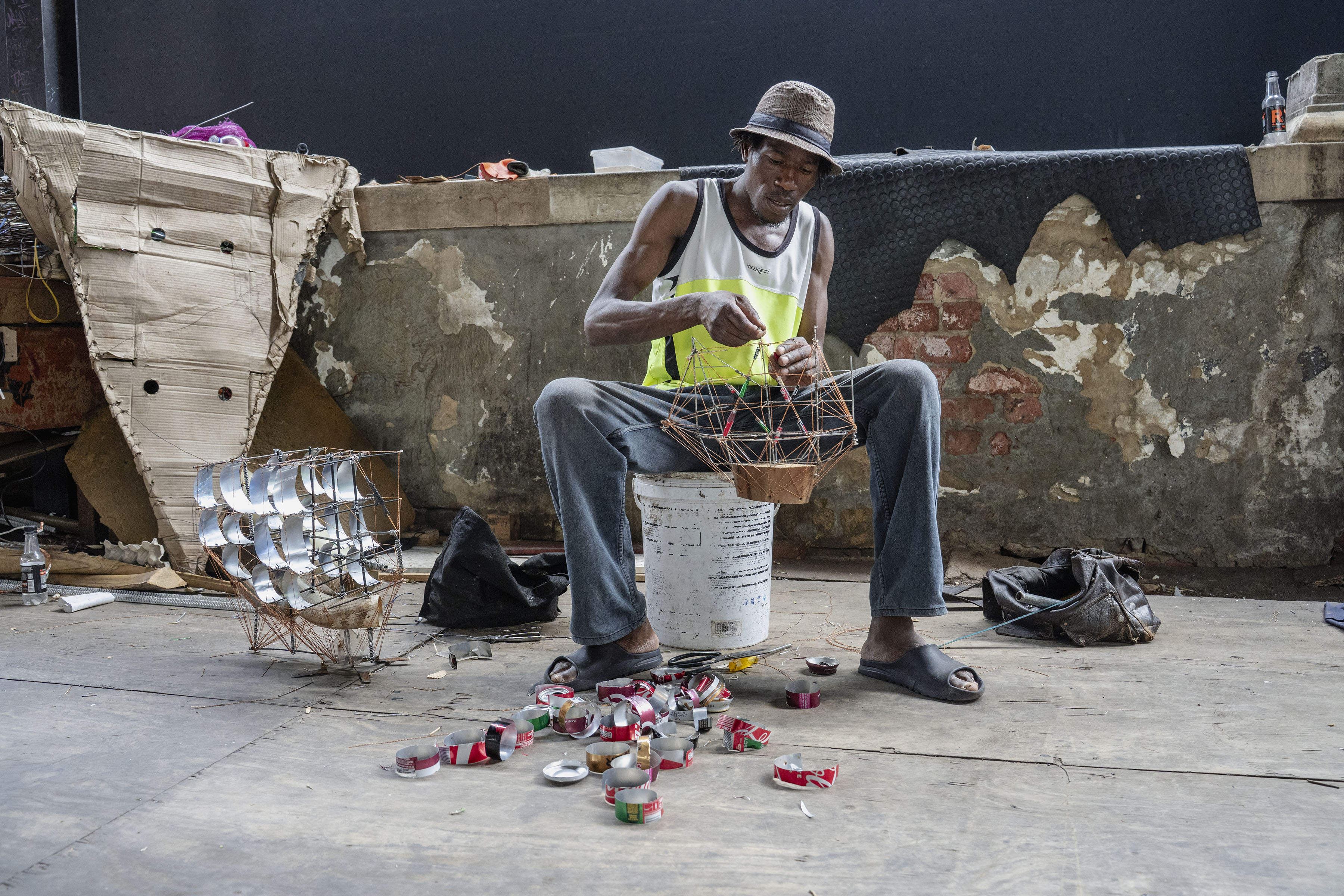
David Gara is one of the artists currently using the Drill Hall as his living and working space.
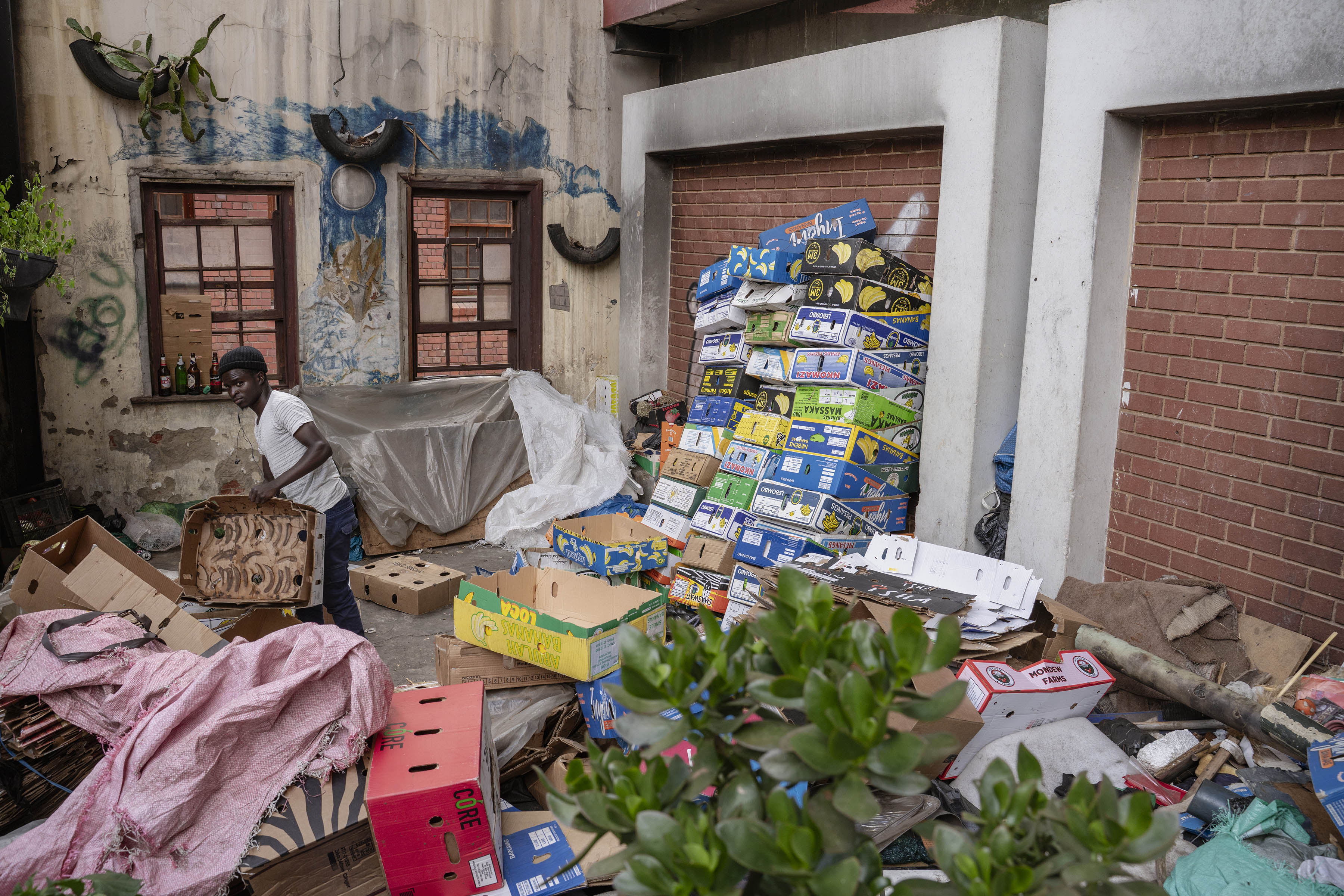
Some waste reclaimers also use the space to sort for recyclables.
Support independent journalism
Donate using Payfast

Don't miss out on the latest news
We respect your privacy, and promise we won't spam you.
Next: How rural communities can help fix their water supply
Previous: Johannesburg and Pretoria Masters’ offices still without permanent heads
© 2026 GroundUp. This article is licensed under a Creative Commons Attribution-NoDerivatives 4.0 International License.
You may republish this article, so long as you credit the authors and GroundUp, and do not change the text. Please include a link back to the original article.
We put an invisible pixel in the article so that we can count traffic to republishers. All analytics tools are solely on our servers. We do not give our logs to any third party. Logs are deleted after two weeks. We do not use any IP address identifying information except to count regional traffic. We are solely interested in counting hits, not tracking users. If you republish, please do not delete the invisible pixel.