
iSimangaliso World Heritage Site is in danger, scientists warn
Estuary could become freshwater wetland within 10 years
 Add GroundUp on Google
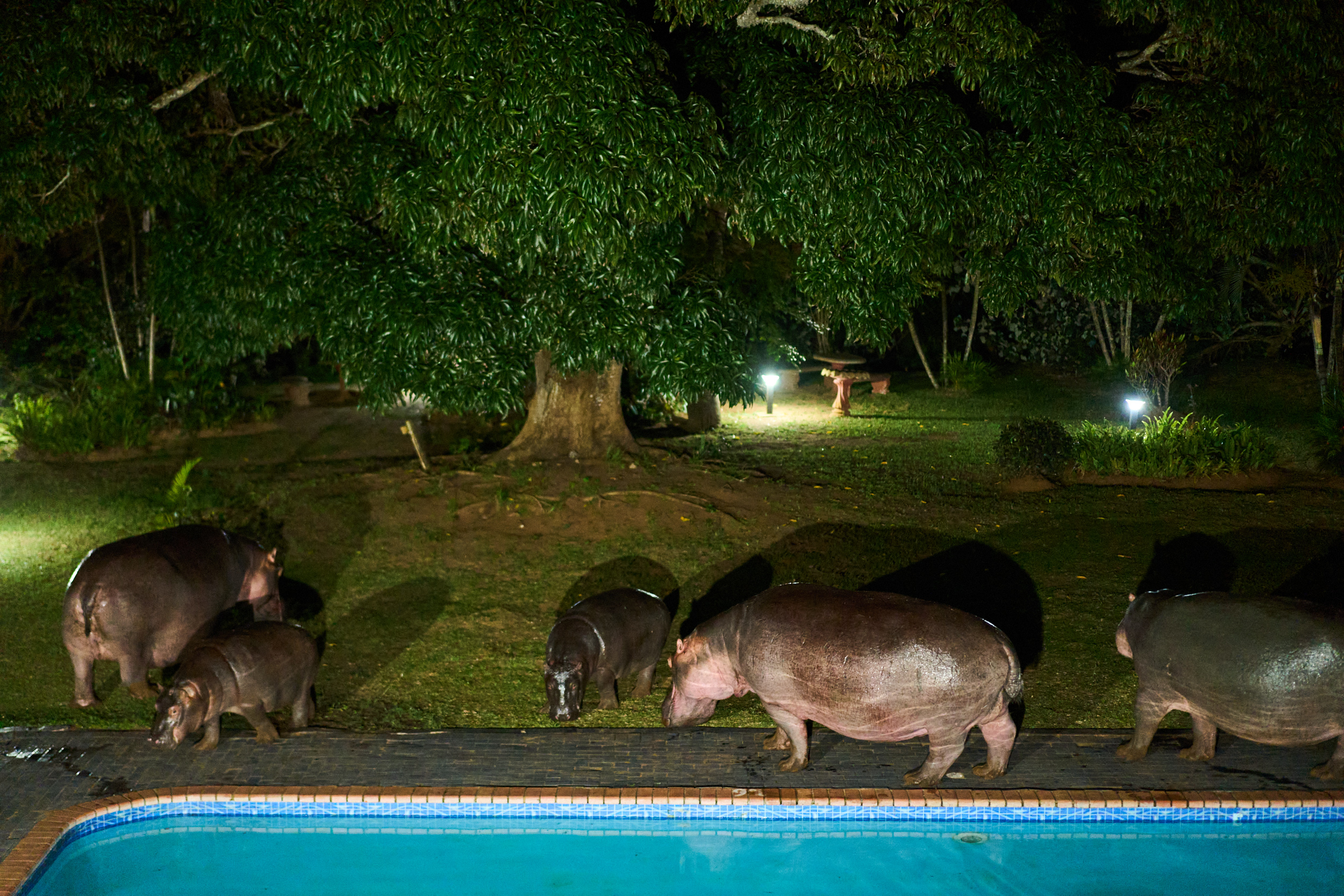
Hippos wander from the St Lucia wetlands into town. Archive photo: Barry Christianson
- The Lake St Lucia estuary in the iSimangaliso World Heritage Site is about to undergo an “ecosystem flip” into a freshwater wetland, a leading scientist has warned.
- Professor Alan Whitfield, Emeritus Chief Scientist at the National Research Foundation’s South African Institute for Aquatic Biodiversity, said on Wednesday this would mean marine fish would die off in the estuary.
- He said this could mean a much simpler ecosystem, which might not warrant the status of a world heritage site.
In the next decade, the Lake St Lucia estuary in the iSimangaliso World Heritage Site could become a freshwater wetland and the marine fish will die, scientists have warned.
The site, in KwaZulu-Natal, is about to undergo an “ecosystem flip”, Professor Alan Whitfield, emeritus chief scientist at the National Research Foundation’s South African Institute for Aquatic Biodiversity, warned at a seminar in Makhanda on Wednesday in recognition of Heritage Month.

Lake St Lucia is the largest estuarine lake system in Africa and makes up half of South Africa’s estuarine habitat. The area was declared a World Heritage Site by UNESCO in 1999 for its exceptional biodiversity and linking of unique ecosystems, including terrestrial, coastal and marine.
Whitfield said human actions had accelerated the natural transition of the estuary system, which should take place over thousands of years.
In 2012, the uMfolozi River, the lake’s largest single source of water, was fully reconnected to the estuary.
The river had been separated from the estuary since 1952. This was to ensure that too much silt did not enter the mouth of the lake and to protect neighbouring sugar cane farms from being flooded when the river mouth closed up.
But in the early 2000s, the lake almost dried up, which prompted the decision to reconnect the uMfolozi River mouth to its natural state.
“We thought at that stage, no, we’re on the right track,” Whitfield said. “Little did we know.”
However, since the river mouth has been reconnected, Whitfield said, silt-laden uMfolozi water has flowed up the St Lucia Narrows towards the lake, leading to deposits of silt and clay in the estuary and threatening the connection between the lake and the sea.
Whitfield, Dr Ricky Taylor, Professor Janine Adams and Caroline Fox have all raised their concerns in articles in the African Journal of Aquatic Science and the Water Wheel magazine, proposing new strategies to slow the changes.
Historically, the estuary has mixed freshwater from nearby rivers, including the uMfolozi and uMkhuze, with salt water from the Indian Ocean. This ecosystem supports Nile crocodiles, hippos, more than 500 bird species and hundreds of fish species.
But decreasing salinity will put pressure on the area’s marine fish species, Whitfield said. He predicted that fish would die off as levels dropped and marine species could not return to the sea to breed.
“All the marine fish are going to die, and that’s thousands and thousands — probably hundreds of thousands of fish,” Whitfield said.
This would lead to a simpler system of fish species, more dominated by freshwater fish. “You’re ending up with a very simple lack of diversity system,” Whitfield said. “Which, in my opinion, doesn’t warrant the status of a World Heritage Site.”
In contrast to the current, mostly “hands-off” management strategy, Whitfield said, new strategies were required to slow the transition to a freshwater system and restore the process to a more natural timeline.
However, Whitfield’s suggestions about the state of the estuarine system have not been supported by the iSimangaliso Wetland Park Authority.
In June, a spokesperson told the Daily Maverick that the authority “does not share the view that the St Lucia Estuary is approaching an imminent ecological tipping point.”
The iSimangaliso Wetland Park Authority did not respond to GroundUp’s request for comment by the time of publication.
Support independent journalism
Donate using Payfast

Don't miss out on the latest news
We respect your privacy, and promise we won't spam you.
Next: State land must be used for housing, activists say
Previous: Peach farmers offered cash to end Tulbagh cannery contracts
© 2026 GroundUp. This article is published under the GroundUp Republication Licence Version 1.0. Email [email protected] to request permission to republish.