
Project brings hope to rural early learning centres
In uMzinyathi District ECD practitioners and non-profits are collaborating with encouraging results
 Add GroundUp on Google
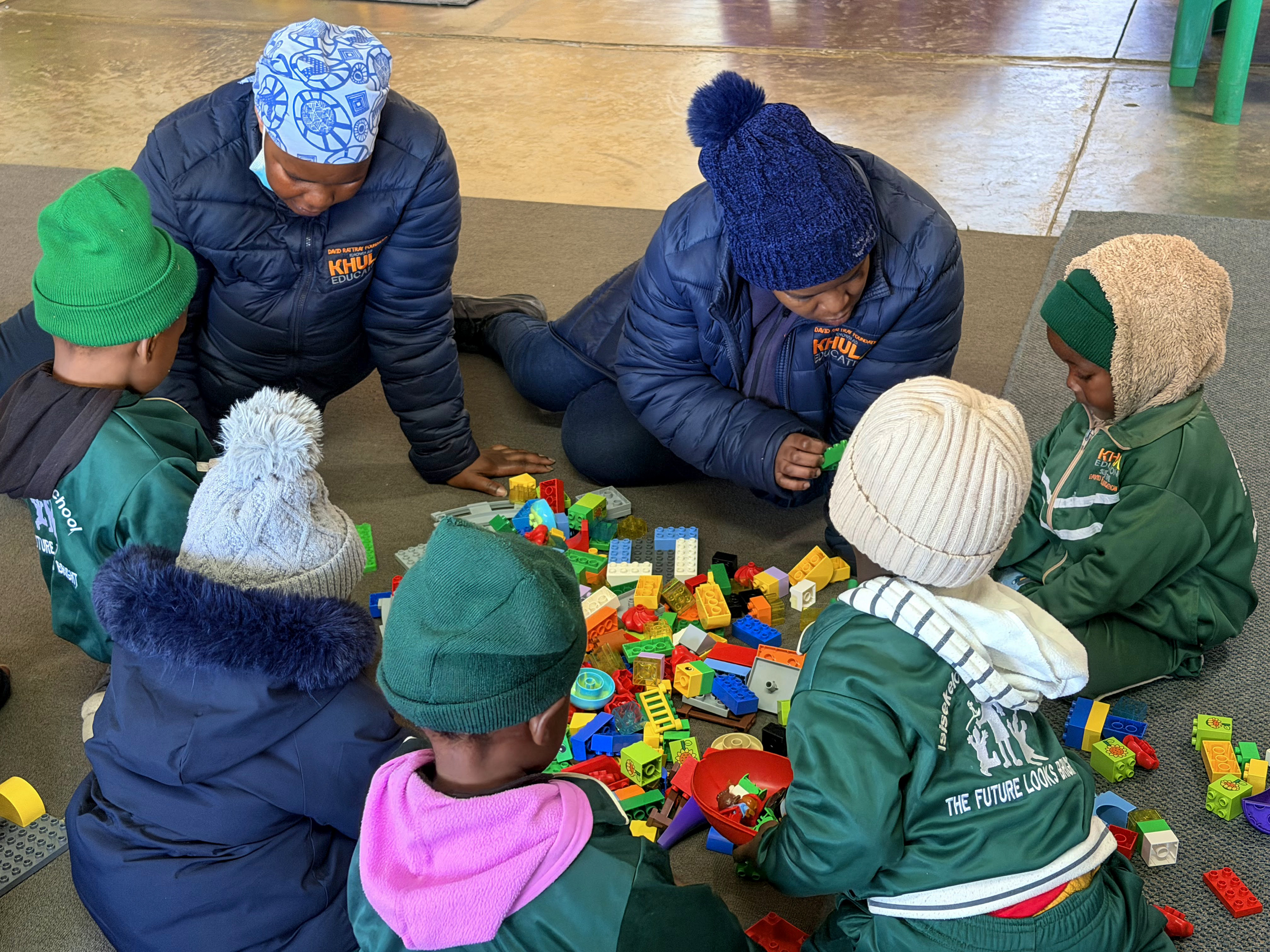
Isisekelo preschool in Rorke’s Drift, KwaZulu-Nata,l is one of four preschools in the uMzinyathi District where Khula Education provides learning spaces for local children. Photo: Khula Education
- According to the Department of Education, over 1.3 million children aged three to five are not enrolled in early learning.
- In the rural uMzinyathi District in KwaZulu-Natal, early childhood development (ECD) practitioners and non-profits are working to change that.
- Non-profit Khula Education’s work with rural schools is showing encouraging results.
For almost five years, MaNtombi Zwane has run God’s Grace Daycare in Amoibe, near Rorke’s Drift, without state funding. She cares for 27 children aged six months to four years, charging R100 per month — an amount she knows cannot cover quality care.
During a morning visit to the centre in mid-August, fewer than a quarter of the children showed up because of the cold, wet weather, with temperatures dropping to three degrees Celsius.
Zwane beams with pride as she points to the colourful posters around the classroom. “We have come really far; I didn’t have these before, and we know children learn through looking and playing every day,” Zwane says.
Zwane lacked a structured learning plan until partnering with Khula Education, a non-profit organisation supporting rural schools.
“Because I am self-taught, the Khula early childhood development (ECD) champion has helped me create a learning plan. We now do play-to-learn and have weekly themes, so she brings me the right charts and toys for the theme,” says Zwane.

“As they grow, they learn basic English and Zulu vocabulary, which makes it easier for them when they get to preschool and then primary school.”
God’s Grace Daycare is one of 18 community centres that Khula supports alongside the four preschools it directly runs across uMzinyathi.
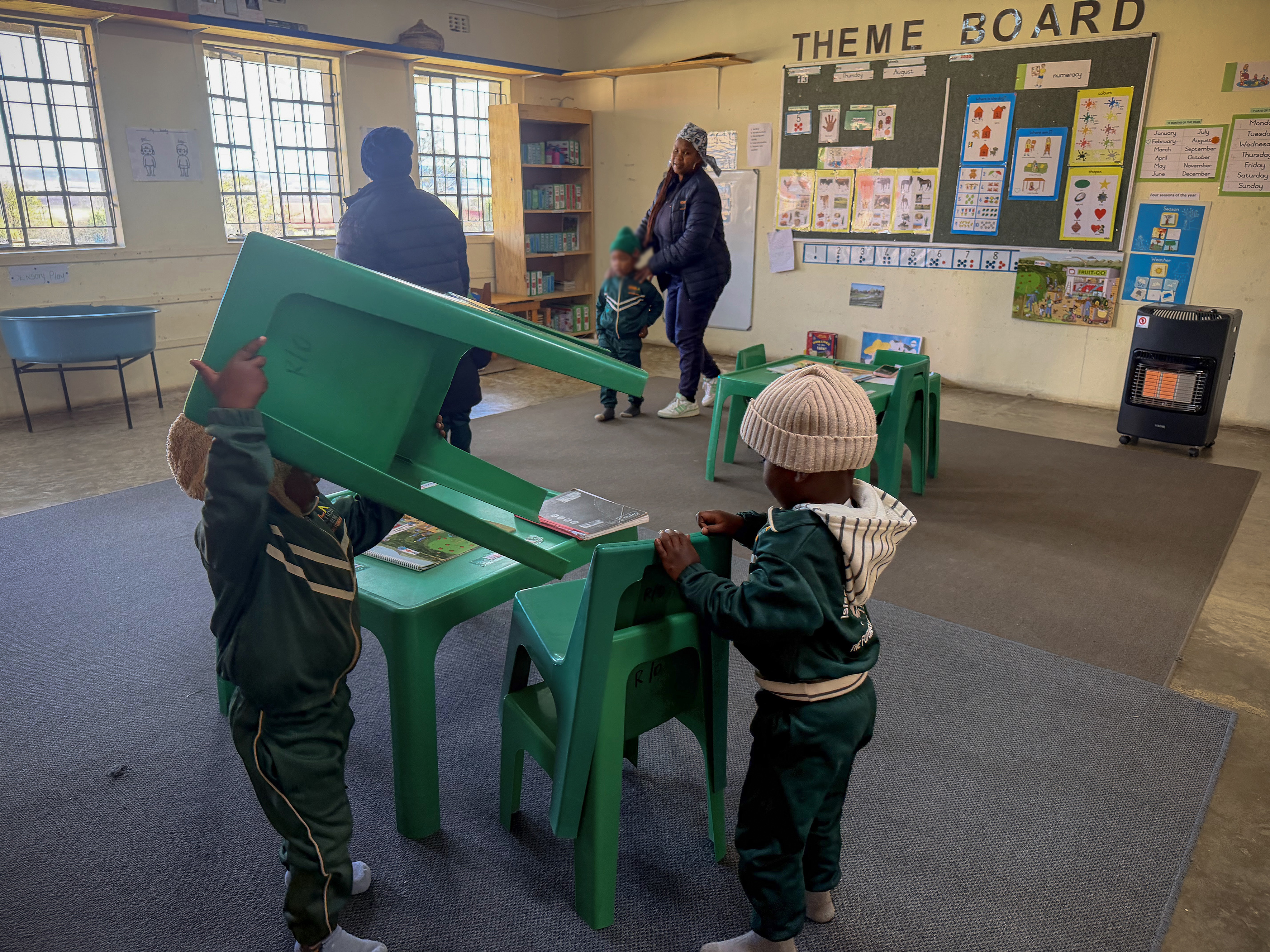
Inside the Isisekelo preschool in Rorke’s Drift. Photos: Khula Education
Still, Zwane faces daily socio-economic hurdles. “Sometimes parents don’t pay, but they bring the children, and I don’t want to turn the children away. That means I have to make ends meet, and I end up taking from what little I would pay myself to buy things for the daycare.”
In 2022, Zwane took over the daycare, which had opened more than a decade ago. It is in the same yard as one of Khula’s preschools and Amoibe Primary.
Zwane wants to officially register with help from Amoibe’s principal, but bureaucratic red tape has delayed access to Department of Social Development or Basic Education funding amid the recent restructuring of ECD support initiatives.
It’s a daily struggle to ensure the children are fed. “Children sometimes come with no lunchbox, and I go and dish up for them at the nearby primary school,” says Zwane.
Zwane’s case is a snapshot of national challenges.
According to the latest Thrive by Five Index, which assesses the developmental status of four-year-old children enrolled in early learning programmes across the country, only 42% to 45% of enrolled children are developmentally on track in early literacy and numeracy. The remaining 55% to 58% cannot comfortably execute standard learning tasks.
For children outside early learning programmes, that figure drops to 18%, and according to the Department of Education, over 1.3-million children aged three to five are not enrolled in early learning.
In a sub-study, the index looked at non-enrolled children, and it found that less than one in five could do the basic tasks expected of a child their age (50–59 months). “A staggering 55% are falling far behind,” the index found.
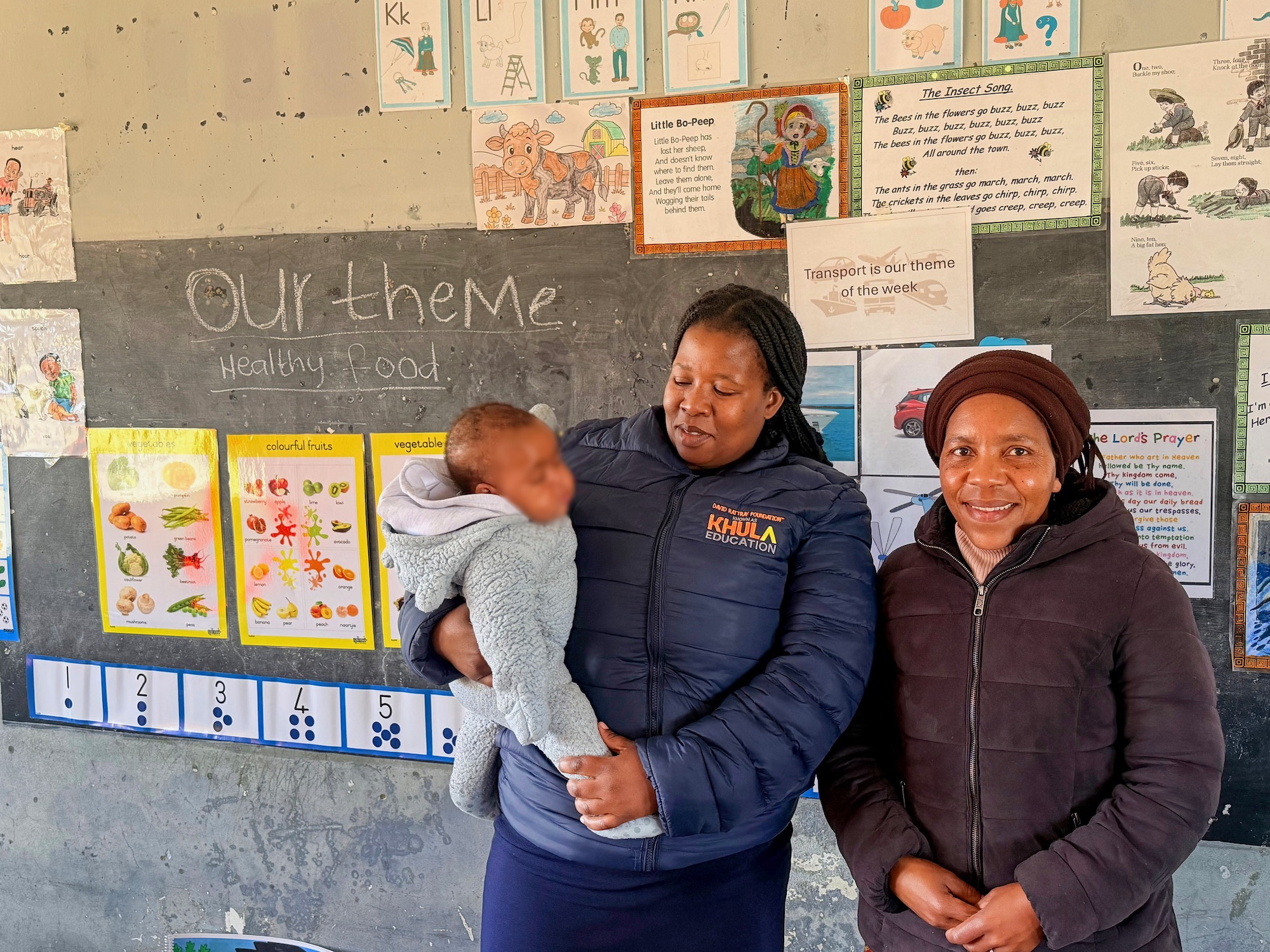
Founder of God’s Grace Daycare, MaNtombi Zwane (right), with Khula ECD champion Nozipho Myeza (left) in Rorke’s Drift. (The child’s face has been blurred to protect their identity). Photo: Naledi Sikhakhane
Debbie Heustice, director of Khula Education, says expanding support to independent daycares aims to close the gap between well-resourced and under-resourced communities. Khula now serves 927 children and provides 132,000 hot meals annually, along with additional nutritional support extended to families.
EduDesk visited one of the Khula-run ECD centres, Isisekelo preschool in Rorke’s Drift. The difference between this centre and community daycare centres is evident. There are sufficient classrooms to separate children by age, the teachers are trained educators, and the classrooms are colourful with toys, books, and seating areas for the children.
The approach has clear results: Khula’s 2025 impact report notes first-year preschool developmental readiness jumped from 18% to 90% by the fourth term. Similarly, second-year preschoolers (grade RR) improved from 72% to 95%, showing strong consolidation ahead of formal schooling. Khula’s preschool graduates remain in the top 20% of their grade throughout primary and secondary school.
The organisation is in a special position to track students’ progress due to their work spanning over 230 government primary and high schools in the uMzinyathi District through the Educator Development Programme.
Educators in the foundation phase specifically receive quarterly, grade and subject specific workshops to strengthen teaching, such as helping children decode words and sentences, and keeping their attention in classes of up to 90 learners.
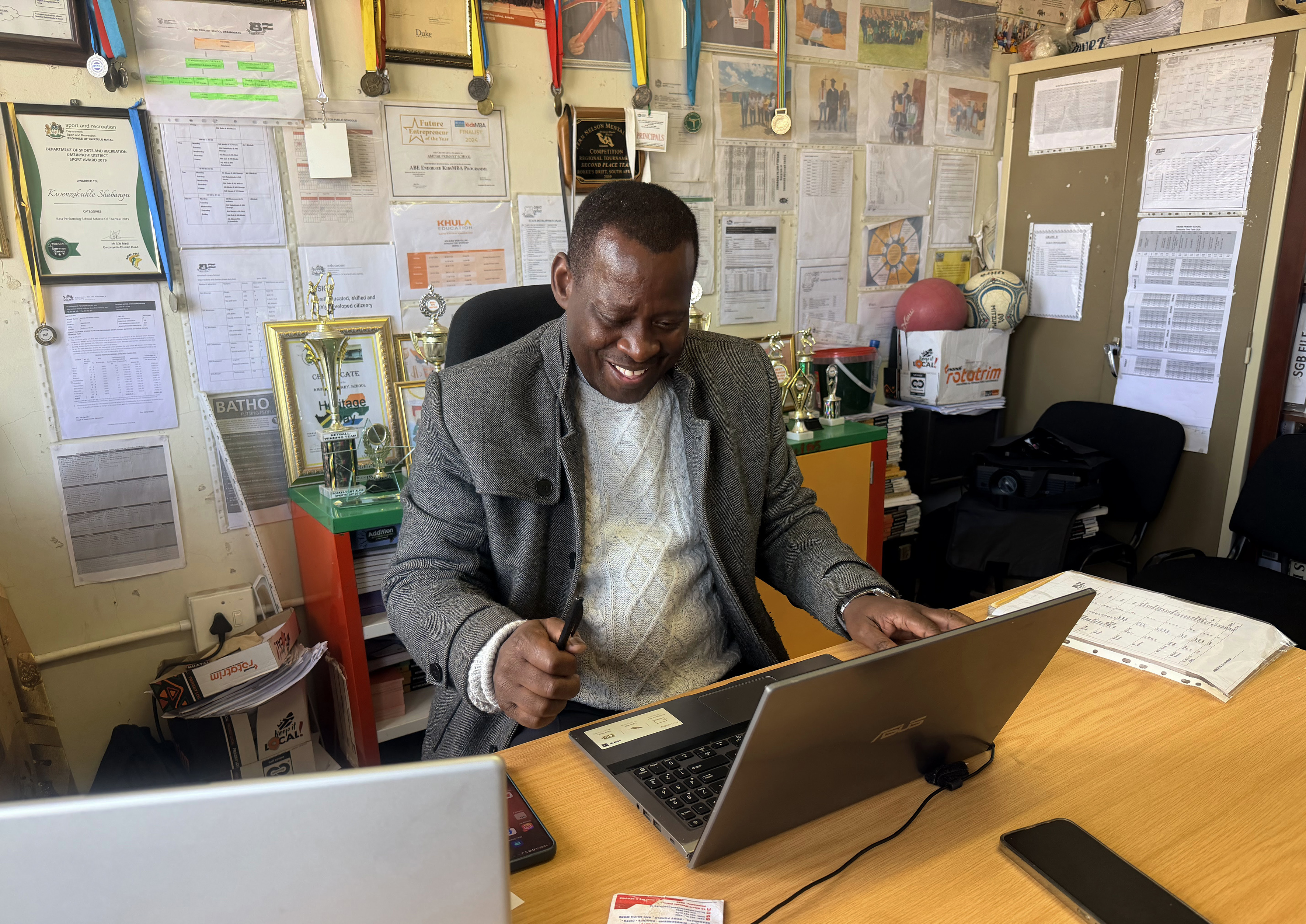
Amoibe Primary principal Derrick Khoza. Photo: Naledi Sikhakhane
Why an early start matters
Early intervention is critical in a country where 70% of learners in grades 1 to 3 cannot read for meaning in their home language.
To tackle this, the Department of Basic Education aims to reach seven million children through structured early learning programmes by 2030 as part of the Bana Pele (“children first”) initiative. Basic Education Minister Siviwe Gwarube has prioritised ECD, acknowledging a significant amount of work still left to be done.
Impact at primary school
Recognising the importance of early learning, Amoibe Primary principal Derrick Khoza says there is a “big” difference between children attending preschools and those who come to grade 1 straight from home – with ECD children showing significantly stronger foundation literacy skills.
Amoibe enrols children from Khula preschools and Khula-supported daycares. It also receives educator development and classroom support from the NPO.
Khoza states that teaching the basics early helps learners be school-ready and confident when they get to grade 1, especially for language and maths.
In terms of the current medium of instruction policy, children are taught in Zulu from grades R to 3, before switching to English, though mother-tongue-based bilingual education is now being extended to grade 4. Khoza says the sudden shift in language of instruction was a “big issue”, so the school requested English be introduced earlier, even against policy, to help learners adapt.
The challenge of the language transition mirrors broader academic struggles, with mathematics standing out as another weak foundation in the early years, creating lasting difficulties.
The latest international Trends in International Mathematics and Science Study (TIMSS) results show that only about 36% to 37% of South African grade 5 learners reached the 91% international benchmark median.
“Mathematics is problematic due to weak early foundations, making later learning harder. The school aims to teach each subject properly from grade R to 9 to build strong foundations,” says Khoza.
Notably, students supported by Khula Education are 50% more likely to take core mathematics to matric than the district average, he notes.
Heustice echoes Khoza’s sentiments, saying, “Many children struggle with mathematics and drop to Maths Lit simply because they do not have teachers who can support that foundational learning. So we felt as Khula we could make a particular difference.”
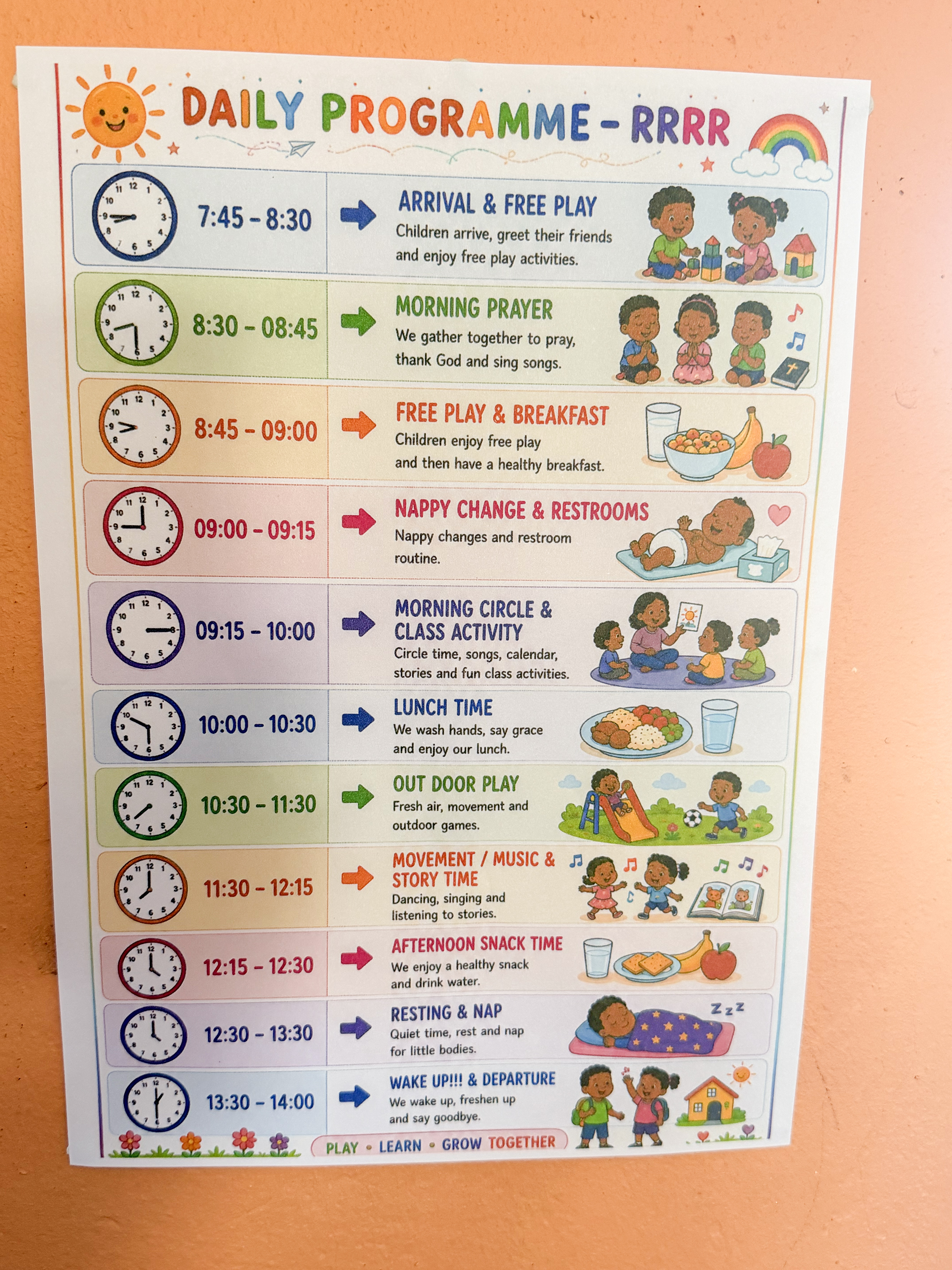
Khula Education curriculum structure posted at Amoibe. Photo: Khula Education

Support independent journalism
Donate using Payfast

Don't miss out on the latest news
We respect your privacy, and promise we won't spam you.
© 2026 GroundUp. This article is published under the GroundUp Republication Licence Version 1.0. Email [email protected] to request permission to republish.