
Lottery whistleblowers denied financial compensation
After year-long reparations process, former NLC staff offered psychological support, educational sponsorships and grocery vouchers
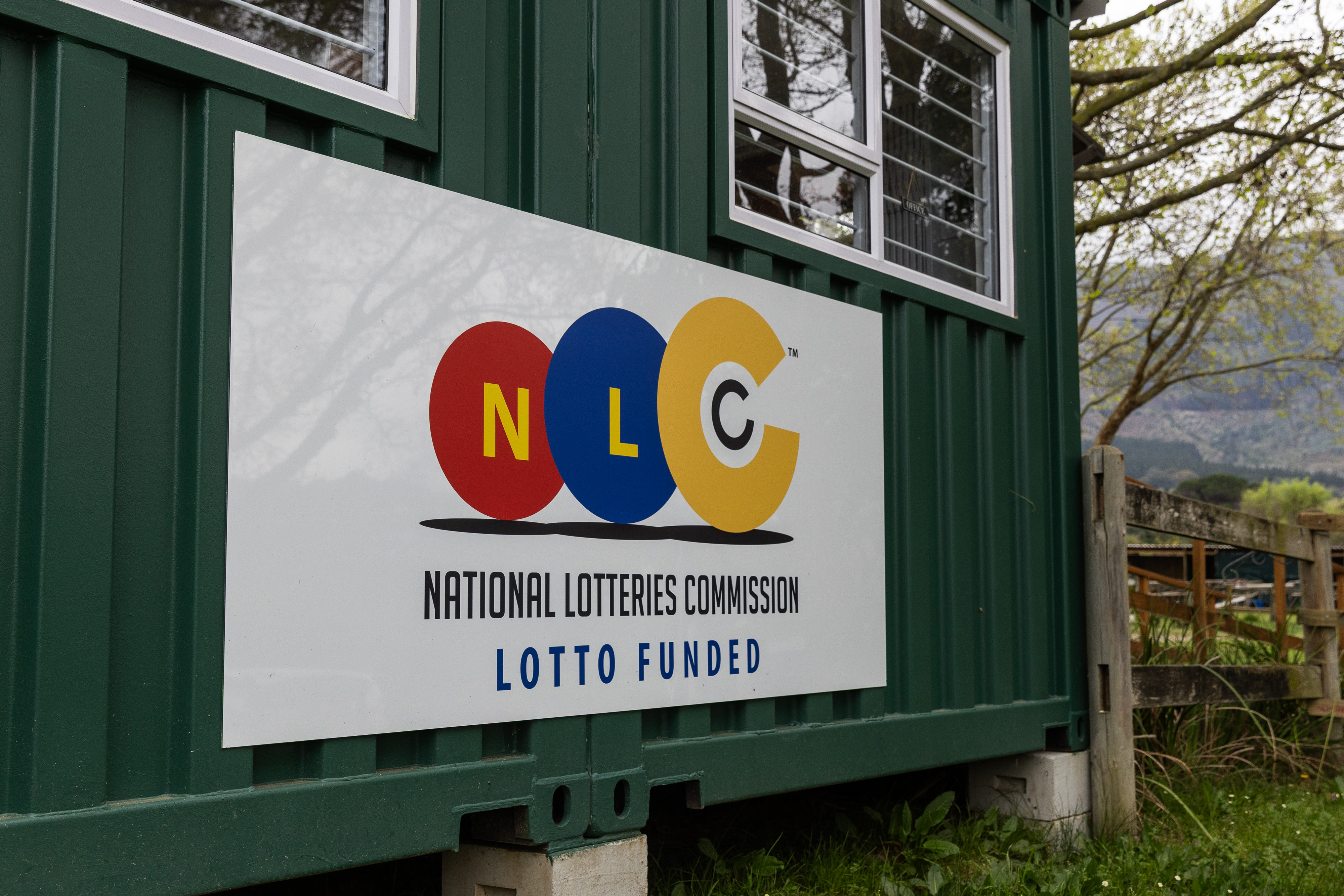
Former National Lotteries Commission staff who blew the whistle on corruption have been denied financial compensation after a year-long reparations process. Photo: Ashraf Hendricks
- Former National Lotteries Commission staff who blew the whistle on corruption have been denied financial compensation after a year-long reparations process.
- Non-staff whistleblowers were only informed at the end of the process that they are ineligible for reparations.
- NLC Commissioner Jodi Scholtz says no funds were allocated for compensation as this is prohibited by the Public Finance Management Act and Treasury rules.
- She said any formal apology could be construed as admission of guilt with far-reaching legal consequences.
Former National Lotteries Commission staff members whose lives were upended after they blew the whistle on corruption in the organisation have been denied financial compensation.
After participating in a year-long reparations process, they were instead offered a combination of psychological support sessions, “wellness” services, educational sponsorships and, in some cases, grocery vouchers.
Whistleblowers who were not staff members, some of whom faced death threats, arson attacks and expensive litigation, were only informed at the end of the year-long process what criteria the NLC board had approved for reparations, and that they did not meet them. They learned this last week, during a brief virtual meeting with a lawyer representing the NLC.
This was later confirmed through emailed rejection letters signed by NLC board chairman Barney Pityana.
Redress for non-staff whistleblowers will be “administered through the NLC’s ordinary operational and funding mechanisms,” NLC Commissioner Jodi Scholtz said. In effect, they were invited to apply for funding for projects that had collapsed because of their whistleblowing.
A total of 18 people (comprising current and former staff and non-staff whistleblowers) participated in the process, and one settlement has been concluded, according to Scholtz.
She said no funds were allocated for compensation, whether directly or indirectly as the Public Finance Management Act (PFMA) and National Treasury rules prohibit unauthorised expenditure, the creation of contingent or unfunded liabilities, and “financial commitments not grounded in statute, contract, or court order”.
Asked why it had taken a year before non-staff whistleblowers were informed that they were ineligible for reparation, Scholtz said, “The timeframe reflects the complexity of designing a first-of-its-kind reparative process within the public sector.”
“Premature determinations would have risked procedural unfairness and legal vulnerability.”
The NLC, she said, was required to ensure constitutional alignment, PFMA compliance, independent verification of claims, and the development of lawful parallel mechanisms to address community harm.
Cold charity
Several former NLC staff and non-staff whistleblowers have now joined forces to fight the NLC’s decisions.
“We reject with the contempt it deserves the degrading offer communicated to each of us by attorneys appointed by the NLC,” they said in a statement issued on their behalf by John Clarke, a social worker.
Those involved have chosen not to be named “at this stage”, citing non-disclosure agreements they had signed when applying for reparation.
“We state categorically that, throughout the Reparations Measures Process, we were led to believe that meaningful financial compensation [their emphasis] would form part of the reparations package,” they said. “This was essential to restoring livelihoods destroyed as a direct consequence of our whistleblowing against systemic corruption at the NLC.”
“Instead, we were offered cold charity, made worse by the fact that expectations had been deliberately raised over an extended period.”
Rather than compensating them financially for what they endured, “the NLC has instead offered pitiful grocery vouchers, limited educational assistance for ourselves and/or our children, access to a health and wellness programme and other token measures”.
Restoration over compensation
“Some individuals were really affected very negatively by this … This is really painful,” Scholtz said in an interview last year. “I met a couple of these individuals. It was just so heart-wrenching that their whole lives have been turned upside down.”
In a statement last week, Scholtz announced that the reparations process, which she described as “groundbreaking”, had been concluded.
The NLC had prioritised “restoration over compensation, healing over financial settlement, and fairness, dignity and responsible stewardship of public funds,” she said.
Responding to questions from GroundUp, Scholtz said the NLC’s approach was “grounded in legal prudence and governance obligations.
She said a formal apology by an organ of state could “reasonably be construed” as an admission of guilt or negligence, an acceptance of harm suffered and “a potential foundation for civil claims for damages”, with “far-reaching legal consequences”.
“The Reparative Measures Programme was not intended, and must not be misconstrued, as a substitute for statutory remedies, labour processes, civil litigation, or court-ordered compensation,” she said.
“Any individualised measures offered are non-financial, confidential, and without admission of liability.”
Responding to questions, Kaamil Allie, spokesperson for Trade, Industry and Competition Minister Parks Tau, said, “Where a court issues a binding order, the NLC will comply lawfully and with Treasury approval, but it cannot voluntarily pay damages outside legal authority. The NLC has made a clear distinction between reparations and damages.”
R10-million budget
Responding to a written parliamentary question in April this year, Tau said that R20-million had been ring-fenced “for individual reparative measures”.
Ultimately, however, only R10-million was budgeted as “reparations” in the NLC 2024/25 annual performance plan.
But responding to follow-up questions from GroundUp, Scholtz said the NLC was “not proposing to pay any monetary amount, monetary equivalent, compensation, damages, or ex gratia payments to any individual under the Reparative Measures Programme”.
“Any figures previously referenced publicly”, including those in the 2024/25 performance plan, “were programme-level indicative allocations intended solely to enable the lawful design, administration, and governance of the initiative”.
“They were never earmarked, ring-fenced, or approved for individual payouts, compensation or damages,” she said.
Scholtz said the actual expenditure related “solely to programme implementation costs and will be disclosed once governance processes and external audits are finalised”.
The R10-million allocation “constituted an upper-limit administrative envelope” and covered
- the independent assessment and adjudication processes;
- legal assurance and compliance oversight;
- governance and ethics oversight;
- psychological and wellness support services; and
- Skills development and reintegration interventions.
“About turn”
DA MP Toby Chance, who has been fighting for the rights of lottery whistleblowers, said in a statement that he was “dismayed” by the NLC’s “about turn on its commitment to pay reparations to whistleblowers”.
“At great personal cost to themselves and their families, these whistleblowers revealed a systematic and sustained undermining of good governance standards by the National Lottery Distribution Trust Fund,” he said.
He said it had led the Special Investigations Unit to identify up to R2-billion worth of illegal grants paid to non-profit organisations since 2013.
“These grants were facilitated by corrupt NLC employees whom the NLC defended in court at great expense, forcing the whistleblowers to spend their own money to defend themselves, often leading to their financial ruin and suffering severe mental stress, sickness and family breakdown.”
Disclosure: Raymond Joseph and his wife were defamed by the NLC and its officials to try to stop his reporting on Lottery corruption. He applied for reparation, but only asked for an apology and specified that he was not seeking financial compensation.
In its response to the application, the NLC thanked Joseph for the role he played in exposing lottery corruption.
Support independent journalism
Donate using Payfast

Don't miss out on the latest news
We respect your privacy, and promise we won't spam you.
Next: Eastern Cape village “electrified” after 30 years, but there is no power
Previous: What the latest tests say about beach water quality
© 2025 GroundUp. This article is licensed under a Creative Commons Attribution-NoDerivatives 4.0 International License.
You may republish this article, so long as you credit the authors and GroundUp, and do not change the text. Please include a link back to the original article.
We put an invisible pixel in the article so that we can count traffic to republishers. All analytics tools are solely on our servers. We do not give our logs to any third party. Logs are deleted after two weeks. We do not use any IP address identifying information except to count regional traffic. We are solely interested in counting hits, not tracking users. If you republish, please do not delete the invisible pixel.