
Why people from Lesotho cross the border illegally
Document offices across the country overwhelmed over the festive season with long queues
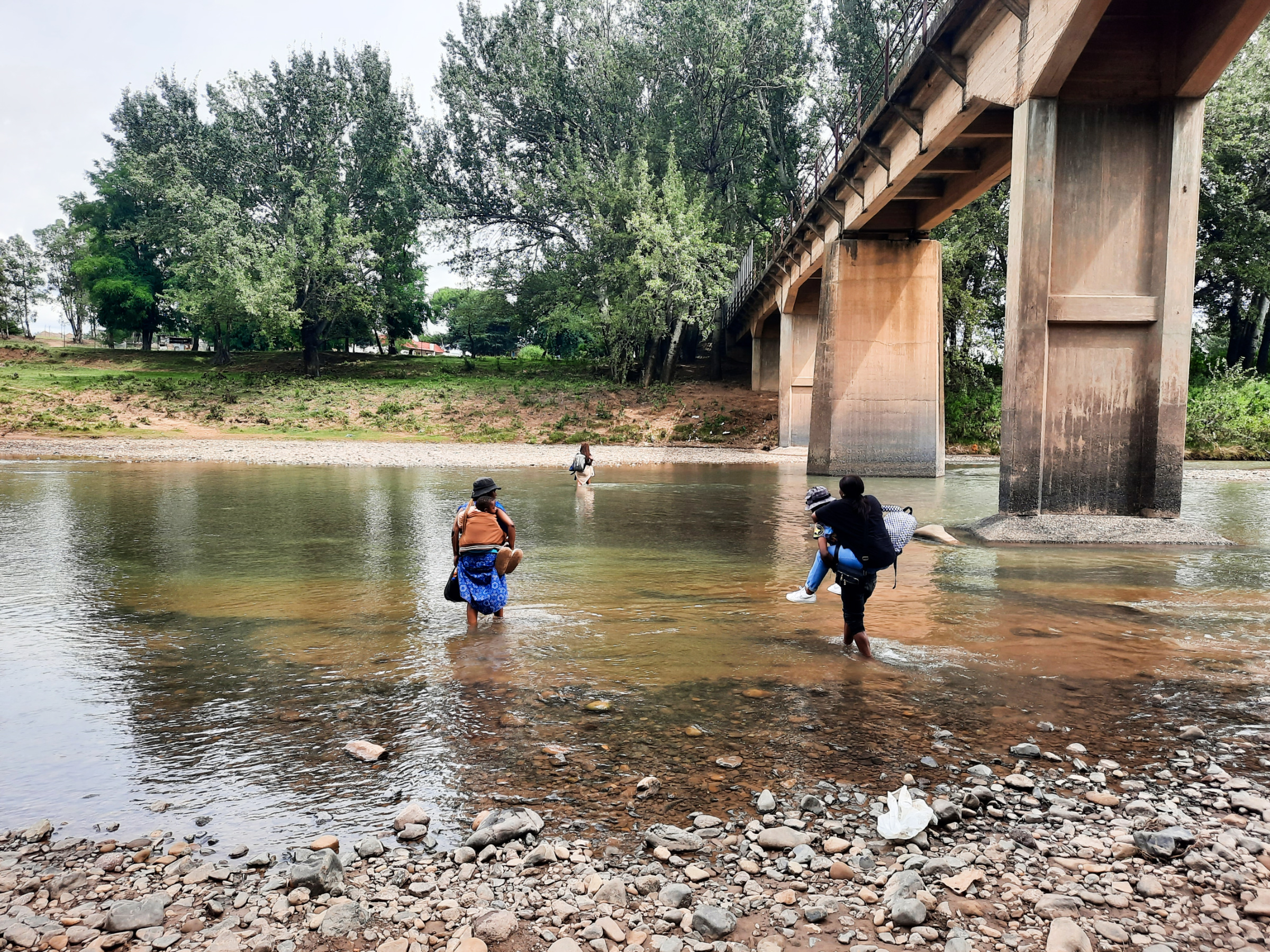
With passports delayed for weeks and sometimes months, many Basotho say they are forced to cross rivers into South Africa. Photos: Sechaba Mokhethi
- The Lesotho Department of Home Affairs office at Mohale’s Hoek in Lesotho has been overwhelmed with snaking queues as thousands returned home to renew their documents over the festive season.
- Because many of the documents are delayed, many people have to unlawfully cross swollen rivers on foot or on the backs of paid ferrymen to reach South Africa.
- Lesotho’s Department of Home Affairs has since extended operating hours and opened passport offices and ID centres on weekends to try and deal with the demand.
Thousands of Basotho migrant workers have been sleeping outside the Mohale’s Hoek passport office in Lesotho in a bid to renew their documents. But the long queues and limited staff at the office have meant that most of them get turned away. Desperate to get to work, many make the dangerous unlawful river crossing into South Africa.
Lesotho began rolling out national identity cards in 2013. Valid for ten years, many began expiring in 2023, forcing many people to renew their IDs before they could apply for passports.
Mohale’s Hoek is a bottleneck. Passports are produced at this office before being distributed to the other nine districts of Lesotho. During the festive season, the pressure on the office became overwhelming.
Near the front of the queue was Mapaseka Motšoeneng standing around a fire. By 2:30am, about 30 names were already on the list. Some people had arrived as early as 7pm the previous day.
“I arrived just after midnight. Services only start at 8am,” Motšoeneng told GroundUp.
Motšoeneng, a domestic worker in Johannesburg, said she had been turned away at the office on Christmas Eve. Her passport has expired, but first she must renew her national identity card before she can apply for a new one. “Once your ID is ready, they tell you to wait another 24 hours before applying for a passport,” she said.
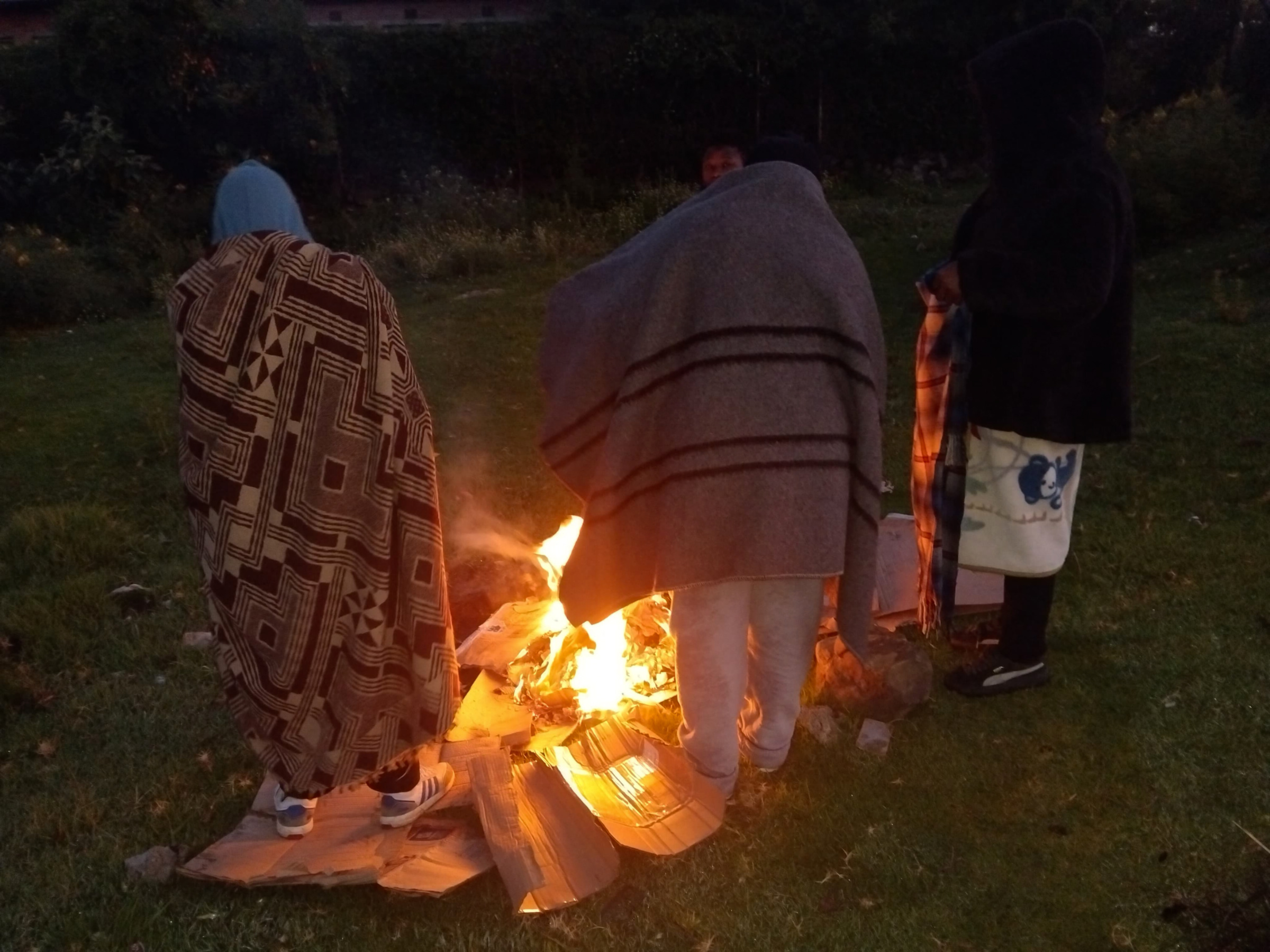
Basotho migrant workers have been sleeping outside the Mohale’s Hoek passport office in Lesotho in a bid to renew their documents. Long queues and limited staff have meant that many get turned away.
Many Basotho migrant workers returned home for Christmas. Across the country, passport offices were flooded with people desperate to regularise their documents before returning to South Africa. Some slept outside in the open, fearing they would lose their place in the queue.
In October 2025, 479 undocumented factory workers were released after raids in SA on condition they return home to update their papers. For many, the December holidays were their only chance to do so.
Teboho Ranti, from Ha Ranti in Ketane, arrived at the passport office at 8pm Thursday evening. We spoke to him around 4am on Friday. He had slept on the grass nearby. “I came on 24 December and was turned away,” he said. “The queue was too long. That’s why I decided to come the night before.”
Ranti works in Cape Town. His passport has expired.
Makaliso Mawene, a farm worker in the Eastern Cape, arrived at 9pm. When we spoke to him at 3am, he was number 14 on the list. “I cannot risk losing my job,” he said.
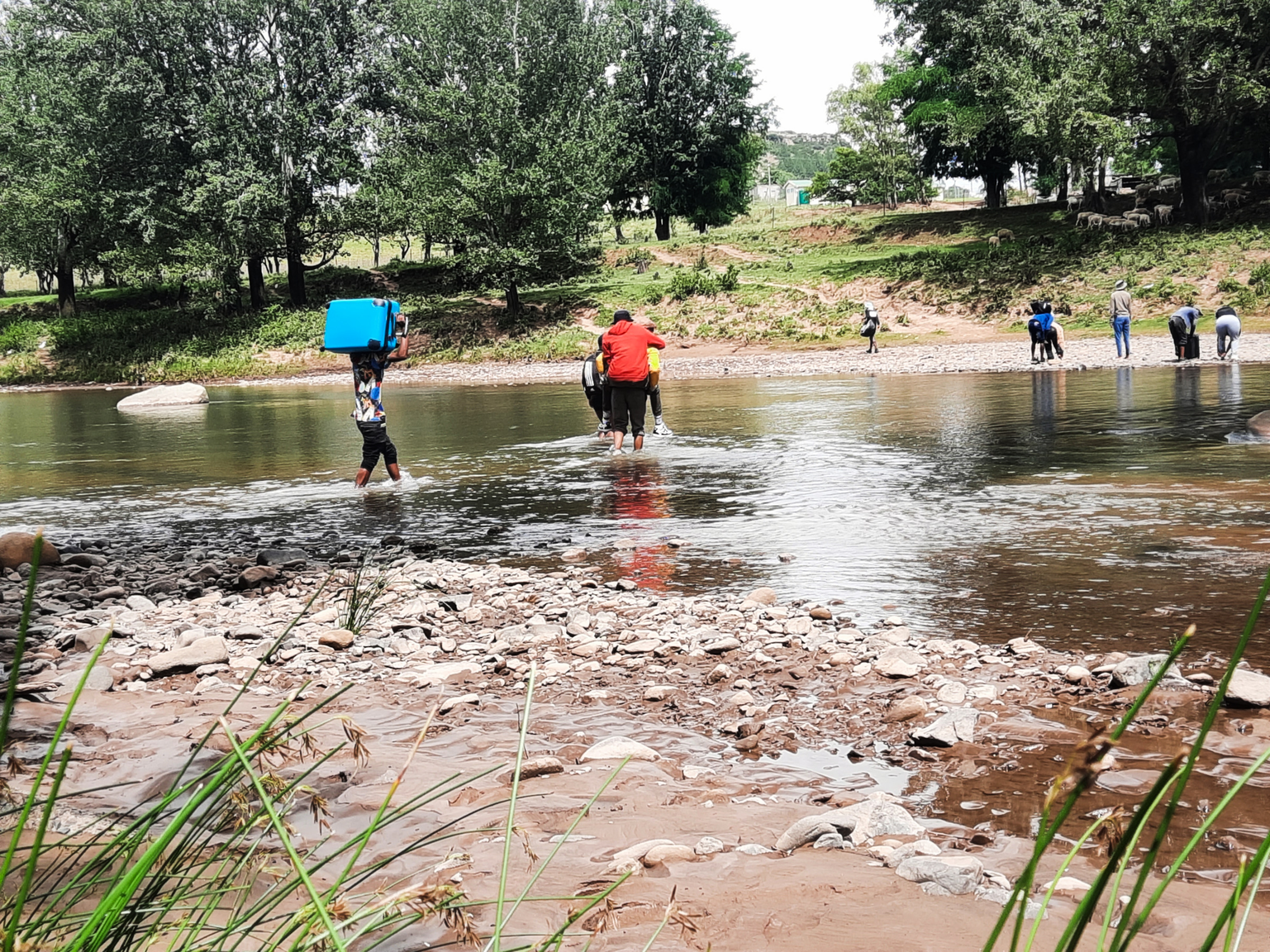
Some people pay men at the river to carry them across on their backs, charging between M20 and M40 per person. Others wade across themselves with their luggage.
Turning to illegal crossings
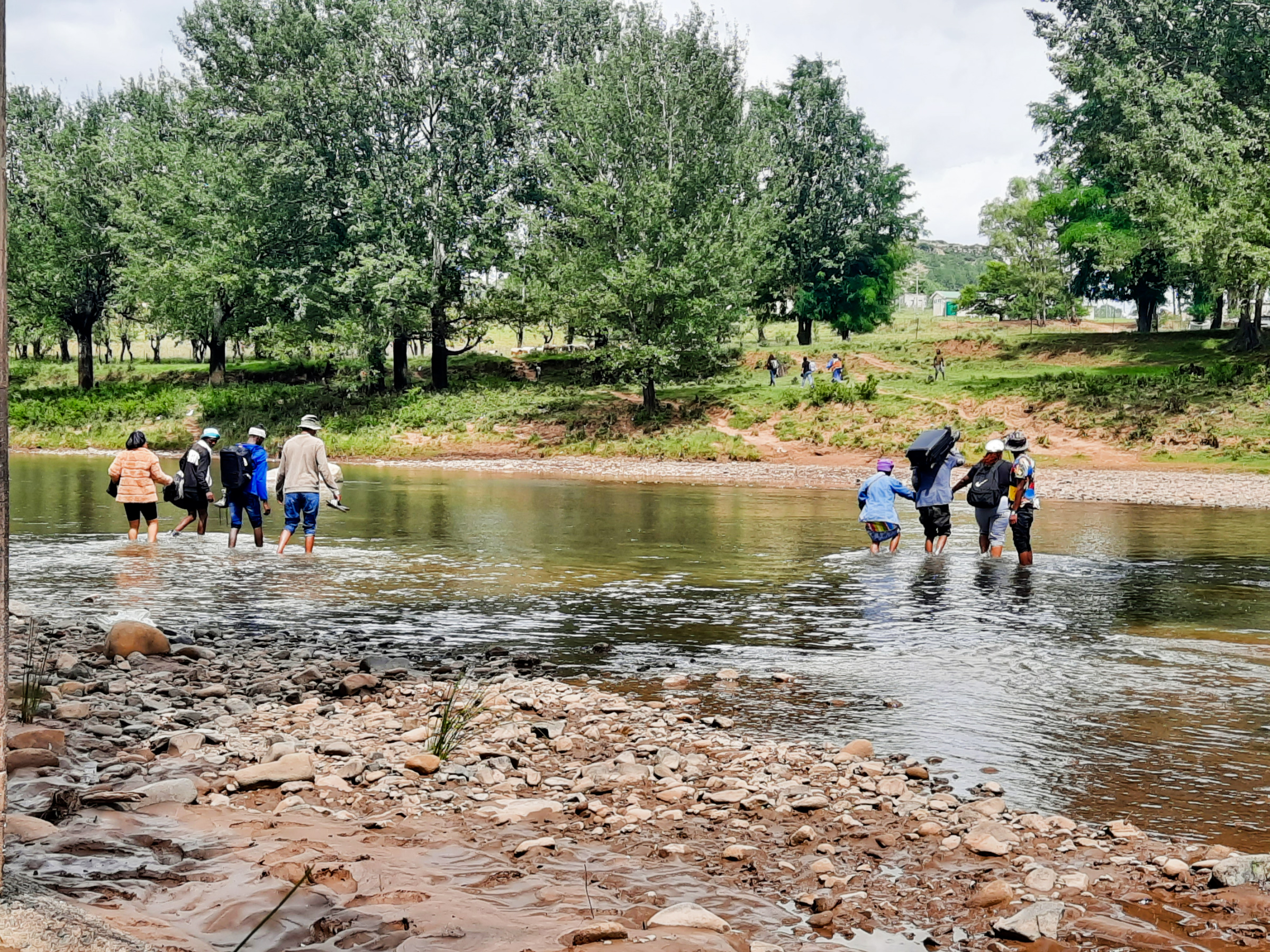
With passports delayed for weeks and sometimes months, many Basotho are taking another route to South Africa across rivers.
GroundUp travelled to Tele Bridge in Quthing district, near Sterkspruit in the Eastern Cape, one of the illegal crossing hotspots along the border.
Days earlier, residents had witnessed a woman carrying a child on her back slip on wet stones while crossing the swollen Tele River after heavy rains. She was swept downstream and briefly submerged. Two men who were nearby rushed into the water and pulled them both to safety.
Within 30 minutes of our arrival, we saw about 70 people crossing the river, some carrying luggage, others carrying babies on their backs. They emerged from a narrow forest path on the Lesotho side and entered the water in groups of five to twelve.
Some paid men stationed in the river to carry them across on their backs, charging between M20 and M40 per person. Others waded across themselves.
“The price is higher when people return from South Africa,” said Jobo (name changed), one of the men ferrying migrants. “It’s M60 because they have money.”
Jobo, a taxi driver, said many taxi operators also earn money helping passengers cross by dropping them near the border. They coordinate with taxi drivers on the South African side.
Jobo said about 18 men operate at the crossing daily. They have even created a burial fund for drownings and other casualties from their work on the river.
“We fetch bodies after people drown,” he said. “The police only come once the body is on the riverbank.”
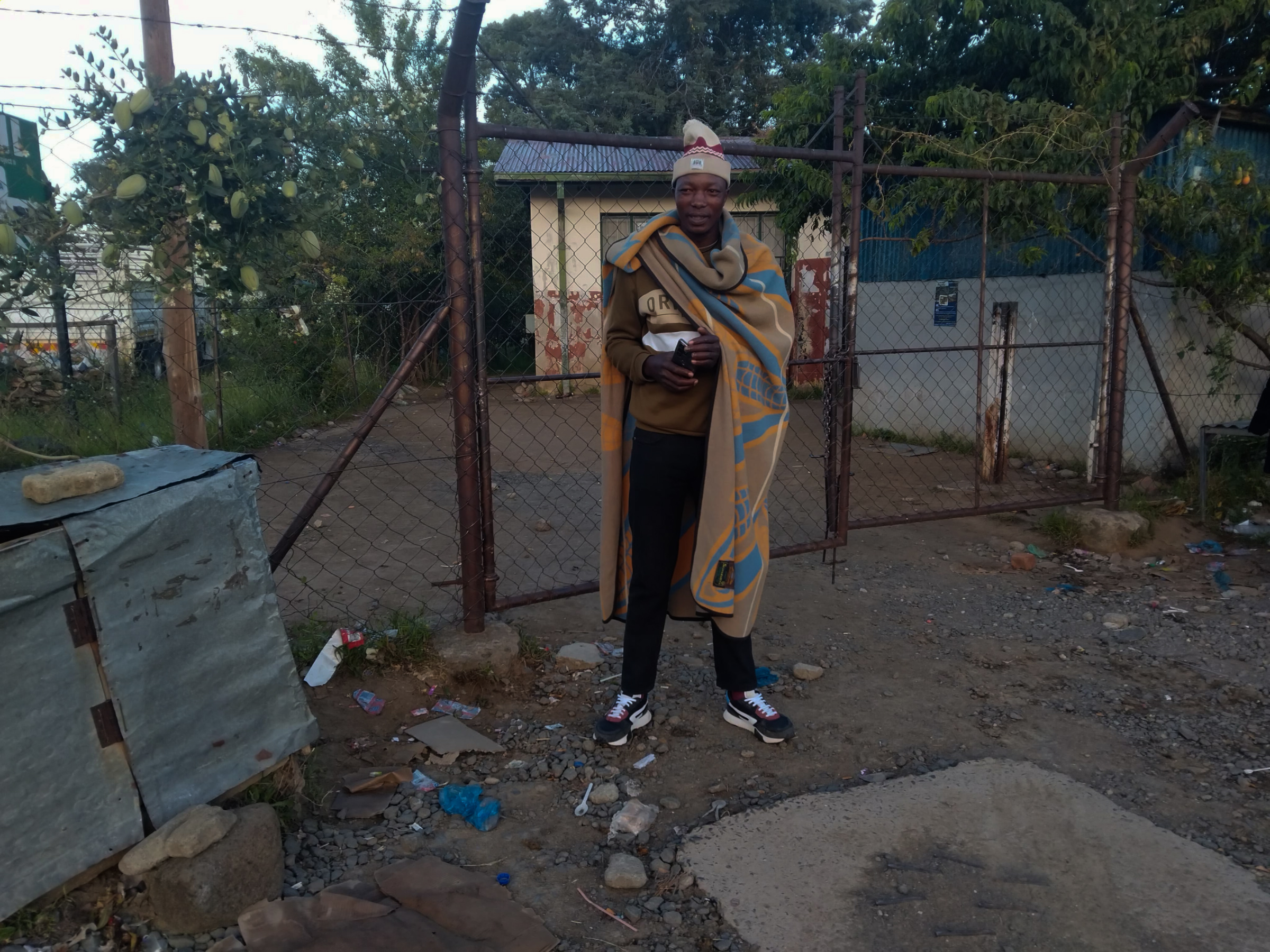
Makaliso Mawene, a farm worker in the Eastern Cape, slept outside the Mohale’s Hoek office from 9pm. He was 14th in the queue to be helped when the office opened at 8am.
Bribes
Along the forest path on the Lesotho side, we found a police officer. He refused to identify himself and did not answer our questions when he realised he was speaking to a journalist.
Adam* also helps migrants cross the river. He accused law enforcement of demanding bribes. “For people to be allowed through the forest, they must pay M20 per person to the officer,” he said. “But we still help people even when they don’t have money, especially when the river is full.”
Adam said migrants who try to avoid paying bribes often cross at more dangerous points and drown.
Police did not respond to our questions on the allegations.
Last week, Thabo Nkhoma, provincial manager of South Africa’s Border Management Authority, told the SABC that more than 300 undocumented migrants had been deported at Maseru and Ficksburg border posts. At least 100 people attempting to re-enter South Africa illegally were arrested.
South Africa’s Border Management Authority says more than 300 undocumented migrants had been deported at Maseru and Ficksburg border posts. At least 100 people attempting to re-enter South Africa illegally were arrested earlier this month.
Lesotho’s Home Affairs has since extended operating hours and opened passport offices and ID centres on weekends to try and deal with the demand. Prime Minister Sam Matekane has also appointed a new permanent secretary of the Ministry of Local Government, Chieftainship, Home Affairs and Police.
Mpopo Tšoele, Permanent Secretary in the Ministry of Local Government, Chieftainship, Home Affairs and Police, said he was tasked with restoring dignity to public services.
“The Prime Minister assured Basotho they will not need to sleep at Home Affairs,” he said. “People must receive documents in a dignified manner, as it is their right enshrined in the Constitution.”
He said he was instructed to ensure one-day turnarounds for applying and collecting documents such as IDs, passports, and birth and death certificates.
When he visited the ministry earlier this month, he still found people sleeping outside. “This is embarrassing,” he said.
*Names changed to protect sources.
Support independent journalism
Donate using Payfast

Don't miss out on the latest news
We respect your privacy, and promise we won't spam you.
Next: Philippi residents beat, stone and burn man to death for robbery
Previous: Social housing set to be built at Salt River Market this year
© 2026 GroundUp. This article is licensed under a Creative Commons Attribution-NoDerivatives 4.0 International License.
You may republish this article, so long as you credit the authors and GroundUp, and do not change the text. Please include a link back to the original article.
We put an invisible pixel in the article so that we can count traffic to republishers. All analytics tools are solely on our servers. We do not give our logs to any third party. Logs are deleted after two weeks. We do not use any IP address identifying information except to count regional traffic. We are solely interested in counting hits, not tracking users. If you republish, please do not delete the invisible pixel.