
NSFAS students battle to keep up with inflation
Living allowance runs out mid-month, students say
 Add GroundUp on Google
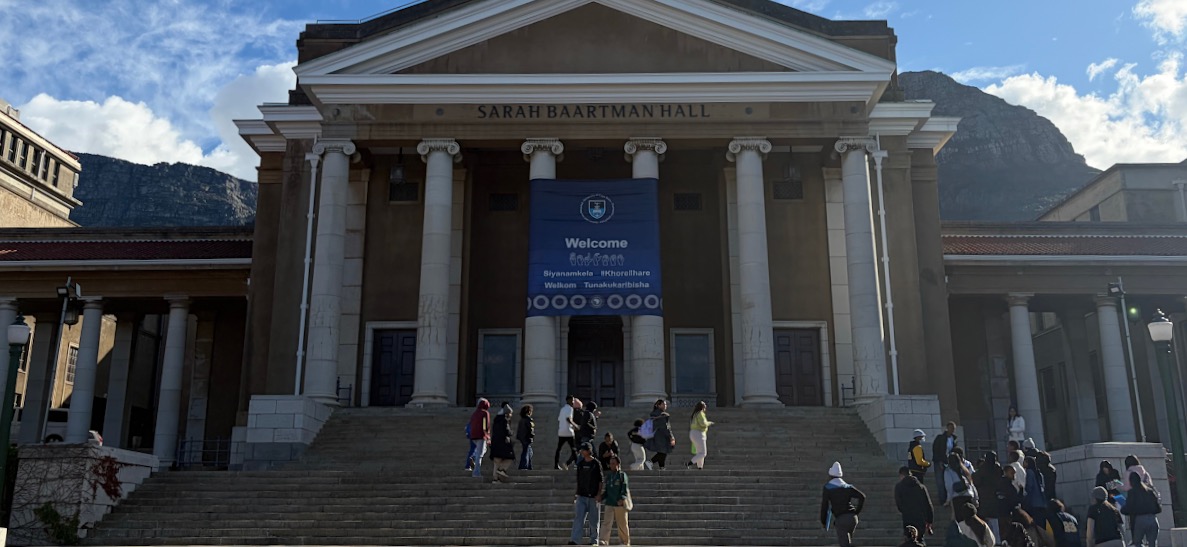
The living allowance awarded to eligible students at the University of Cape Town and other institutions is not keeping pace with inflation. Photo: Sikelelwa Sidinana
- The living allowance awarded by the National Student Financial Aid Service (NSFAS) has not kept pace with inflation in recent years.
- Students living off campus who get the R1,716-a-month allowance say they battle to make ends meet.
- The allowance has increased by 14% since 2022 but inflation over the period was 20%.
Twenty-one-year-old Oyama* a second year Bachelor of Science Student at the University of the Western Cape, says her monthly living allowance from the National Student Financial Aid Service (NSFAS) is usually exhausted by the middle of the month.
Oyama, who lives with her grandmother in Langa, gets a R1,716-a-month living allowance and R850 a month for transport. It is her only source of income. She says she spends R900 a month on groceries, R250 on toiletries, R350 on data, and R850 on transport commuting from home to the university.
“Once food has been bought, there is often little left for toiletries, emergency transport or other unexpected expenses.”
Her situation is that of many students who are struggling as their allowances fail to keep up with the cost of living.
Between 2022 and 2026, the living allowance offered to NSFAS students living off campus went up 14.4% from R1,500 to R1,716. But between February 2022 (the start of the academic year) and February 2026, according to StatsSA, consumer prices went up more than 20%.

NSFAS offers eligible students various forms of assistance, including tuition coverage, money for learning materials and a living allowance. These differ according to whether students live in residence or not.
Students living at home qualify for a transportation allowance to help them travel from home to campus. Students in a self-catered residence receive different support from those in a catered residence, and allowances for students at Technical and Vocational Education and Training (TVET) Colleges differ from those for students at universities.
The living allowance is paid over ten months of the academic year, typically from February to November. Some students get top-ups from their universities.
According to the NSFAS guidelines, university students in non-catered accommodation received a living allowance of R15,000 per academic year in 2022. This increased to R15,750 in 2023, an increase of 5%, and to R16,500 in 2024, an increase of 4.8%. In 2025, the allowance increased by 4% to R17,160 per year.
| Academic Year | Annual Allowance | Annual Allowance Increase | CPI Inflation (Feb) |
| 2022 | R15,000 | 0% | 5.7% |
| 2023 | R15,750 | 5% | 7% |
| 2024 | R16,500 | 4.8% | 5.6% |
| 2025 | R17,160 | 4% | 3.2% |
| 2026 | R17,160 | 0% | 3% |
The living allowance for TVET students was hiked in 2025 by 46% to R17,160 a year for eligible students in non-catered residences and students living off campus, as part of the plan by the Department of Higher Education to remove the gap between University and TVET college students.
Sona*, a third-year student in the Bachelor of Social Science at the University of Cape Town, lives in a self-catered residence at the university. She gets the R1,716 living allowance and a R284 top-up from the university, but says she still struggles to cover her expenses. She estimates spending R1,200 on groceries each month, leaving approximately R800 to cover toiletries, emergency transport, and other unexpected expenses. She buys groceries from a supermarket within walking distance, because travelling to cheaper supermarkets would cost too much.
“By the middle of the month, after buying everything I need, I usually only have around R200 to R300 left,” she said.
“I don’t think it’s sufficient,” says Olonathando Nomdatya, a member of the University of Cape Town Student Representative Council. She said many NSFAS beneficiaries could not rely on their families for help when the money ran out.
“We have to consider that we live in Cape Town and Cape Town is super expensive,” she said.
She believes student allowances should reflect regional differences in living costs.
GroundUp asked the NSFAS media team whether inflation was taken into account when the living allowance was calculated. NSFAS referred us to the Department of Higher Education and Training (DHET) but the media liaison team had not responded to our questions by the time of publication.
*Not their real names
Support independent journalism
Donate using Payfast

Don't miss out on the latest news
We respect your privacy, and promise we won't spam you.
© 2026 GroundUp. This article is published under the GroundUp Republication Licence Version 1.0. Email [email protected] to request permission to republish.