
On board the Rainbow Warrior — the iconic Greenpeace ship
A world without fossil fuels is possible, says crew
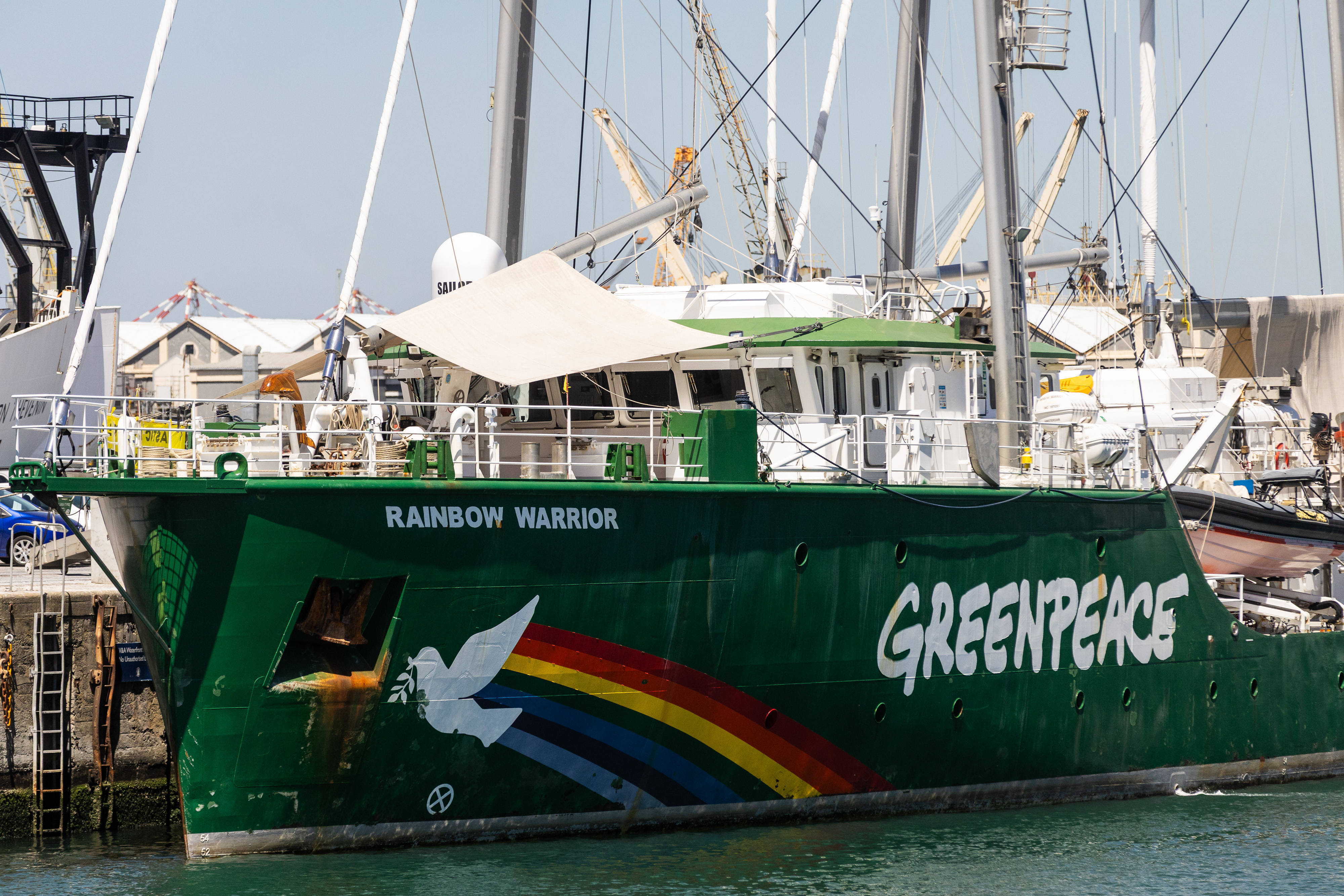
The Rainbow Warrior will be open to the public at the V&A Waterfront over the weekend. Photos: Ashraf Hendricks
The Rainbow Warrior, the iconic Greenpeace ship, has docked in Cape Town and will be open to the public at the V&A Waterfront harbour over the weekend.
Greenpeace, an international environmental campaigning organisation, is calling on African countries to “break free” from fossil fuels.
Between 10am and 5pm on Saturday and Sunday, visitors will be able to tour the ship’s deck and bridge, which houses its navigation system, meet the Greenpeace crew, and learn about their campaigns and life aboard the ship.
The first Rainbow Warrior was bombed and sunk in 1985 while protesting French nuclear testing in the Pacific. The ship currently docked at the Waterfront is the third iteration. The first two boats were reused fishing vessels, but this one was designed and built specifically for Greenpeace.
Video: Ashraf Hendricks
The ship sails around the world, campaigning against oil and gas drilling and illegal fishing. It also assists scientists and specialists in conducting research.
Recently, scientists studied radiation levels in the Marshall Islands in the Pacific Ocean, where the United States conducted nuclear bomb testing from 1946 to 1958. The ship was also stationed at the recent international climate conference COP30 in Belém, Brazil.
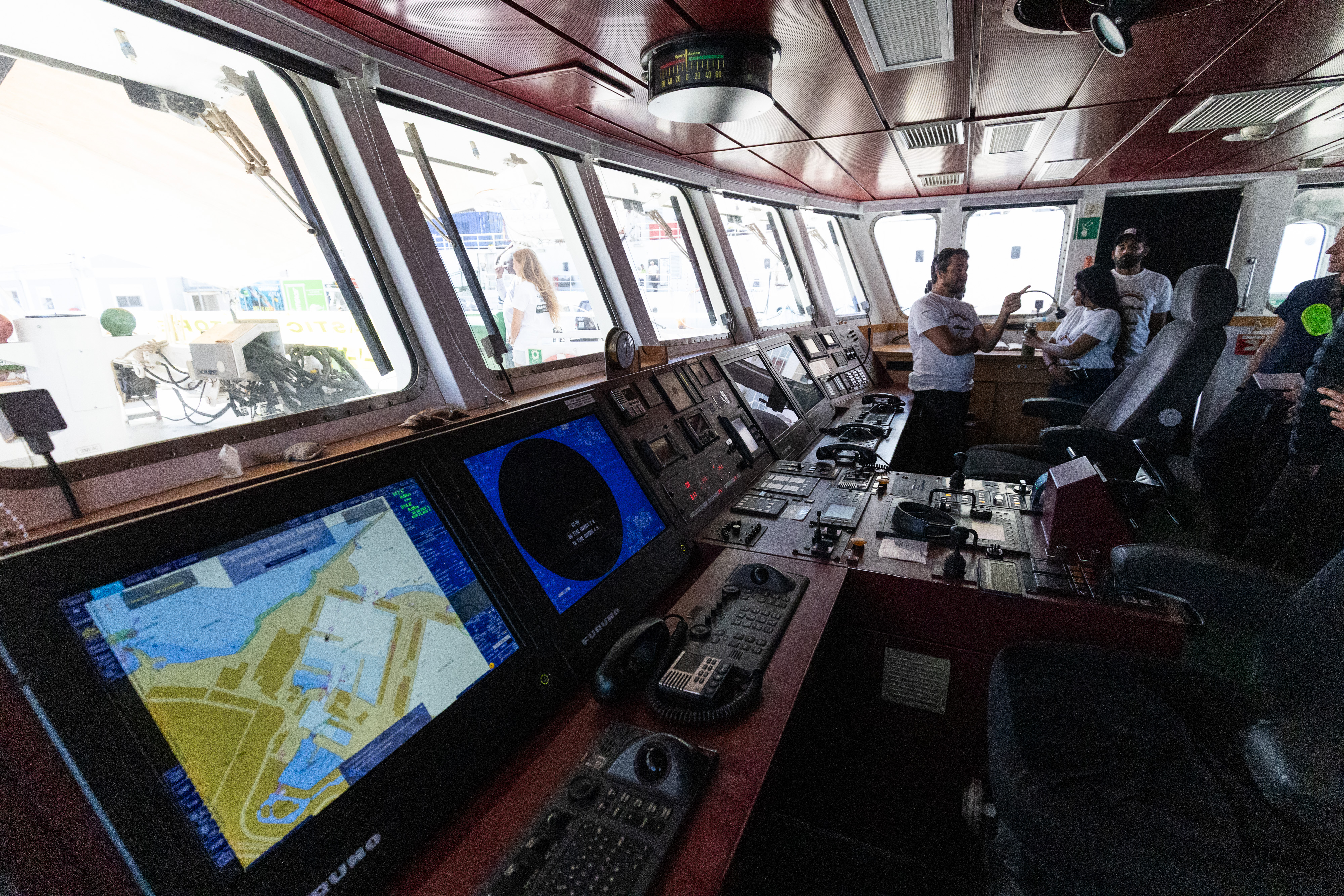
Visitors can tour the ship’s deck and meet the crew.
Speaking to attendees during a tour of the boat on Friday, ship captain Maria Martinez acknowledged the lives lost in the recent floods in Limpopo and Mpumalanga.
“Events like these remind us that the climate crisis is a reality. It’s already shaping lives, increasing the intensity of extreme weather, and placing a heavy burden on communities that are often the least responsible for the crisis,” she said.
“We can do things differently. We don’t have to be so dependent on fossil fuels,” said first mate Daniel Mares. “As more and more technology becomes available, hopefully there will be more alternatives.”
He described how Uruguay, within twenty years, phased out fossil fuels and built a power grid nearly 99% powered by renewable energy such as wind, hydropower, and solar. “It’s possible,” he said.
Last week, the African Energy Chamber criticised Greenpeace and the Rainbow Warrior for being “hypocritical” in pushing an anti-fossil fuel agenda while relying on diesel to fuel the ship. The statement also noted that millions of Africans live without electricity.
Mares acknowledged that the Rainbow Warrior, although built as a sailing boat, uses diesel when there is no wind.
“At the moment, the world is addicted to fossil fuels, and we’re not immune from that, but we do try to minimise our use. We use the wind as our main form of propulsion,” said Mares.
Greenpeace Africa’s oil and gas campaigner, Sherelee Odayar, said that African countries have seen a big drive for more oil and gas projects.
“Governments and industries … use the narrative that there is energy poverty in Africa,” said Odayar, adding that fossil fuels were not the solution to this.
“In order for households to get electricity, they need to move to renewables. It’s far cheaper, it’s far safer. It’s not as volatile as oil and gas.”
“We are on the brink of climate breakdown. And it’s going to continue to get worse if we burn more fossil fuels,” she said.
The Rainbow Warrior is a reminder of Greenpeace’s mission to drive countries toward a just energy transition and phasing out fossil fuels, as well as to show oil and gas industries that “we are not afraid to fight for environmental justice”, said Odayar.
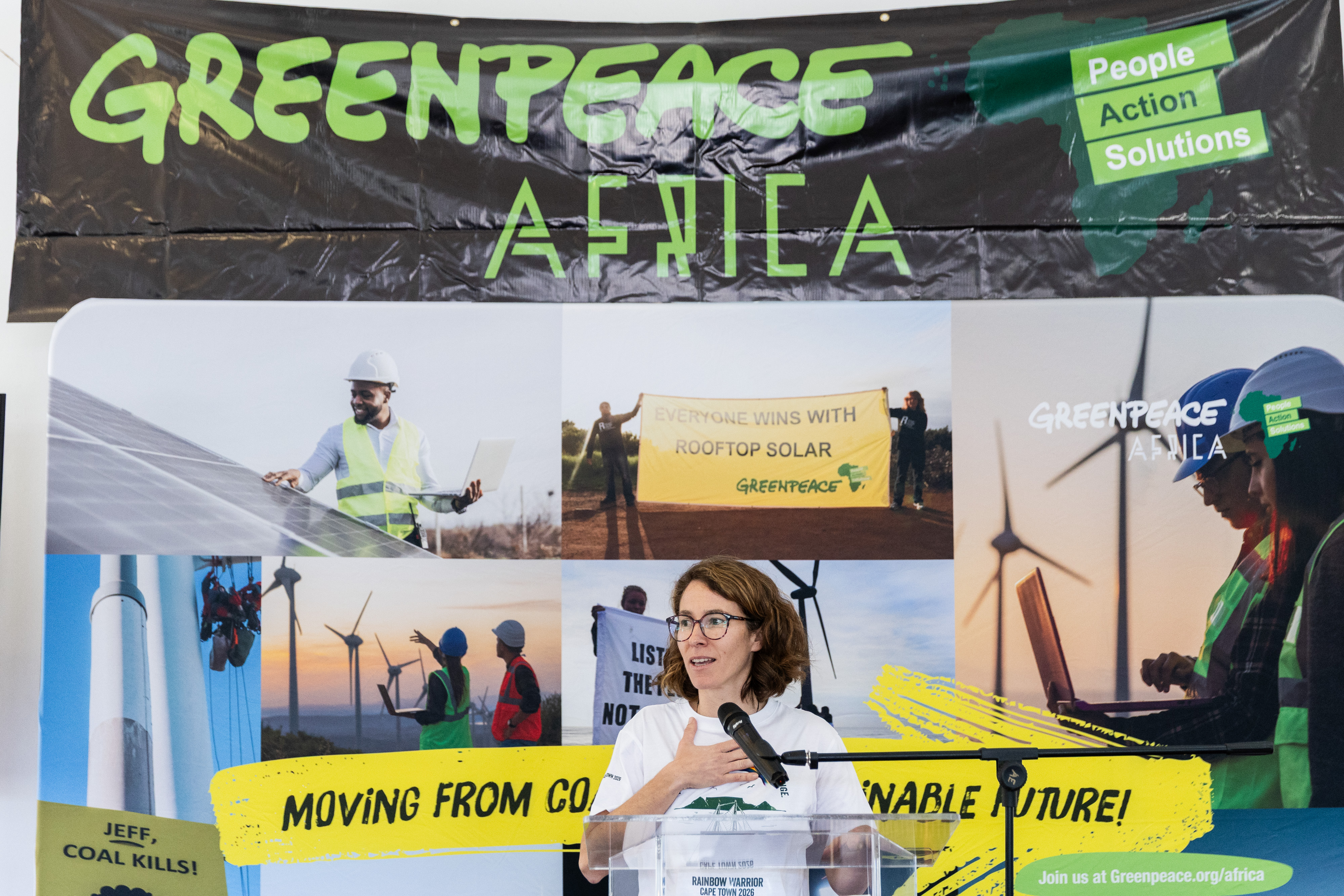
We can do things differently and don’t have to depend on fossil fuels, said Rainbow Warrior captain Maria Martinez.
Support independent journalism
Donate using Payfast

Don't miss out on the latest news
We respect your privacy, and promise we won't spam you.
© 2026 GroundUp. This article is licensed under a Creative Commons Attribution-NoDerivatives 4.0 International License.
You may republish this article, so long as you credit the authors and GroundUp, and do not change the text. Please include a link back to the original article.
We put an invisible pixel in the article so that we can count traffic to republishers. All analytics tools are solely on our servers. We do not give our logs to any third party. Logs are deleted after two weeks. We do not use any IP address identifying information except to count regional traffic. We are solely interested in counting hits, not tracking users. If you republish, please do not delete the invisible pixel.