
Passport crisis in Lesotho
Ministry suspends passport services but people are desperate and still queuing in Maseru
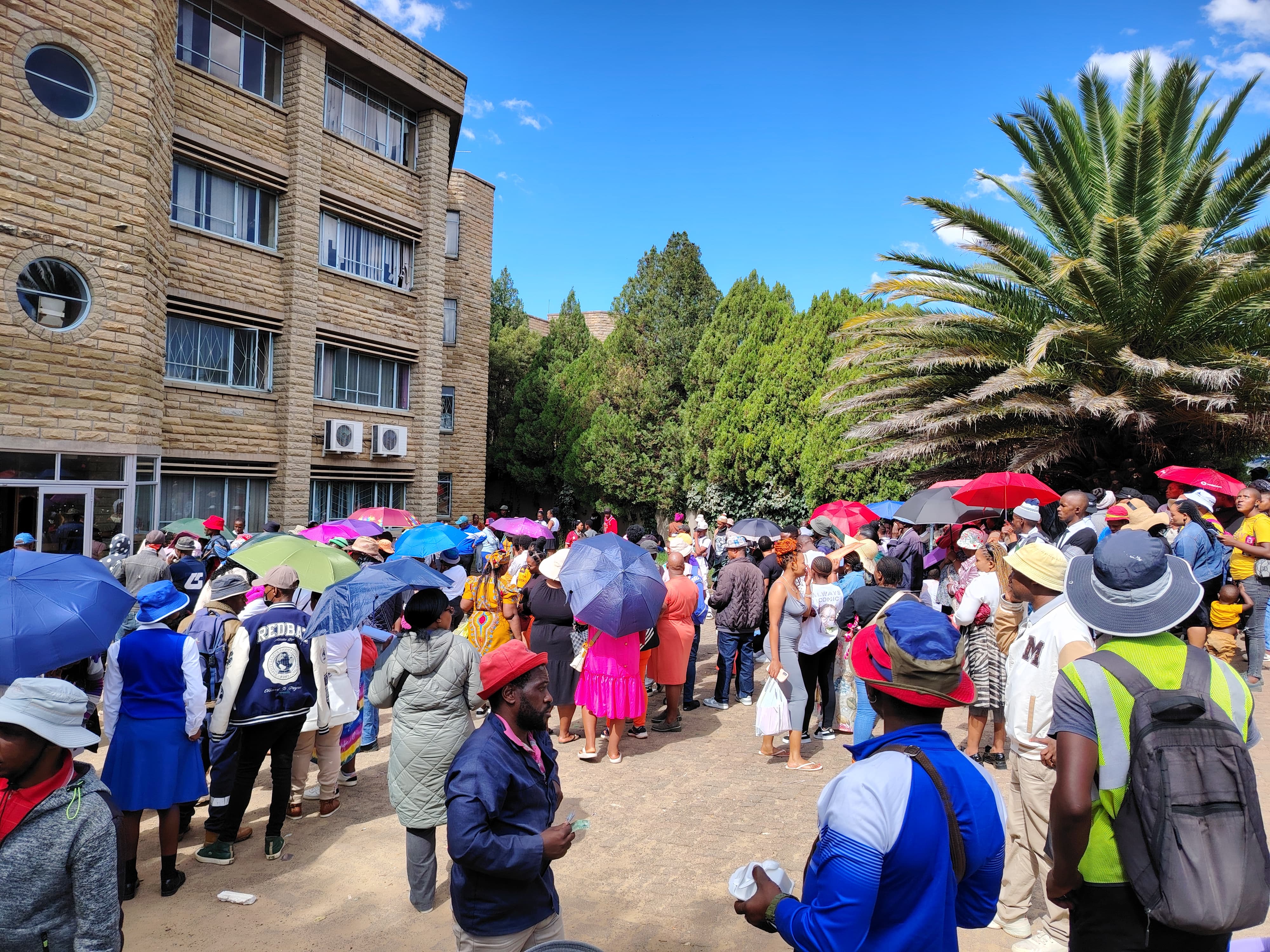
People queue from before dawn at the Maseru passport office, though passport services have been officially suspended. Photos: Sechaba Mokhethi
- The Lesotho Ministry of Home Affairs has suspended passport services, citing the need to clear a huge backlog.
- But crowds of people are still queuing at the Maseru passport office.
- Some are migrant workers who say that without a passport they may lose their jobs in South Africa.
At the Maseru passport office on Tuesday, people began arriving before sunrise. By mid-morning, the yard was full. Some stood in long queues hoping to submit new applications, while others clutched receipts, waiting to collect passports applied for months ago.
Despite a government announcement suspending new applications to clear a backlog of 50,000 pending passport applications, the crowds have not thinned.
Officials call people in groups of ten. Movement is slow. For many, this is not their first attempt.
 first attempt.
Marethabile Sekiki, a seamstress from Ha Mabote in Berea, returned to the office this week after being turned away last Thursday.
“We managed to fill in the forms, and after that we joined a long queue like the one you see now,” she said. “We were told to return today at 7 am so that we would be among the first to be helped, but that did not happen.”
By 1:30 pm, she was still queuing to pay. “It seems that each day you only complete one step, then you go home and return, even though you do not have enough money for transport,” she said.
Sekiki depends on clients in South Africa for her sewing business. Without a passport, she cannot travel legally. “If I do not get a passport, my business will have to shut,” she said. “I cannot risk my life crossing the river or using illegal routes.”
Others in the queue face similar dilemmas.
Lisele Molise, from Rothe in Leralleng, works as a domestic worker in Pretoria. She returned home last month and says she has been trying to apply for a passport ever since. “I do not have a passport, so I have been crossing into South Africa illegally,” she said. “But because we are afraid of being arrested, I decided to apply for a passport so that we can travel freely.”
She described paying between M300 and M350 (M1=R1) to cross at the Ficksburg border using informal routes. “Even though it is dangerous, we still cross because there are no jobs in Lesotho and we have to support our children,” she said.
Molise first came to the passport office last Thursday, where she filled out forms. At about 4 pm, she was told to return after the holidays. “If I do not get help by Thursday, I will go back and cross at Ficksburg again,” she said.
For those who have already applied, the wait can stretch into months. Motšoane Relebohile, from Ha Tsolo in Maseru, applied for a passport in June 2025. Since he works in South Africa, his wife has been following up on his behalf. “At first, she was told to come back after two weeks. After that, she was told to come back after three weeks,” he said. “She returned, again, in February 2026, but it was still not available.”
“I have just come to try my luck since I am here for Easter,” he said. “If it is not available now, I will only be able to collect it when I return in December.”
For migrant workers, delays can mean lost income or even jobs. Molupe Mofuoa, who works at a mine in Rustenburg, said his passport renewal is urgent. He is expected back at work on 27 April. “I will not be able to return to work if I do not get my passport,” he said.
Although he was initially allowed to skip the queue after presenting a letter from Teba, a labour recruitment agency, he was later told to rejoin the line when he went to pay.
“My passport expires in September 2026, but before returning to work, I must rejoin through Teba in Maseru, and I cannot do that without a passport that is valid for at least 12 months,” he said. “If it does not arrive in time, I will not be able to resume work, and I could lose my job.”
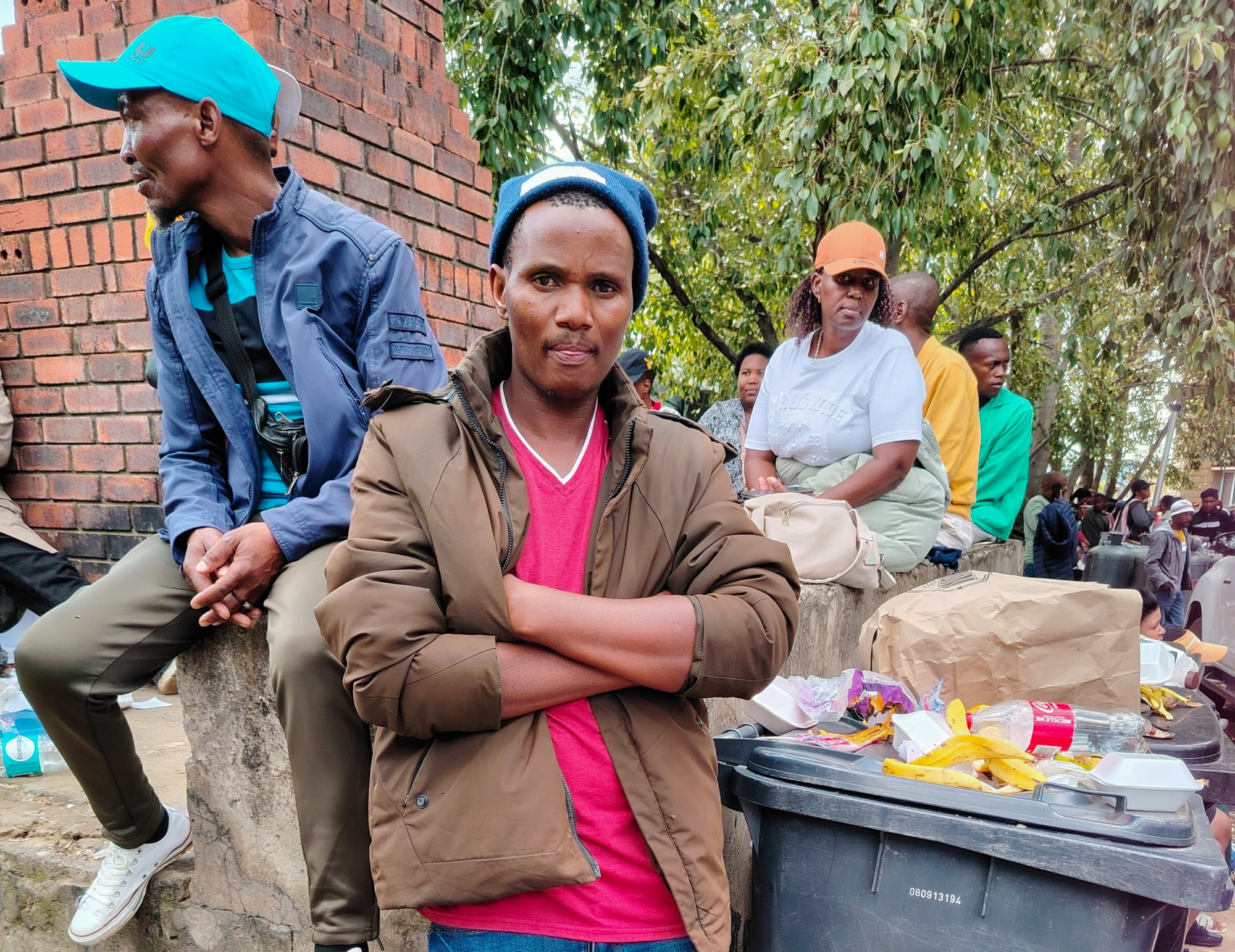
Motšoane Relebohile from Maseru applied for a passport in June 2025.
In an internal memo dated 17 March 2026, the director of passport services at the Ministry of Home Affairs instructed offices across the country to scale down daily production. The memo set strict limits, such as 100 passports per day for Maseru and as few as 10 in districts like Mokhotlong and Qacha’s Nek. Offices were told to prioritise the sick, migrant workers and students.
At a press conference last week, the Principal Secretary, Mpopo Tšoele, said the department is dealing with a backlog of 50,000 passport applications. “As April begins, we are focusing on clearing these 50,000 passports before we can take new applications,” he said.
Tšoele said financial constraints and equipment failures were challenges. “We are still using old machines, which overheat after producing about 200 to 300 passports and can no longer continue printing in large volumes.” He said new machines have been ordered.
“Once we receive the new machines, we will be able to increase production and serve more people,” he said, adding that normal turnaround times of three to four days would only resume after the backlog is cleared.
But a day after the press conference, the ministry issued another internal memo, formally announcing the suspension of passport services.
The memo, dated 2 April 2026 and signed by Tšoele, stated that the department is experiencing “grave challenges” at the production centre and across passport offices. “Services will be discontinued until further notice,” the memo said, adding that technical teams are working to restore operations.
At the Maseru office, queues continue to grow. Many say they came because they are on Easter holidays and finally have time to apply. Others say they cannot wait any longer, even if services are slow or uncertain.
Support independent journalism
Donate using Payfast

Don't miss out on the latest news
We respect your privacy, and promise we won't spam you.
© 2026 GroundUp. This article is published under the GroundUp Republication Licence Version 1.0. Email info@groundup.org.za to request permission to republish.