
Heritage Day: poet celebrates Kaaps dictionary
The first-ever Kaaps Woriboek was released earlier this year
 Add GroundUp on Google
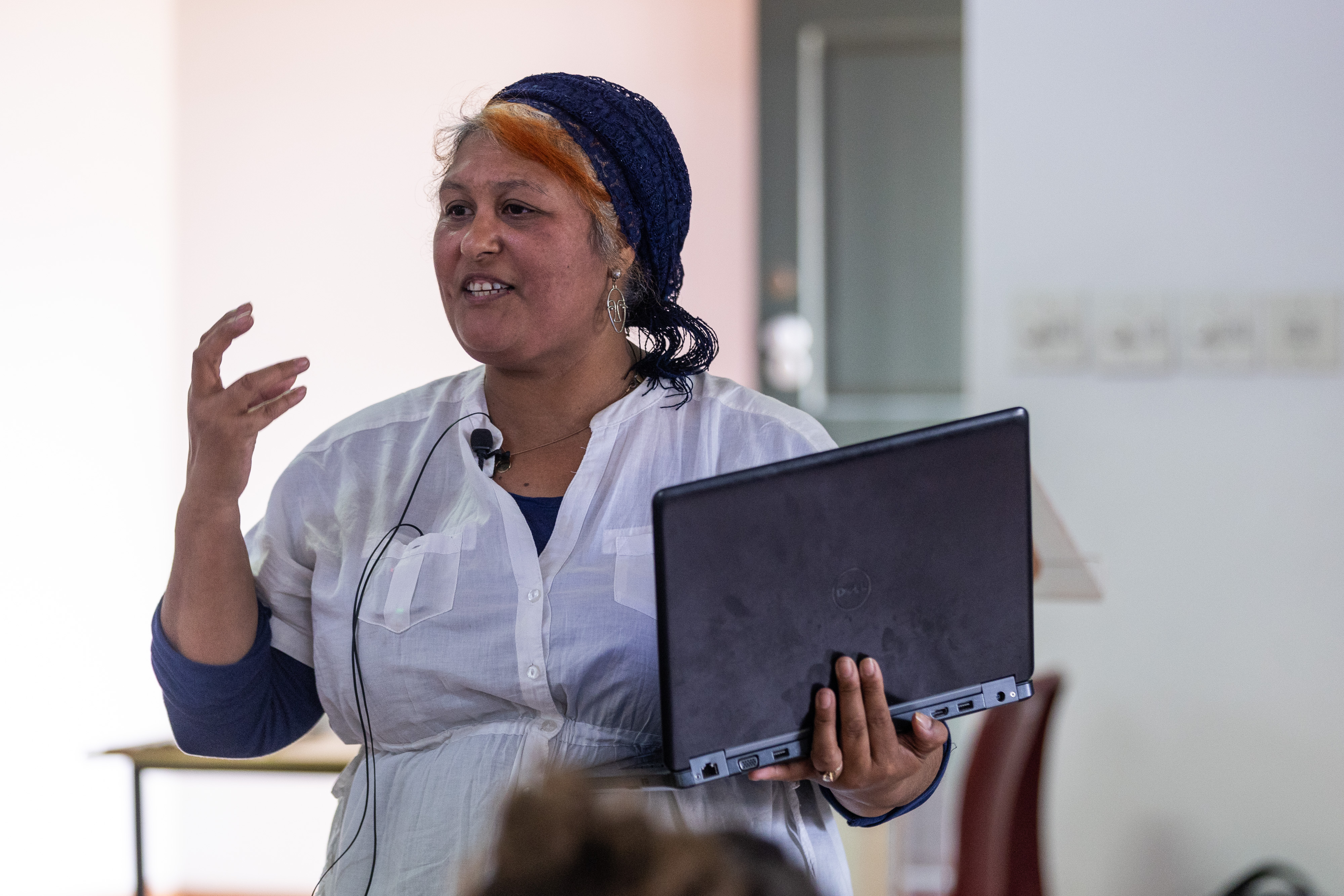
Gaireyah Fredericks spoke at the Iziko Bo-kaap museum on Thursday. Photos: Ashraf Hendricks
“One cannot complete one’s identity without language,” says award-winning author and poet Gaireyah Fredericks. She was speaking about the rich history of Kaaps at the Iziko Bo-Kaap museum’s Heritage Day event on Thursday.
Kaaps is a unique vernacular with roots that go as far back as the 1500s and developed over the years through contact between Khoi and San people, enslaved people and settlers. It is closely tied to Afrikaans but distinct.
Fredericks is a Kaaps advocate and translator, and contributed to the Kaaps Woriboek – the first-ever Kaaps dictionary released earlier this year.
It is trilingual: Kaaps, Afrikaans and English. The project was led by UWC linguist Professor Quentin Williams.
The dictionary formalises the language and codifies the standard spelling of Kaaps words, roots and grammatical rules.
Fredericks said one of her favourite Kaaps phrases is “ma se kind”, which is an endearing phrase meaning “mother’s child”.
“Anyone can be a ma se kind,” she said. It means “you are now my brother, you are now my sister.”

She read her poem “Kaaps is Hollands”, which describes the reclamation of the language Kaaps. She describes how Kaaps has historically been seen as a “dumb language” or something spoken by people of a “low class”.
She says the first time she saw the word “djy” in a poem by Kaaps pioneer and writer Adam Small. When she said it aloud, she felt she had become connected to her ancestors again.
“That’s the day where I became a we, where I became a whole community,” she says.
For the first time, the word “djy” now appears in a dictionary.
Fredericks spoke of the importance of formalising the language for the next generations. “It is a necessary act for us as a country, as a people, as a community, so that the youngsters that are born now, they are truly born free,” she says.
She was inspired by several writers who wrote in Kaaps, but they all had their own spelling system. “Now we have one spelling system”, she says about the dictionary.
“I have to secure everyone else after me to be able to look and see on paper their audio-language in the flesh, and they experience that bliss, that identity that comes with it, that representation, that validation. All those beautiful things that we never had,” she says.
Video: Ashraf Hendricks
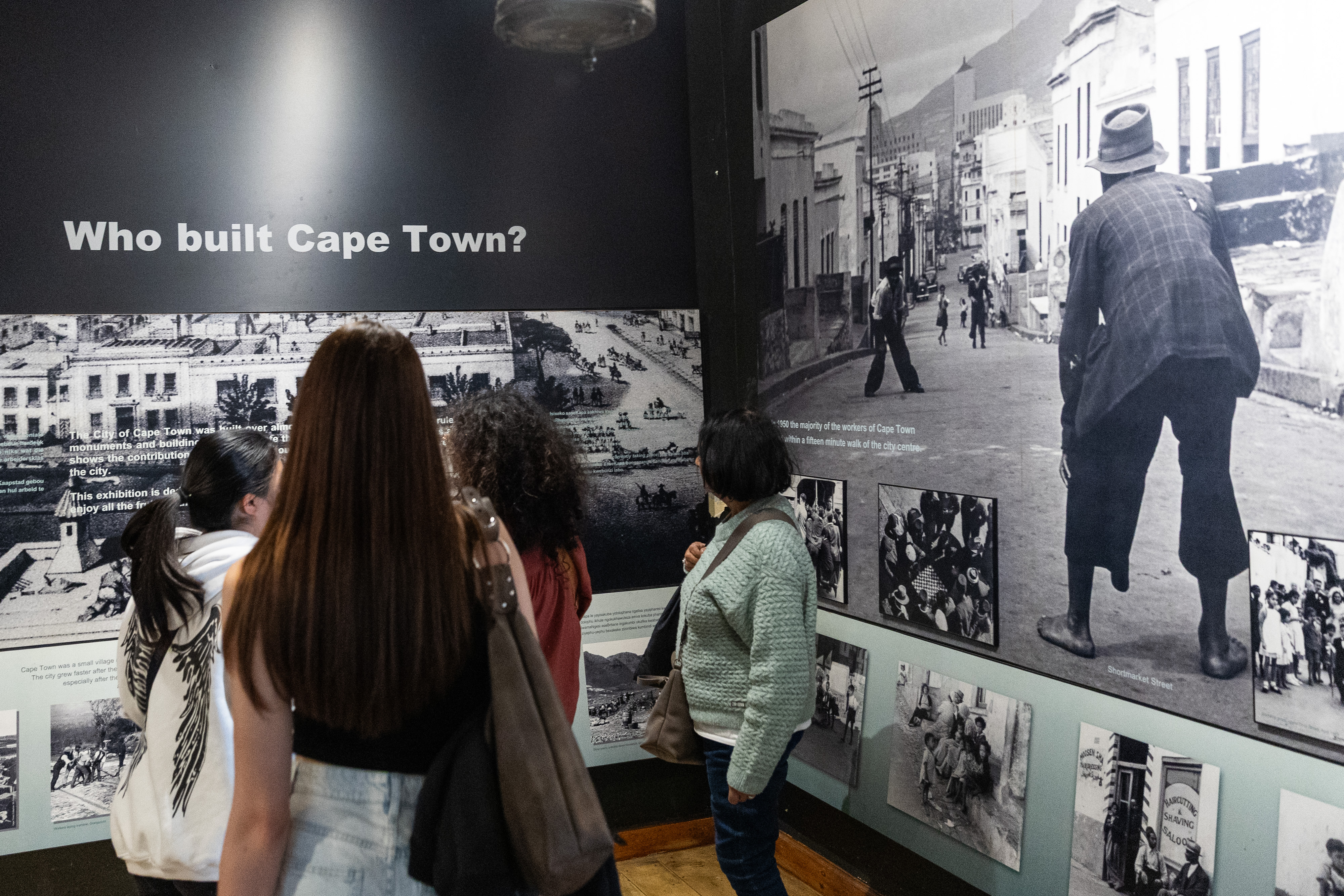
All Iziko museums and galleries offered free entry on Heritage Day, including the Bo-Kaap museum.
Support independent journalism
Donate using Payfast

Don't miss out on the latest news
We respect your privacy, and promise we won't spam you.
Next: Debate over new Makhanda wind farm
Previous: Hundreds march through Cape Town against planned N2 wall
Letters
Dear Editor
The publishing of the Woriboek on the words and grammar used by the coloured people who originate from the Khoi and San people who came as slaves to the Cape is highly appreciated and commendable.
This is a great achievement for the first people of South Africa. However, it is a drop in the ocean. Much more space and resources must be provided by the state to acknowledge how the cloured people contributed to the heritage of South Africa. More financial support must be given to establish Afrikaans museums for coloured people's heritage across South Africa and not only in Cape Town. Laat Afrikaans voortleef en ons Suid-Afrika bou in liefde en eenheid met almal.
© 2026 GroundUp. This article is published under the GroundUp Republication Licence Version 1.0. Email [email protected] to request permission to republish.