
Arms committee fails to explain SA’s weapon sales to Saudi Arabia and UAE
National Conventional Arms Control Committee has not filed record of decisions despite being ordered to do so by the High Court in 2021
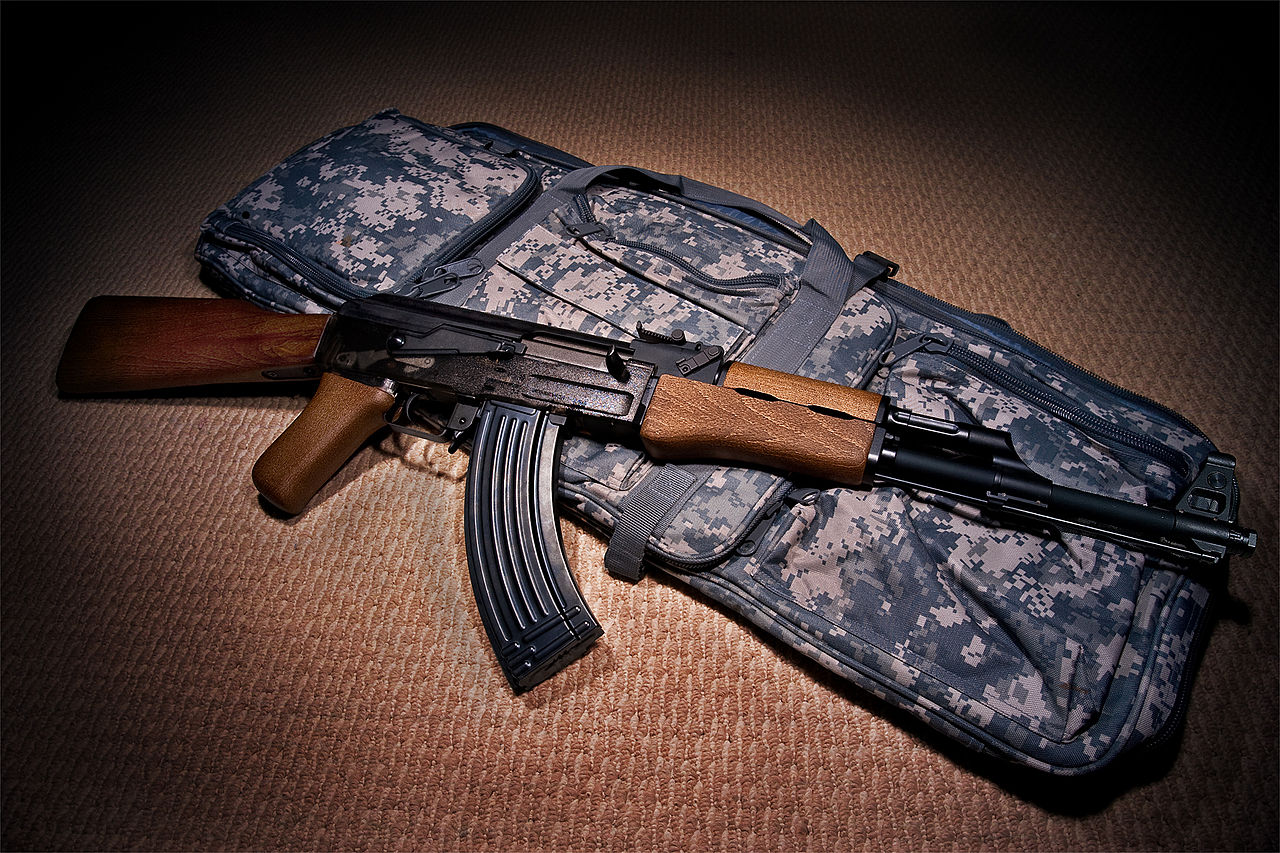
In the 30 years since the National Conventional Arms Control Committee was established, export permits have routinely been granted for the sale of armaments by South Africa to countries alleged to have committed war crimes and other human rights violations, says Open Secrets. Photo of an AK-47, Wikimedia Commons, Creative Commons, cc-by-2.0.

- The National Conventional Arms Control Committee (NCACC) is failing to fulfil its regulatory role.
- It remains plagued by weak governance and a lack of transparency.
- The NCACC persistently fails to comply with court directives to produce a record of its decisions about the sale of arms involved in the Yemen conflict.
The National Conventional Arms Control Committee (NCACC) was established to ensure accountability in all matters concerning conventional arms. Yet it continues to approve the sale of weapons to armed conflicts involving war crimes and other human rights violations. Not only is this inconsistent with South Africa’s foreign policy (and arguably the Constitution), but it also violates South Africa’s obligations under international law.
Furthermore, the NCACC continues to delay producing a record of its decision-making to the courts.
One would have thought that the “arms-money machine” that unleashed unspeakable violence within South Africa and on its neighbouring countries during apartheid would have led a new democratic government to overhaul the military industrial complex responsible for decades of suffering.
In 1995, South Africa established the NCACC to ensure transparent, legitimate, and effective control of arms exports. In September 1994, media reports of an arms-related controversy had emerged.
Reports on the “Wazan debacle” suggested that state-owned Armscor had sold a large shipment of weapons (including 10,000 AK-47 assault rifles, 15,000 G3 assault rifles, and a million rounds of ammunition) to Yemen, a country in the grip of a devastating armed conflict.
The Cameron Commission of Inquiry investigated these arms sales and found that “hundreds, perhaps thousands” of people had been killed or hurt by South African weapons. Armscor’s weapons had been used across the world from Angola to Mozambique, Chad, Israel, Rwanda and Iran.
There was an understanding that South Africa’s position as a regional power had to be moderated in line with its wider international obligations.
There was optimism in 1995 that the establishment of the NCACC under Nelson Mandela’s administration would see to it that the Wazan debacle and the clandestine military order of old would never recur.
That optimism was short-lived. In the 30 years since the NCACC’s establishment, export permits have routinely been granted to countries alleged to have committed war crimes and other human rights violations.
Yemen conflict
The spectre of the Wazan debacle has recently arisen in the form of Yemen. On 3 June 2021, Open Secrets, with the Southern African Litigation Centre (SALC), applied for an order reviewing and setting aside the NCACC’s decisions to authorise the sale of weapons to Saudi Arabia or the UAE and forcing the NCACC to produce the record in terms of which the export permits were granted.
Key documents were to include NCACC meeting minutes, recommendations of the scrutiny committee, input from the National Conventional Arms Control Inspectorate, the one-page summary document provided to the NCACC by the Directorate for Conventional Arms Control (DCAC), which forms the basis for the NCACC’s final deliberations on contract permits, and the contract permit applications.
The reason for the application was the NCACC’s decision to ignore the humanitarian crisis in Yemen, characterised by indiscriminate bombing campaigns and mass killings.
Reports from the NCACC show that South African arms companies have continuously supplied the UAE and Saudi Arabia with weapons, before and since the Yemen conflict began, including vehicles, mortars and ammunition.
Forensic investigators Bellingcat found that a 2018 attack on Hodeidah’s fishing harbour that subsequently targeted survivors and first responders was likely caused by mortar bombs produced by South African firm Rheinmetall Denel Munition (RDM). This finding was corroborated by the United Nations Panel of Experts on Yemen in 2019.
Between 2015 and 2018, South Africa approved arms exports of R1.3-billion to Saudi Arabia and R3.2-billion to the UAE.
Lack of transparency
The NCACC has yet to file a complete record of how these permits were granted, despite being ordered by the High Court to do so just three months after Open Secrets and SALC first launched their review application in 2021.
The delays in the production of the record of its own decisions for almost five years have only stood to benefit the arms companies that were granted the permits.
The NCACC is failing in its duty to make sure that weapons produced by RDM do not become a resource for waging war crimes and other human rights violations. The Committee’s glaring failure to discharge its duty in terms of the National Conventional Arms Control Act (the Act) is a contravention of South Africa’s international obligations and the Constitutional imperatives which underscore the Act.
South Africa is also party to the Arms Trade Treaty (ATT), which prohibits a state from exporting weapons that it knows “would be used in the commission of genocide, crimes against humanity, grave breaches of the Geneva Conventions of 1949, attacks directed against civilian objects…or other war crimes as defined by international agreements to which it is a Party”.
A year before Open Secrets and SALC approached the courts, SA’s Permanent Representative to the UN, Jerry Matjila, told the Security Council that South Africa remained concerned at “the alarming number of deaths exceeding 100,000 that resulted from this war [in Yemen] thus far”.
But five years later, the NCACC remains unmoved by the evidence put before the court that it knowingly authorised permits to countries committing war crimes and other human rights violations in Yemen.
Who is accountable?
The NCACC includes the Minister and Deputy Minister of International Relations and Cooperation as members, and it requires input from the Department of International Relations and Cooperation (DIRCO) when authorising permits. Yet its decisions contradict the international human rights stand taken by its representative members in DIRCO.
Thirty years ago, the Cameron Commission stated that when “states deliberately or carelessly sell weapons to repressive or aggressive regimes, they bear a measure of culpability for the use to which their weapons are put.”
In the face of that culpability today, the NCACC refuses to produce a complete record to the High Court that would explain its reasons for authorising the sale of weapons to the kind of regimes it once condemned.
Views expressed are not necessarily those of GroundUp.
Support independent journalism
Donate using Payfast

Don't miss out on the latest news
We respect your privacy, and promise we won't spam you.
© 2026 GroundUp. This article is licensed under a Creative Commons Attribution-NoDerivatives 4.0 International License.
You may republish this article, so long as you credit the authors and GroundUp, and do not change the text. Please include a link back to the original article.
We put an invisible pixel in the article so that we can count traffic to republishers. All analytics tools are solely on our servers. We do not give our logs to any third party. Logs are deleted after two weeks. We do not use any IP address identifying information except to count regional traffic. We are solely interested in counting hits, not tracking users. If you republish, please do not delete the invisible pixel.