
SARS’s record-breaking tax collection
A look at how tax collection has improved since 1994
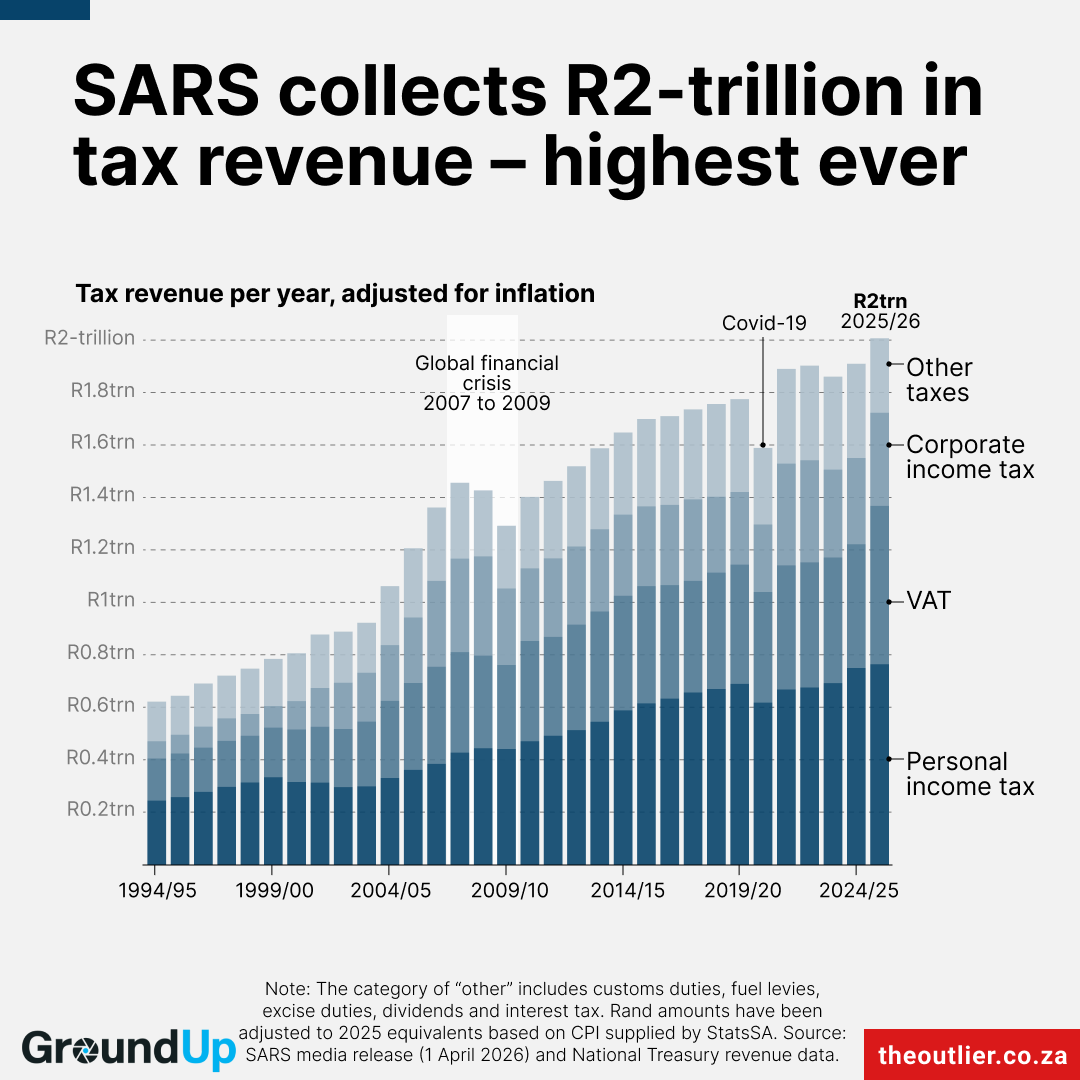
In 1994, when South Africa became a democracy, the South African Revenue Service (SARS) collected R113.8-billion in taxes. When adjusted for inflation, this would have been equivalent to about R624.3-billion in 2025.
31 years later, in the 2025/26 financial year, SARS broke records by bringing in R2-trillion in tax revenue.
Collection over the last three decades has been far from smooth. Large increases were seen in the early 2000s as a commodity boom (minerals, metals) boosted corporate income tax, but then during the global financial crisis between 2007 and 2009 the economy contracted and revenue collection dropped.
Revenue only reached pre-crisis levels in 2011/12. Tax income started to grow again in the years that followed, but slow economic growth hampered tax collection. Then, in 2020, the covid pandemic hit the economy, and tax revenue dropped again.
There has been significant recovery since covid as the economy has started to grow again and SARS, under the leadership of outgoing commissioner Edward Kieswetter, has rebuilt its capacity after a period of state capture.
Chart produced by The Outlier in partnership with GroundUp

Support independent journalism
Donate using Payfast

Don't miss out on the latest news
We respect your privacy, and promise we won't spam you.
© 2026 GroundUp. This article is published under the GroundUp Republication Licence Version 1.0. Email info@groundup.org.za to request permission to republish.