
SA’s harbours are slowly recovering
Cape Town port hit record numbers in 2024
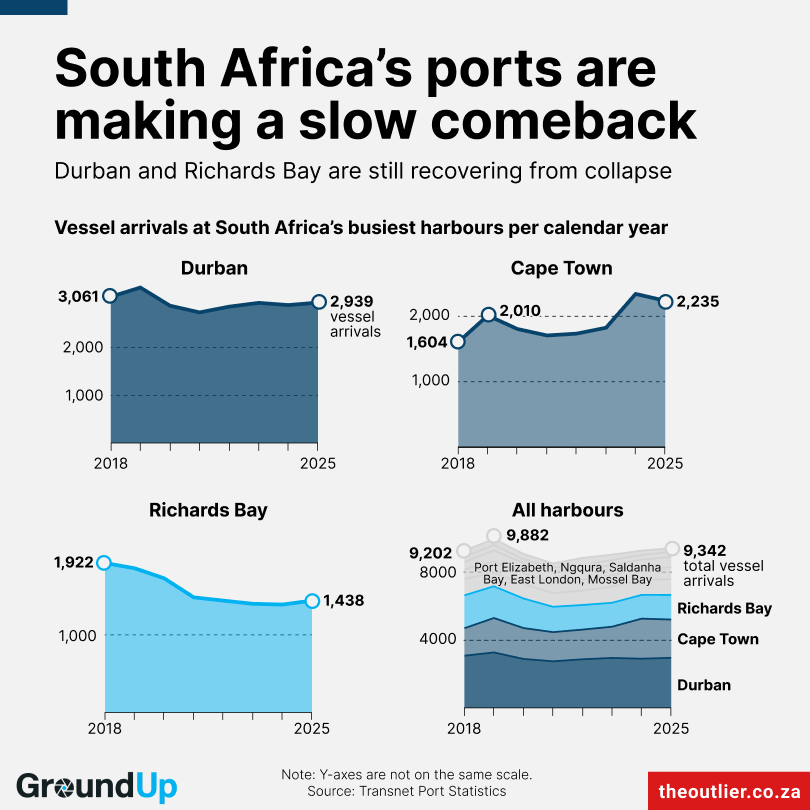
After a decline in ships docking at South African ports between 2019 and 2021, the country’s harbours appear to be making a gradual comeback.
Almost all of the country’s exported goods leave through harbours operated by state-owned Transnet.
The sharp drop in vessels arrivals – from 9,882 in 2019 to 8,453 in 2021 – was the result of the covid pandemic, compounded by ageing infrastructure and years of mismanagement and corruption at Transnet.
However, economic recovery and increased investment in South Africa’s ports over the past few years, including new public-private partnerships, appear to be arresting the decline, with 9,342 vessels arriving last year.
Durban harbour, the country’s largest, has battled with ageing infrastructure and administrative delays, resulting in long waiting times. A new public-private partnership came into effect in January at Durban’s Pier 2 and is expected to improve throughput and ease congestion.

Richards Bay is used primarily for coal exports, but due to inefficiencies in Transnet’s rail operations there is not enough coal arriving at the port. There have, however, been some improvements in rail operations and infrastructure upgrades over the past two years, although vessel numbers remain well below 2018 levels.
Cape Town harbour has been busier than ever. Since 2018, it has overtaken Richards Bay as the country’s second-busiest port, with record numbers in 2024. The increased traffic has put pressure on the harbour’s limited infrastructure, causing bottlenecks and delays. Substantial infrastructure upgrades and improvements are ongoing since 2024.
Support independent journalism
Donate using Payfast

Don't miss out on the latest news
We respect your privacy, and promise we won't spam you.
Next: Canegrowers warn Tongaat liquidation will devastate economy
Previous: Rural Eastern Cape children left to hitchhike to school
© 2026 GroundUp. This article is licensed under a Creative Commons Attribution-NoDerivatives 4.0 International License.
You may republish this article, so long as you credit the authors and GroundUp, and do not change the text. Please include a link back to the original article.
We put an invisible pixel in the article so that we can count traffic to republishers. All analytics tools are solely on our servers. We do not give our logs to any third party. Logs are deleted after two weeks. We do not use any IP address identifying information except to count regional traffic. We are solely interested in counting hits, not tracking users. If you republish, please do not delete the invisible pixel.