
Slovo Park: a decade of winning in court, losing on the ground
After decades of struggle, residents still lack sanitation and water infrastructure
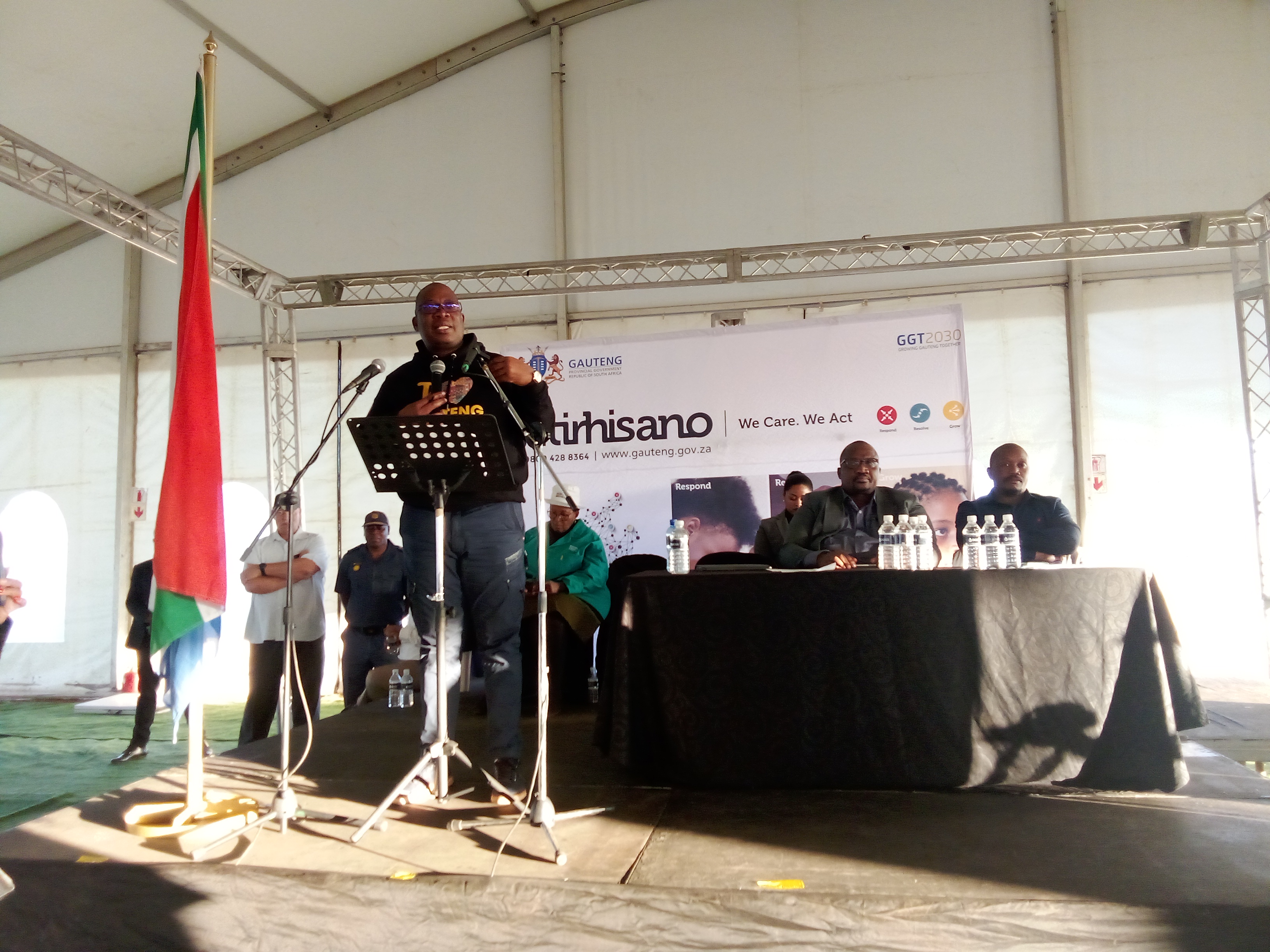
Gauteng Premier Panyaza Lesufi at the meeting in Slovo Park in August 2023, in which he promised a “realistic” plan for rolling out services in the informal settlement. Archive photo: Chris Gilili
Moments after the Johannesburg High Court handed down a landmark judgment in the Melani case in 2016, founding resident Frank Mapara jubilantly declared in a media interview that even if he died on that day, he would die knowing that Slovo Park would finally be developed and that what he had fought for had been secured.
The court had ordered the City of Johannesburg to apply for funding under the Upgrading of Informal Settlement Programme (UISP) for Slovo Park, an informal settlement situated in the south of Johannesburg, near Eldorado Park.
Mapara died in May 2019 at the age of 80, ten months after the City electrified Slovo Park. It would take another six months before the City applied to the Gauteng Department of Human Settlements (GDHS) for UISP funding in compliance with the Melani judgment.
But as time passes, despite the Slovo Park community’s landmark legal victory, there is little progress. Sadly, its predicament is not unique.
The Melani judgment was handed down a decade ago on 5 April because residents challenged the City’s plans to evict and relocate them after two decades of unfulfilled development promises. Specifically, they challenged the City’s failure to implement the UISP — a national housing programme facilitating structured incremental development through the introduction of permanent basic service infrastructure, such as water, sanitation, proper roads, and eventually housing.

Led by a representative leadership structure called the Slovo Park Community Development Forum (SPCDF), residents had legal representation from the Socio-Economic Rights Institute of South Africa (SERI).
When the High Court found in their favour, the judgment was hailed as a landmark because it affirmed, for the first time, that the UISP, contained in the Housing Code, was binding on all municipalities.
Nomzamo Zondo, lead attorney for the applicants, said at the time that the legal victory was an important “vindication of the Slovo Park residents who fought for twenty years” and that the UISP could now come alive for communities in informal settlements all over South Africa.
The community had engaged the state at all levels, exhausting every avenue available, until litigation was all that remained. However, a decade after the court victory, the comprehensive upgrade envisioned in the UISP is yet to be realised.
With recent estimates that more than five million people live in informal settlements in South Africa, the UISP is a vital lifeline for residents.
Among the various challenges hindering successful informal settlement upgrading is government ambivalence around community participation, on which the UISP places strong and explicit emphasis.
In December 2016, the SPCDF initiated the establishment of a task team to ensure engagement and community participation in the settlement upgrade. The task team includes the SPCDF, the City of Johannesburg (led by its human settlements department), entities such as Joburg Water and City Power, the Gauteng provincial department of human settlements, as well as longstanding partners of Slovo Park, SERI, the Centre for Urbanism and Built Environment Studies (CUBES) at the University of the Witwatersrand, and NGO 1:1 Agency of Engagement.
Through the task team, they negotiated in situ electrification in 2018 and improved high-mast lighting in 2026. Each gain was a struggle, waged by the community through the SPCDF.
Until recently, when human settlements mayco member Mlungisi Mabaso took over chairing the task team in 2025, it lacked the necessary political backing to progress the upgrading project meaningfully.
For years, the task team sat inconsistently, sometimes with meetings cancelled at the eleventh hour. Following the established pattern of unfulfilled promises in the years before the litigation, in meeting after meeting, commitments would be made, budgets allocated and timelines set, only for them to be broken, despite persistent pressing by SPCDF leadership.
Task team meetings appeared to the community to be talk shops from which nothing would materialise. The lack of progress in the task team and on the ground has presented the leadership with resident scepticism, distrust, and despondency.
Over the years, a gradual weakening of the community’s participation and empowerment has been the result.
In 2023, the leadership boycotted the task team when it learned that it was not included in the list of informal settlements for which the City would receive funds from the National Department of Human Settlements, despite seven years of engagement through the task team.
The community decided instead to take to the streets to address urgent needs. The poor state of toilets in Slovo Park has caused illnesses, mostly among women, and taken the lives of several children.
After ten years, the City is yet to install permanent water and sanitation infrastructure and finalise the acquisition of additional land parcels for the de-densification process – a critical component of upgrading an informal settlement.
As the first and only informal settlement with a court order mandating a municipality to upgrade it, the City has largely failed to seize it as an important learning opportunity to better understand and implement incremental participatory informal settlement upgrading as advocated for by Professor Marie Huchzermeyer.
However, with the renewed political commitment and parliamentary oversight secured through a 2025 petition by the SPCDF to the portfolio committee, not all hope is lost.
Mapara did not live to see the commencement of Slovo Park’s development as he had wished, but Slovo Park remains determined to ensure that its hard-won legal victory does not remain deferred indefinitely.
To mark the tenth anniversary of the Melani judgment, the SPCDF and partners are dedicating the month of April to reflecting on this milestone and Slovo Park’s ongoing struggle for development.
As part of this, the Slovo Park Digital Archive will be launched at a commemorative media briefing to serve as a public resource for Slovo Park and other communities, researchers, journalists, and organisers pursuing informal settlement upgrading across South Africa.
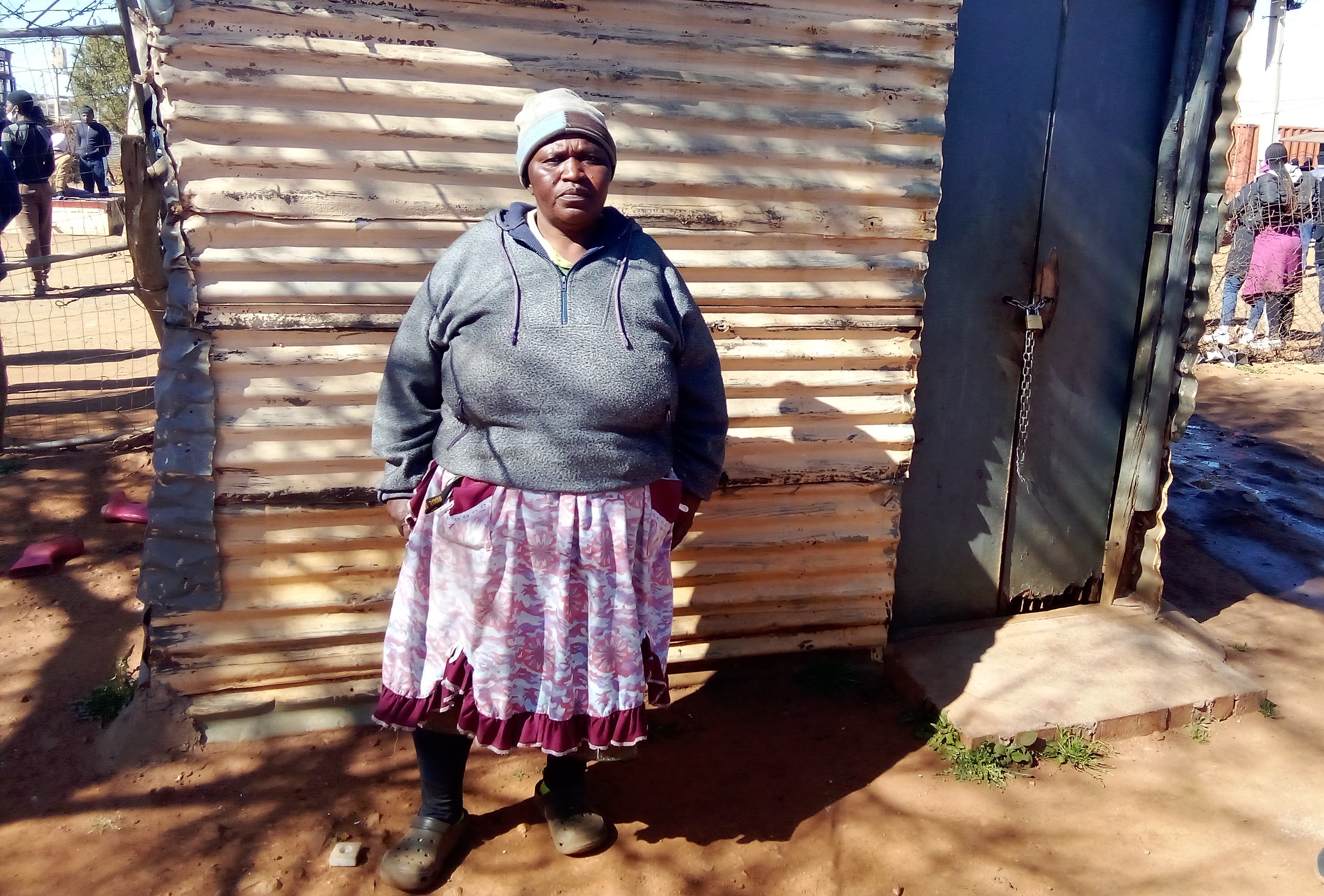
In 2023, GroundUp wrote about Evelyn Ntimande, who came to Slovo Park when she was 27. Her elder daughter had then turned 27, and they were still living in poverty. Archive photo: Chris Gilili
Views expressed are not necessarily those of GroundUp.
Support independent journalism
Donate using Payfast

Don't miss out on the latest news
We respect your privacy, and promise we won't spam you.
© 2026 GroundUp. This article is published under the GroundUp Republication Licence Version 1.0. Email info@groundup.org.za to request permission to republish.