
Teenager beaten to death for stealing cellphone and cash
Sinethemba Mxhaso, 18, was beaten to death by members of his community in Philippi on Wednesday
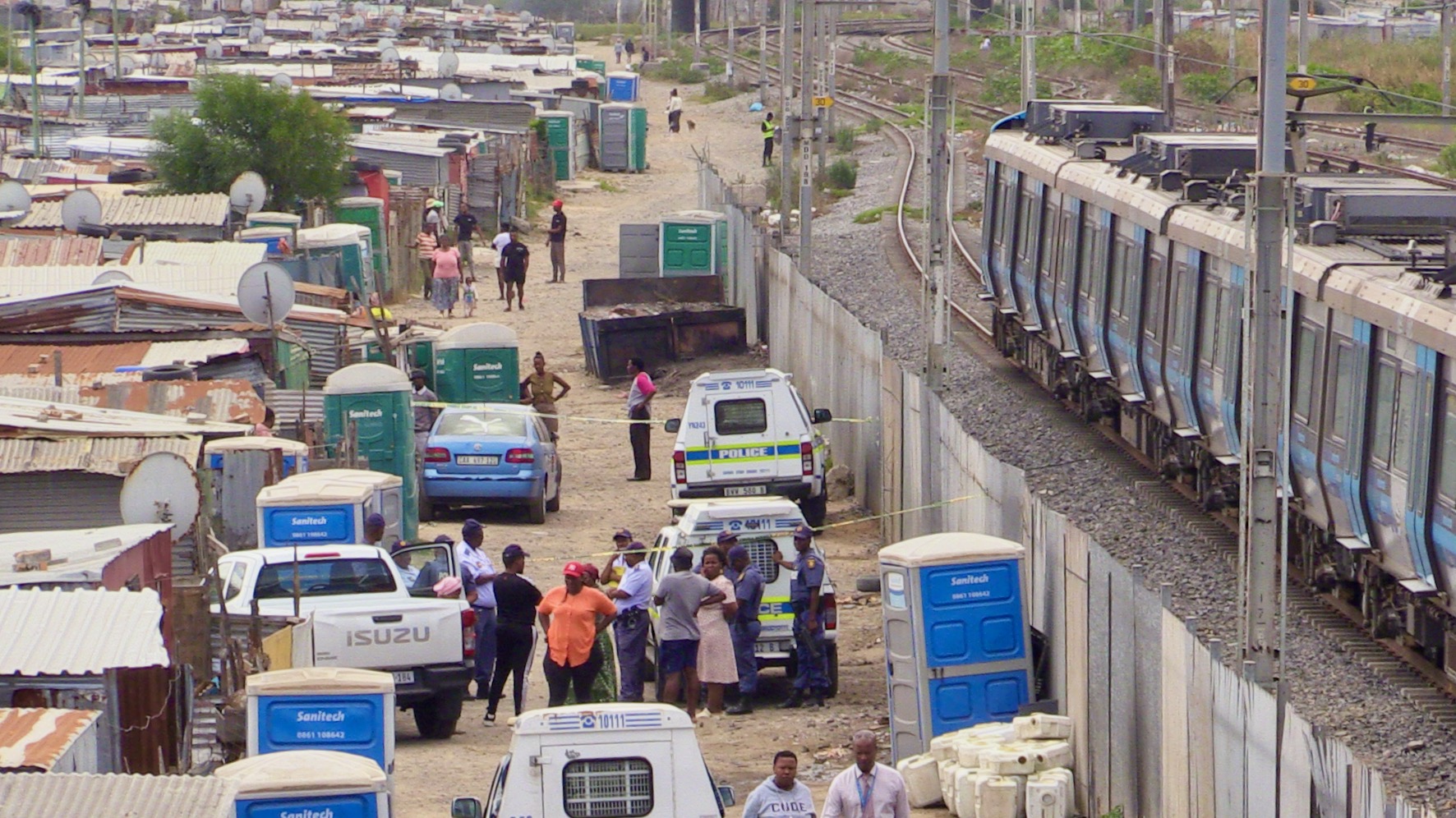
Police arrived only in time to stop the body of Sinethemba Mxhaso being set alight after he was beaten to death in Malema informal settlement near Philippi train station on Wednesday. Photos: Sandiso Phaliso
- Sinethemba Mxhaso, 18, was beaten to death by members of his community in Malema informal settlement on Wednesday.
- Another man accused of involvement in the robbery was taken to the hospital by paramedics.
- They were accused of robbing an elderly man of a cellphone and R1,000.
- No arrests have been made.
Eighteen-year-old Sinethemba Mxhaso was beaten to death by residents of Malema informal settlement near Philippi train station on Wednesday. Car tyres were placed on his body, but police arrived before these were set alight.
Another man accused of involvement in the robbery was taken to hospital by paramedics. A third man escaped to alert Mxhaso’s family of his murder.
Mxhaso was accused of having robbed an elderly man of his cellphone and cash that morning.
Residents told GroundUp the suspects had been chased, caught and questioned before they were beaten with sticks and rocks.
Constable Ndakhe Gwala of the South African Police Service (SAPS) said police arrived at the scene at 10:30am, and “found two males laying on the ground, with visible face, head, and body injuries. One was declared dead on the scene and the other one was rushed to a medical facility.”
“Nyanga police registered a case of murder and attempted murder.”
“The circumstances surrounding the incident are under investigation and no arrest has been made yet.”
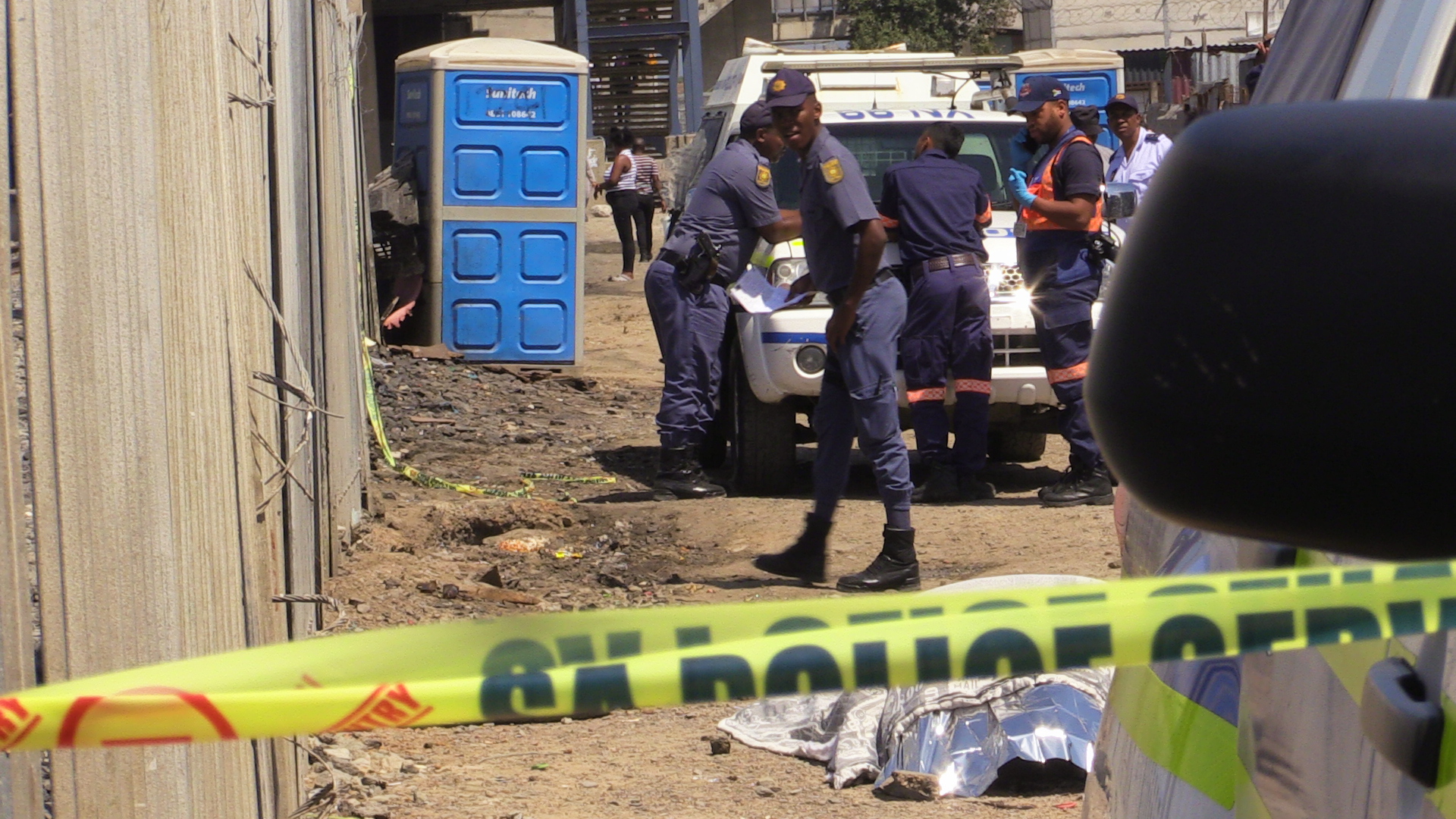
Eighteen-year-old Sinethemba Mxhaso was beaten to death by members of his community in Malema informal settlement near the Philippi train station on Wednesday.
The victim of the robbery spoke to GroundUp but asked to remain anonymous. He said he was walking to a nearby shop after 8am when the three men approached him and demanded his money and cellphone. When he refused, they started slapping him and one drew a knife.
“It was a scary moment. I gave them the phone and cash, about R1,000. But luckily there were people who had seen this and they started shouting at them. They ran and they were chased and caught. Then they were beaten.”
He said he had not got his cash or phone back. He believes the third suspect had run away with them.
A person who took part in the killing said the community was fed up because police usually release suspected criminals, and taking the law into their own hands sent a message to would-be criminals.
“People are angry and frustrated at the way police deal with criminals. Some people took part in mob justice attacks because they take revenge for what happened to them before,” the person said. “Police are not doing enough to curb crime.”
Other killings
On Friday, 13 February, another man, suspected of a smash-and-grab robbery from a car at the corner of New Eisleben and Bristol Road, Philippi, was stoned to death by community members. No one has been arrested.
Residents told GroundUp that people have lost faith in the police and the justice system.
Anele Madondile, Philippi community policing forum chairperson, said taking the law into one’s own hands was a crime in itself, and he urged residents to rather work with the police.
“The people that are suspected of crime live among us, they don’t fall from the sky … The reason people have lost faith in the police is because the same community is not reporting criminal conduct. If people say they have lost faith in the police, what action or initiative have they played? Nothing,” said Madondile.
Mob justice
Lizette Lancaster, head of the Institute for Security Studies’ (ISS) Justice and Violence Prevention Programme, commented that mob justice or vigilantism, according to the second quarter crime statistics for July to September 2025, is a main driver of violence, on par with murders occurring as a result of robberies, gang violence or intergroup retaliations or revenge attacks.
The fact that vigilantism is still rife more than 30 years after democracy, “shows that a lot more needs to be done to make justice accessible to all,” said Lancaster.
“The police need to be held accountable, be seen to reduce crime and investigate cases properly. The country needs strong community leaders and local councillors to condemn all forms of violence and take community concerns seriously.”
“The high crime rate in South Africa causes most communities to live in fear. Communities often feel that the police cannot protect them. Those who can afford it, invest in private security.”
“Those who cannot afford these measures often have no means to safeguard their families and homes. Crime statistics suggest that most low-income areas experience acts of violence and crime on a daily basis. Any incident could be ‘the last straw’ and could lead to an outburst of emotions and frustration where ordinary people engage in vigilante activities.”
The ISS’s research shows that “community frustration may boil over if groups feel that their situation is not improving”, said Lancaster .
“Victims will report crimes to the police if they feel that the police will be able to solve these cases and arrest the perpetrators. If they feel that the police are unable to do so and emotions run high, then they are more likely to resort to mob justice.”
“Often innocent persons are targeted who happened to be at the wrong place at the wrong time. The criminal justice system is designed to be fair, impartial and objective, with separate law enforcement and court functions and clear rules to ensure a fair trial.”
“Unfortunately, many do not believe this and communities are caught in a cycle of violence, which turns our people into criminals if they participate in mob justice. Our children are exposed to violence on a daily basis in our homes and in our streets. In turn, it is very likely that they will use violence too to deal with stress and conflict.”
“South Africa desperately needs effective, professional and responsive policing in high-violence communities, especially in dealing with murders, rape and robberies. Where serious violent crime occurs, the state must be seen to respond swiftly, fairly and most importantly, consistently. Communities cannot simply be prioritised when government officials visit after such shocking attacks take place.”
Support independent journalism
Donate using Payfast

Don't miss out on the latest news
We respect your privacy, and promise we won't spam you.
© 2026 GroundUp. This article is licensed under a Creative Commons Attribution-NoDerivatives 4.0 International License.
You may republish this article, so long as you credit the authors and GroundUp, and do not change the text. Please include a link back to the original article.
We put an invisible pixel in the article so that we can count traffic to republishers. All analytics tools are solely on our servers. We do not give our logs to any third party. Logs are deleted after two weeks. We do not use any IP address identifying information except to count regional traffic. We are solely interested in counting hits, not tracking users. If you republish, please do not delete the invisible pixel.