
The ancient tribe without a piece of land they can call their own
Dorah Begwa has been fighting for land for her clan for more than 30 years
 Add GroundUp on Google
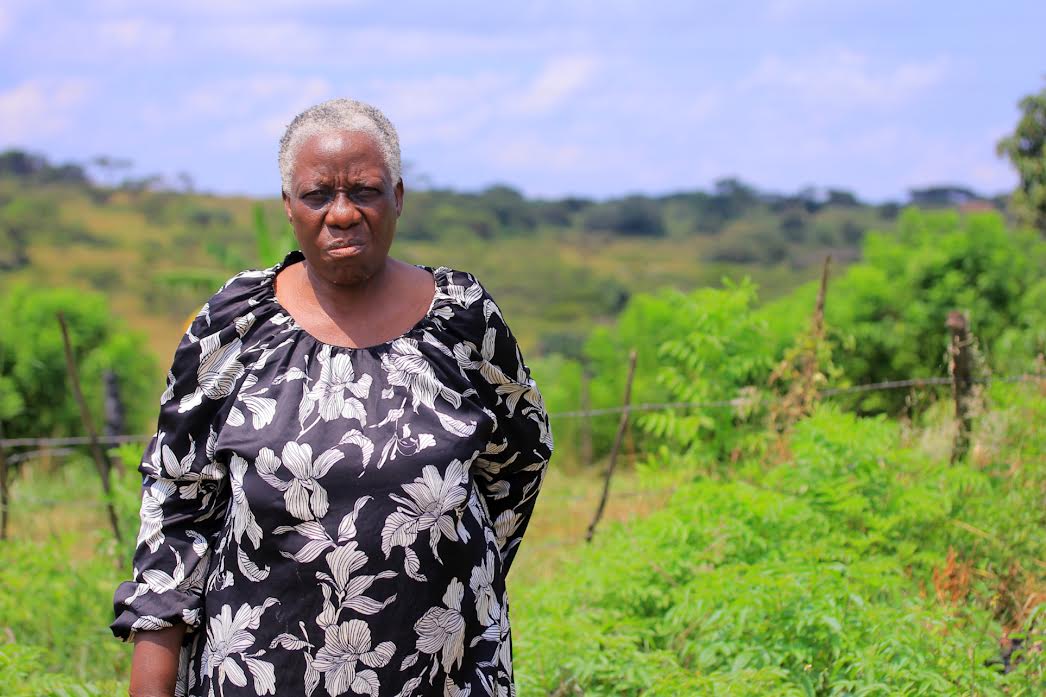
Dorah Begwa has been fighting for more than 30 years to get back land which once belonged to the Begwa clan. Photo: Thembi Siaga
For more than three decades, Dorah Begwa has been on a mission – trying to restore land that once belonged to the Begwa community. But the task may be more than what a single activist, without access to expensive lawyers and substantial funds, can achieve. For many, she represents the last hope for a people who have occupied the land for over a thousand years.
Dorah fights on behalf of a clan that is part of the Vhangona people, who have lived in the northern part of the country for over a thousand years. They have a history fraught with conflict, where they were continuously pushed aside and suppressed by new groups moving in. Still, they remain, and they are proud of their cultural history.
But, as has so often been said, history is written by the victors and framed according to their prejudices and biases. For the Begwa clan, it meant being pushed out when the first settlers arrived in the region and also being sidelined by Vhavenda clans in the land restitution process that followed the dawn of democracy post-1994.
The earliest inhabitants
The Vhangona are estimated to have settled in the area as early as the sixth century, placing them among the original inhabitants of the region. They preceded by several hundred years what is now known as the Vhavenda.

This is not a history based on folklore alone. Since the late 1800s, several studies have attempted to trace the history of the indigenous people in the northernmost part of the country.
In 1929, one of these researchers, Hugh A. Stayt, interviewed a Mungona (Ngona man) named Netshitumbe, who could recite his ancestors back 16 generations. Scholars calculated a timeframe of roughly 500 to 700 years prior, which would place the Vhangona in the region at the time of the Mapungubwe Kingdom, which flourished between 1030 and 1290 AD.
According to some oral traditions, the Vhangona Kingdom consisted of approximately 145 chiefdoms with Mapungubwe as its capital. The kingdom was reportedly divided into seven districts: Dzanani, Mbilwi, Tswime, Tshiendeulu, Tshakhuma, Tshamanyatsha and Thulamela, each ruled by district chiefs.
As the first major inhabitants of the area, the Vhangona are credited with naming the places, mountains, rivers and trees in what would later become Vendaland.
There are, however, competing versions of Vhangona history. An alternative version disputes that the Vhangona were ever united under one chief or king, suggesting instead that they had different independent chiefdoms.
Central Africa and Ethiopia
In the late 1600s and early 1700s, the Singo clan (also known as the Vhasenzi) settled in the northern parts of South Africa. They came from central Africa and Ethiopia, passing through Zimbabwe. Upon arriving in the north of what is now South Africa, the Vhasenzi managed to fuse all the clans into one nation known as Vhavenda.
Upon entering what later became known as the Zoutpansberg region, the Singo, led by Vele Lambeho (also known as Dambanyika), settled at Mount Lwandali. They eventually built their capital, Dzata, in the Nzhelele Valley, naming it after their former home in Zimbabwe.
The Vhangona clans scattered throughout the region, with some moving to places like Blauwberg and east of the salt pans. Some, like the Begwa clan, kept to the south of the mountain, in the area south-west of Louis Trichardt, towards Elim and Bandelierkop.
Interestingly, despite being conquered, about 85% of present-day Tshivenda words and vocabulary derive from the original Tshingona Luonde, demonstrating the Vhangona’s lasting cultural influence. The conquerors adopted much of Vhangona culture and language, even though they became the political rulers.
Then came the Boers
Historical references after 1800 indicate that Vhangona tribes, such as the Begwa, were not left to live peacefully when the first white settlers began moving into the area. They were caught between succession struggles within the Vhavenda kingdom and the expansion of the Zuid-Afrikaansche Republiek (ZAR).
When Voortrekker leader Louis Tregardt arrived in the area around 1836, he played an important role in one such succession battle. A few years before his arrival, in 1829, the Venda leader Munzhedzi Mpofu died and a power struggle ensued between his two sons, Ramavhoya and Ramabulana. Ramavhoya succeeded his father as ruler, but tension remained between the brothers.
Tregardt was asked to trick Ramavhoya into leaving the palace at Tshirululuni to visit him at his laager. Here he was ambushed and strangled by Ramabulana.
For this assistance, and for protection against Matabele raiding parties, Rasethau (Ramabulana) gave Tregardt freedom to occupy land and access to hunting grounds.
But the Tregardt group were merely passing through, leaving the area in 1837 in search of a route to Lourenço Marques on the east coast. In their place came more Voortrekker groups who could not resist the temptation to get involved in local affairs.
When Ramabulana died in 1864, he was succeeded by his eldest son, Davhana. His younger son, Makhado, challenged the succession and war broke out between the two. Davhana was defeated and sought refuge with João Albasini. Albasini, a Portuguese trader and Native Commissioner for the ZAR, provided Davhana with a place of residence along the banks of the Luvuvhu River.
This also meant that the ZAR, through Albasini, was taking sides in the struggle. Makhado’s soldiers’ persistent attacks on white settlers eventually caused the evacuation of the once-thriving Schoemansdal town, just south of his headquarters at Luatame. Many Boer families retreated to the area known as the Klein Spelonken, close to Albasini’s farm and the area where Davhana lived.
Collateral damage
Makhado had issued a decree that no one, except hunters, was permitted north of the Luvuvhu-Muhohodi line. The Begwa community lived on the fringe of this border, in the Tshabwa area, but Makhado perceived their presence as an encroachment on his territory. He intended to subjugate groups like the Begwa, Neluvhola and Nevari, using their lands as a springboard to eventually drive out the Tsonga and the Boers from the Spelonken.
In the decade that followed the evacuation of Schoemansdal in 1867, the Begwa clan became casualties in these skirmishes, attacked by both white settlers and Makhado’s forces. They gained some protection when Funyufunyu, described as the fighting general of the Makhado tribe, married into the Begwa family.
One such battle was recorded in 1883, when the Buys family (specifically Doors Buys and his family) became trapped and surrounded by Makhado’s army at Begwa’s kraal. This triggered a military response from the ZAR, and the authorities mobilised a combined force including João Albasini’s “Knobneuzen” (Tsonga/Shangaan auxiliaries) and members of the Elim mission station to engage Makhado’s army at Muhohodi.
Led by Commandant B.J. Vorster, this combined force launched a direct attack on Begwa’s kraal to liberate the Buys family. The ensuing battle lasted approximately one and a half hours, resulting in the Boer forces capturing the kraal.
The longer-lasting effect was that the area became occupied by white settlers and farms were demarcated where clans like the Begwa had once lived.
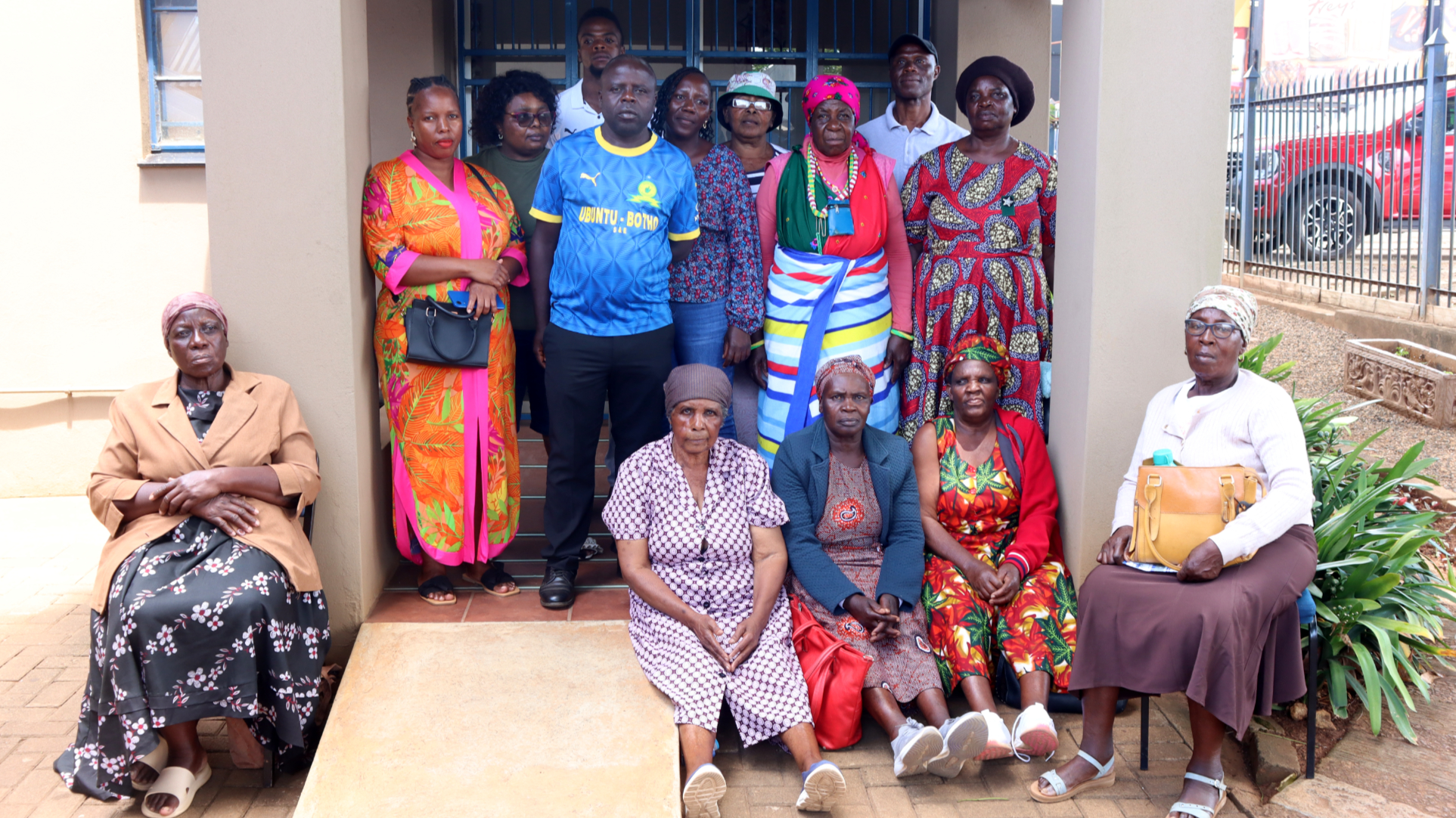
Members of the Begwa clan on a visit to the offices of the Limpopo Mirror. Photo: Anton van Zyl
A gradual eviction
Unlike in many areas of South Africa, where black communities were forcibly removed from land using oppressive laws, the removal of the Begwa clan from their land happened gradually.
On one side they had to contend with the Vhavenda, who further encroached on land they previously inhabited. In 1890, one such area, which later became the farm Melkhoutkopjes, was given by Vhavenda chief Nthabalala to his son Mamphodo, a grandson of Davhana. When white farmers moved in, the Begwa clan remained in their huts and kraals, with many working on the farms.
In the decades that followed, the clan had to relocate to areas outside the farms, as their presence was seen as a transgression of apartheid laws, which demarcated areas for certain race groups.
In practice, however, farmers were not always keen on relocating their labour force. The farm Melkhoutkopjes was a good example. The Menne family, whose roots in the area stretch back to the late 1800s, bought the farm from Koos Botha, who had occupied it since roughly 1867. Three generations of Mennes farmed there. The late Peter Menne, who was living there when the new political dispensation came about, acknowledged the Begwas as the previous inhabitants of the area. He also did not object to selling back the land when a land claim was filed on his farm in 1999.
When the Restitution of Land Rights Act was promulgated in 1994, the Vhangona had high hopes of recovering some of their land. Thirty years later, however, that hope is starting to fade.
Expectations, deceit and disappointment
The Begwa clan did not immediately respond to the call to claim back land they believed was historically theirs. Representatives of a Vhavenda clan, Khaukanani Wisdom Mamphodo and Jack Mushana, filed Mamphodo Land Claim 1707, covering only Melkhoutkopjes farm 314LS.
On 21 October 1999, a meeting was held with the Land Claims Commissioner from Pretoria, which Andries Rambau (Begwa) attended after being invited by the Mamphodo family. Even though the Mamphodos disputed the Begwa’s version of the history, they were willing to include them, possibly to strengthen their own claim.
In March 2002, a meeting was held in Vleifontein where it was agreed that the land should be claimed by four clans: Begwa, Mamphodo, Mushasha and Godoni.
According to Dorah Begwa, the regional Land Claims Commission worked behind the scenes to convince them not to file a separate claim, but to work together with the other groups. The Mamphodo Mushasha Begwa Communal Property Association was formally registered in February 2005. On 30 September the following year, the farm Melkhoutkopjes 314 LT was officially handed over to the Mamphodo-Mushasha-Begwa community.
But from the outset there was no harmony within the CPA. In August 2008, the Begwas formally complained in a letter to the department about being excluded from the management of the CPA. There was no progress in developing the land and they requested a forensic audit of the finances.
Not much happened, and after countless phone calls, letters and visits, Begwa visited the office of the Chief Land Claims Commissioner in Pretoria with a list of complaints. The Commissioner’s office responded by scheduling a meeting at the Land Restitution Support Offices in Limpopo. Still nothing happened.
In March 2012, community members went to the minister’s office in Pretoria but were denied access and slept outside overnight. The next morning they were allowed to meet with the director general and handed over their complaints. Further meetings followed, again with no results.
The pattern repeated itself over the next decade. Dorah Begwa keeps a pile of documentation, including letters to various departments, official responses and further complaints. She can pinpoint every so-called annual general meeting that was held where she says the Begwas were not informed and not represented.
On 29 July 2014, the Begwa clan filed another claim in an attempt to secure land of their own. Several other farms were included in this claim.
One of the first hurdles Dorah Begwa had to clear was for the clan’s senior traditional leader, Andries Begwa, to be recognised.
In 1928, the clan members had been told by then Commissioner of Native Affairs to pay allegiance to the Vhavenda traditional leader, Nthabalala. For several decades no Begwa leader had been recognised by the government of the day.
In 2015, when the Commission on Traditional Leadership Disputes and Claims had to rule on whether the land claim was valid, they first had to determine whether a senior traditional leadership had been established in accordance with customary law.
Drought
In her presentation to the commission, Dorah Begwa explained that the clan initially lived in the Mulambwane area, north of the Soutpansberg. A prolonged drought forced them to move south, and they settled on land now known as Melkhoutkopjes, Vleifontein, Vyeboomspruit, Mampakuil and Rondebosch.
She told the commission that their clan was recognised by Vhavenda king Makhado, but they lost possession of their land when the white settlers arrived. The well-known Lovedale Park, run by the Cooksley family for many decades, was where their main kraal had been.
The Begwa clan’s members gradually scattered across the region. The leaders and many of their followers refused to work as farm labourers, opting instead to pay the two-pound annual levy imposed by the government, she said.
But the members of the commission were not convinced. In their finding, in February 2015, they noted that there did not appear to be a history of cohesion and leadership. “The Begwas have existed alongside the Mamphodos and Mushasha for many years, according to the history submitted, which shows a period as far back as 1866,” they said.
The commission found that the Begwas had never functioned under an independent traditional leadership and thus had no land of their own on which they could practise jurisdiction.
But Dorah Begwa is not about to give up. During an interview earlier this year, she produced more documents as evidence of her ongoing fight, including letters of complaint to various departments.
She still hopes that the land claim they filed in 2014 will succeed.
The Begwas have ambitious plans to develop the land, should they ever receive any. For now, however, Dorah Begwa is fighting a largely lonely battle with very few resources.
Support independent journalism
Donate using Payfast

Don't miss out on the latest news
We respect your privacy, and promise we won't spam you.
Letters
Dear Editor
The history of the world: one tribe takes the land of another by force. In South Africa, this is evident in the history of the San, the Nguni moving south, and the Venda moving too, for example. People took land as they moved.
Dear Editor
Dear Editor,
I just want to commend you on this very informative masterpiece.
As a MuVenda person, reading this article made me realise how ignorant we are about our identity, especially black people.
I learnt many things I didn't know about my identity, and it spurred me to dig deeper, and it amazed me.
The conclusion I arrived at was that VhaVenda might be a minority, but not an insignificant one.
© 2026 GroundUp. This article is published under the GroundUp Republication Licence Version 1.0. Email [email protected] to request permission to republish.