
Vatsonga Machangani march against xenophobia
Tsonga-speaking South Africans say they are being harassed during protests over immigration
 Add GroundUp on Google
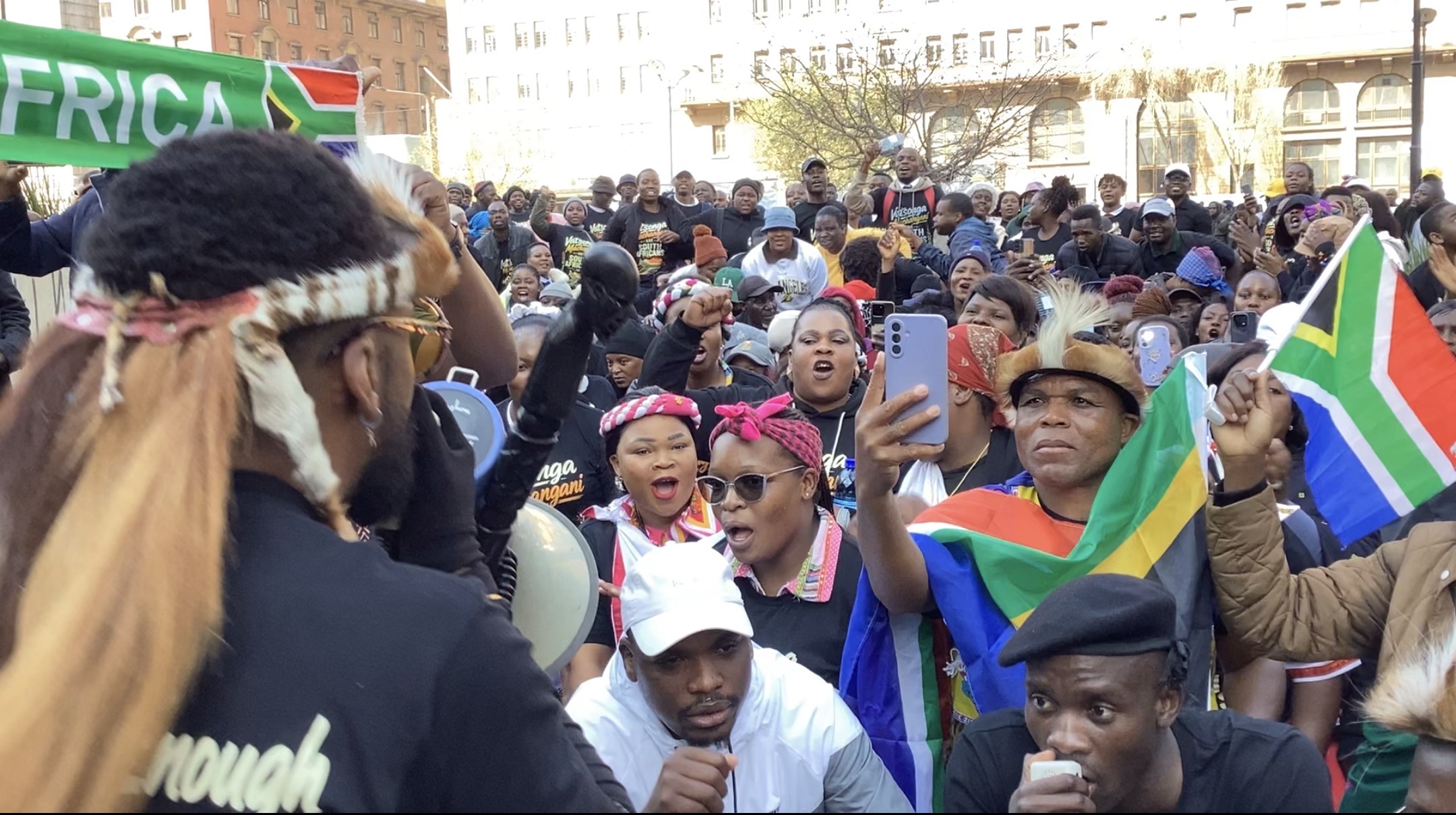
Hundreds of Vatsonga Machangani marched in Johannesburg on Friday. Photos: Kimberly Mutandiro
- People of the Vatsonga Machangani marched through the streets of Johannesburg to the Human Rights Commission in Parktown.
- The march was against harassment and profiling of Tsonga-speaking South Africans experienced during recent anti-immigrant protests.
- “These injustices are rooted in misidentification, ignorance, and unlawful vigilantism, which have in some instances escalated to fatal incidents,” read the memorandum.
On Friday, hundreds of Vatsonga Machangani from across South Africa marched from Beyers Naude drive to the Human Rights Commission (SAHRC) in Parktown, Johannesburg. They were demanding an end to human rights violations faced by their people during recent marches and amid anti-immigrant sentiment fuelled by March and March.
Organised by the Vatsonga Machangani Association of South Africa, most marchers were people originally from Bushbuckridge and Dzanini, Limpopo.
The protesters said Vatsonga Machangani are being attacked and accused of being undocumented. Marchers we spoke to said they are now afraid to speak their language in public. Some said they’d been forced on multiple occasions to produce documents to prove their South African identity during protests.

“We are tired of hearing the phrase ‘Mashangani Abahambe’ in our community. I am a South African citizen, but I’m treated as a foreigner in my own country,” said Tinyiko Cossa, from Elandsfontein informal settlement. She said when she wears her traditional attire, anti-immigrant groups label her a foreigner.
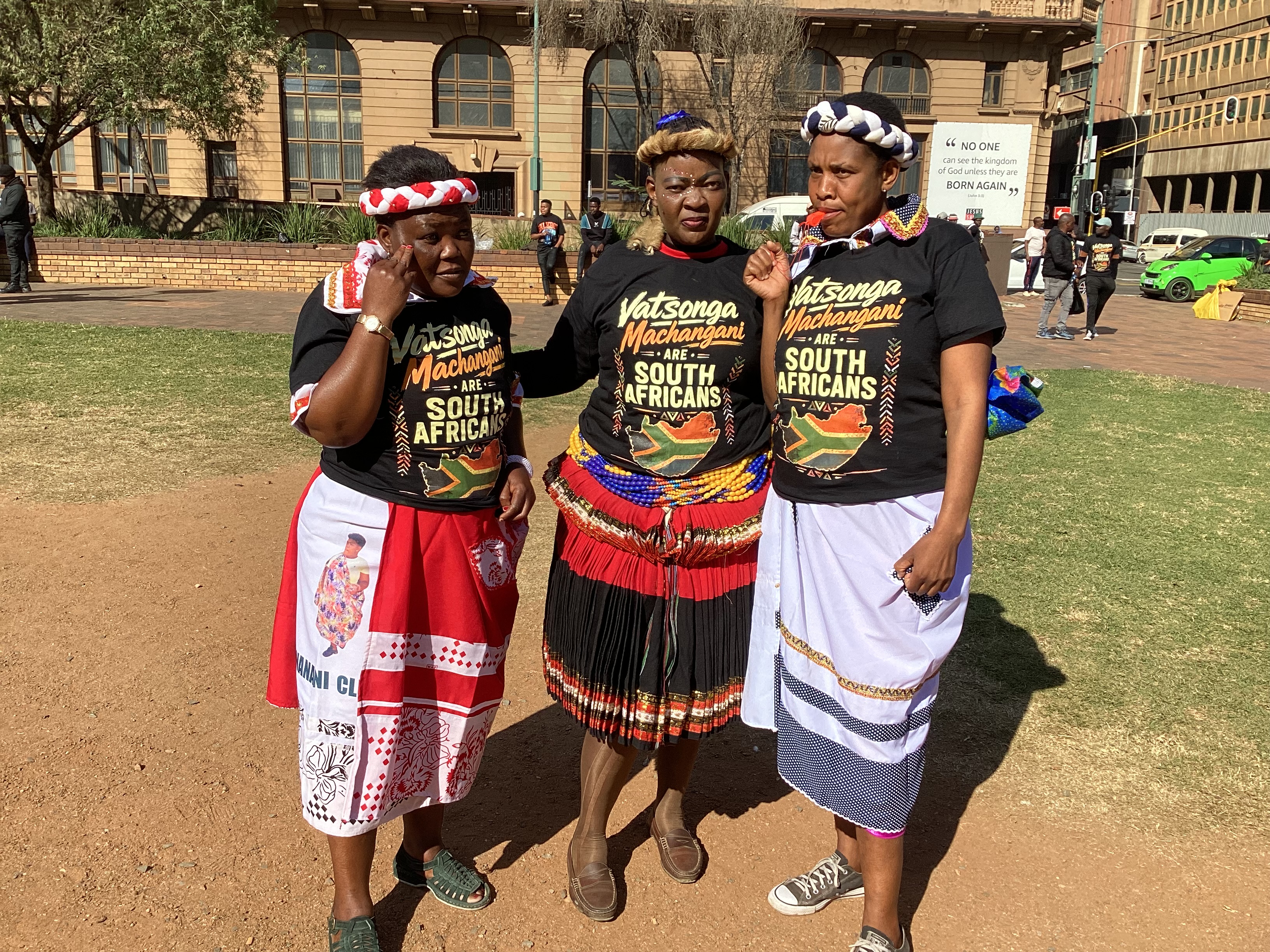
Flora Nancy Rikhotso, Goodness Mabunda and Kensani Khoza at the march in Johannesburg on Friday.
A memorandum presented to the SAHRC expressed concern over a growing crisis where Vatsonga Machangani are being subjected to discrimination, harassment, violence, and intimidation due to their language, identity and cultural expression.
“These injustices are rooted in misidentification, ignorance, and unlawful vigilantism, which have in some instances escalated to fatal incidents,” read the memorandum.
The memo referred to the killing of 19-year-old Nhlamulo Sambo, originally from Limpopo, in Mossel Bay, Western Cape, during a protest in May.
Demands included the public condemnation of the targeting of South African citizens based on language, ethnicity, or cultural identity and the recognition of Vatsonga Machangani traditional leaders. The marchers also demanded perpetrators be given harsh sentences.
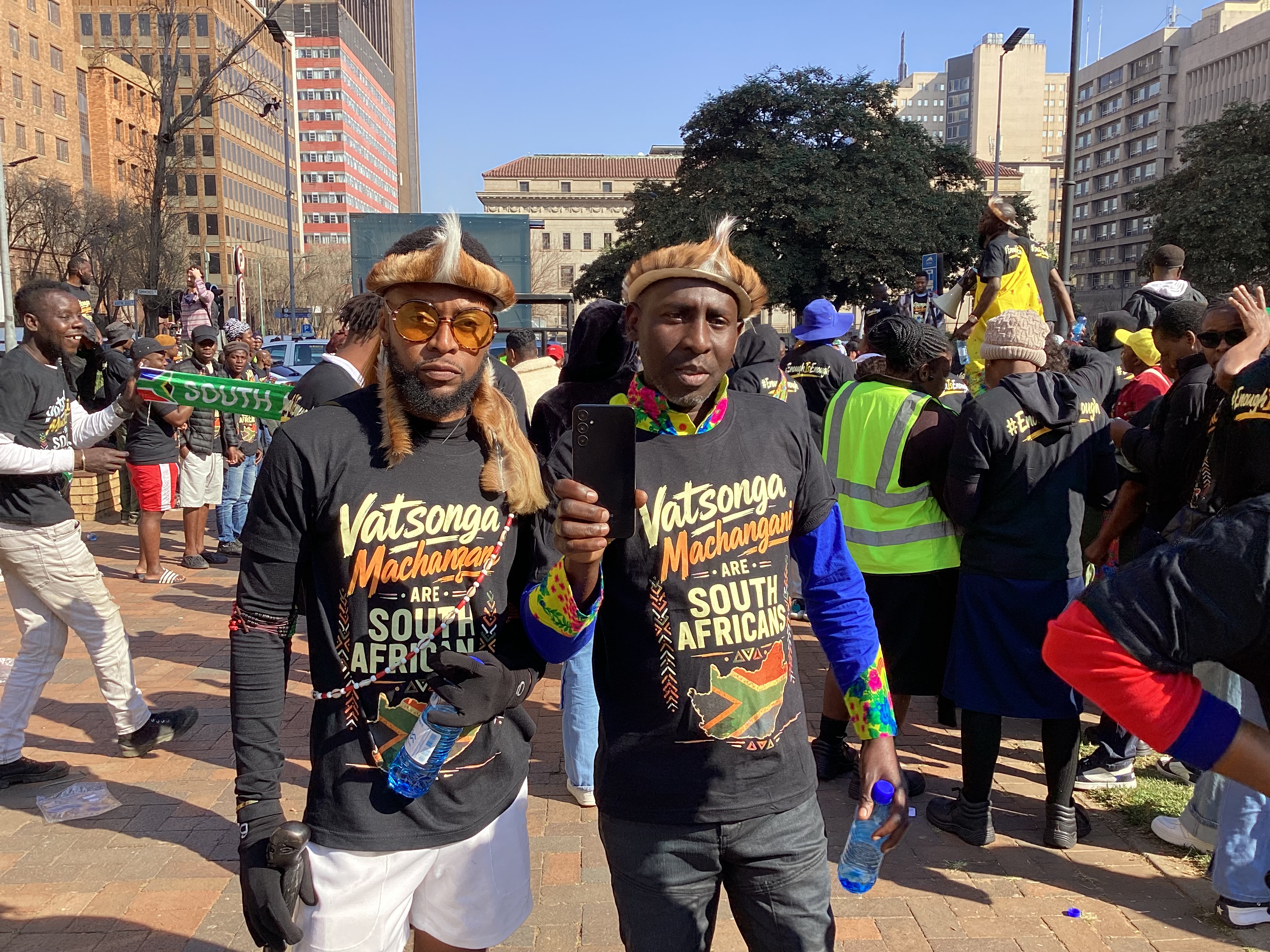
Nhlamulo Makhubela and Leonard Ngobeni joined the march calling for an end to the harassment of Tsonga-speaking South Africans.
National coordinator of the Vatsonga Machangani Association Civic Movement Wandile Malileke said, “The commission has the responsibility to educate other tribes of the existence of the Vatsonga Machangani people to avoid further violations.”
He said it is unlawful for ordinary people to go around asking for documents.
Nhlamulo Makhubela, from the Banthu Movement, said attacks on immigrants are unjustified. He called on vigilante groups to stop taking the law into their own hands.
“People are being beaten, anti-migrant marches are taking a wrong turn, and lives are being lost. This should stop,” Makhubela said.
The SAHRC was given 15 days to respond to the memo.
Representatives of the commission promised to address the marcher’s concerns.
Support independent journalism
Donate using Payfast

Don't miss out on the latest news
We respect your privacy, and promise we won't spam you.
Next: South Africans lose income as immigrants flee
Previous: Man promised RDP home left to live for seven years in collapsing mud house
© 2026 GroundUp. This article is published under the GroundUp Republication Licence Version 1.0. Email [email protected] to request permission to republish.