
Waste reclaimers demand plan as Joburg’s landfills fill up
They also want to be included in the City’s solutions. But there are obstacles.
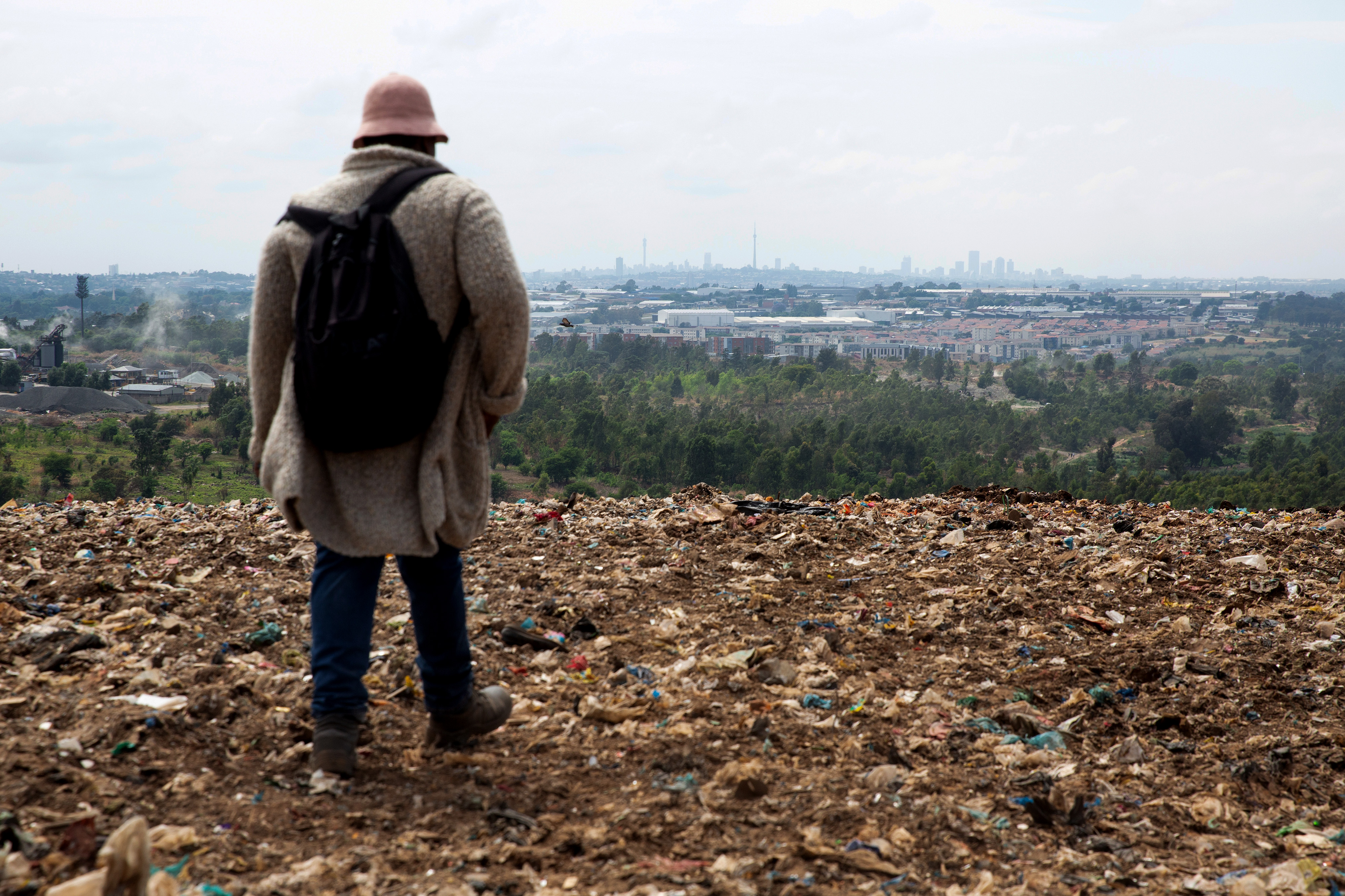
A waste picker at Marie-Louise landfill site in Johannesburg. Photo: James Oatway
- Johannesburg’s four operational landfills will reach capacity within a year, threatening the livelihoods of reclaimers who handle 80 to 90% of all recyclables collected in the city.
- The City of Johannesburg says it is working on waste picker integration but is hindered by a lack of funds and the unwillingness of reclaimers to join recognised cooperatives.
When informal waste reclaimers protested at the Johannesburg mayor’s office in September, they demanded that the City provide a plan for 140 reclaimers who had lost their income through the temporary closure of the Marie-Louise landfill in Dobsonville, Soweto.
Pikitup and the City’s environmental and infrastructure services department (EISD) then negotiated a draft memorandum of understanding (MOU) with the African Reclaimers Organisation (ARO) for a social plan for the Marie-Louise reclaimers and another plan for reclaimers at the city’s operating landfills.
But talks stalled within weeks and remain unresolved.
Joburg’s four operational landfills — Marie-Louise, Goudkoppies, Ennerdale and Robinson Deep — are all between 95% and 98% full. Pikitup says that they will have reached capacity within the next year.
These imminent closures threaten the livelihoods of thousands of reclaimers who salvage recyclables at the sites.
“What has happened in Marie-Louise is going to happen in all other landfills within the space of a year,” says ARO spokesperson Luyanda Hlatshwayo. “So we want to solve the problem before it happens.”
ARO, a research and advocacy group, represents about 5,000 reclaimers. It accuses the City of stalling changes to by-laws that criminalise reclaimers’ work. It wants the City to provide equipment and consult them on mutually beneficial municipal waste management plans.
But Nthatisi Modingoane, spokesperson for the City of Johannesburg, said they are developing waste picker integration guidelines in accordance with the 2020 National Waste Management Strategy.
He said the timeline for implementation is between three to five years and will involve finalisation of contractual agreements, waste picker registration and include the provision of sorting facilities, all subject to budget availability.
He said the process is hindered by a lack of funds, the unwillingness of some reclaimers to join cooperatives, and the fact that the majority are undocumented immigrants.
ARO is understood to have rejected a proposal that restricted the benefits of the social plan to South African citizens, because a majority of the reclaimers at Marie-Louise are immigrants.
Hlatshwayo, ARO’s spokesperson, said most reclaimers prefer to work independently, rather than in cooperatives.
Reclaimers are not paid by the City and they work in hazardous conditions. Residents, dogs and security guards can be hostile, and the metro police have been known to confiscate their trolleys. Reclaimers have died in landslides and fires at the landfills, which have also become hotspots for illegal mining and extortion.
Lillian Thamae, a reclaimer who has worked at Marie-Louise for about 25 years, says they were given just a day’s notice that the dump would stop accepting household waste. But ARO was informed three weeks before.
ARO’s Hlatshwayo says there are about 20,000 reclaimers working on the streets and at landfills, but Modingoane says only 1,600 reclaimers are registered with the City.
“If we were not there, Pikitup, and the City would have to hire more trucks, more people, and spend more money. We are saving them millions of rands,” claimed Hlatshwayo.
He said the City is not considering the experience and expertise of the reclaimers who have developed their own waste collection systems over decades.
Modingoane says the City has completed a review of by-laws to regulate waste picking and continues to build its database of registered reclaimers.
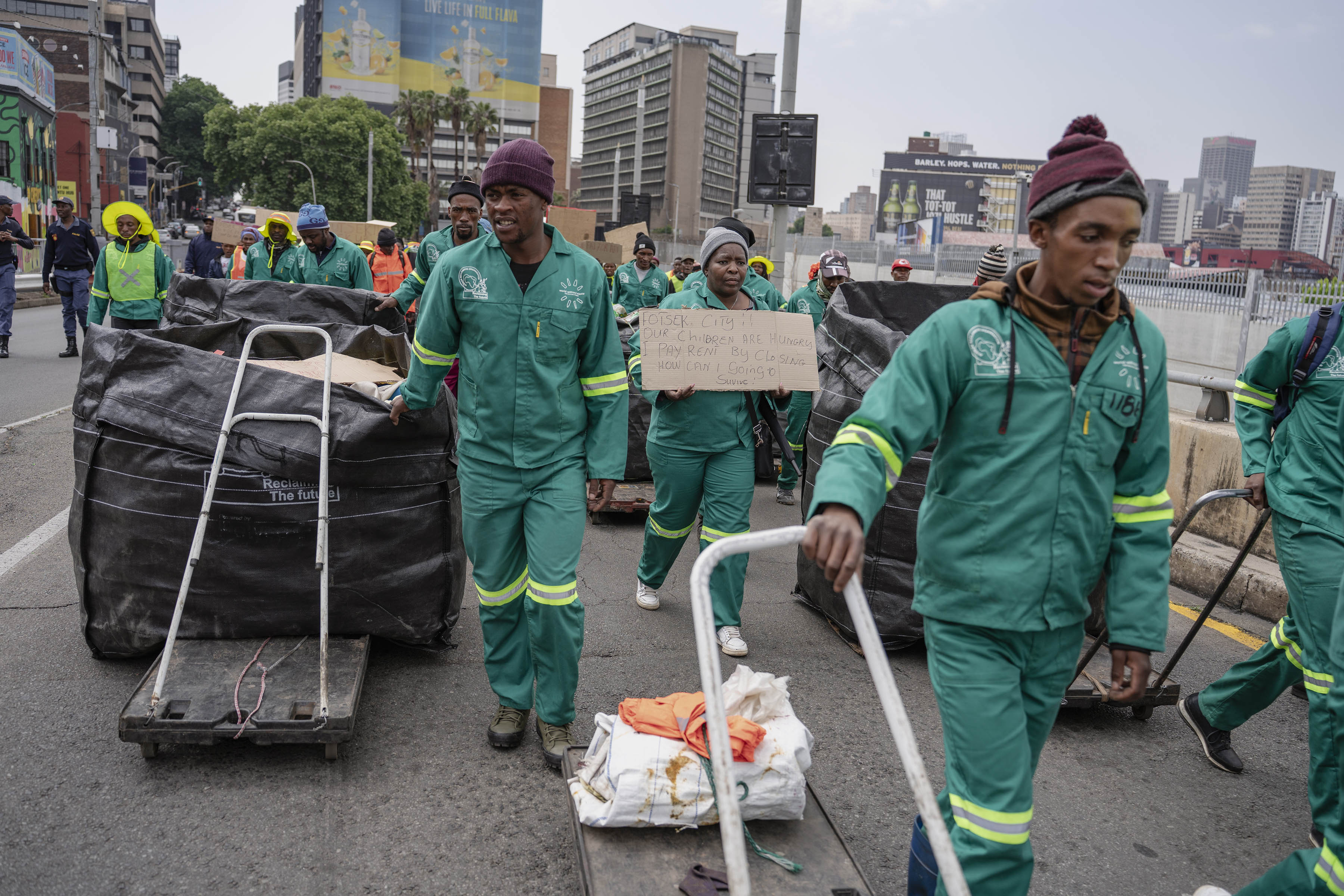
Waste reclaimers demonstrate in September after Pikitup and the City of Johannesburg stopped accepting domestic waste at the Marie-Louise landfill. Photo: Ihsaan Haffejee
The state of Joburg’s landfills
Pikitup is expected to spend R430-million to upgrade landfills and bring them into compliance with health and safety requirements, according to Pikitup spokesperson Muzi Mkhwanazi. Upgrades include the construction of Material Recovery Facilities for diverting recyclables and transfer stations for storing recovered materials.
Marie-Louise
Mkhwanazi said there is no specific date for when Marie-Louise, which was receiving about 25% of the City’s waste (1,400 tonnes daily), will reopen. Upgrades include a leachate pond, boundary wall and a new waste dump cell that will extend its lifespan by seven years.
Robinson Deep
Joburg’s oldest landfill opened in 1930. It will be full by November 2026. Mkhwanazi says that “plans for a new cell are at an advanced stage, which will give us 15 more years”.
Pikitup is also developing three new waste diversion facilities which it hopes will divert half a million tonnes of household waste from the landfill. Mkhwanazi says an onsite materials and waste sorting facility will be complete by December 2025. A biogas plant for food waste and a waste-to-energy plant will be built.
Mkhwanazi declined to say how many reclaimers the facility will serve. About 250 reclaimers are currently registered to operate at Robinson Deep, with Mkhwanazi estimating that there are about 2,000 in total operating in the area.
Ennerdale
The Ennerdale landfill was expected to reach full capacity in December 2025. Pikitup is upgrading the capacity of the Ennerdale landfill, adding another cell that will extend the dump’s life cycle to 2041.
Goudkoppies
An informal settlement at Goudkoppies dump has grown to almost 10,000 households. Its residents eke out a living through waste reclaiming. The city centre landfill, which opened in 2010, is also a hotspot for illegal dumping, illegal mining and extortion. Pikitup has predicted it will reach full capacity in October 2026. “Plans are underway for a material recovery and sorting facility,” said Mkhwanazi.
Linbro Park
The Region E landfill was open from 1969 until it reached capacity in 2007. Now a project is underway to rehabilitate the site. “Our sorting facility for recycling purposes is almost 70% complete, and should be ready on 30 April 2026,” said Mkhwanazi.
Kya Sands
After its closure in 2010, Kya Sands has become a hive of criminal activity where syndicates operate illegal dumps. “The current crisis requires intergovernmental intervention,” writes Pikitup in its 2023/24 annual report.
Pikitup has appointed a service provider to lead the rehabilitation of the decommissioned landfill. Interventions include clearing illegal waste deposits, installing fencing and lighting and monitoring of water and air quality.
Support independent journalism
Donate using Payfast

Don't miss out on the latest news
We respect your privacy, and promise we won't spam you.
Next: Mother and three children burned alive in Langa shack fire
Previous: Alfred Nevhutanda used Lottery money to build a holiday mansion
Letters
Dear Editor
Residents in suburbia, take one month's waste from recyclers in your area and dump it all together. Now look at the humungous smelly mess. Then tell me Pikitup is sufficient for Joburg's waste.
Support the recyclers where and whenever you can! Municipalities are not capable of making forward-thinking plans. Listen to the man on the street. We have all seen recyclers clean up after Pikitup.
© 2025 GroundUp. This article is licensed under a Creative Commons Attribution-NoDerivatives 4.0 International License.
You may republish this article, so long as you credit the authors and GroundUp, and do not change the text. Please include a link back to the original article.
We put an invisible pixel in the article so that we can count traffic to republishers. All analytics tools are solely on our servers. We do not give our logs to any third party. Logs are deleted after two weeks. We do not use any IP address identifying information except to count regional traffic. We are solely interested in counting hits, not tracking users. If you republish, please do not delete the invisible pixel.