
Weaving mats for survival in rural KwaZulu-Natal
The Zikhali family have always made traditional mats, but hope their youngest daughter will have other options
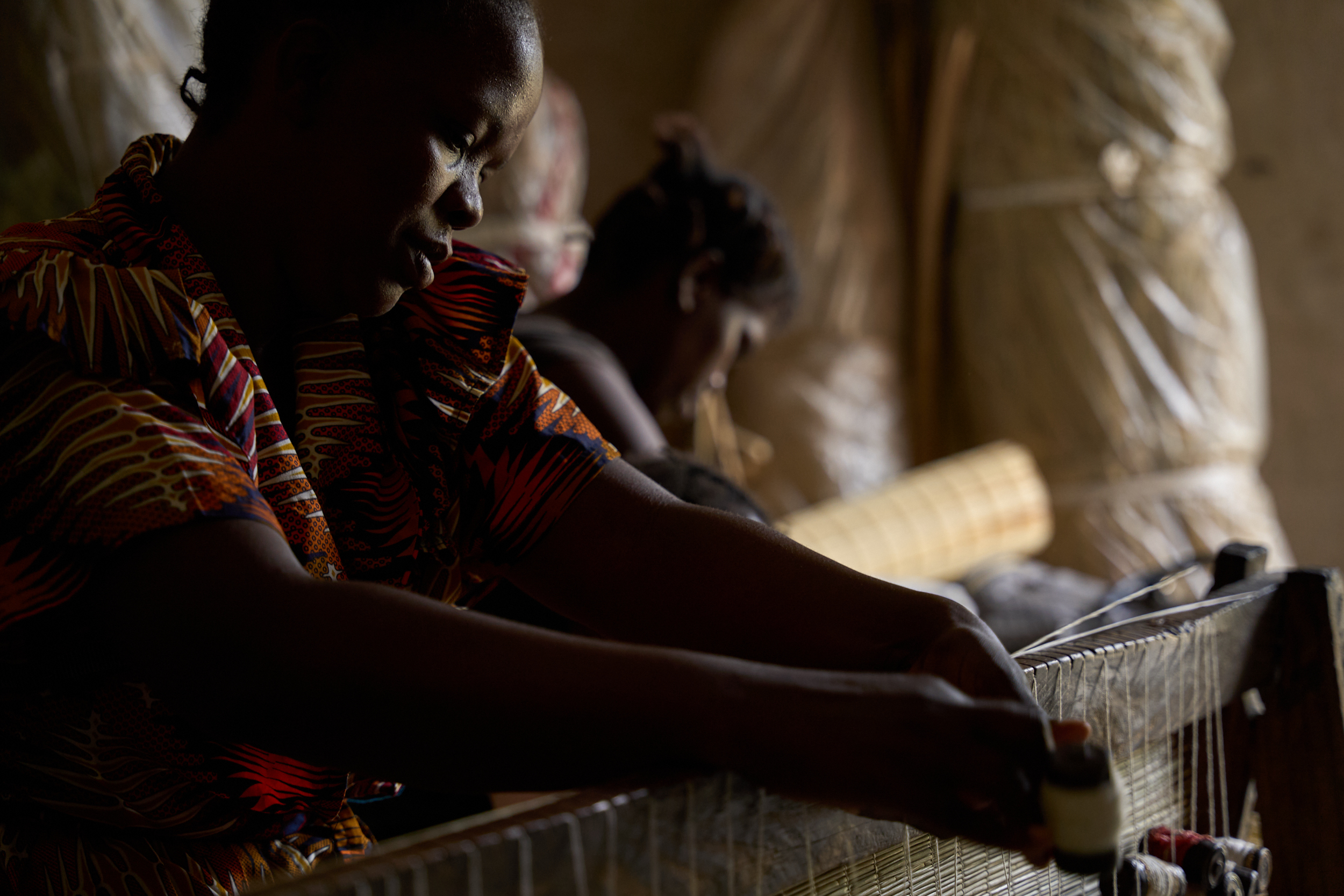
Sibonga Zikhali (left) and her sister, Nomkhuleko (right), make a living by weaving traditional Zulu mats from dried incema grass.
Sibonga Zikhali sits on the floor of her rondavel in KwaNibela, northern KwaZulu-Natal, with a wooden loom. She places a long blade of dried incema grass on top of the loom and rhythmically begins casting threads over it.
Her sister, Nomkhuleko, who is deaf, sits close to her, sewing a colourful design into a finished mat.
When she was young, Nomkhuleko went to a special school for the hearing impaired, but had to return home due to an illness. Since then, she has helped with the weaving.
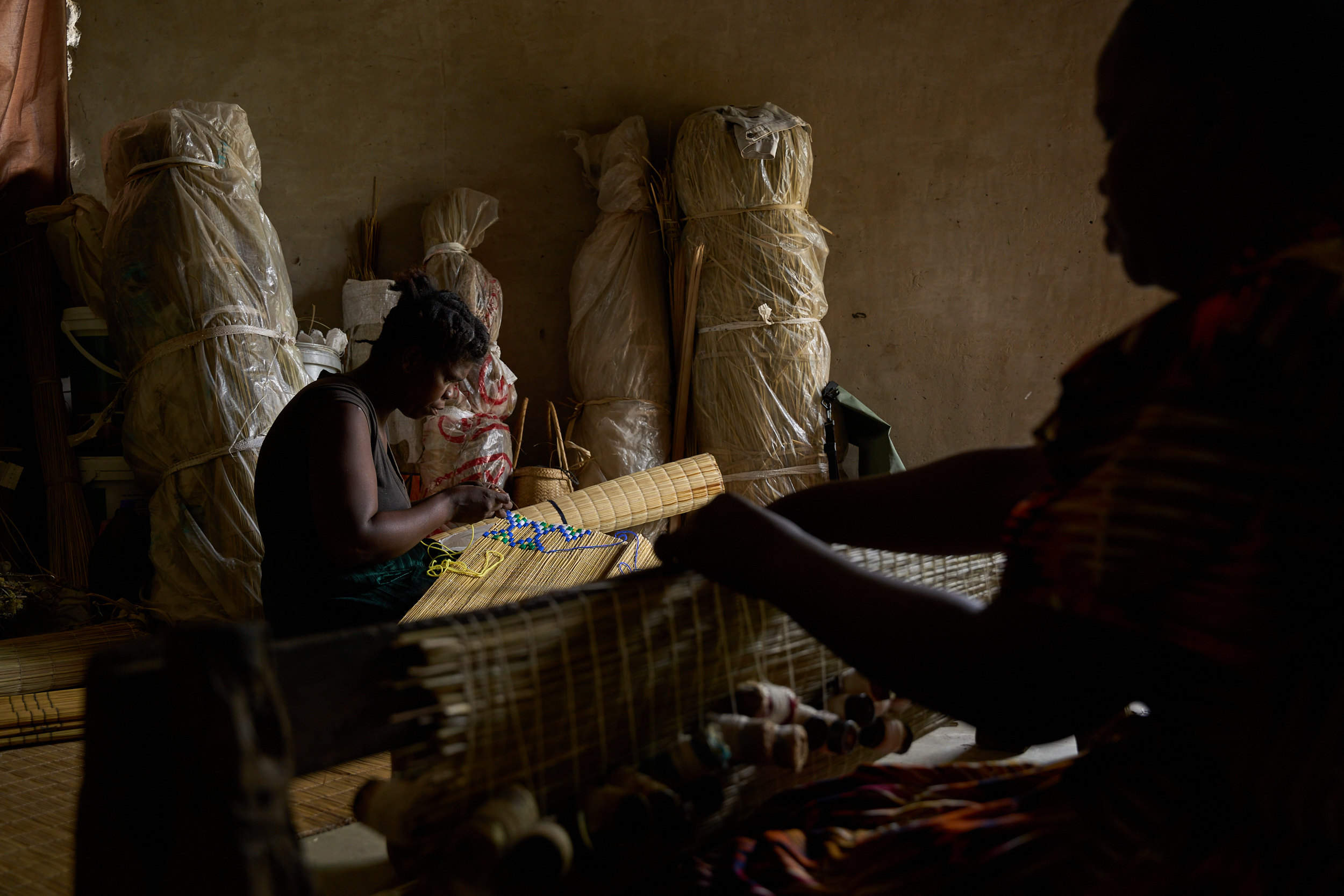
Nomkhuleko Zikhali (left) adds a colourful design to a finished mat while her sister, Sibonga Zikhali, keeps weaving.
For as long as Sibonga can remember, weaving mats has been their only livelihood.
She says they usually sell their mats in Hluhluwe, 40km away. Sometimes they receive large orders. The mats are used for sleeping on floors. Small mats are sold for R80 and big mats for R150. Smaller ones can take a few hours to make, while larger ones up to a day.

Nomkhuleko Zikhali adds a colourful design to a finished mat.
“We used to go with our mother to KwaMbila to cut the incema, and then she taught us how to weave. I can’t even remember when I started, because I grew up doing it,” says Sibonga.
Their mother, Brenda, still does most of the cutting. Weavers are able to access KwaMbila through iSimangaliso’s Sodwana Bay gate, about 80 km from KwaNibela. Brenda goes with a team of women and they spend a few days in the park cutting the incema before returning to KwaNibela. They need to rent a vehicle, which costs upwards of R500 per person.
Brenda goes with a team of women and they spend a few days in the park cutting the incema before returning to KwaNibela.
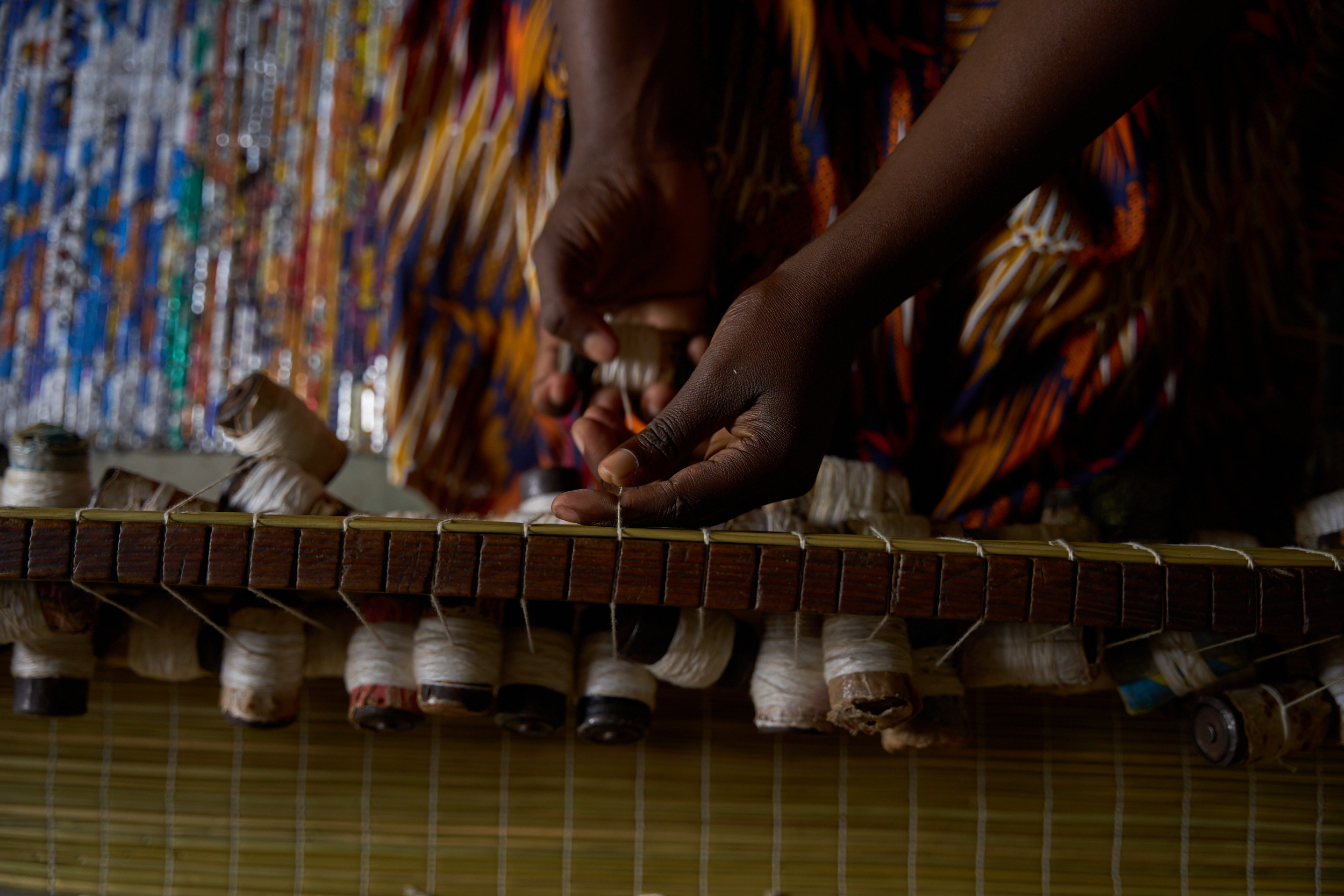
Sibonga Zikhali uses a wooden loom to weave a traditional Zulu sleeping mat with incema, a perennial herb that can grow up to 1.5m tall.
Weaving has helped Sibonga send her teenage daughter to school. She will be in grade 10 next year. While Sibonga occasionally allows her to weave for fun, she is not allowed to contribute to the household through weaving work, like Sibonga and Nomkhuleko had to, when they grew up.
Occasionally, she does allow her to weave for fun.
“I don’t want her to have the same life as us. We weave because we are forced to but I want her to focus on her schooling,” says Sibonga.

The mats are used for sleeping on floors. Small mats are sold for R80 and big mats for R150.
Support independent journalism
Donate using Payfast

Don't miss out on the latest news
We respect your privacy, and promise we won't spam you.
Next: City of Cape Town must rebuild homes, demand protesters
Previous: Protesters express solidarity with Palestine Action hunger strikers
Letters
Dear Editor
It is disheartening to read an article that dismisses entrepreneurial efforts instead of celebrating them. Productive work is much better than seeking assistance and handouts and should be encouraged.
The proverbial “I don’t want work, I want a job” should be cast into the dustbin of history.
If entrepreneurs are not celebrated and encouraged this country will continue a downward slide impoverishing generation after generation.
Dear Editor
I feel this article contradicts itself; weaving is an indigenous and generational skill.
Because this was covered in the rural community of KZN, and not in Scotland, for example, weaving is seen as an effort we must pity rather than an entrepreneurial one. If this article were written about people who are not black, and living in Scotland, then the argument would have likely been that art is beneficial, and the weaver would have been referred to as an artist, rather than someone who is suffering and has no other option but to weave for a living.
The world is transitioning, and interest in handmade items is increasing. People should be commended for their beautiful work and for how they have kept this generational skill going.
© 2025 GroundUp. This article is licensed under a Creative Commons Attribution-NoDerivatives 4.0 International License.
You may republish this article, so long as you credit the authors and GroundUp, and do not change the text. Please include a link back to the original article.
We put an invisible pixel in the article so that we can count traffic to republishers. All analytics tools are solely on our servers. We do not give our logs to any third party. Logs are deleted after two weeks. We do not use any IP address identifying information except to count regional traffic. We are solely interested in counting hits, not tracking users. If you republish, please do not delete the invisible pixel.