
Western Cape schools to teach maths in isiXhosa from next year
Nearly 3,500 teachers trained in Bala Wande programme
 Add GroundUp on Google
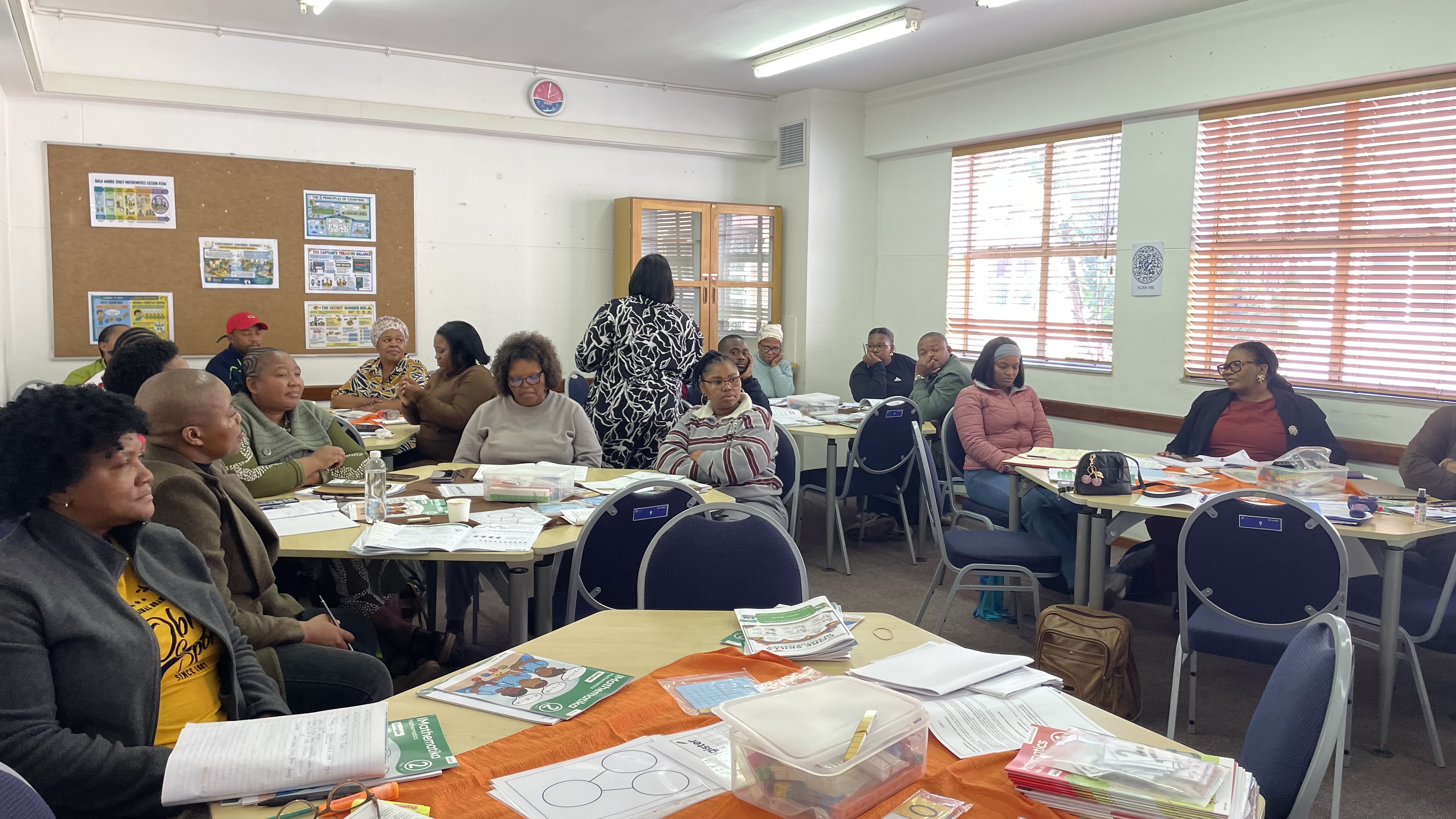
Thousands of teachers in the Western Cape have been trained to teach arithmetic in isiXhosa. Photo: Sindisiwe Tshona
Next year, thousands of grade 1 learners across the Western Cape will be taught maths in their mother tongue, including isiXhosa.
Nearly 3,500 grade 1 and grade 2 teachers were trained in September and October to teach numeracy in children’s home languages. This is part of the Bala Wande programme, set up by Funda Wande in partnership with the Western Cape Education Department (WCED).
Of the 3,467 teachers trained, 3,242 teach grade 1 and 225 teach grade 2.
The grade 1 programme was piloted in schools in 2026, reaching about 8,000 learners, said WCED spokesperson Bronagh Hammond.
Next year, Bala Wande will be implemented in all grade 1 schools across the province, reaching 112,000 learners. Grade 2 teachers from the 70 pilot schools have also been trained and will be implementing the intervention in their schools, targeting approximately 9,000 learners.
Bala Wande aims to build stronger mathematics foundations and a love for mathematics.
“We aim to … move beyond traditional approaches and offer various approaches to create a classroom where every child understands mathematics,” said Ntsiki Nyamza, senior curriculum planner of isiXhosa at WCED.
Funda Wande, established in 2017 by Nic Spaull, is an entity of Allan and Gill Gray Philanthropies. Through its literacy and numeracy interventions, the organisation has reached more than 250,000 learners.
The Bala Wande programme is structured as a “cascade” model (rolled out incrementally). Grade 1 was piloted this year and will be rolled out next year; Grade 2 will be piloted next year and rolled out in 2028; Grade 3 will be piloted in 2028 and rolled out in 2029.
“This approach also allows us to learn from implementation at each stage and strengthen the programme as it expands,” says Funda Wande’s Nobuhle Mhlongo. From next year, an external evaluation will track learners until the end of 2029. “This longitudinal approach will give us a deeper understanding of the programme’s longer-term impact, with findings expected in 2030,” said Mhlongo.
“Teachers need to leave this training confident that they can implement the intervention in their classrooms, especially since it’s new to them,” she said.
Athabile Tshongweni, a Grade 1 teacher at Sonwabo Primary School, says she is finding Funda Wande’s programme interesting and helpful. “The training has been practical, it’s not just about theory.”
“It’s all about the kids,” says Mhlongo. “At the end of the day, we want to see the learners learning.”
Support independent journalism
Donate using Payfast

Don't miss out on the latest news
We respect your privacy, and promise we won't spam you.
Next: We found flaws in Gauteng’s panic button app. The province set the cops on us
Previous: Six years later Eastern Cape storm victims still without houses
© 2026 GroundUp. This article is published under the GroundUp Republication Licence Version 1.0. Email [email protected] to request permission to republish.