
What happens when a shack appears in a gated community?
Playwright Amy Jephta’s new play explores race, class, land and the pressures of fitting in
 Add GroundUp on Google
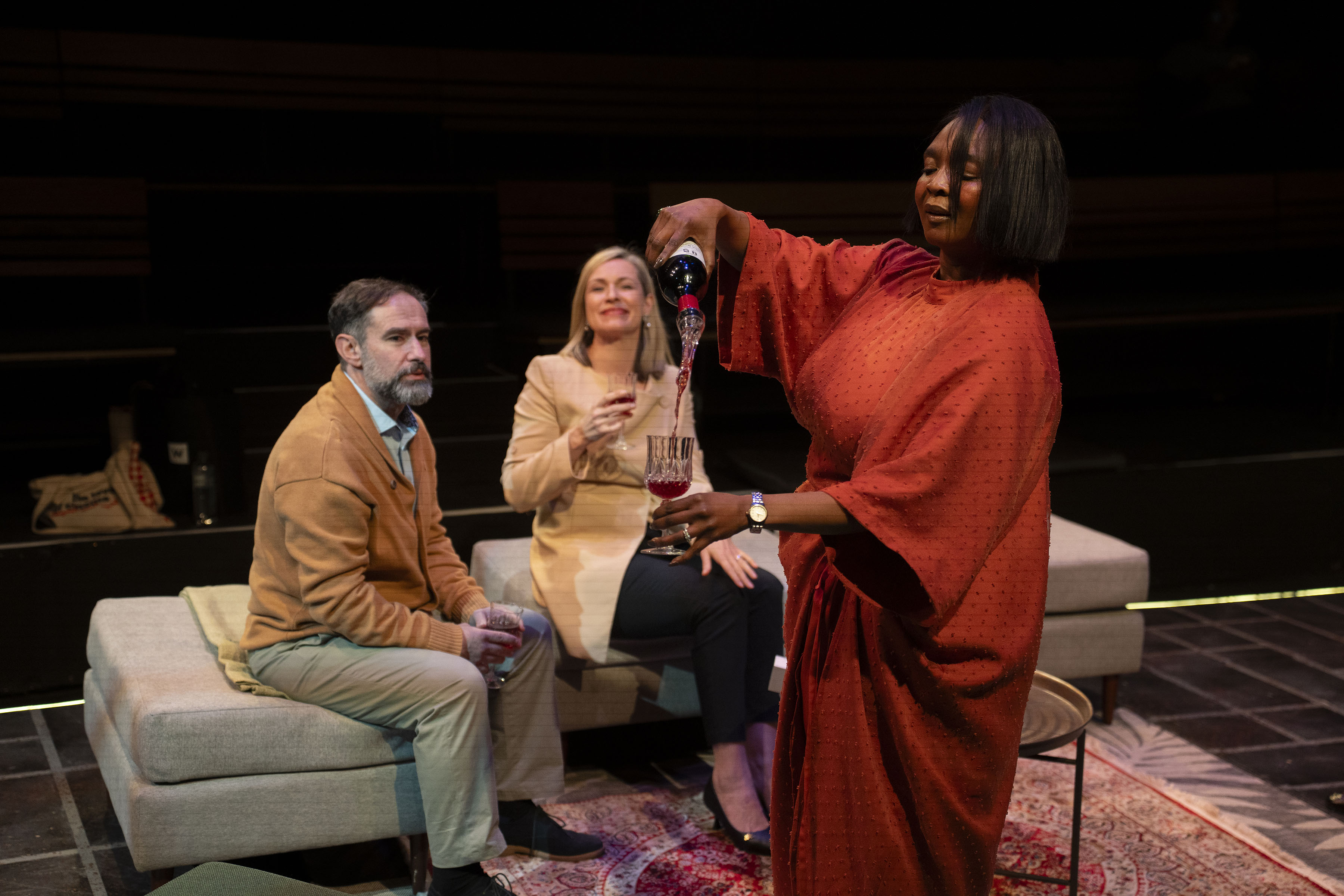
Bonolo (Lesoko Seabe) pours a glass of wine for her neighbours Lynette (Mary Anne Barlow) and Chris (Jose Domingos) in Amy Jeptha’s play, A Good House, at The Market Theatre in Johannesburg. Photos: Ihsaan Haffejee.
When a shack suddenly appears inside an affluent suburban neighbourhood, panic spreads among residents. Rumours take hold, alliances shift, and assumptions about race, class and belonging begin to unravel.
This is the premise of A Good House, playwright Amy Jephta’s latest work, which opened at Johannesburg’s Market Theatre on Thursday.
Set in the fictional gated community of Stillwater, the play follows Sihle and Bonolo, a black middle-class couple who find themselves recruited by their white neighbours to oppose the mysterious structure. As events unfold, the couple confront questions about assimilation, identity and belonging.
“The shack symbolises our fraught relationship with land, informal settlements and with who gets to be on land,” Jephta said. “It’s so often associated with being black, with being poor, and with all the stigma that comes with that.”
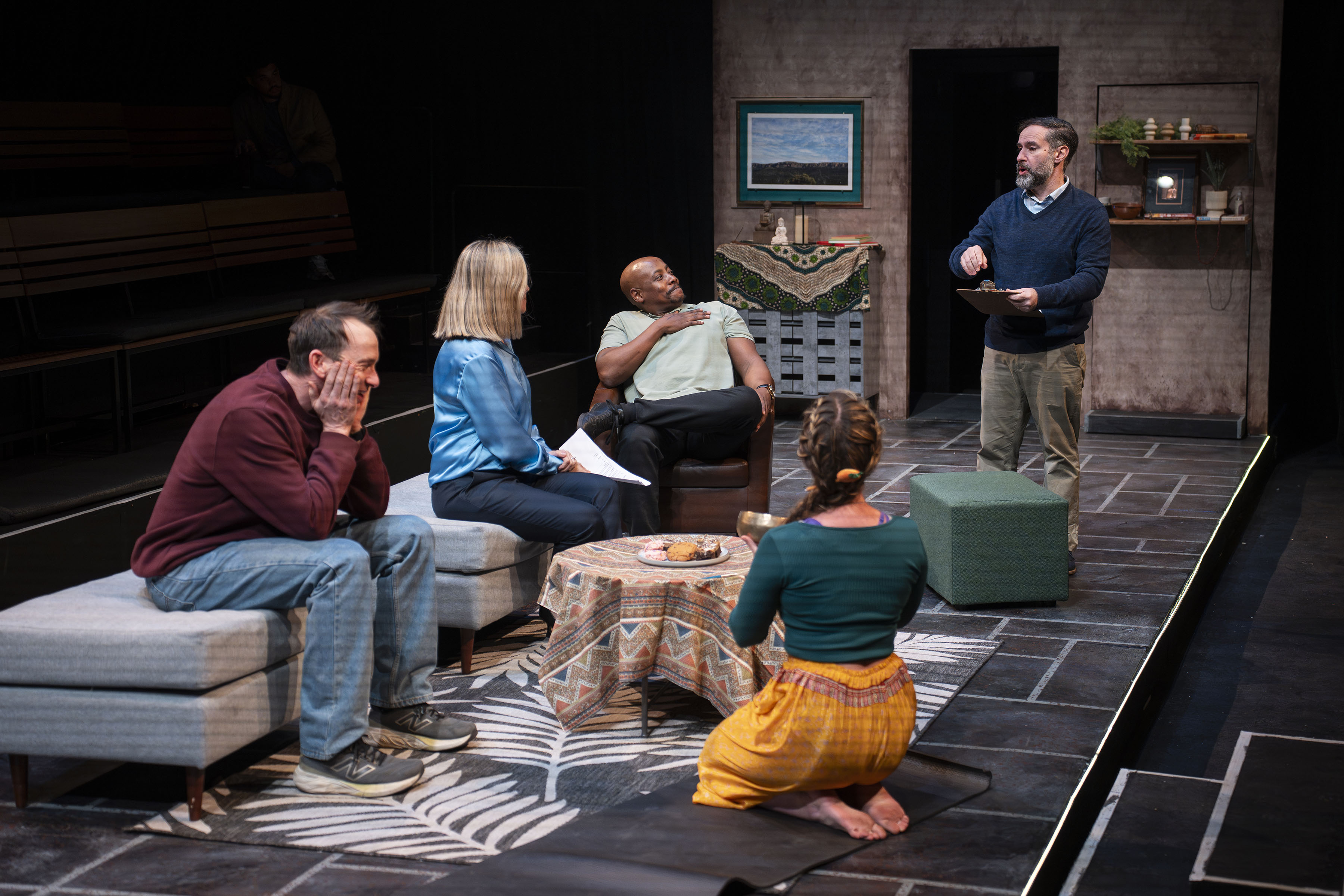
A neighbourhood meeting is called to discuss what to do about the shack built near their middle-class suburban homes.
Jephta said the play draws on her experiences of being “the first or the only” black person in predominantly white spaces.

“I was often implicitly asked to represent everyone who looked like me,” she said. “There is no homogeneous black experience, but I was expected to speak for one.”
“There was a younger version of me who became very good at assimilating,” she said. “I softened my opinions because I didn’t want to be seen as too political or become ‘the difficult black person’.”
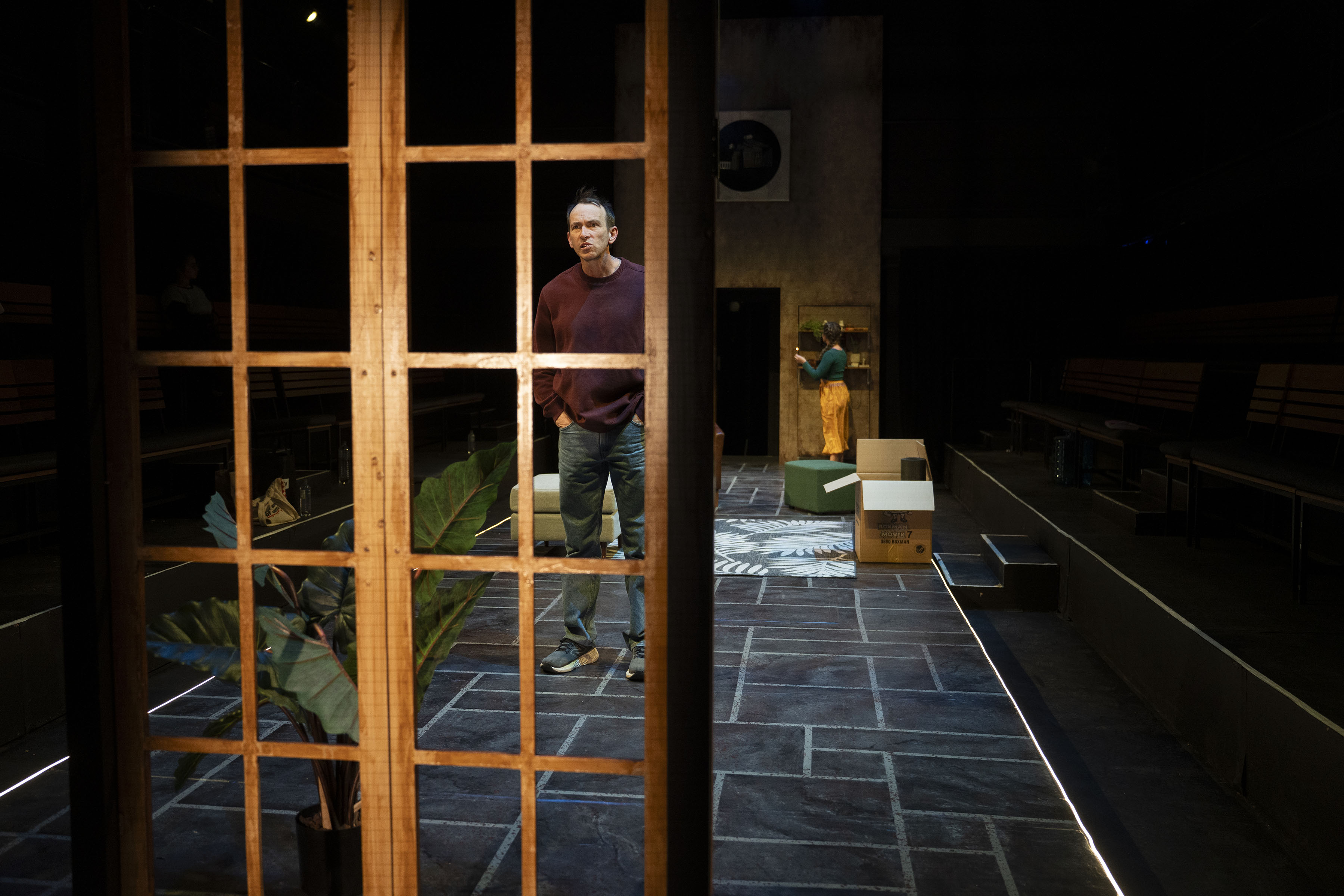
Andrew (Conrad Kemp) and Jess (Christine van Hees) observe the mysterious shack that has popped up near their suburban home.
The play asks how residents react when the shack appears inside their community. “It becomes foreign. It becomes something to fear,” she said.
Jephta said she hopes audiences will leave questioning how they would respond.
“You might see yourself as an activist,” she said. “But when your activism is called into actuality, how far are you willing to go?”
She said these questions remain relevant as South Africans continue debating migration, land and housing.
“We’re having so many conversations about who belongs here. Who gets to call themselves South African? Who has the right to claim a piece of land? Who gets to decide who belongs?” Jephta said.
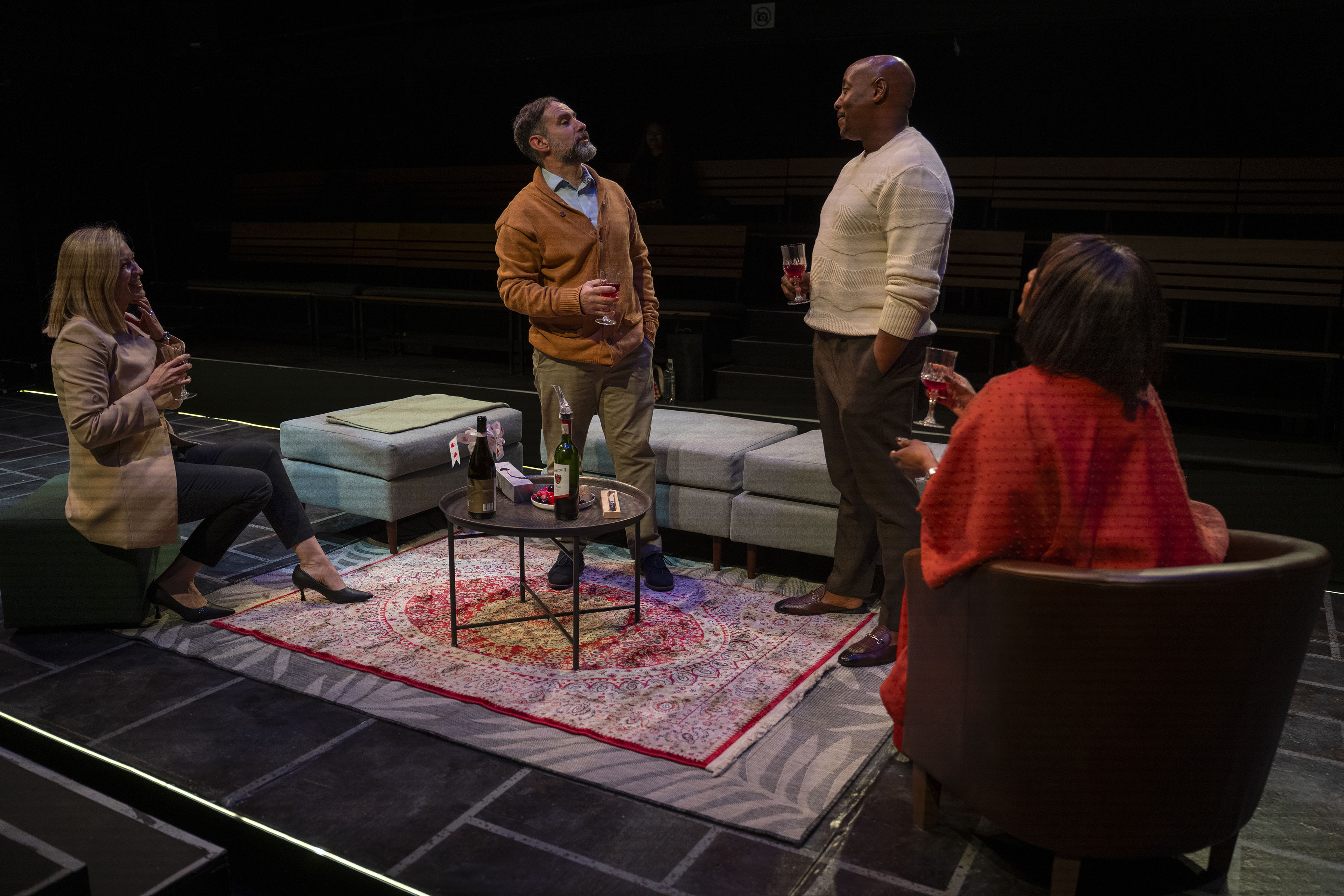
Sihle and Bonolo are recruited by their white neighbours to oppose the mysterious structure. As events unfold, the couple confront questions about assimilation, identity and belonging.
Jephta hopes the play encourages empathy.
“So much of the conflict in the play comes from people being unable to see the world through someone else’s eyes,” she said. “If audiences walk away asking what life feels like for someone else, then we’ve achieved something.”
A Good House runs at the Market Theatre in Johannesburg from 6 to 30 August as part of the theatre’s 50th anniversary programme.
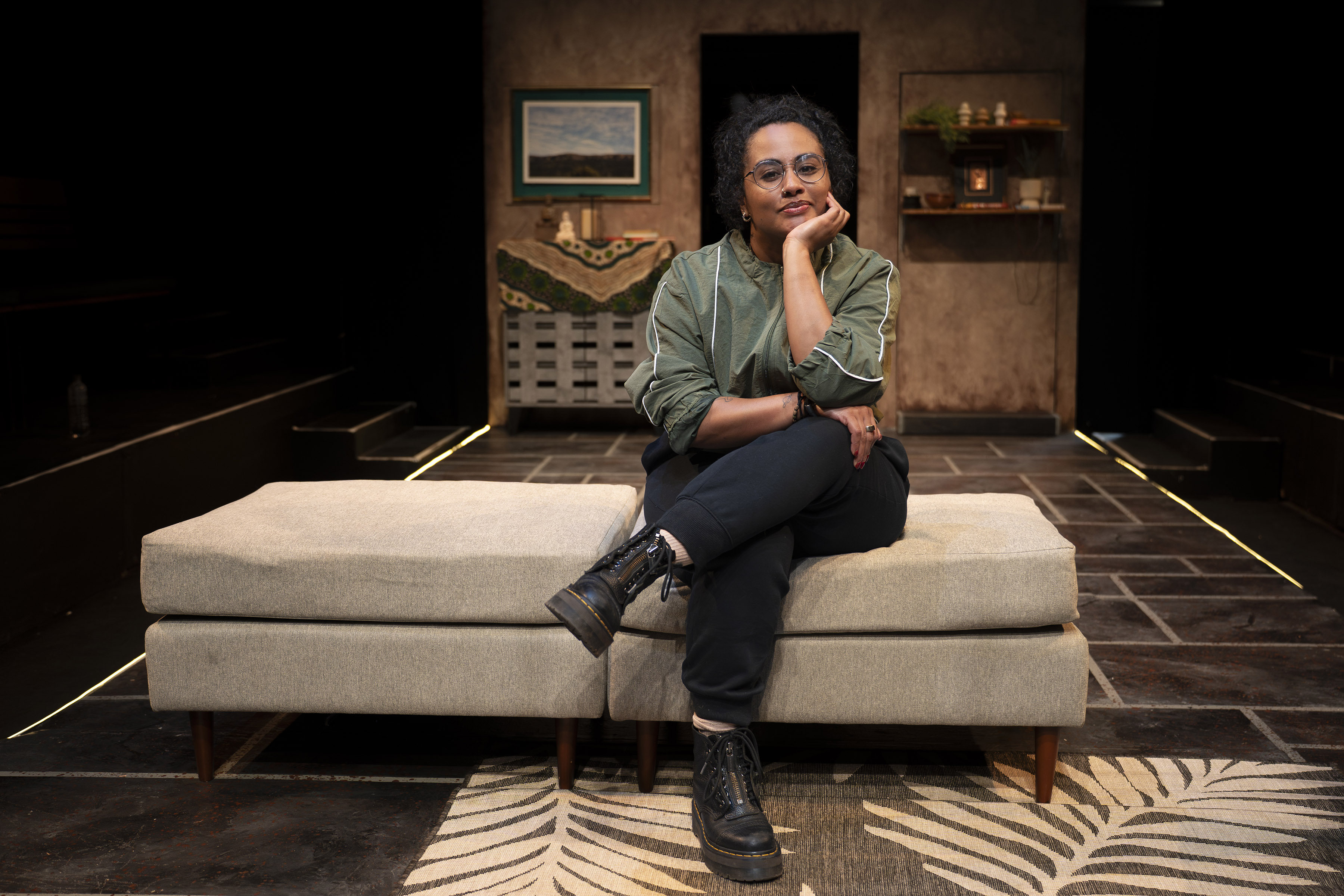
Playwright Amy Jephta says the play was inspired by her own discomfort in spaces where she was often “the first or the only” black person in the room.
Support independent journalism
Donate using Payfast

Don't miss out on the latest news
We respect your privacy, and promise we won't spam you.
Next: Immigrant traders see their livelihoods destroyed by March and March
Previous: NUMSA wins bid to block liquidation of diamond mine
© 2026 GroundUp. This article is published under the GroundUp Republication Licence Version 1.0. Email [email protected] to request permission to republish.