
Why do Joburg’s taps keep running dry?
Poor management has caused frequent, prolonged water outages and left many families dependent on water tankers
 Add GroundUp on Google
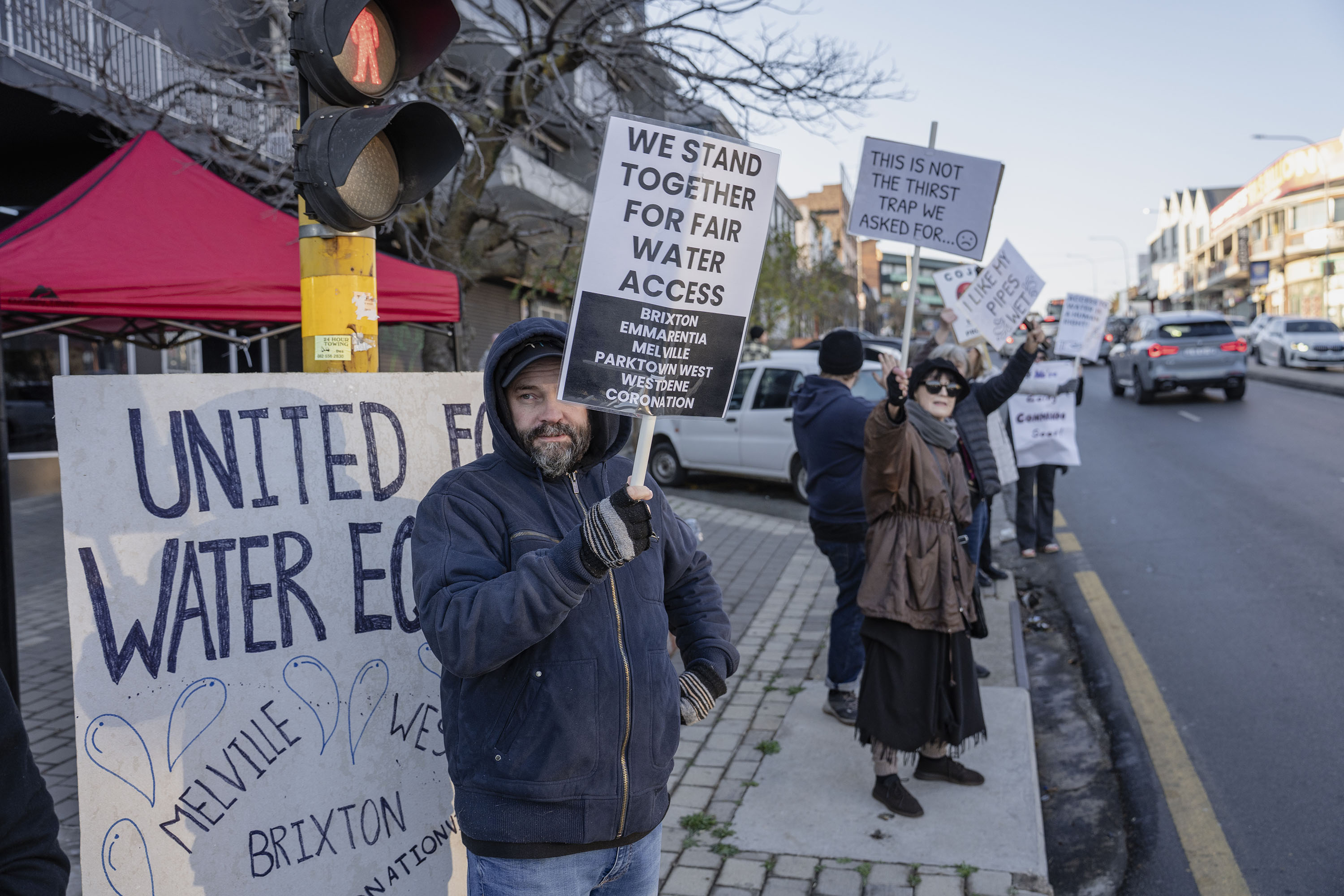
Residents of Melville and surrounding suburbs, such as Westdene and Sophiatown, protested on Friday, 14 August, about ongoing water outages. Photo: Ihsaan Haffejee
- Between June 2025 and June 2026, Johannesburg recorded an average of almost 140 water pipe leaks a day.
- The City spent at least R650-million over five years on water tankers, which critics say is an unsustainable and expensive emergency substitute for functioning infrastructure.
- Meanwhile, billions of rands have been swept from Johannesburg Water’s accounts, raising concerns that it lacks the financial autonomy to maintain infrastructure and pay contractors.
“I am sick and tired of lugging around water containers hoping to find a running tap. It is no way to live,” said Simon Banda from Melville, protesting on Friday morning with dozens of residents from areas fed by the Commando water system.
“Water is not a privilege. It is a fundamental right. No water, no life,” said resident Zsofia Borsanyi.
Melville residents have endured more than 50 days without water in total so far this year.
“The residents of Melville are angry, exhausted and deeply disillusioned,” the Melville Residents Association (MRA) stated. “Families cannot wash, cook, clean or maintain basic sanitation. Elderly and vulnerable residents are forced to carry heavy containers of water.”
The MRA said that, despite inconsistent water supply, residents continue to be billed at “ever increasing, marked up rates” while the City employs contractors to perform disconnections.
Prolonged water outages have become the norm in many parts of Johannesburg. No matter what the reason for the interruption – burst pipes, pump station failures, illegal connections or maintenance shutdowns – “the result for residents is the same: no water for extended periods, often with very little certainty about when their supply will be restored,” said Ingrid Bester, who heads the community action group the Water Crisis Committee.
Johannesburg Water said the Commando system is a complex network that is highly sensitive to mechanical, electrical and bulk-supply disruptions. Recent failures at the temporary Crosby Pump Station, including a City Power outage at the Delta substation on 11 August, disrupted recovery.
Johannesburg Water said its main focus was restoring supply to Hursthill 2 and affected areas including Westdene, Auckland Park, Melville, Emmarentia and Parktown West.
Longer-term upgrades to the Commando system are underway, including a new Crosby Reservoir and bulk pipeline, and repairs to Hursthill’s reservoirs. A standby generator for the Crosby Pump Station was delivered on 11 August and is expected to be installed over the weekend.
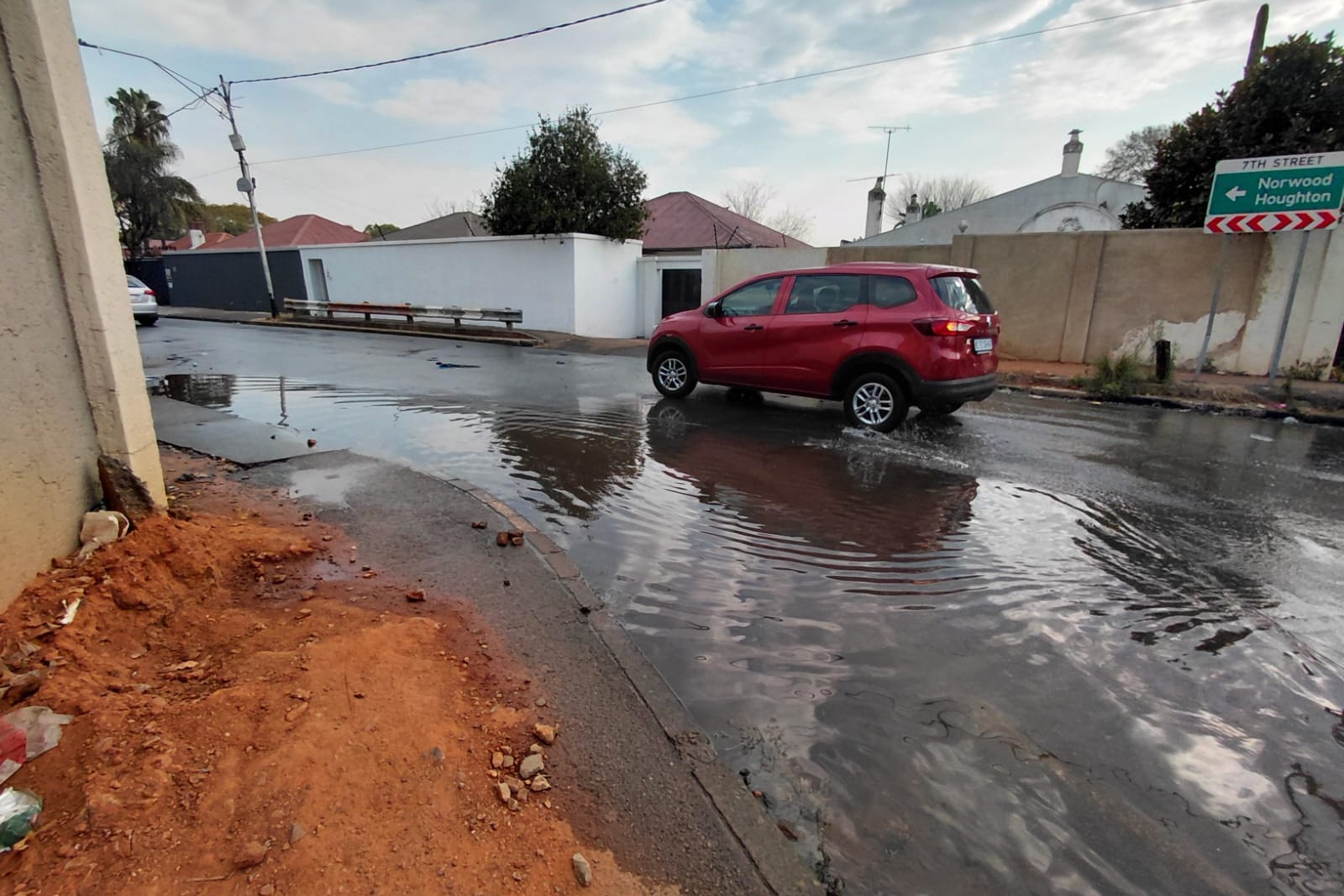
A burst pipe in Orange Grove was leaking for days. Photo: Seth Thorne
According to the Gauteng Water Security Dashboard, between June 2025 and June 2026, the city recorded 50,536 water pipe leaks, an average of almost 140 leaks per day.

In the 2025 financial year, Johannesburg reported to the Auditor-General (AG) that it had lost over 207-billion litres of water. Over four years, this amounted to a revenue loss of about R10.3-billion. The AG’s office, in its Consolidated General Report for 2024/25, noted that the figures may be higher since “weak performance reporting and unreliable system-generated information” had limited its oversight.
The AG concluded that Johannesburg Water failed to “proactively maintain” its infrastructure, resulting in frequent pipe bursts, deteriorating network reliability and more unplanned emergency repairs. It attributed these failures to inadequate maintenance planning, poor execution and insufficient oversight.
At an inquiry in May by the SA Human Rights Commission (SAHRC) into the Gauteng water crisis, evidence leader advocate Afika Nqeto said there was a “profound and systemic breakdown in governance” in Johannesburg.
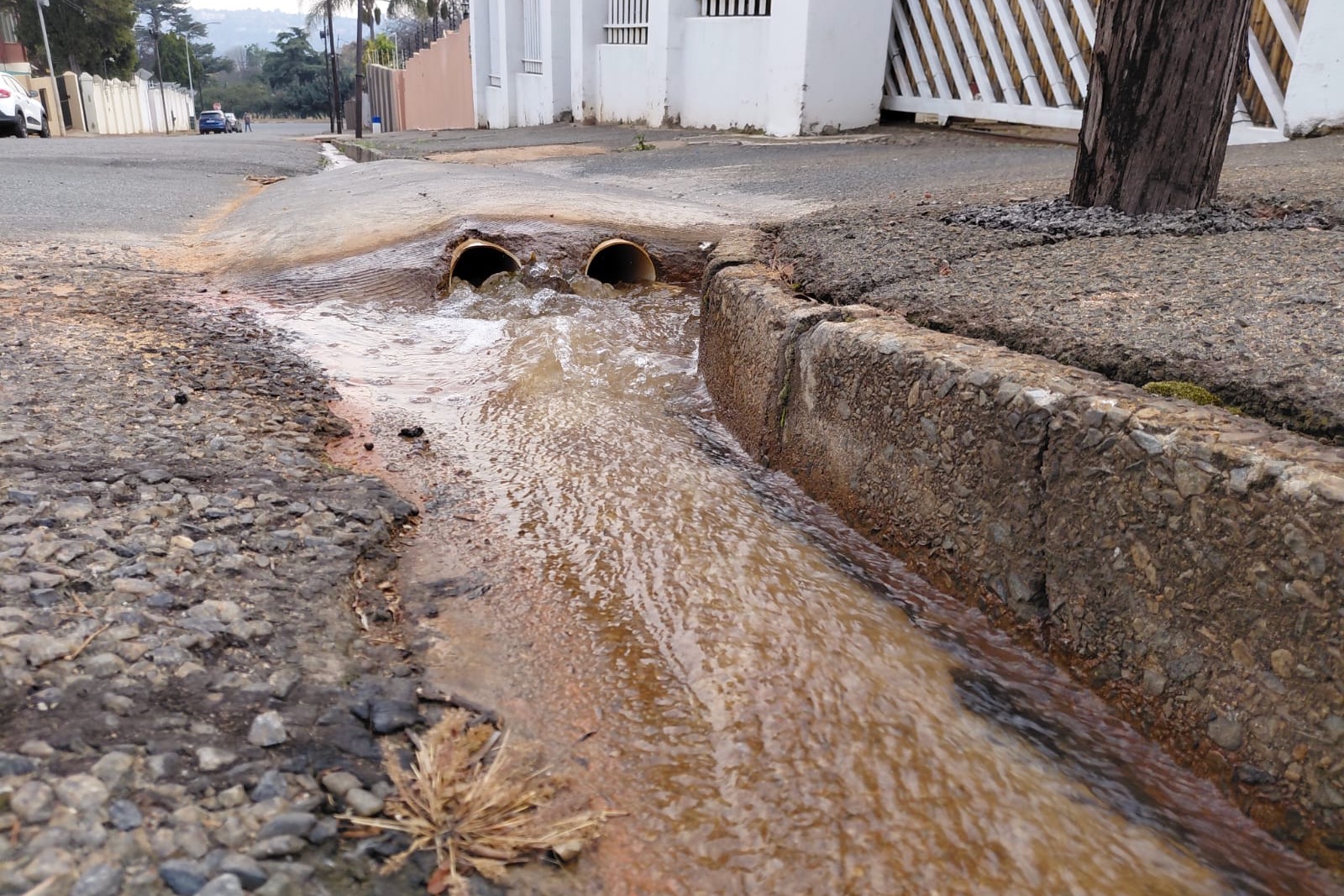
Drinking water runs down a street in Kensington, an area where water outages have been prolonged and frequent. Photo: Seth Thorne
“Tanker mafia”
The water tankering business has grown in recent months. Nqeto said this “reflects a costly and unsustainable substitute for proper infrastructure management and long-term planning”.
GroundUp recently reported on the difficulties residents face accessing tankers. Not everyone is physically able to fetch and carry water. People often miss the water truck. Meanwhile, some informal settlements, like Thembelihle in the south, do not receive tankers at all.
“You cannot build a functioning water system around people having to chase tankers,” said Bester.
City manager Floyd Brink has disclosed that over five years Johannesburg spent at least R650-million on water tankers.
However, when GroundUp requested these details, Johannesburg Water refused to provide additional information on tenders and related procurement. Spokesperson Nombuso Shabalala told us to send a Promotion of Access to Information Act (PAIA) application. Even councillors have said they have had to resort to PAIA applications to get information.
“There is no reason why information on water tankers should be a secret,” said DA caucus leader in Johannesburg, Belinda Kayser-Echeozonjoku. She said the secrecy prevents proper oversight.
Johannesburg Water officials have denied there is a “water tanker mafia” in the city, but others are sceptical. Chairperson of Parliament’s portfolio committee on water and sanitation Leon Basson told GroundUp the committee is concerned about groups deliberately damaging infrastructure to ensure residents remain dependent on water “tanker mafias”.
SAHRC commissioner Henk Boshoff described keeping communities dependent on lucrative private tanker operations as a “brazen form of corruption”.
At the SAHRC inquiry, Johannesburg Water managing director Ntshavheni Mukwevho said the entity is “phasing out” the use of external tankers, with a fully internal fleet expected by the end of 2028/29.
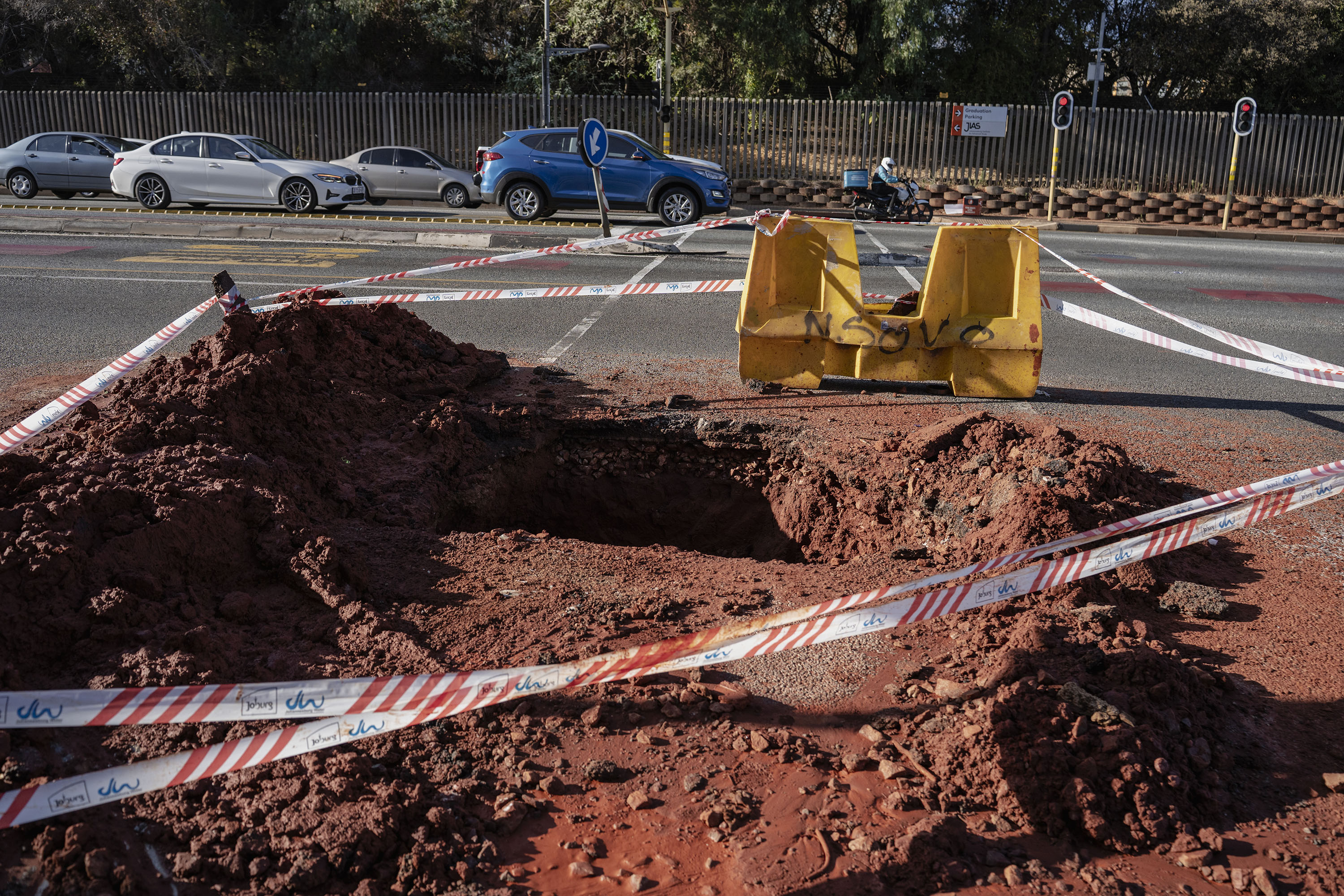
A repair site in Westdene where a water leak is being fixed by Johannesburg Water. Photo: Ihsaan Haffejee
Poor financial management
Since 2024, Johannesburg Water has had a R64-billion, ten-year turnaround strategy. In the current financial year, it has been allocated R21.6-billion for operating expenditure, and in the medium term R6.4-billion for capital projects. But questions remain, since the City’s previous adjustments budget was found to be unfunded and Treasury demanded a funded 2026/27 budget.
Since the early 2000s, Johannesburg has made use of “sweeping accounts”, automatically transferring a municipal entity’s available funds to the municipality’s central bank account.
Funds are meant to be returned to the entity based on its financial needs, but Basson is sceptical this has been happening. He described Johannesburg Water as effectively being “stripped of cash”, with billions being moved out of its accounts.
“That creates a problem because there’s not immediate access to enough money to restore, maintain or upgrade the water system … and no guarantee that all that money will be returned,” he explained.
On 9 September 2025, Department of Water and Sanitation (DWS) director-general Sean Phillips, who co-chairs the water and sanitation workstream of the presidential Johannesburg working group, warned Parliament that a R4-billion shortfall created by the sweeping arrangement severely compromised the utility’s infrastructure projects, causing many to stall due to unpaid contractors.
Because Johannesburg Water doesn’t pay contractors, and the City repeatedly delays vital projects like the Hursthill 2 reservoir, suburbs like Melville, Emmarentia, Westbury, Coronationville and Brixton endure long water outages.
In its 2025/26 business plan, Johannesburg Water said the City’s arrangement of sweeping accounts stripped its financial autonomy, with “limited transparency,” preventing it from securing direct funding or controlling its own budget.
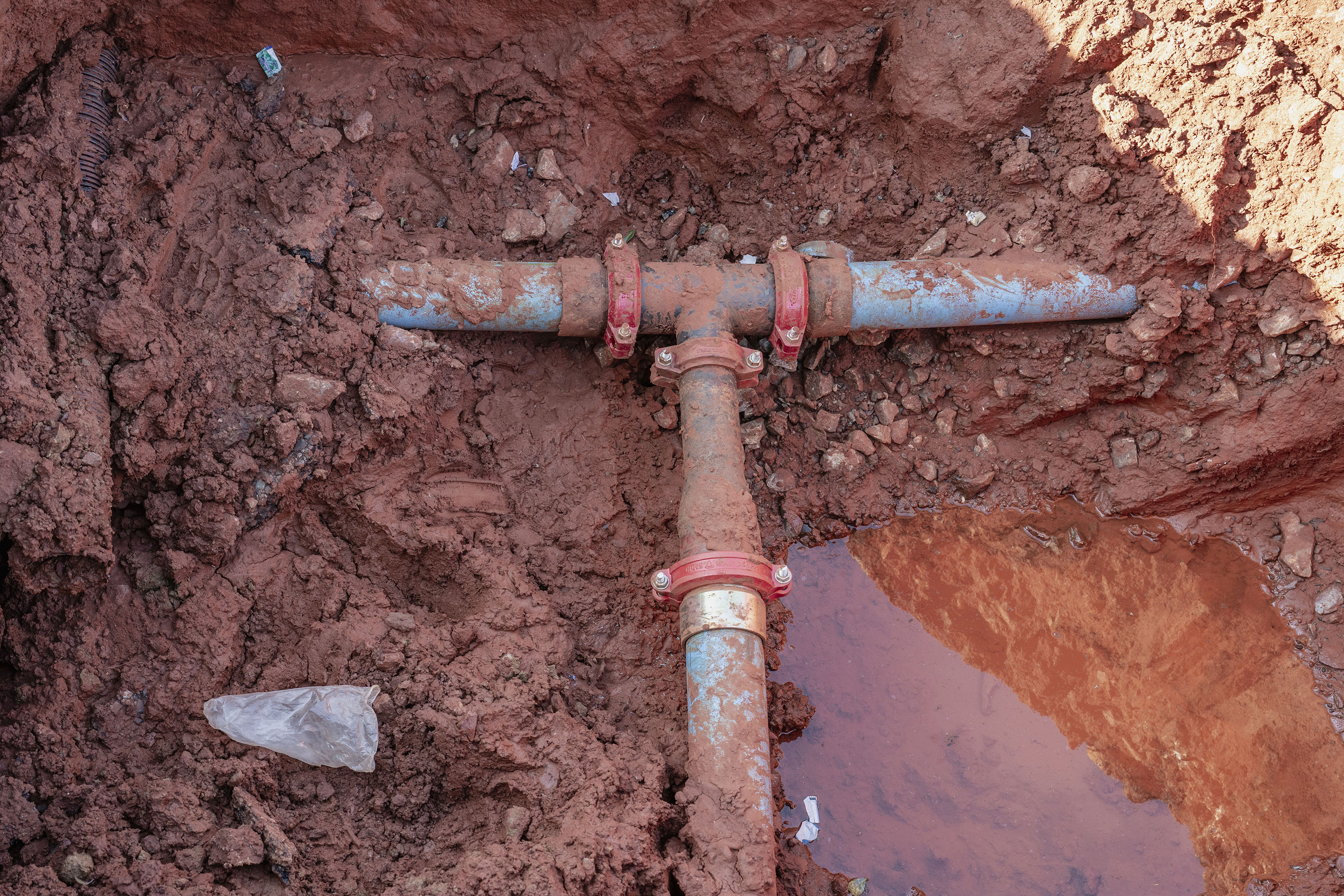
A water repair site in Westdene. Photo: Ihsaan Haffejee
The issue has led to calls to ring-fence Johannesburg Water’s revenue. First approved by council in 2024, the mechanism has gained more support from President Cyril Ramaphosa’s National Water Action Plan and the portfolio committee.
In July 2026, the executive director of civil society group WaterCAN, Ferrial Adam, said, “Ring-fencing means nothing if the utility cannot access its own money when it needs to pay contractors, maintain infrastructure and provide emergency services.”
This followed reports that R3.4-billion was taken from Johannesburg Water’s account in June, leaving it with a zero balance and unable to settle R1.8-billion in creditor debts.
“Until we deal honestly with the money, the infrastructure and the accountability, we are not fixing the crisis,” said Bester.
Water and Sanitation deputy minister Jack Bloom said, “The City has said Joburg Water began implementing ring-fencing from 1 July. We need to establish whether this is happening in practice, and whether the sweeping arrangement has stopped.”
“There is a willingness by central government to get tough in this matter, as we saw with National Treasury temporarily withhold grants from non-compliant municipalities.”
“DWS will continue to press the City on ring-fencing, in line with the National Water Action Plan. Residents have a right to know that the money they pay for water is being used to keep the water system working.”
The City did not respond to GroundUp’s questions on ring-fencing.
National Treasury did not respond at the time of publication.
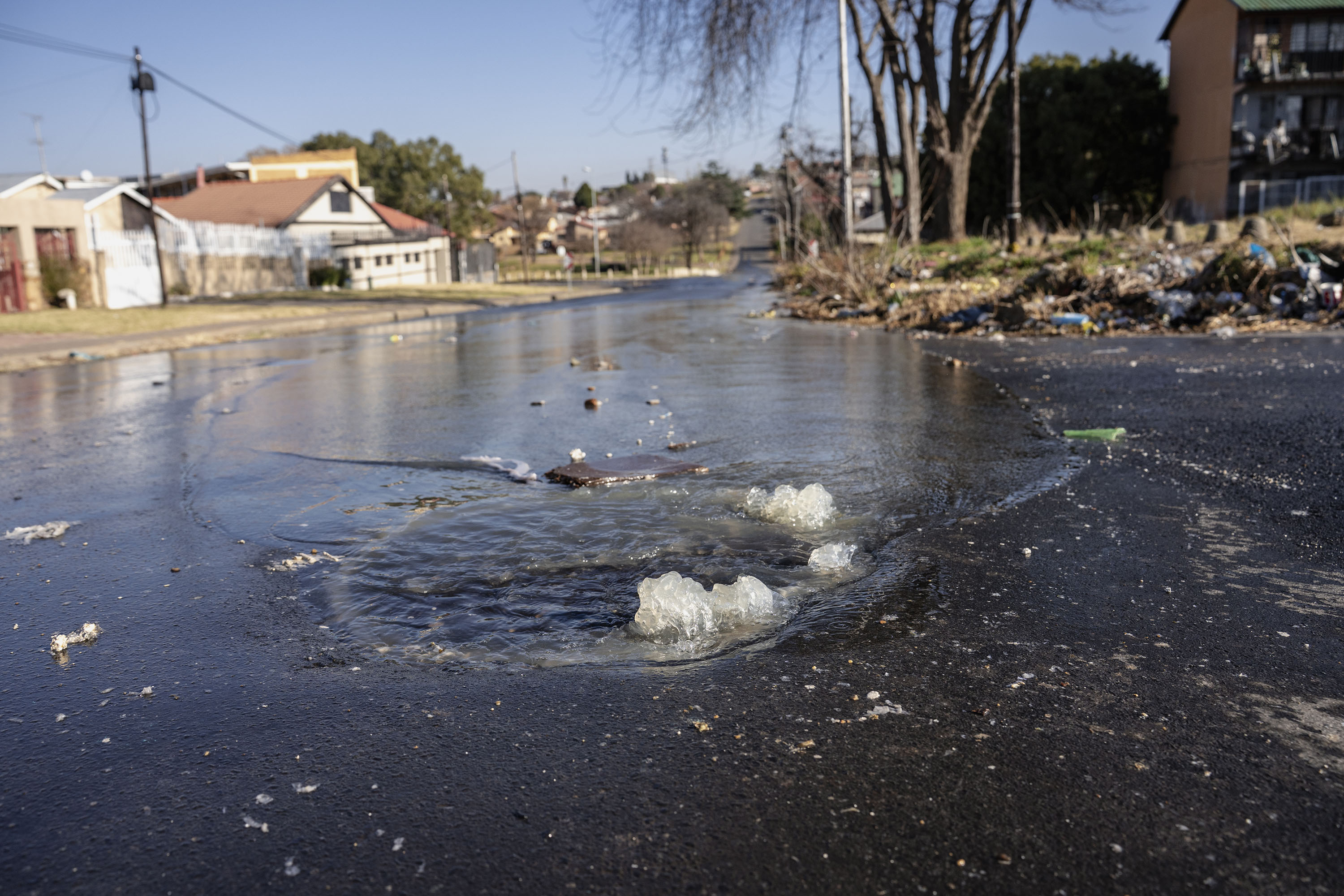
Sewage from poorly maintained infrastructure spills from a manhole into the streets of Westbury in Johannesburg. Photo: Ihsaan Haffejee
Support independent journalism
Donate using Payfast

Don't miss out on the latest news
We respect your privacy, and promise we won't spam you.
© 2026 GroundUp. This article is published under the GroundUp Republication Licence Version 1.0. Email [email protected] to request permission to republish.