
Economy
Minimum wages: too high will hurt poor people
At Cosatu's demand of R4,500 per month, we risk increasing unemployment
Opinion | 15 February 2016

Zuma's national minimum wage "own goal"
President is placating business and wavering on policy
By Gilad Isaacs
Opinion | 15 February 2016
How drought is destroying KZN’s cattle farms
Lack of rain has forced farmers to make difficult decisions
Feature | 11 February 2016

Unions justified to demand double digit pay increases
But is the labour movement sufficiently united, independent and democratic to defend workers?
By Terry Bell
Opinion | 8 February 2016
Robots will replace most jobs
And our current economic system is not prepared for it.
By Terry Bell
Opinion | 11 January 2016
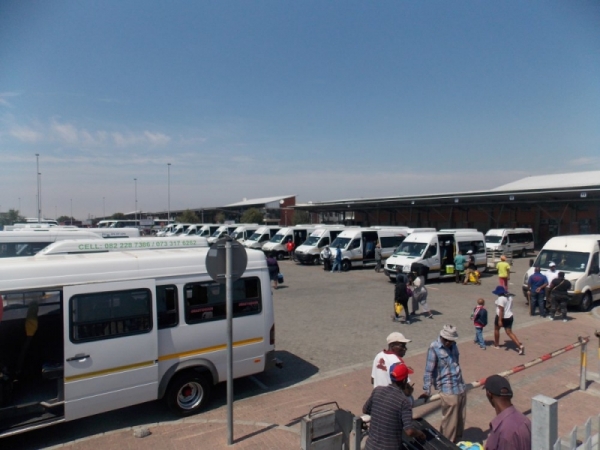
City steps up bus safety checks for annual exodus to Eastern Cape
The City of Cape Town will, from 10 December until Christmas Eve, step up safety checks on buses departing to the Eastern Cape. But some bus drivers are annoyed by the inconvenience this causes at the busiest time of the year.
Siyavuya Khaya and GroundUp staff
News | 7 December 2015
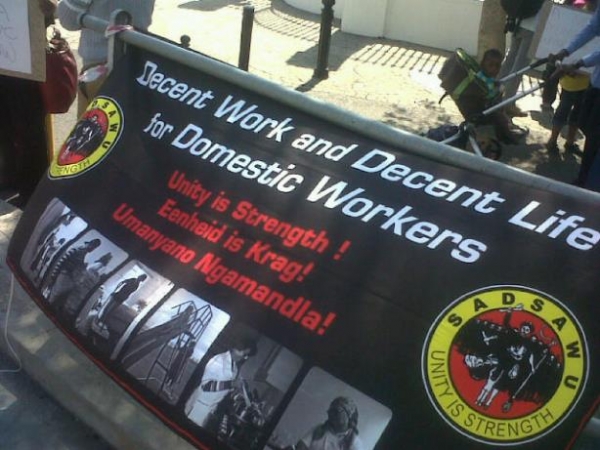
National Minimum Wage: Cosatu calls for R4,125 to R5,276 a month
At Cosatu’s 12th national congress, delegates resolved to support a call for a national minimum wage of between R4,125 and R5,276 a month. Here is an edited summary of the congress declaration.
Cosatu
Analysis | 2 December 2015
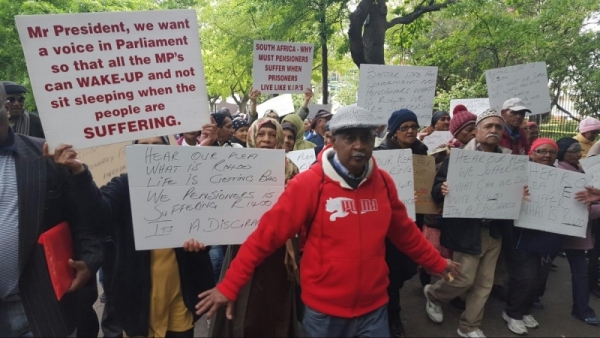
National minimum wage part three: the options
Deputy President Cyril Ramaphosa is hosting a social dialogue between business, labour and other constituencies over setting a national minimum wage (NMW). This is the final installment of a three part series by two University of Cape Town professors.
Nicoli Nattrass and Jeremy Seekings
Analysis | 26 November 2015
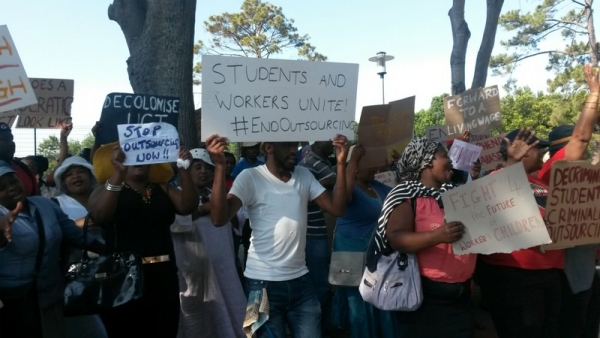
What are the financial implications of insourcing at UCT?
On 28 October, University of Cape Town management signed an agreement with NEHAWU (the National Education, Health and Allied Workers' Union) which commits the university to employ catering, transport, cleaning, security, and maintenance workers who work at UCT but are employed by outside companies. This promise of “insourcing” came in response to longstanding worker demands, and a period of intense protest in which outsourced workers were joined by many students and some UCT staff.
Ben Stanwix
Analysis | 26 November 2015