
Court sets aside national tender for circumcision device
With immediate effect the CircumQ device may not be used on boys aged ten to 14
 Add GroundUp on Google
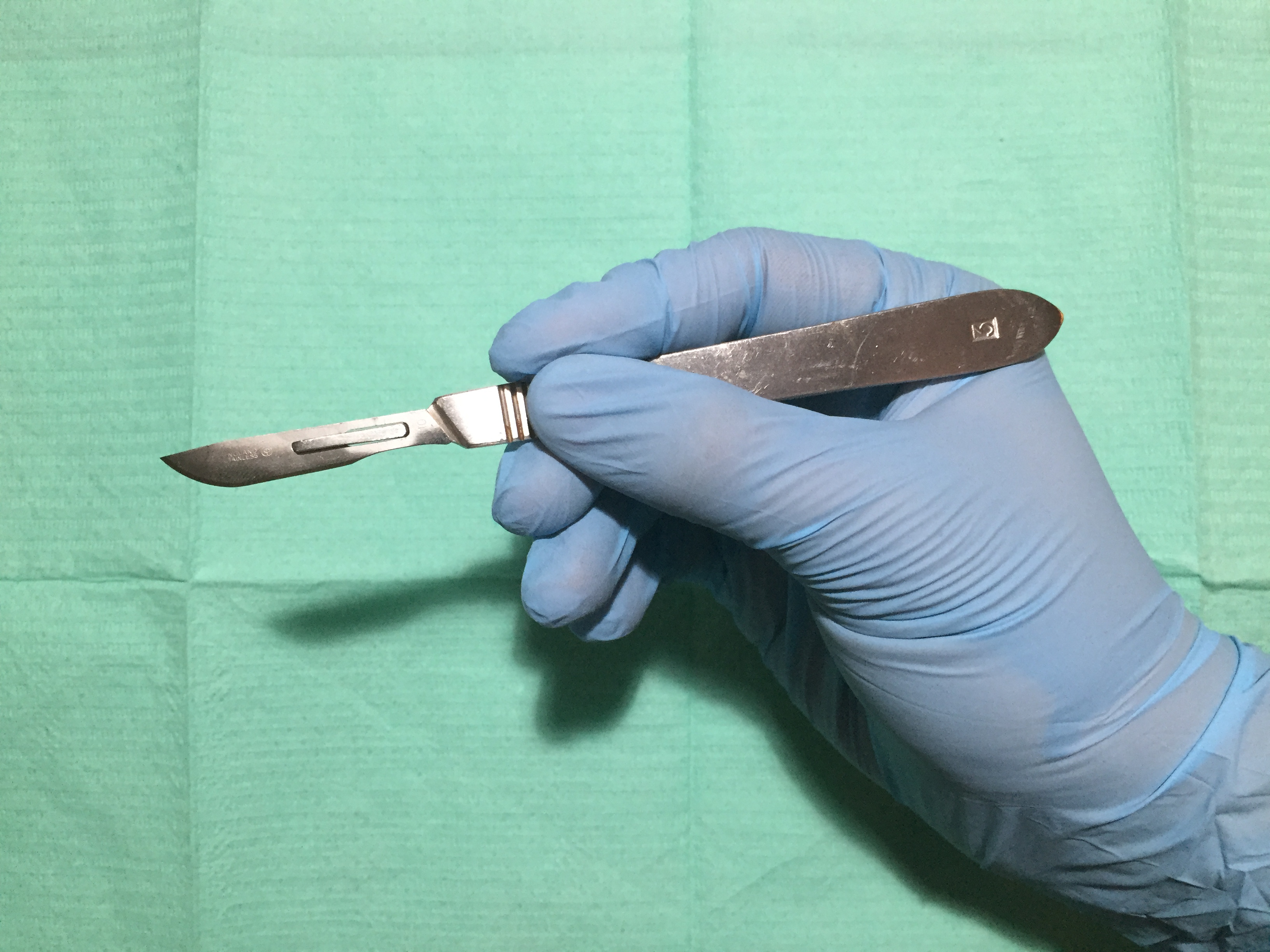
The High Court has set aside a tender awarded to CircumQ in 2023, finding that Treasury’s bid evaluation committee abdicated its responsibilities. Photo of a scalpel: Wikimedia user Rickyblax (CC BY-SA 4.0)
- The Gauteng High Court has set aside a national tender awarded to CircumQ in 2023, finding that Treasury’s bid evaluation committee recommended the award “in the absence of evidence of safety standards” and accepted the manufacturer’s own classification of the device.
- The CircumQ device was rolled out across 40 health districts and the military despite never receiving WHO approval.
- The judge has however allowed the contract to run to its expiry, but it may no longer be used on boys aged ten to 14.
The award of a tender for a circumcision device used in 40 provincial health districts and the military has been deemed unlawful by the Gauteng High Court in Pretoria. The device may no longer be used for circumcising boys aged ten to 14.
The 36-month tender was awarded to CircumQ by National Treasury in April 2023 and implemented from 1 September that year.
Allegations soon arose that it was unsafe and untested, particularly for boys aged ten to 14 – a cohort crucial for South Africa’s voluntary male medical circumcision programme (VMMC) to reduce the risk of HIV infection.


The tender was taken to court by a competitor, Unicirc, which said it was acting in the public interest.
On Thursday, Judge Elmarie van der Schyff ruled that the award of the tender had permitted the “mandatory use of an unproven surgical device on children”. She reviewed and set aside the decision by the Treasury.
The judge said, “There are irregularities in process and verification, not findings that the [CircumQ] device is in fact clinically dangerous or that its use caused systematic harm. To set it aside [in its entirety] would necessarily mean that all circumcision procedures across the programme would revert to the dorsal slit method.”
The judge said it was appropriate to halt its use with immediate effect for boys aged 10 to 14.
Noting that the contract is about to expire, the judge said the contract would be allowed “to exhaust its natural term rather than being wound back at significant cost and disruption, even though the underlying unlawfulness is shared across the whole award”.
She ordered that Treasury and the provincial health departments may not direct or obligate any health provider to use the CircumQ device on boys younger than 14.
The health authorities must ensure that health workers are “free to apply whatever clinically appropriate method” they felt is in the best interests of their patients.
The judge said the special conditions of the tender required that the surgical aid be non-invasive and either had or was in the process of obtaining World Health Organisation (WHO) approval.
The tender also required that it be a device suitable for boys aged ten to 14, and that it be a Class A device, the lowest risk category.
While Treasury and the Department of Health opposed the application, Judge van der Schyff said she found it “peculiar” that CircumQ had not opposed or even participated in the review proceedings.
“All the parties involved understand the public health benefits associated with medical male circumcision and the benefit of reducing a man’s risk of acquiring HIV. They also agree that circumcising boys in the ten to 14 age group offers several notable advantages.
“Because of the warnings on adverse effects associated with the traditional and current dorsal slit method, the Treasury and the department called for the bid to enable health professionals to move away from that.”
Regarding the WHO pre-qualification criteria, she said that while CircumQ’s application had not been “outright rejected” it had not been cleared to proceed. To date, it remained unapproved and there were no public records indicating that the required additional studies had been completed or the deficiencies identified by WHO had been addressed.
“The tender was not a routine procurement exercise. Its stated purpose was to appoint a service provider to deliver high quality, high volume VMMC services to males aged ten years and above over 40 health districts nationwide as part of South Africa’s HIV prevention strategy. The protection of patients, many of whom are children, is therefore not incidental to the tender’s purpose. It is its foundational rationale,” the judge said.
“The WHO pre-qualification requirement must be understood not as a bureaucratic formality but as a direct expression of the patient safety objective.”
Bid Evaluation Committee slammed
Judge van der Schyff said the Bid Evaluation Committee (BEC) had recommended the award of the tender “in the absence of evidence of safety standards”.
She said the committee had also “passively accepted” CircumQ’s self-assessment that its device fell into “Class A”.
“No reasonable BEC could be indifferent to the question of whether a device being deployed at scale is correctly classified when that classification directly determines the risk profile of the device.
“A BEC which simply accepts the manufacturer’s assertions and proceeds to recommend an award, is a BEC that has abdicated its responsibility to engage critically with all the material and apply its mind fully to the issue at hand,” the judge said.
The “safety question” should have been given exceptional weight.
She also noted that while the Gauteng Department of Health had said the device was being used effectively, its data did not include a breakdown of the crucial age group.
In January this year, GroundUp reported that about 96,000 circumcision devices procured under the controversial tender were about to be rolled out to clinics in KwaZulu-Natal.
Prior to the hearing in April, Unicirc attempted to introduce an affidavit of a nurse who had knowledge of a ten-year old who allegedly suffered serious complications following a circumcision with the CircumQ device. However, the court ruled that this was hearsay and did not allow the evidence.
The judge ordered that the costs of the review application be paid by the Treasury.
Support independent journalism
Donate using Payfast

Don't miss out on the latest news
We respect your privacy, and promise we won't spam you.
Next: Khayelitsha families relocated at last after weather delays and protests
Previous: Taxi operators call for urgent relief as fuel prices rocket
© 2026 GroundUp. This article is published under the GroundUp Republication Licence Version 1.0. Email [email protected] to request permission to republish.