
Photo exhibition shows the struggle of menstruation in informal settlements
15 women from Khayelitsha marked World Menstrual Hygiene Day
 Add GroundUp on Google
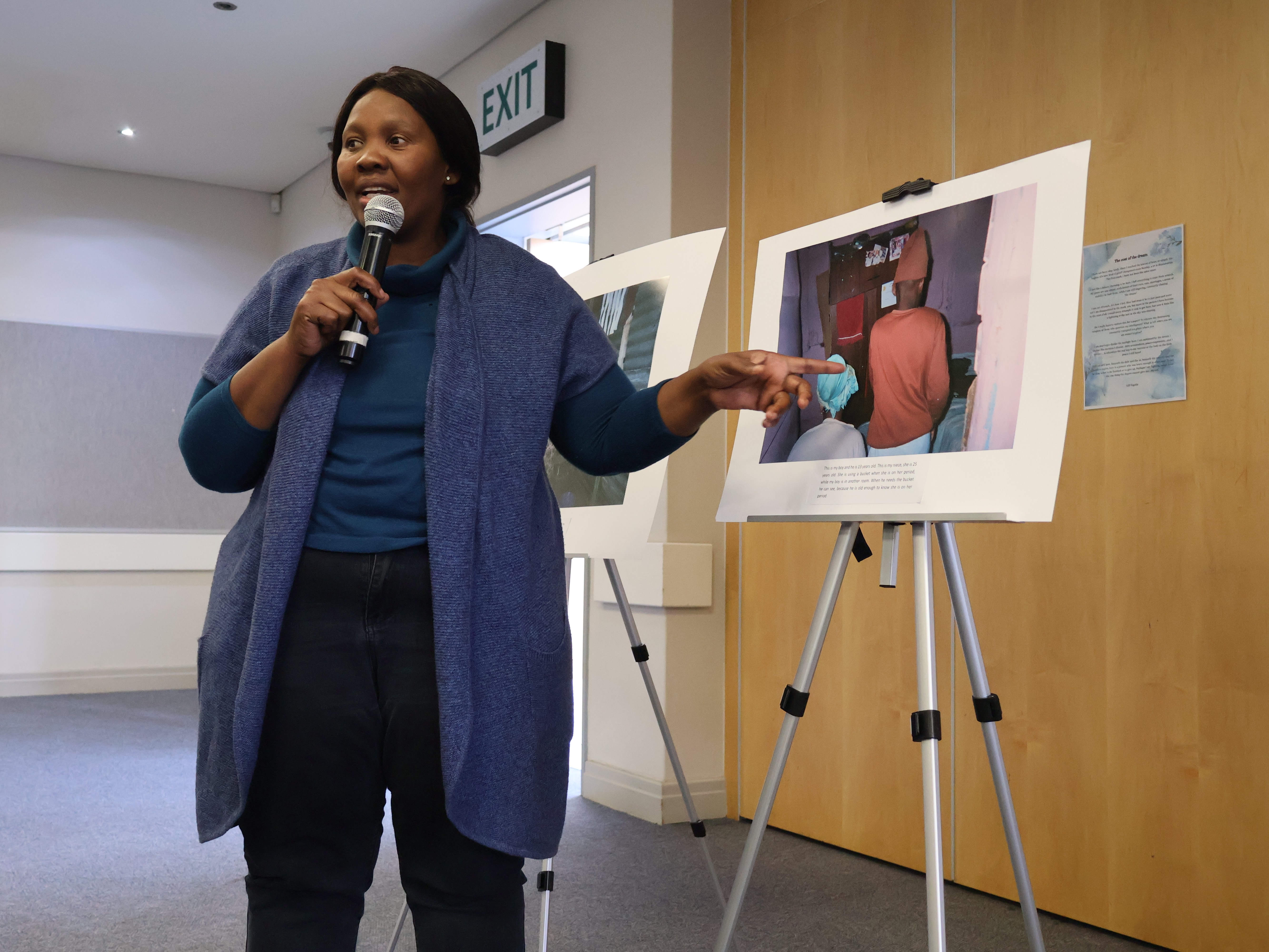
Neliswa Kani presents her photograph of her son and niece in her shack in BM Section informal settlement in Khayelitsha. She says her niece has no privacy when she is on her period. Photos: Mary-Anne Gontsana
- About 15 women from BM Section informal settlement in Khayelitsha used disposable cameras to document their menstrual struggles over an eight-month period.
- They presented their photographs at a World Menstrual Hygiene Day at the University of the Western Cape’s School of Public Health on Thursday.
- The exhibition is part of the Caring for the Other Half project, which explores menstrual health in urban informal settlements.
To mark World Menstrual Hygiene Day, a group of women from BM Section informal settlement in Khayelitsha presented a photo exhibition, highlighting their menstrual struggles living in informal settlements.
Held at the University of the Western Cape’s (UWC) School of Public Health on Thursday, the exhibition is part of the Caring for the Other Half project, funded by the Matariki Network.
The project explores the impact of public sanitation services in urban informal settlements on menstrual health.
15 women documented their experiences over an eight-month period with disposable cameras, said Christina Culwick Fatti of UWC’s Politics and Urban Governance Research Group.

One of the women, Neliswa Kani, lives in a shack with her 13-year-old son and 25-year-old niece. She explained that the lack of toilets near her home meant her niece has no privacy when she is menstruating.
“We use a bucket to relieve ourselves. When my niece is on her period, and she urinates, obviously, some traces of blood will be in the urine. Sometimes when she changes her sanitary pad at night, my son will see because there is no privacy for her or a toilet to go to, to change her pad.”
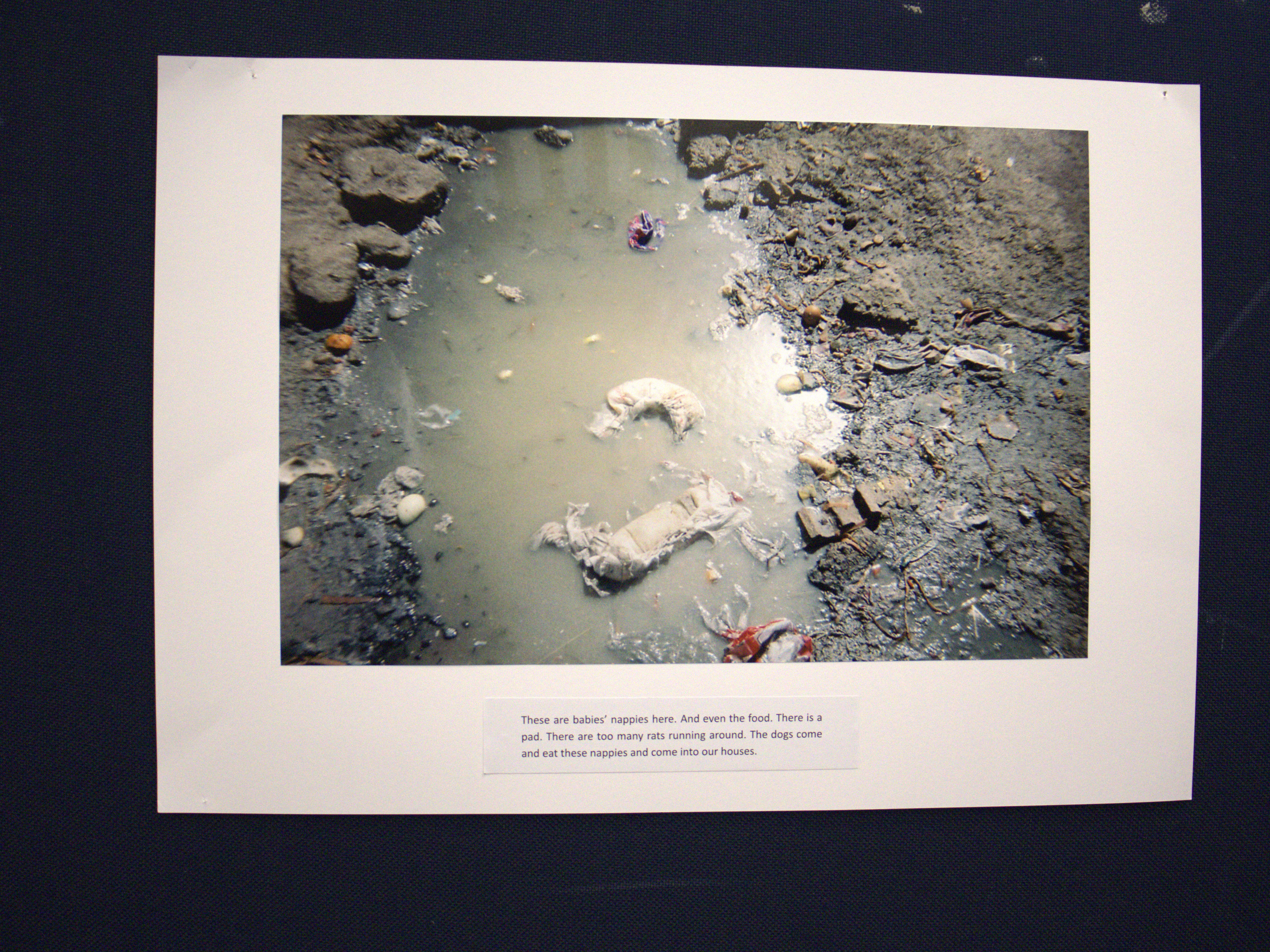
Photo taken of a soiled sanitary pad in the street.
Nolundi Xhobo used her camera to highlight the struggles of disposing sanitary pads. “We do not have bins in BM Section, so the only place we have to dispose of pads is the [shipping] containers. The problem with these containers is that sometimes the refuse isn’t collected, leaving the container full and exposed. Now a dog comes and opens the plastic bag with the used sanitary pads. Those pads then end up exposed in the street,” said Xhobo.
The women also spoke about the difficulty of accessing sanitary products. Products are expensive, and with the lack of taps and water, maintaining good hygiene is hard in the settlement.
Unathi Noludwe of the City of Cape Town’s informal settlements basic services department said, “This event highlights the importance of turnaround time when providing services or repairs, especially in informal settlements. I have noted all that has been said and will relay it to the department.”
She said a water and sanitation project is set to start in BM Section in July.
In a statement for Menstrual Hygiene Day, the I_Menstruate Movement, which works to eradicate period poverty, repeated its call for Parliament to legally recognise menstrual health as a fundamental human right through the introduction of the proposed Menstrual Health Equity Bill.
“Period poverty is not only about the absence of menstrual products. It is about unsafe and inadequate sanitation infrastructure in schools and communities, lack of access to clean water, healthcare, pain management support, nutrition, menstrual health education, inclusive workplace policies, social protection and the continued stigma and silence surrounding menstruation,” said I_Menstruate Movement founder Tracey Malawana.
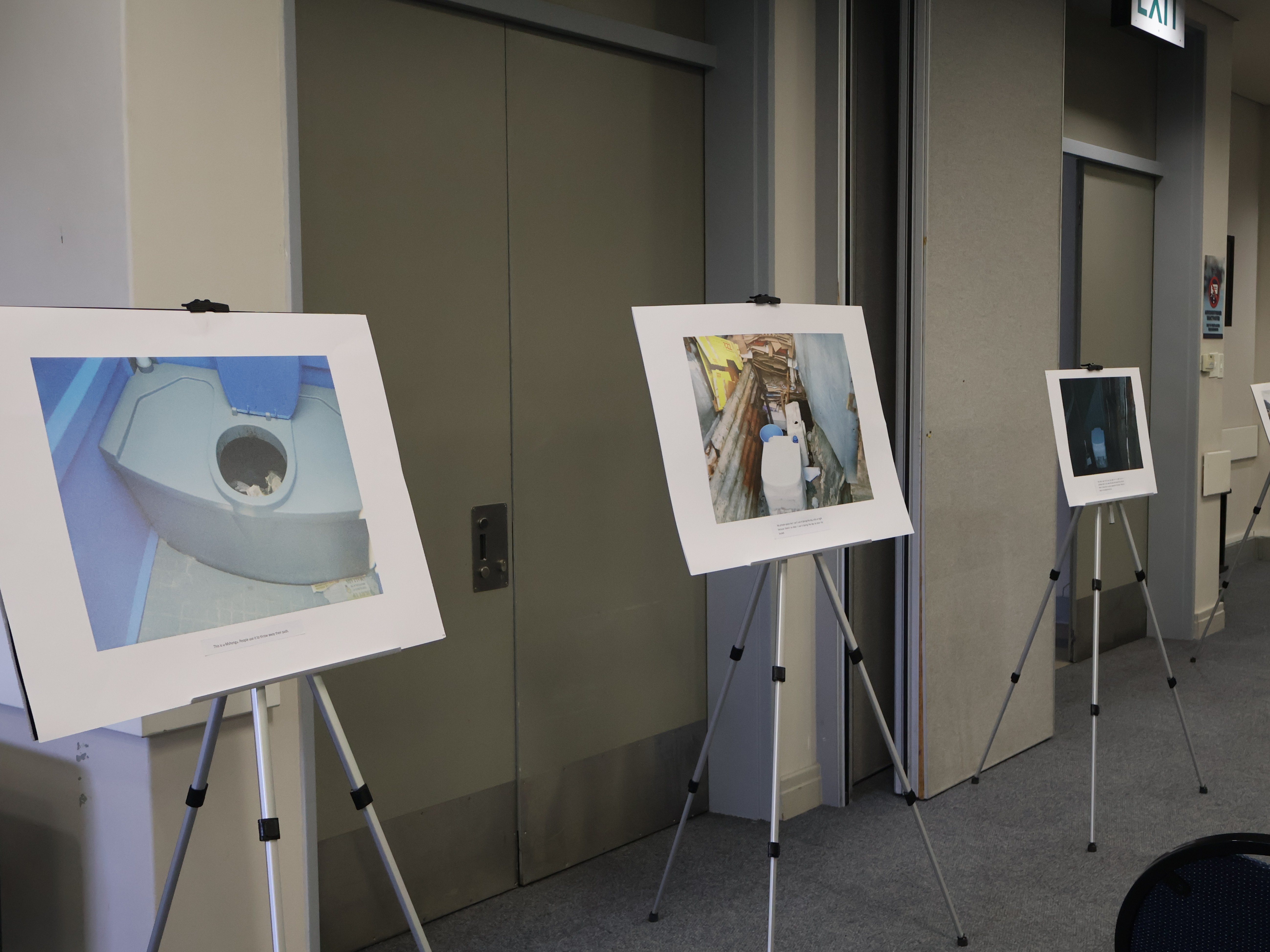
Row of photos taken by the women to show the poor toilets and sanitation options in BM section.
Support independent journalism
Donate using Payfast

Don't miss out on the latest news
We respect your privacy, and promise we won't spam you.
© 2026 GroundUp. This article is published under the GroundUp Republication Licence Version 1.0. Email [email protected] to request permission to republish.