
Funding delay puts Salt River social housing at risk
Government approved funding in October last year but has yet to sign the final grant agreement
 Add GroundUp on Google
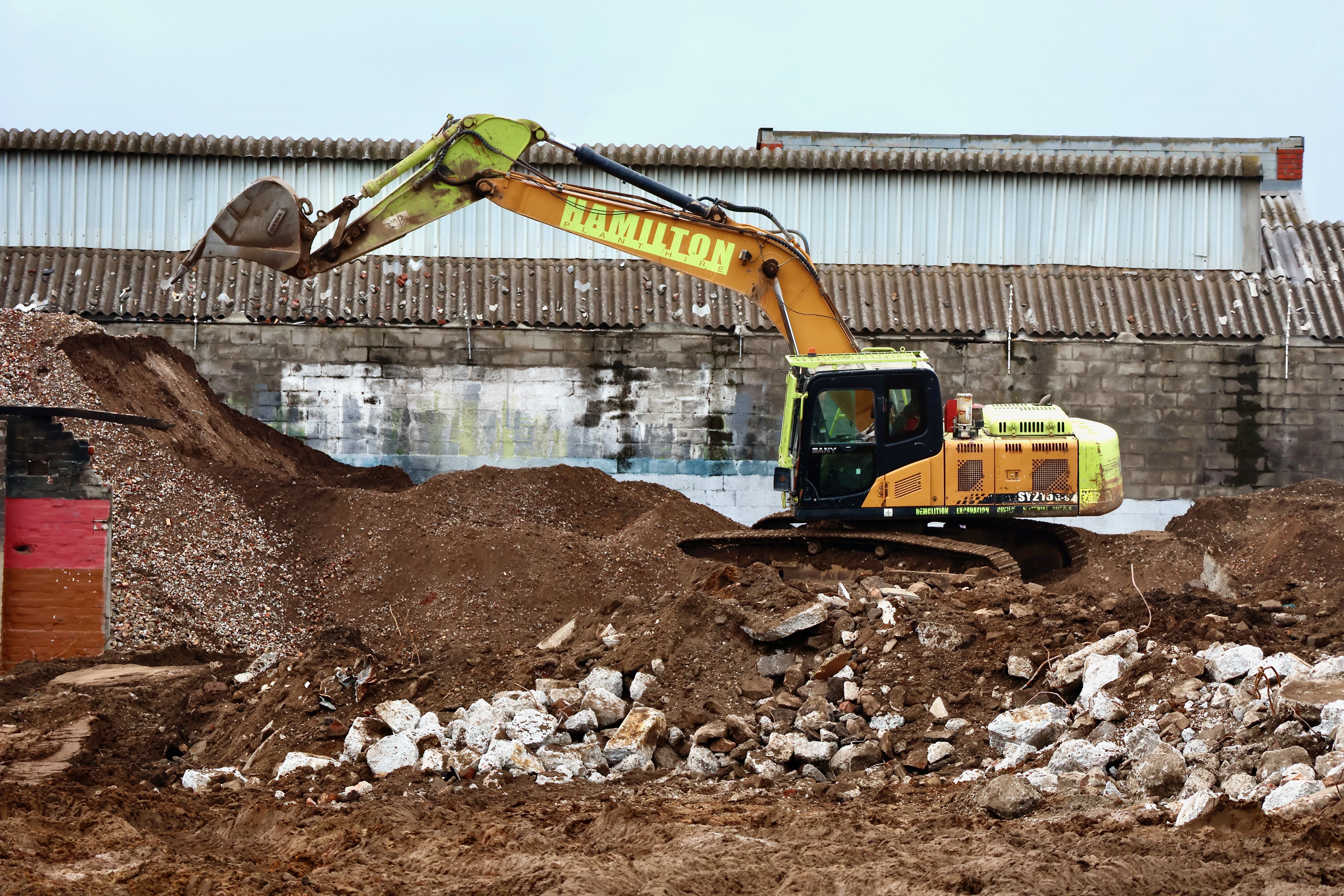
Earthworks and demolition at the Salt River Market site began in October, but funding for the planned social housing units is still uncertain. Photo: Matthew Hirsch
- The Social Housing Regulatory Authority (SHRA) approved R127-million for 300 social housing units at the Salt River Market site over a year ago, but has still not signed the grant agreement.
- Communicare, which is building the units, says that every month of delay pushes up costs.
- Across the country, 17 social housing projects with more than 9,000 units are blocked or delayed. SHRA says it needs about R1-billion to sort them out.
The Social Housing Regulatory Authority (SHRA) has allocated R127-million for social housing at the Salt River Market site but has yet to sign a final grant agreement.
Until it does, social housing institution Communicare’s plans for 300 units for households earning less than R22,000 a month remain uncertain.
The site was first earmarked for social housing more than a decade ago. It was owned by the City of Cape Town until its release to Communicare earlier this year.
Earthworks and demolition began in October, and the main housing construction is scheduled for March. The development is the only one in the City’s pipeline where ground has been broken.
Communicare is investing R40-million of its own funds. In addition to the 300 subsidised social housing units, 670 units will be built without state subsidies and allocated to households earning up to R34,400 a month.
The SHRA council approved funding for the development in October 2025.
Communicare CEO Anthea Houston said a draft contract was finalised in December 2025, but there has been no progress since. 
Houston said that should the SHRA grant not materialise, the development may have to consist of only non-subsidised housing for households earning less than R34,400.
“We would have to go back to the City council to get their support,” she said.
Activists have raised concern that non-subsidised affordable housing will exclude many lower-income families.
The longer the grant is delayed, the more costs increase and the less viable the social housing units become, said Houston.
She said subsidised housing secures lower rentals. Without it, rental amounts would not be as affordable as they could be.
Meanwhile, demolitions and earthworks at the site are ongoing. The demolition contractor will move off site before the end of the year, and the piling contractor will take over in January. The main contractor will start in early March 2027. Construction is expected to last two years, according to Communicare.
The SHRA did not answer questions on why the funding has apparently been delayed.
“The process is within the domain of the National Department of Human Settlements (NDoHS). The SHRA has indicated that it cannot communicate outcomes and timelines in the meantime on NDoHS’s behalf,” the SHRA said in a written response to GroundUp. “The SHRA will remain communicating in writing directly with Communicare.”
The national Department of Human Settlements referred our questions back to the SHRA.
Mayco member for human settlements Carl Pophaim told GroundUp that such developments are funded by “very steep land discounts” and the SHRA grant.
“So we will carry on offering the land discounts, but without the SHRA grant, you are really impacting on your affordability,” said Pophaim.
Mayor Geordin Hill-Lewis also said the functionality of SHRA was a “serious concern that threatens the affordable housing delivery programme across South Africa”.
9,000 blocked social housing units
When inflation is taken into account, the SHRA’s capital grant allocation for funding social housing projects is about 22% less than it was in 2018.
In April, SHRA told Parliament that its R828-million capital grant allocation for 2026/27 “might not be sufficient to cover the delivery of all budgeted units.”
The SHRA’s entire portfolio consists of 65 projects with 32,016 units.
Briefing Parliament’s portfolio committee on human settlements on Wednesday, the SHRA said that across the country there were 17 social housing projects, consisting of 9,378 units, that were blocked or delayed.
The SHRA aims by December 2028 to ensure that all these projects are completed and occupied, transferred to a capable institution or officially terminated. It will need about R1-billion to do this, it said.
“We are working around the clock,” said the SHRA interim chairperson Tumisho Makofane.
Biansha van Staden, executive committee member at SHRA, attributed most of the blocked projects to cost escalations after Covid-19. And in some cases, grant funding was released “before projects were secure.”
The SHRA recommended suspending or limiting new approvals and redirecting existing capital grant funding to recovery projects.
The SHRA had twice this year failed to brief the committee because its presentations were late. The committee had also asked the SHRA for quarterly reports on blocked projects.
The SHRA has also had leadership trouble. Its chief executive, Sandile Luthuli, was removed in July 2024 and returned only on 16 November, after a CCMA arbitration award ordered his reinstatement. In between, the SHRA was run by acting CEOs, including van Staden. Makofane currently chairs the council as interim chairperson.
Support independent journalism
Donate using Payfast

Don't miss out on the latest news
We respect your privacy, and promise we won't spam you.
© 2026 GroundUp. This article is published under the GroundUp Republication Licence Version 1.0. Email [email protected] to request permission to republish.