
Protesters block N2 and R300 for taps and toilets
Residents of the Covid informal settlement have for years been fighting for services
 Add GroundUp on Google
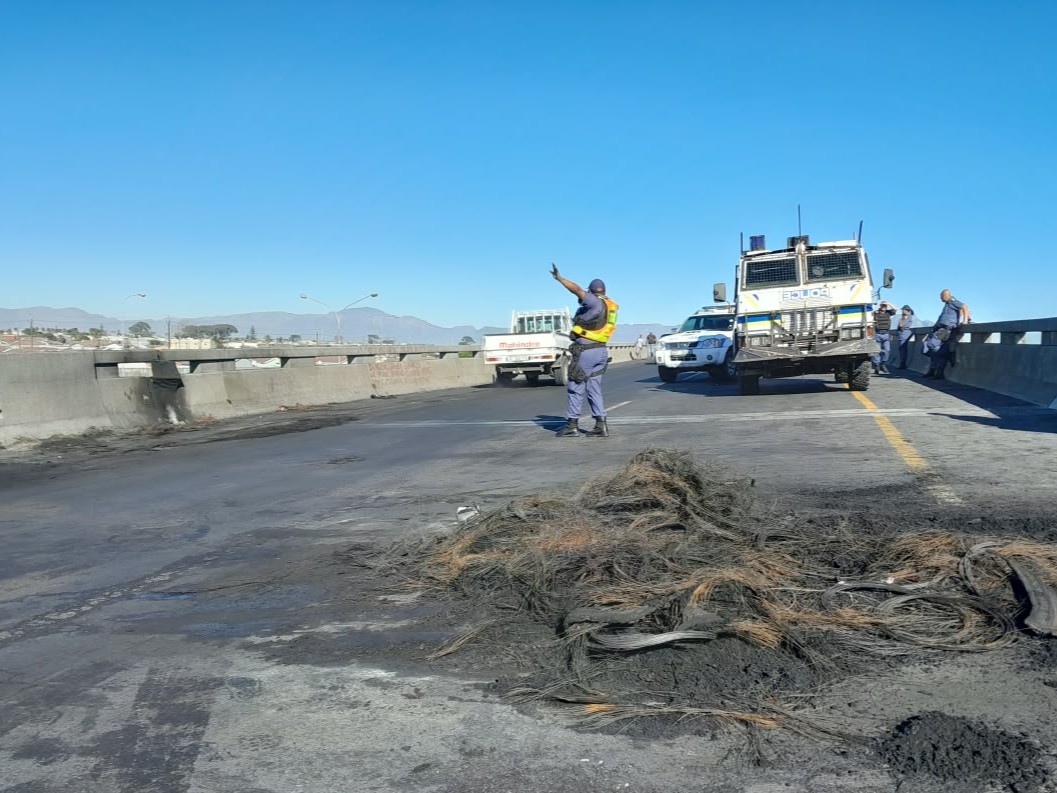
Covid informal settlement residents have been protesting on the N2 and R300 for the City of Cape Town and premier to install taps and toilets. Photos: Vincent Lali
- Residents of Covid informal settlement have been protesting on the N2 and R300 for the City of Cape Town to install taps and toilets.
- A year ago, they marched in the city centre and handed over memorandums to the mayor and Western Cape premier. They say they have not heard back.
- They say they must cross the busy N2 and R300 to relieve themselves on open land, and residents have been injured or even killed in the process.
It’s been nearly a year since shack dwellers from Covid informal settlement marched to the offices of the Western Cape Premier and Cape Town mayor to ask for toilets and water.
They say they must cross the busy N2 and R300 to relieve themselves on open land, and many residents have been injured or even killed in the process.
On Monday morning, residents used burning tyres and debris to block sections of the freeway and Old Faure Road near Mfuleni. It was the fourth protest in a week.
Western Cape police spokesperson, Ndakhe Gwala, on Friday said the police would open a case of public violence after about 500 people protested for services.
On Monday, the police’s Wesley Twigg said, “Police took action to disperse the crowd, however no arrests were made and no injuries were reported. The roadway has since been opened to traffic. SAPS and other law enforcement agencies will remain in the affected area to monitor the situation. We appeal to anyone who participates in protest action to do so within the ambit of the law.”
Community leader Bathandwa Gali said people are angry because the City of Cape Town and the Premier’s Office “ignored” their memorandums.
“After we handed memos to the Premier Office and the City of Cape Town, we expected senior officials to come and tell us what they could do for us. We have been staying here for six years but we don’t have water and chemical toilets,” he said.
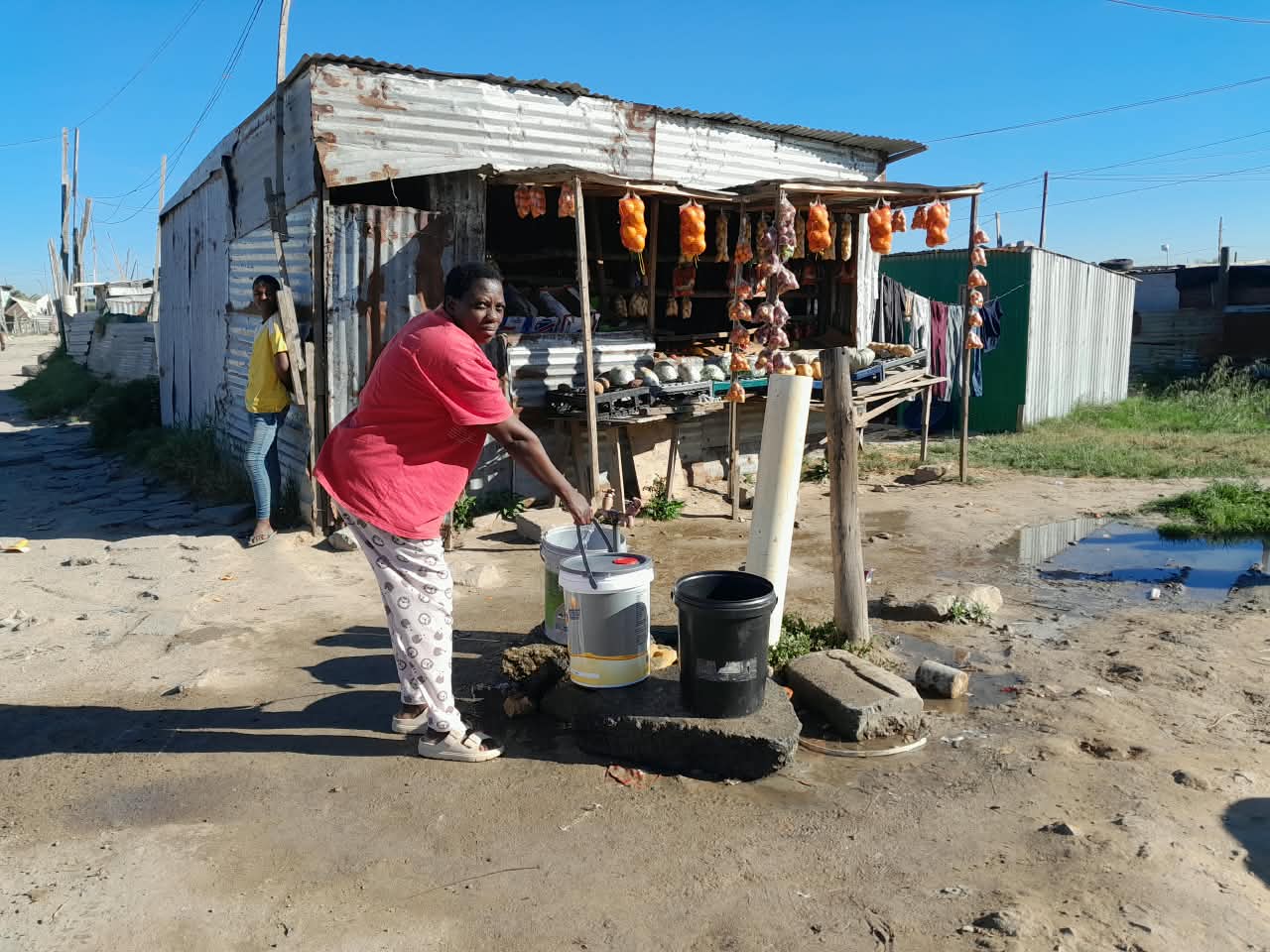
Covid resident Nomabongo Magaiana fills her buckets at a communal tap installed by residents.
Protester Andiswa Charlie said she often experienced sexual harassment while relieving herself beside N2. “Some drivers stop and wave for me to come to them while I’m relieving myself beside the road. I feel unsafe,” she said.
Zandile Ntsabo said they rely on one community-installed tap for water to cook, drink and do laundry. “We always experience long lines in the morning when people prepare to go to school and work as the water drips out of the tap slowly,” she said.
Elderly residents staying far from the tap use their grant money to hire youth to collect water with wheelbarrows and trolleys for R10, she said.
Ntsabo, who stays with her 14-year-old daughter, is also worried about their safety when they relieve themselves in the open. “We were both relieving ourselves beside different bushes when she screamed for help as a man approached her. When I saw him putting his finger on his lip to tell her not to scream, I threw a stone at him and he ran away.”
Ntsabo said since this incident, they only relieve themselves in buckets inside their shack and empty it in a hole they dig.
To our questions, Regan Thaw, spokesperson for the Premier’s Office, said: “I can confirm the Office of the Premier did receive the memorandum. The matter was referred to the Western Cape Department of Local Government.”
The City’s response will be added once received.
Support independent journalism
Donate using Payfast

Don't miss out on the latest news
We respect your privacy, and promise we won't spam you.
© 2026 GroundUp. This article is published under the GroundUp Republication Licence Version 1.0. Email [email protected] to request permission to republish.