
Families return home after fleeing zama zama violence
Hundreds of people spent two weeks in a community hall in Randfontein after armed gangs terrorised the informal settlement of Sporong
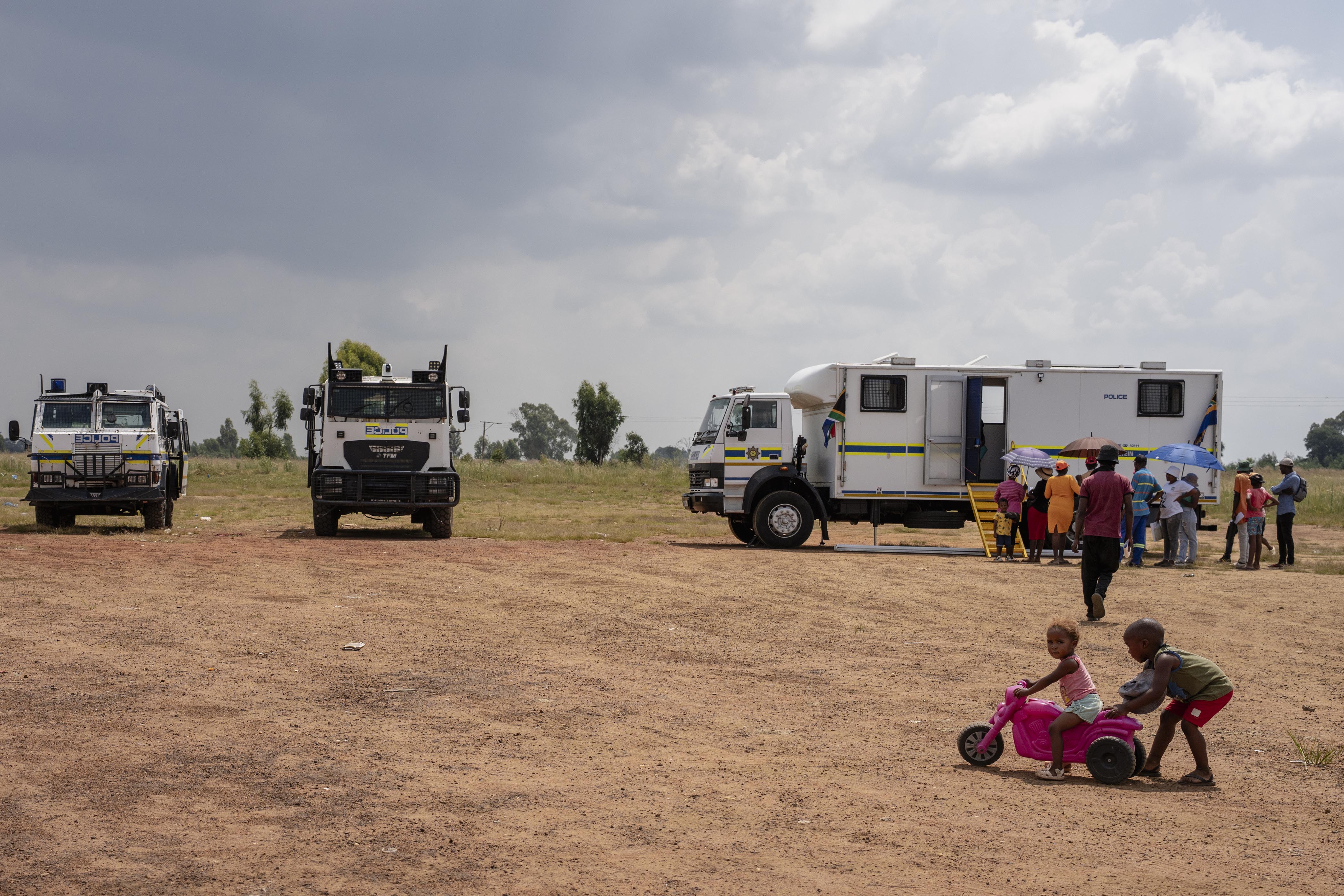
Two police Nyalas and a temporary police station at the edge of Sporong. Photos: Ihsaan Haffejee.
- Hundreds of residents from Sporong informal settlement who fled raids by armed gangs have started to return home.
- The residents spent two weeks sheltering in a community hall in Randfontein.
- They returned because of an increased police presence after the Gauteng Premier and provincial police commissioner intervened.
Hundreds of residents who fled violence in Sporong informal settlement on the West Rand two weeks ago have begun returning to their homes.
The settlement, home to about 500 people, was established about 10 years ago in an open field near old gold mines. For months it has been terrorised by armed gangs, believed to be linked to nearby informal mining activities.
“What we have experienced has traumatised the entire community,” said community leader Zanele Morapedi.
She said that in November heavily armed informal miners (zama zamas) began raiding the settlement at night. Residents had to lie on their floors to avoid gunfire. People found outside were robbed and beaten.
“We live in shacks so there’s no real protection as the bullets enter easily,” said Morapedi.
Dimakatso Moatshe, a 35-year-old mother of two, was shot dead during one such raid at the end of November. Her orphaned children have since moved to another settlement to live with their grandmother.
“It really broke our hearts,” said Moatshe’s sister, Puseletso Sefoloshe.
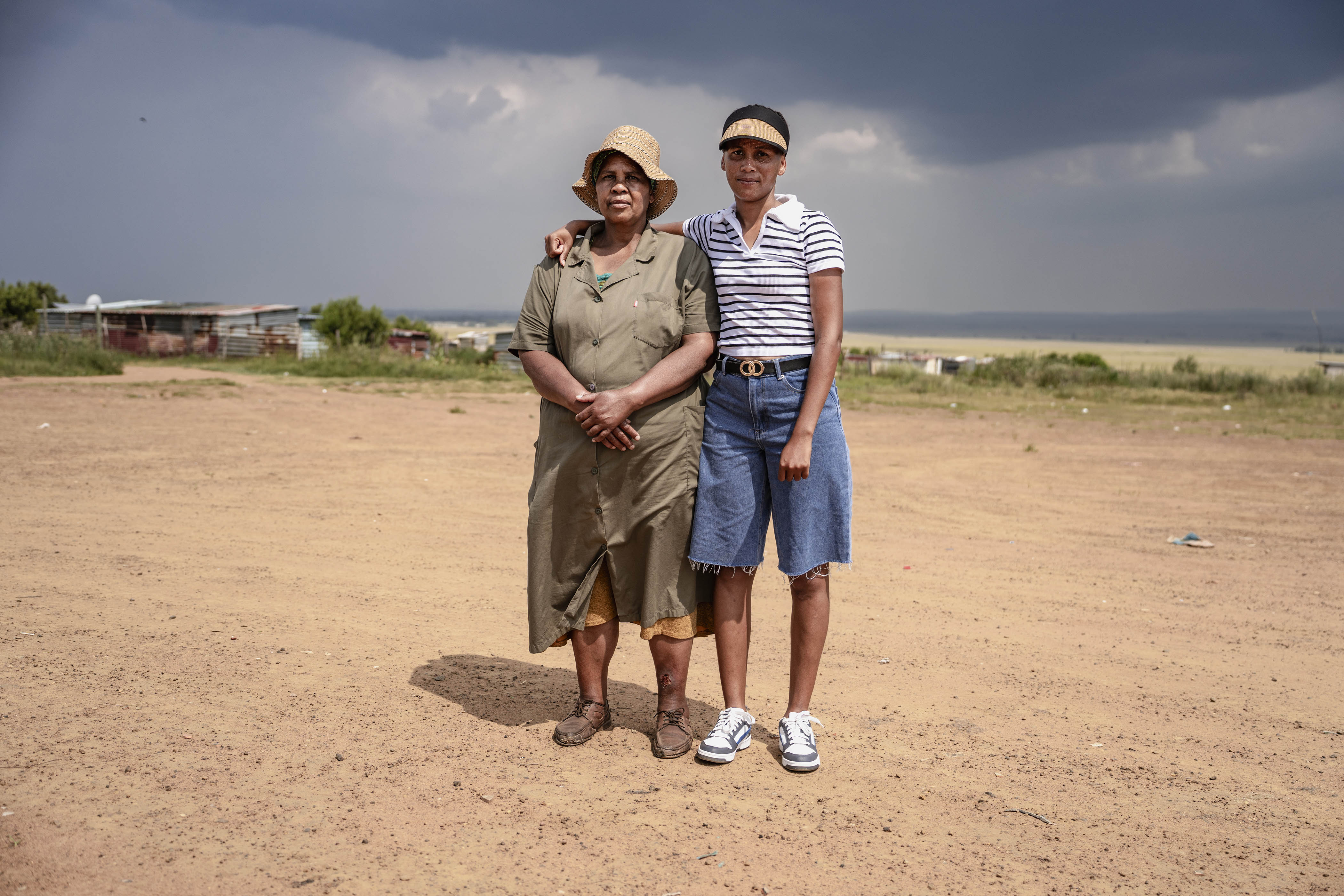
Betty Sefoloshe (left) and her daughter, Puseletso. Dimakatso Moatshe, the daughter of Betty and sister of Puseletso, was killed during a zama zama raid at the end of November.
The attacks continued in December and escalated in January, with armed gangs breaking into homes to rob people.
Community leaders decided to evacuate the settlement.
Hundreds of people sought shelter at a community hall in Randfontein for two weeks. They refused to return unless police intervened and made the settlement safe.
Gauteng Premier Panyaza Lesufi and provincial police commissioner Tommy Mthombeni visited Sporong. Mthombeni promised increased policing and Lesufi said residents would, in time, be relocated.
On Monday, two police Nyalas and a temporary police station were stationed on the edge of the settlement. A police helicopter circled overhead.
“If the police leave, they [gangs] will return and shoot more people,” said Ponto Julius Ponto, a longtime resident of Sporong. He earns a living salvaging recyclable materials from a nearby dumpsite.

Julius Ponto, a longtime resident of Sporong, hopes police will stay stationed in the area for a while.
Municipal housing officials briefed the community on Monday. The names of the latest group of housing beneficiaries were announced, to cheers from the residents. Kate Morapedi was overjoyed to hear her name called. She received congratulatory hugs from fellow residents.
“We are finally moving into a house. We are moving away from this place,” she told her daughter.
Speaking on condition of anonymity because he is not authorised to speak to the media, a housing official said qualifying residents would be allocated homes in various developments, but it would take time.
“We can maybe allocate around 20 applicants every few weeks, so people need to be patient, as there is a long waiting list,” the official said.
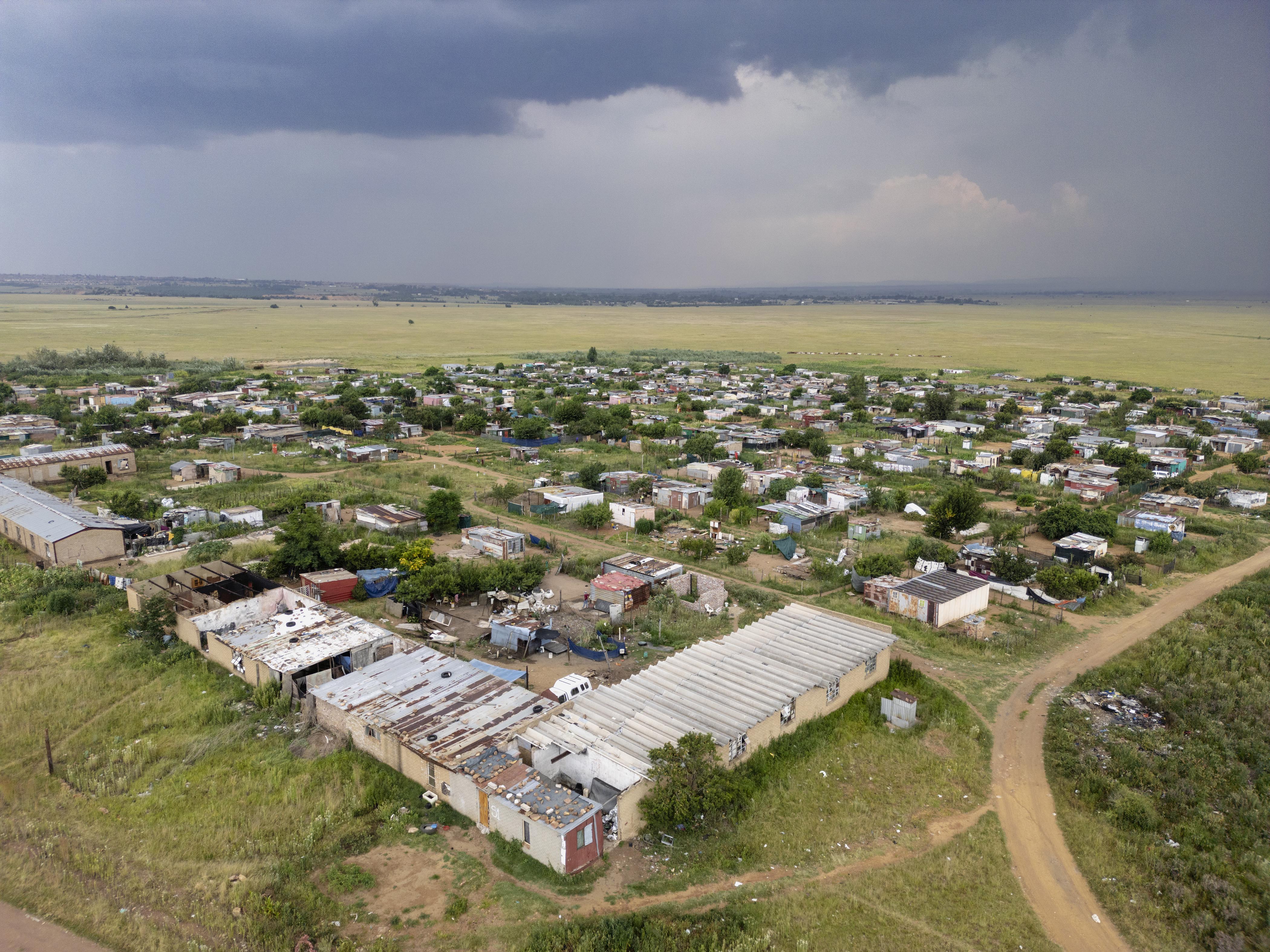
Sporong, in an open field near old gold mines on the West Rand, is home to about 500 people.
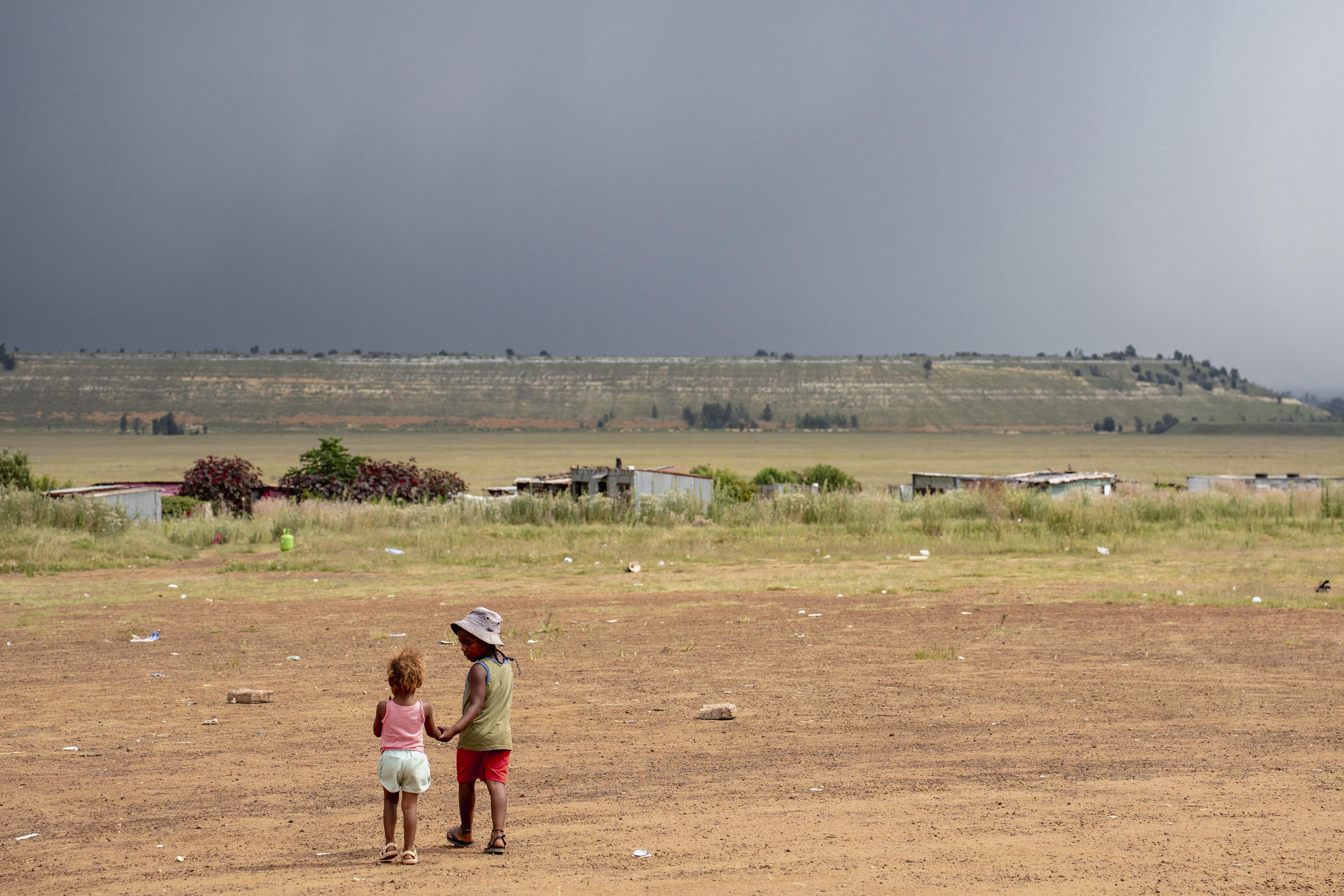
Two children walk through a field in Sporong. In the distance are old mine dumps.
Support independent journalism
Donate using Payfast

Don't miss out on the latest news
We respect your privacy, and promise we won't spam you.
Next: Upgrades to Polokwane taxi rank delayed for months
Previous: 250 learners share three pit toilets at this Eastern Cape school
© 2026 GroundUp. This article is licensed under a Creative Commons Attribution-NoDerivatives 4.0 International License.
You may republish this article, so long as you credit the authors and GroundUp, and do not change the text. Please include a link back to the original article.
We put an invisible pixel in the article so that we can count traffic to republishers. All analytics tools are solely on our servers. We do not give our logs to any third party. Logs are deleted after two weeks. We do not use any IP address identifying information except to count regional traffic. We are solely interested in counting hits, not tracking users. If you republish, please do not delete the invisible pixel.