
Rat poison found in Cape Town’s dead caracals
UCT researcher says secondary poisoning of the apex predator from eating contaminated prey threatens to unbalance the Cape Peninsula ecosystem
 Add GroundUp on Google

A caracal spotted near Cape Point. Photo: Oscar Barnes/Urban Caracal Project
- Post-mortems by the UCT Urban Caracal Project has found internal bleeding caused by anticoagulant rodenticides in most dead caracals.
- Caracals are poisoned indirectly by eating rats and other animals that have consumed slow-acting poison.
- The City of Cape Town says it uses lower-risk poisons in environmentally sensitive areas, but lead researcher Dr Gabriella Leighton says she has seen no improvement on the ground.

Dr Gabriella Leighton has performed dozens of post-mortems on Cape Town’s caracals. She has become used to seeing the effects of anticoagulant rodenticides – rat poisons designed to cause internal haemorrhaging.
“You see a lot of free blood in the chest and abdomen,” she says. “It just doesn’t coagulate.”
Leighton and her research team at the University of Cape Town’s Urban Caracal Project have found evidence of secondary poisoning caused by eating other poisoned animals.
Rodenticides, which are widely used, will often contaminate rats or mice with a slow-acting poison.
“That target rodent will consume whatever poison is put out, but it can take up to two weeks to die,” explains Leighton. “In the meantime, it’s running around and it’s often a bit slower and easier to catch.”
Predators, including birds, genets and caracals, find what seems an easy meal. “The poison is not something they can see,” Leighton says. “It’s an invisible threat.”
Even when it isn’t lethal, the impact of secondary poisoning on the cat’s health can be severe.
“These compounds can affect the immune system,” says Leighton. “So they may be less able to fight off diseases.”
“Caracals are a sentinel species,” she says. “All of the threats that other species are facing will be reflected in them.”
“Being a top predator puts them at more risk. For every step you go up the food web, the poison gets more concentrated and potent. It’s a trend of bioaccumulation,” says Leighton.
Whilst secondary poisoning is an issue across the world, Cape Town’s geography makes it particularly vulnerable. “Cape Town is pretty unique,” says Leighton, “We have a national park surrounded by the city.” Caracals living on the peninsula are often forced into contact with human settlements, which “puts them at much greater risk of poisoning”.
“The use of poison is always considered a last resort,” the City Health Department told GroundUp. In environmentally sensitive areas, the City uses poisons with “a lower risk of secondary poisoning”.
However, Leighton has not seen this reflected in her observations: “I wouldn’t say that there’s been any improvement,” she says. “I don’t think that any kind of mitigation has really been implemented.”
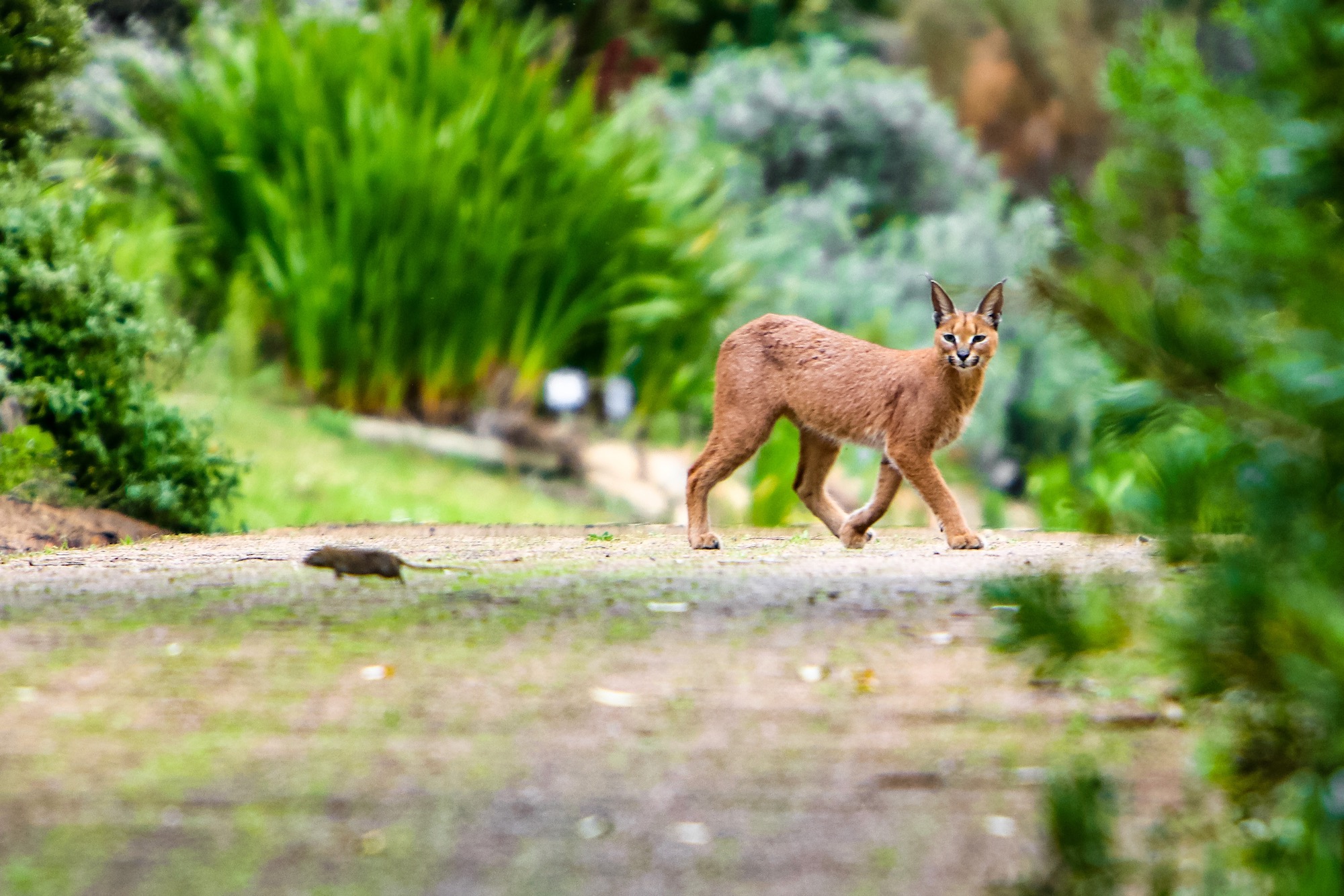
A caracal and rat spotted at Kirstenbosch, Cape Town. Photo: Jacques Smit/Urban Caracal Project.
Rodenticide is also widely used by businesses, farmers and private individuals, something industry-body CropLife SA insists is a necessity. “The reason we have rodenticides is public health,” says CEO Rod Bell. “There are quite a few nasty diseases that rodents are vectors for. So they’re for things like food processing facilities, hospitals, anywhere you need sterile conditions. ”
Bell maintains that risks to the environment can be managed through responsible use of poisons.
“We have a really strong emphasis on stewardship,” he says of CropLife’s guidelines for using poison. These include placing poisons in bait stations, collecting dead rodents, and responsibly disposing of unused rodenticides.
CropLife, and the City, advocate for an “integrated pest management programme” where poison is a “last resort.” Instead, primary interventions focus on prevention through managing food waste, limiting access points like holes in walls, and using non-poison traps.
But Bell acknowledges that the risk of secondary poisoning cannot be totally eliminated.
“Unfortunately, pesticides are designed to kill an organism,” he says, “that is the basic function of it, but responsible use practices reduce that risk as far as possible.”
Even so, Bell says rodenticides are a crucial part of a healthy city. “It’s a delicate situation of the benefits outweighing the risks.”
But Leighton and her team say the harm to caracals will be felt in the wider environment. “When predators are not doing well their ability to control their prey species in the environment is lessened,” she says. “That’s when ecosystems very quickly get out of balance.”
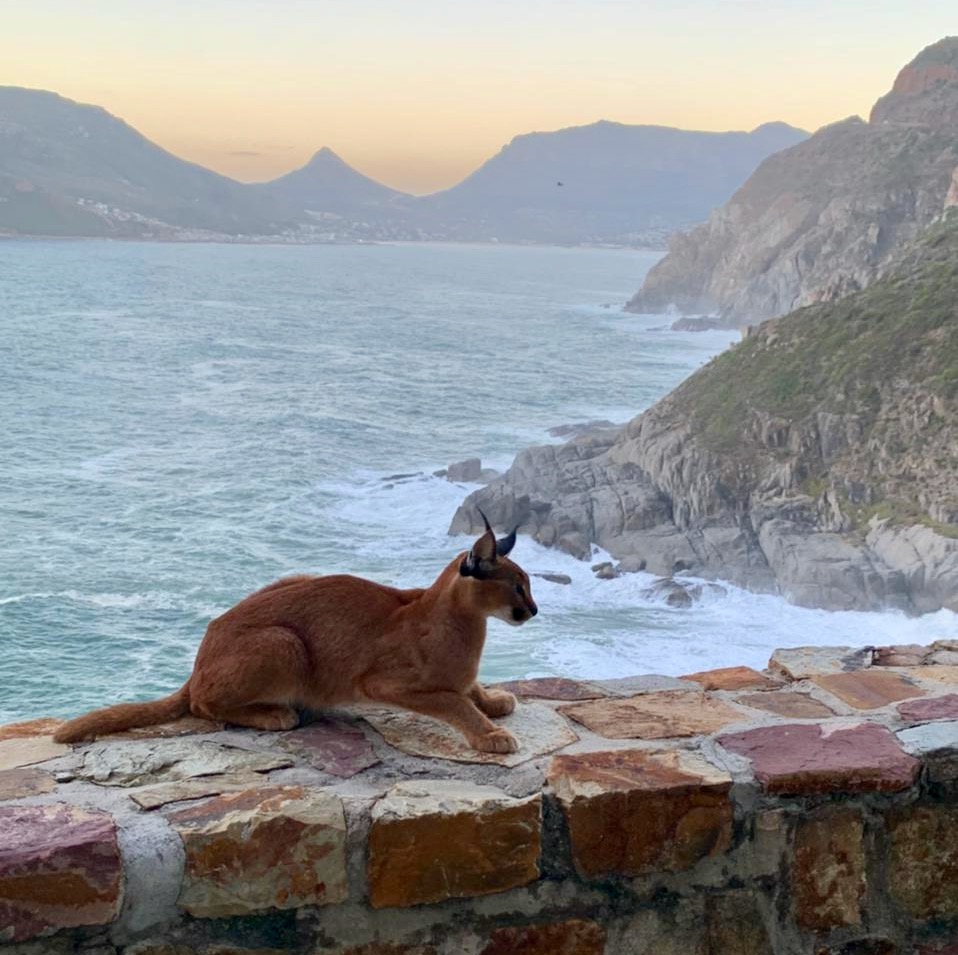
A caracal on Chapman’s Peak drive. Photo: Adam Parker/Urban Caracal Project
Support independent journalism
Donate using Payfast

Don't miss out on the latest news
We respect your privacy, and promise we won't spam you.
Next: Protesters from Marikana picket for jobs at Samancor in Joburg
Previous: This granny lives in a shack right next to her unfinished RDP house
© 2026 GroundUp. This article is published under the GroundUp Republication Licence Version 1.0. Email [email protected] to request permission to republish.