
PRASA rail theft trial bogged down in argument over virtual testimony
Key state witness is stranded in Dubai
 Add GroundUp on Google
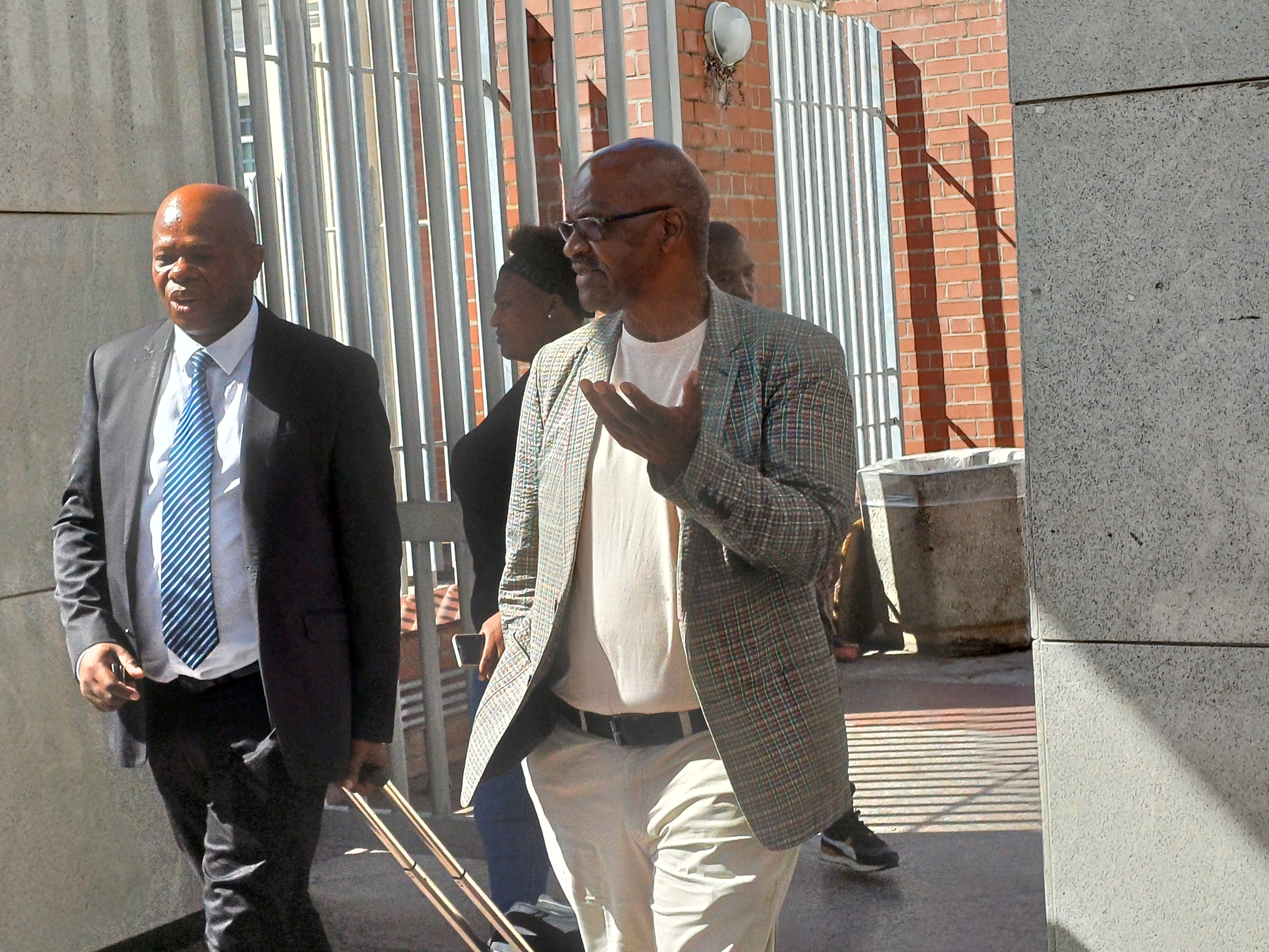
Former PRASA acting CEO Mthuthuzeli Swartz (right) exits the Gqeberha Regional Court with advocate Mzwamadoda Mnyani in March 2025. Archive photo: Steve Kretzmann
- One of the state’s key witnesses, in a fraud trial against a former PRASA manager and a Cape Town businessman, is in Dubai and cannot afford a flight to South Africa.
- The case concerns the alleged unauthorised sale and upliftment of 42km of rail between Sterkstroom and Khowa in the Eastern Cape in 2012.
- The trial has dragged on for seven years, with one accused changing attorneys five times.
- The state has applied for the witness to provide testimony virtually, arguing that witnesses from other provinces have repeatedly travelled to Gqeberha at public expense only for the case to be postponed.
- The defence are opposed to allowing virtual testimony.
In late 2012, Adrian Samuels and his cousin, Cedric Samuels, say they were given authorisation to uplift 42km of rail between Sterkstroom and Khowa (formerly Elliot) in the Eastern Cape for scrap.
The authorisation allegedly came from then PRASA Western Cape manager Mthuthuzeli Swartz, with Cape Town-based businessman Nadir Mohiudeen acting as a go-between.
Adrian Samuels was then general manager of Akisisa, the company that undertook to uplift the rail, and is now a key state witness in the case of fraud and/or theft against Swartz and Mohiudeen.

But Adrian Samuels is now working in Dubai and says he doesn’t have the money to fly to South Africa to appear in court in person.
Following numerous delays and postponements of the trial, the state this week applied for the Gqeberha Commercial Crimes Court to allow him, and other witnesses, to testify virtually.
He testified that he and his cousin, Cedric, paid R1.5-million to Swartz and Mohiudeen for scrap rail they were told was available at the Woodstock, Cape Town rail yard in 2012.
When the material in Woodstock turned out to be unavailable, Swartz and Mohiudeen allegedly gave permission for the rail in the Eastern Cape to be uplifted.
The rail upliftment began in late 2012 but the company was stopped by Transnet security guards in February 2013.
Swartz and Mohiudeen were arrested six years later, in early 2019.
Postponements, many of them due to Mohiudeen changing attorneys, and an unsuccessful application by Mohiudeen for a High Court review of Magistrate Nolitha Bara’s decision around particulars related to the charges against him, has dragged the case out for seven years.
The trial got underway when Adrian Samuels first testified in court in March 2025. Proceedings continued to cross examination by Swartz and Mohiudeen’s legal teams, but Samuels was unable to attend the June 2025 hearing due to illness. The trial was set to continue at the end of July, for which Samuels flew from Dubai at his own expense.
However, the trial did not proceed as Mohiudeen changed his attorneys for the fifth time. The trial was postponed to December 2025 and again postponed when Samuels could not leave Dubai. A warrant of arrest was issued by Magistrate Thabisa Mpimpilashe and new trial dates were set for this week.
State asks for virtual testimony
This week, Samuels was again unable to travel to South Africa. The court heard he was still in Dubai as his contract had been extended due to the conflict in the Middle East, and he had been unable to borrow money for a flight to South Africa.
Additionally, due to Mohiudeen’s attorney withdrawing due to non-payment of fees, one day of the four-day hearing was lost before Mohiudeen resolved the matter.
These factors, as well as the state incurring costs for domestic flights and accommodation for other witnesses who had not appeared in court due to postponements, led prosecutor Gerrit van der Merwe to apply for the virtual cross-examination and virtual testimony by other witnesses.
On Thursday, van der Merwe called two state employees to testify on the logistics and costs of organising witnesses to attend court, and Samuels’ struggle to travel from Dubai despite his willingness.
Court accounts supervisor Mfuneko Sodlulashe said that funds for witness travel and accommodation came from National Treasury, and a Public Finance Management Act circular encouraged “easier ways for witnesses to be brought to court”.
Sodlulashe said virtual testimony was encouraged. He said the Department of Justice “has measures in place to accommodate virtual witnesses”.
He said witnesses had been flown to Gqeberha and accommodated, only for them not to testify in court due to postponements or the slow pace of proceedings.
Investigating officer Mzonke Sonjani told the court that Samuels had been trying to borrow money for a flight to South Africa but sent him a WhatsApp message on Sunday saying he had been unsuccessful.
He said it was difficult for Samuels to provide a commissioned statement that he was in Dubai, as this was by appointment at the embassy, which only had a commissioner of oaths on certain days. Eid was also currently being observed.
Sonjani said other state witnesses, all of whom lived in other provinces, had expressed their frustration in having to take days off work and travel to Gqeberha, and then not be called to the stand.
They had expressed their desire to testify virtually, he said.
Van der Merwe said Section 158 of the Criminal Procedure Act had been amended and allowed for virtual testimony so long as one of eight conditions were met. Cost and convenience were two such conditions, he argued, both of which were met in this case. He also went through the history of postponements, the vast majority of them being caused by the accused rather than the state.
Defence opposes virtual testifying
On Friday, Mohiudeen’s advocate Cheryl Sjoberg and Swartz’s advocate Mzwamadoda Mnyani argued against the court allowing virtual cross-examination and testimony.
Sjoberg took issue with a subpoena having been issued to Samuels to attend court this week and noted the provision that failure to attend would result in a fine and/or imprisonment. She said a warrant of arrest had been issued against Samuels after his failure to arrive at court in December, and that it should be effected.
She said Samuels was initially arrested in February 2013 when Transnet security guards stopped his company uplifting the rail, and suggested Samuels was avoiding coming to court as he was implicated in the case. She also questioned the credibility of statements that he was in Dubai, as no commissioned documents to the effect had been provided.
Mzwamadoda Mnyani echoed Sjoberg’s arguments, adding that a virtual cross-examination would impinge the accused’s rights to challenge the evidence against him.
Judgment on this application is to be delivered on 9 June.
Support independent journalism
Donate using Payfast

Don't miss out on the latest news
We respect your privacy, and promise we won't spam you.
Next: Hidden hunters of the Kalahari: Why small carnivores hold big ecological answers
Previous: Activists gather at TotalEnergies offices to “Kick Polluters Out of Africa”
© 2026 GroundUp. This article is published under the GroundUp Republication Licence Version 1.0. Email [email protected] to request permission to republish.