
Elections 2026: this village in the Langkloof orchards is strewn with rubbish
Residents of Louterwater in Kou-Kamma municipality complain of uncollected waste, persistent sewage overflows and inconsistent water supply
 Add GroundUp on Google
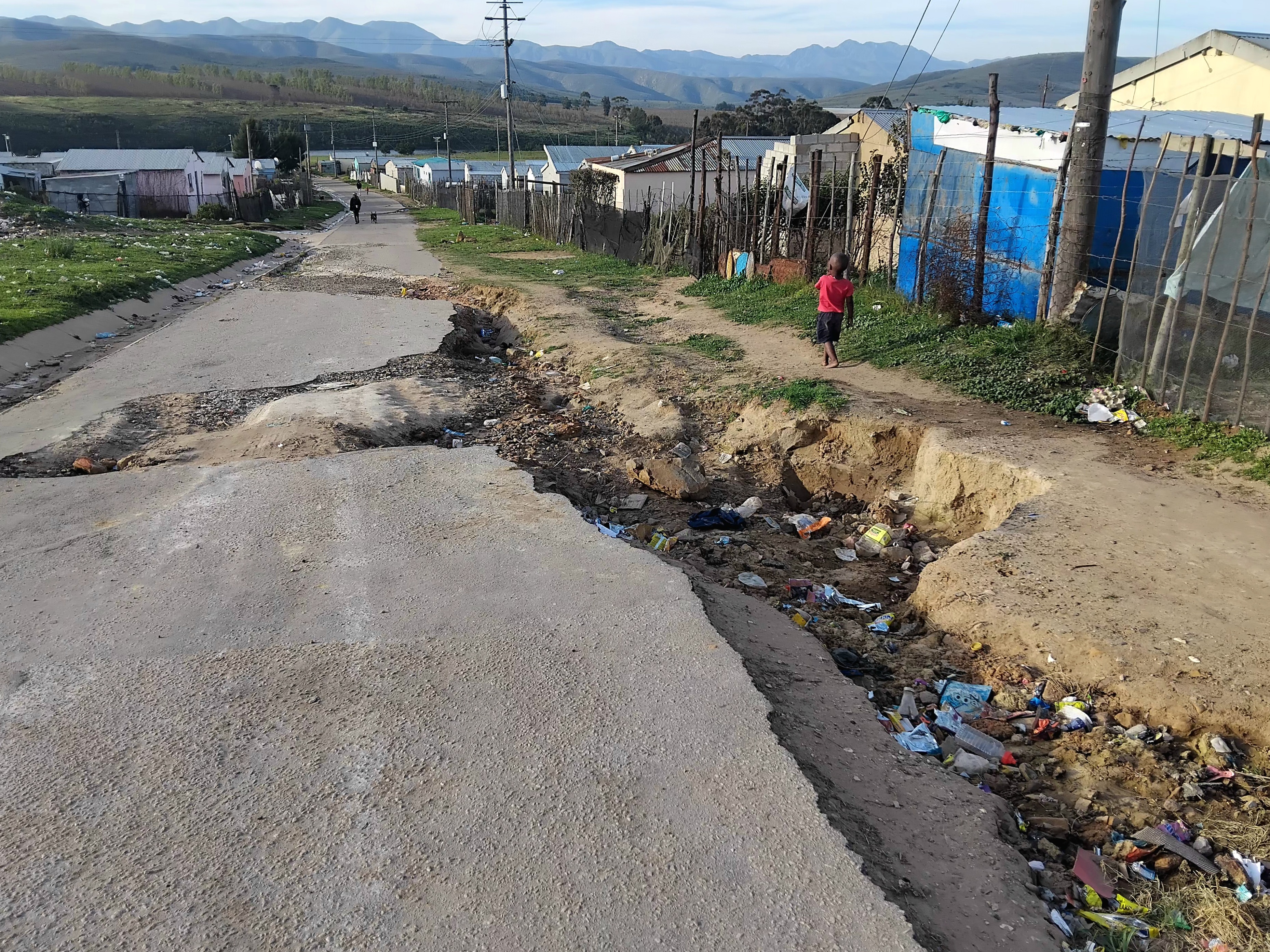
The Eastern Cape town of Louterwater is home to about 5,000 people, most of whom are farmworkers or former farmworkers. Residents say their waste is not collected consistently. Photos: Marecia Damons
- Poor waste collection in Louterwater in the Eastern Cape has left the town littered with piles of plastic and other rubbish. GroundUp found at least ten illegal dumping sites.
- An Expanded Public Works Programme (EPWP) team cleans what it can, but workers say they barely make a dent in the rubbish.
- Kou-Kamma Municipality says refuse collection is complicated by the long distances between settlements and landfill sites, and the refuse truck breaks down regularly.
Nestled in the Eastern Cape’s Langkloof valley along the R62, under the Sarah Baartman District Municipality, is the town of Louterwater. It is home to about 5,000 people, most of whom are farmworkers or former farmworkers.
The region is known for its orchards of apples, pears and peaches.
But the streets are full of potholes. Stagnant water pools where drains have overflowed.
There are piles of burned rubbish on the roadside.
The small town has RDP homes and an informal settlement, and many formal homes have backyard dwellings.
Illegal dumping
Residents GroundUp spoke to complained about unreliable refuse collection. Rubbish piles up at illegal dump sites, and residents often resort to burning it.
The municipal refuse truck is meant to collect household rubbish weekly. But residents say it often skips the area for weeks or comes on a different day without warning. Rubbish bags are then left outside where dogs tear them open, leaving waste strewn on the ground.
We found at least ten illegal dumping sites, all in use.
Anthony Miggels, who supervises a 35-person Expanded Public Works Programme (EPWP) team, said workers do not have enough equipment or refuse bags to clean up properly. They work four days a week.
“Louterwater has become far bigger than ten to 20 years ago. We need the truck to come at least three times a week,” he said.
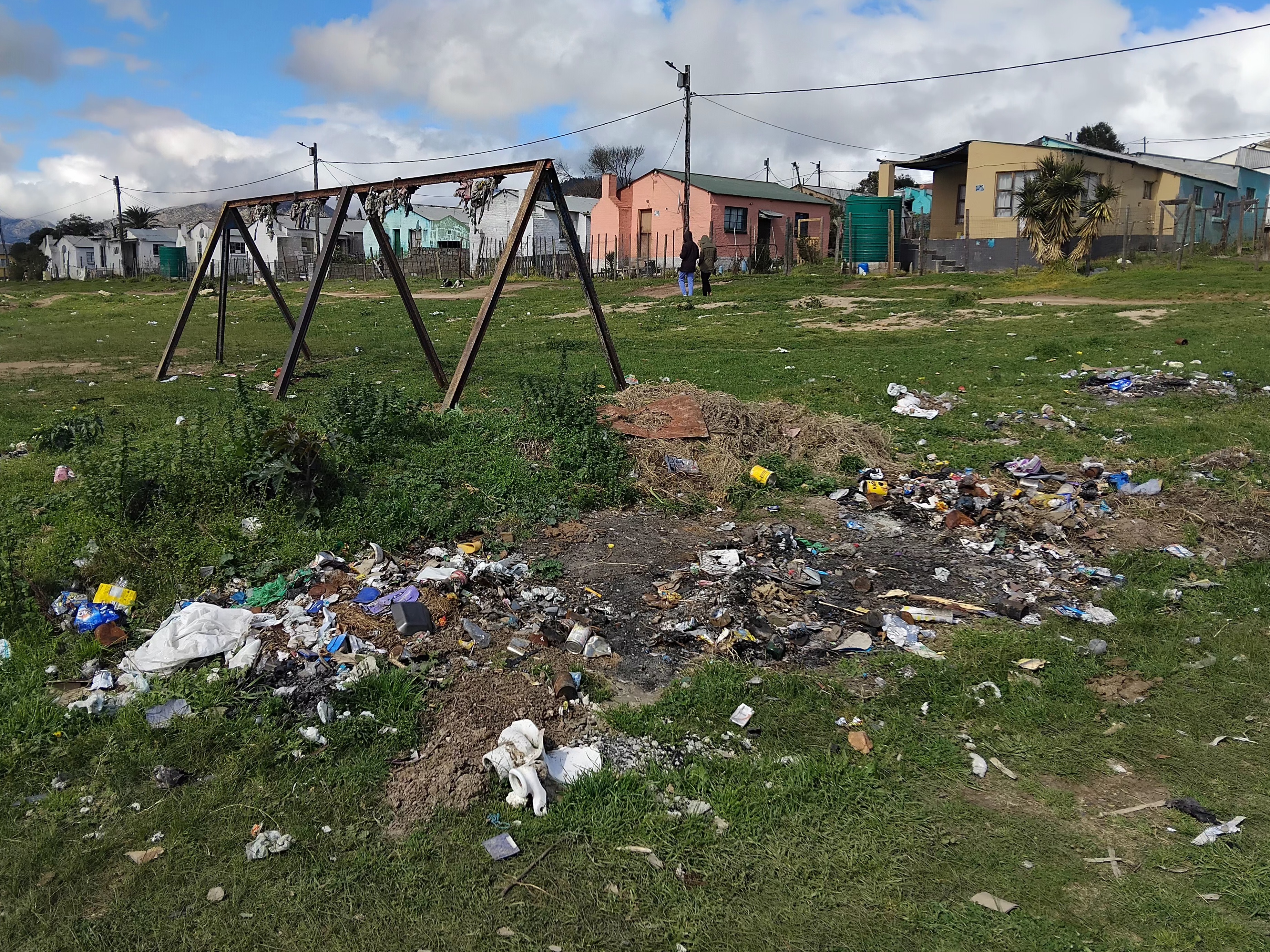
Residents dump and burn uncollected rubbish next to the swings at a neglected park in Louterwater.
With nowhere to store household rubbish, workers also end up burning what they collect. Miggels said his team’s efforts barely make a dent. “The dumping sites are not worth cleaning,” he added.
He uses his own money to buy about 20 black bags a week because the municipality does not supply enough.
Ward councillor Michael Hartz (PA) confirmed that Louterwater is serviced by one refuse truck that operates inconsistently, with a bakkie and trailer sometimes used instead.
He said some families crossed the R62 to dump their rubbish on private land, where the cleaning team could not pick it up.
“If the refuse truck came to collect people’s rubbish, residents wouldn’t be forced to illegally dump,” Hartz said.
Venecia Janse has lived in Louterwater since 1986. She said most of the plastic bins given to households by the municipality years ago have since been stolen.
Janse lives with her daughter and two grandchildren in a two-bedroom house. She receives a pensioner’s grant of R2,400 a month, while her daughter relies on temporary work.
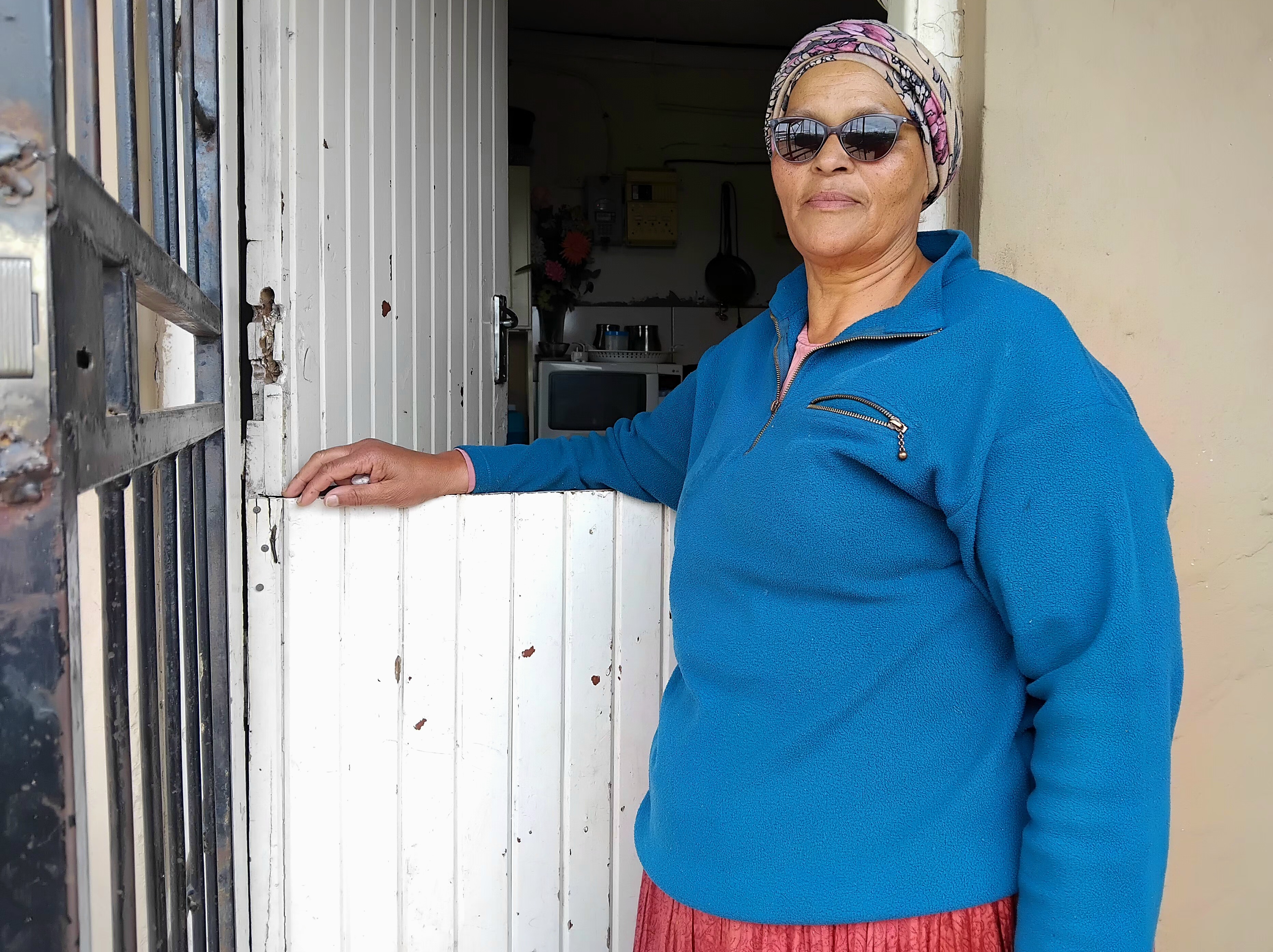
Venecia Janse says she has to use her pension to buy her own refuse bags.
She buys her own black bags every month, which cost up to R45. “We have to take out the black bag and put it somewhere high, so the dogs don’t rip it open,” she said. “If we could at least get bins, it would help so much.”
In its latest draft 2025/26 annual report, Kou-Kamma municipality says refuse collection takes place weekly, including in Louterwater. In some rural areas, the report said, residents buried or burned their waste.
The report noted that refuse collection was a challenge due to the long distances between settlements and only three operational landfill sites. This increases the kilometres travelled by refuse trucks, as well as fuel and maintenance costs, it said.
The municipality has repeatedly informed residents this year of suspensions of refuse collection services due to “mechanical breakdown of the municipal refuse removal truck”.
Residents were told to “keep refuse stored on their properties”, “avoid illegal dumping”, and wait for further updates.
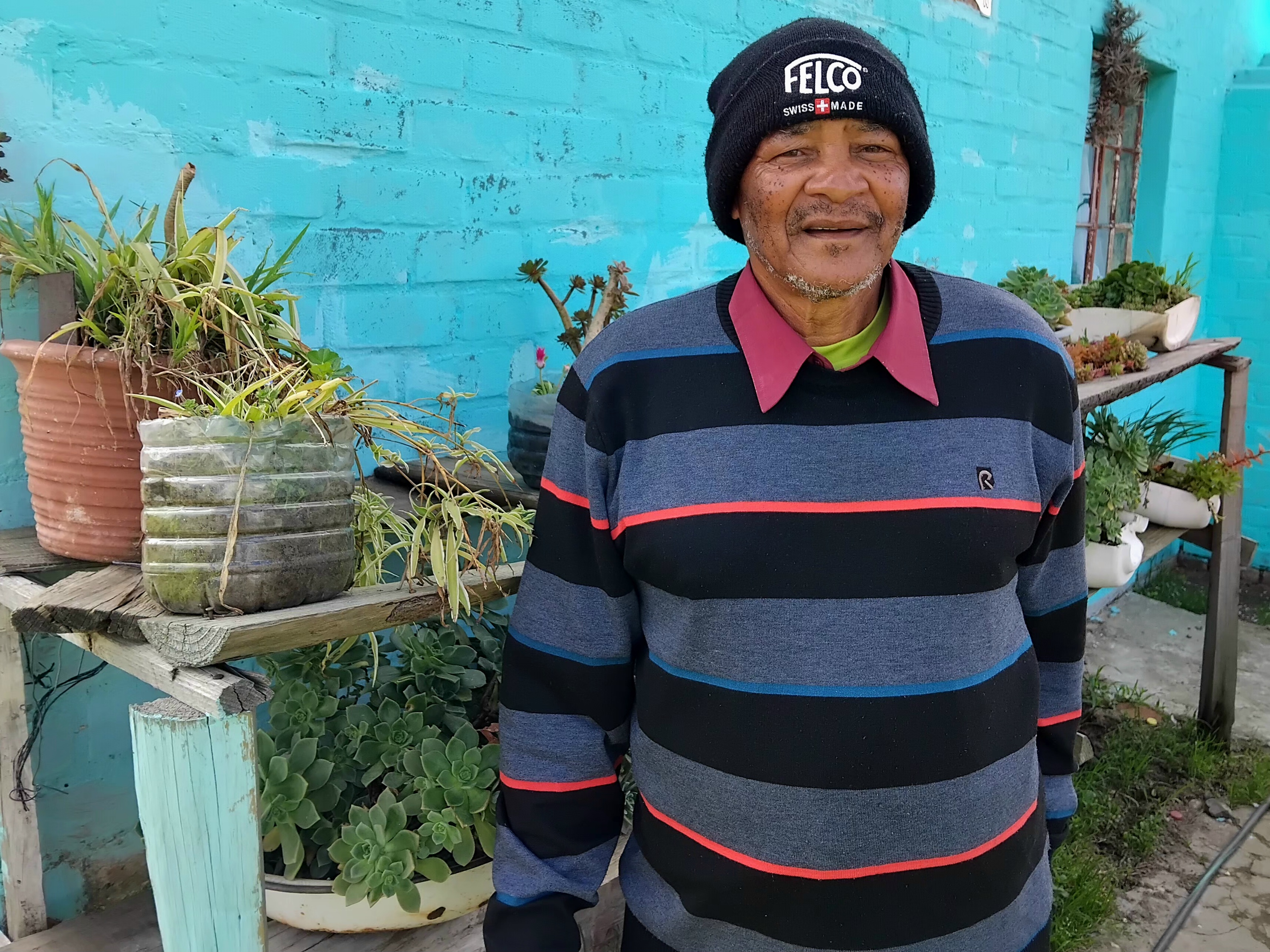
Freek Le Grange says waste collection has become unpredictable, and burning the rubbish is not a healthy alternative. “It’s not good for our health because we have to inhale that,” he said.
Overflowing drains
Residents also complained about an unreliable water supply and sewage blockages. Several people we spoke to said water is available for only a few hours a day, and drains regularly overflow into the streets.
Clive Abrahams, who has lived in Louterwater for more than 30 years, said blockages have pushed sewage back up his toilet. He survives on a disability grant while his wife is due to retire soon. To supplement their income, Abrahams uses his car to transport farmworkers to and from their jobs each day.
“I had to open the drain in front of my house because the stuff started coming out in my toilet, because the entire drainage system was blocked.”
Abrahams believes the blockages are linked to the intermittent water supply. “There will be no water for two or three days, then the stuff in the pipes becomes hard. When the water comes back on, it pushes everything through, and that’s how it ends up in our houses,” he said.
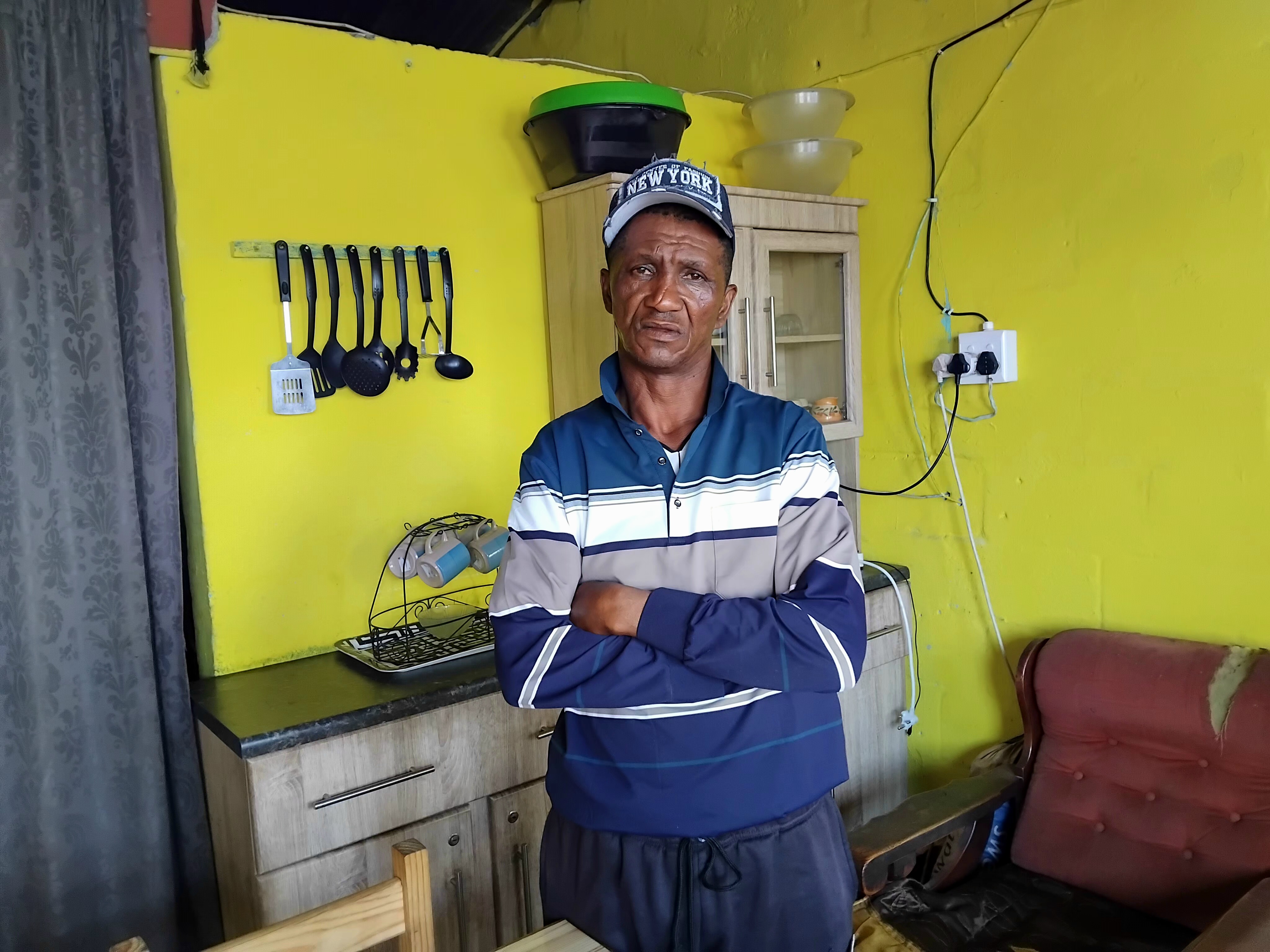
Clive Abrahams says sewage often overflows into his toilet.
Abrahams said the outages sometimes force residents to collect water from a nearby dam where cattle also graze.
He has a 2,000-litre water tank. “That tank gets empty when it doesn’t rain. We have to wash, cook and drink from the water in that tank,” he said. “I had to put a lock on my tank because when water is scarce, people come and steal my water.”
Samelda Arends lives with her husband and seven children. The household receives child support grants for four of the children, and her husband is a subsistence farmer whose income depends on seasonal produce he grows to sell.
She showed us how dirty water runoff from higher up the settlement regularly floods the ground near her home. “When the water switches on, it comes through with force. It happens very often,” she said.
The municipality has sent staff to fix an overflowing drain near their home, but the problem persists. “I have young children and I’m afraid they’ll get sick,” she said.
Arends said the water that reaches her taps is often discoloured.
“The water tastes bitter. We put the water in drums, buckets and containers and add Jik. I’ll taste it until it tastes right. Or we will boil the water and give it to the children,” she said.
The municipality’s Integrated Development Plan for 2026/27 lists an allocation of R3-million for investigating Louterwater’s existing boreholes, identifying new sites, and installing additional boreholes. It also lists plans to refurbish “dilapidated water infrastructure”, fence the settlement’s raw water dam, build a 500-kilolitre reservoir, commission two additional boreholes, and supply water tanks to households.
Two weeks ago, GroundUp asked Kou-Kamma Municipality about the unreliable refuse collection, overflowing drains and intermittent water supply in Louterwater. The municipality had not responded by the time of publication. Its response will be added if received.
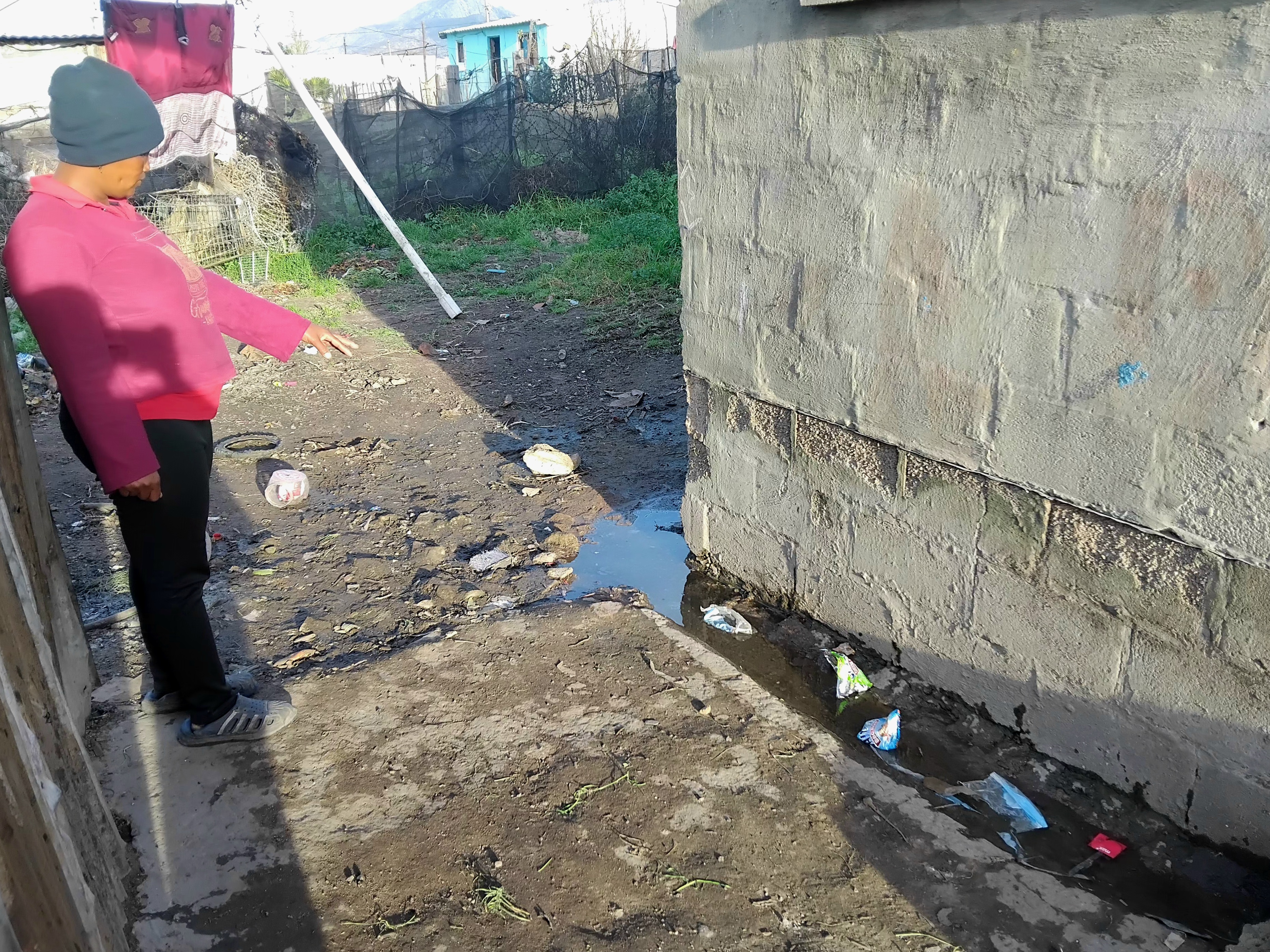
Samelda Arends points to sewage around her home.
Support independent journalism
Donate using Payfast

Don't miss out on the latest news
We respect your privacy, and promise we won't spam you.
Next: Thousands join 17th Walk for Freedom in Johannesburg
Previous: Thousands march in Cape Town for freedom in Palestine
© 2026 GroundUp. This article is published under the GroundUp Republication Licence Version 1.0. Email [email protected] to request permission to republish.