
EThekwini housing contracts ruled unlawful
Three companies may not start building new dwellings but may finish those they have started
 Add GroundUp on Google
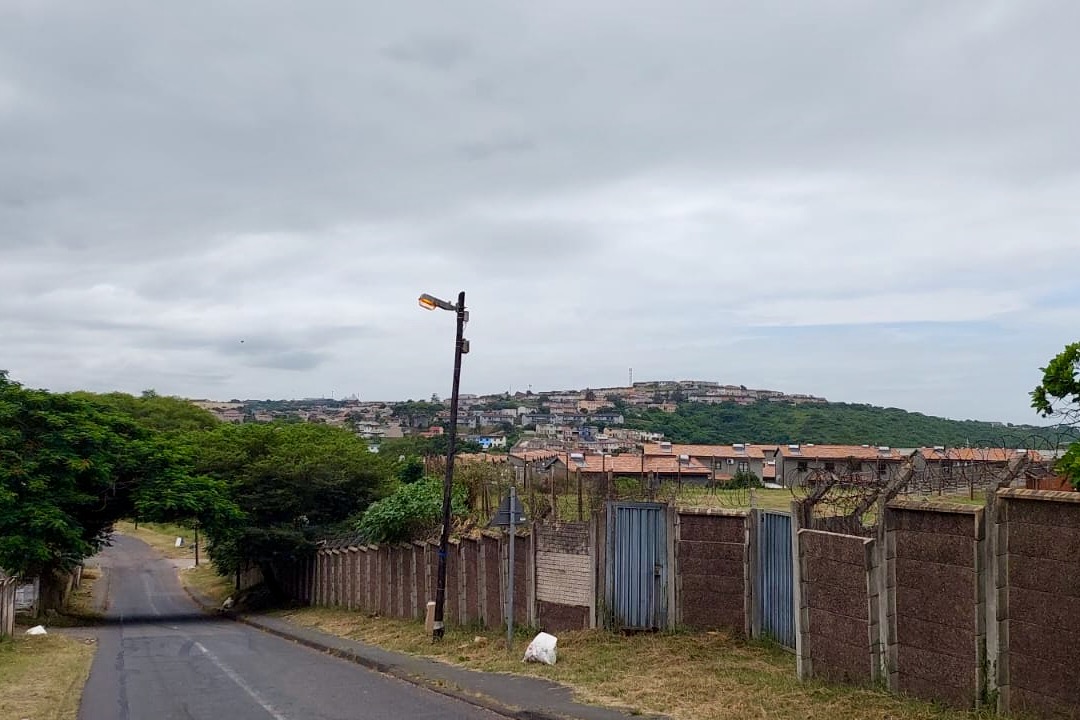
A street in Phoenix, Durban. The Special Tribunal has set aside eThekwini’s “irregular” Phoenix housing deals. Archive photo: Benita Enoch
- The Special Tribunal has found eThekwini Municipality’s arrangements with three housing companies — Madupha Business Enterprise, Ready Homes and Woodglaze Trading — unlawful and constitutionally invalid.
- Judge Margaret Victor said the municipality created and perpetuated the irregular arrangements, failed to maintain adequate records and failed to act when concerns were identified.
- The tribunal declined to order the companies to repay profits due to a lack of evidence regarding financial details, but it left the issue open for further consideration.
The Special Tribunal has set aside what it termed “irregular arrangements” that the eThekwini Municipality had with three companies.
Residents have long complained about the quality of housing being built as part of the Phoenix infill municipal housing project, and the subsequent eviction of some tenants. Earlier court cases involved Woodglaze, which trades as Lady Brick Block Property Development and has been building houses in Phoenix for two decades. The company is associated with Durban businessman Jay Singh.
In a judgment on 5 August, Judge Margaret Victor directed that Woodglaze — as well as Madupha Business Enterprise and Ready Homes — may not start building any new houses but may finish those under construction
The infill project, which began in 2000, was intended to build affordable housing on vacant municipal land in Phoenix.
In terms of the tender, the service providers were to develop 130 sites within two years and sell them to beneficiaries approved by the municipality’s housing department.
More than two decades later, it is unclear how many affordable housing units for first-time homebuyers in low- and middle-income groups have been built.
Questions have also been raised regarding ownership structuring, environmental concerns over the loss of open and recreational spaces, and infrastructure strain.
Victor declined to order the companies to repay their profits, which was requested by the Special Investigating Unit (SIU), saying a debatement and disgorgement order would be “inappropriate” given the lack of evidence regarding financial details of the project.
But she left the door open for further evidence to be filed on this issue.

“The municipality’s conduct warrants particular comment,” Victor said. “It created and perpetuated the irregular arrangements, failed to maintain adequate records, failed to revoke or regularise unlawful arrangements when concerns were identified, and then elected not to participate substantively in proceedings concerning its own procurement failures.”
Victor, in her ruling, said the service providers were required to provide beneficiaries with “good value for money”. They also had to produce evidence of available funding, traceable references and the ability to obtain funding for the entire project.
In 2002, the municipality appointed three service providers — Universal Property Development, Sabamba and Cascade Home Trust. They were required to provide detailed plans, specifications, materials and finishes and to demonstrate that they would meet the beneficiary allocation requirements of 25% to subsidy-income beneficiaries (earning less than R3,500 a month) and 75% to middle-income beneficiaries (earning from R3,501 up to R5,000 a month).
However, it appears none of these three companies did the work.
Madupha and Ready Homes, which were apparently subcontractors to Sabamba, were later “introduced into the programme” without any prior public tender or adjudication process.
When Universal failed to perform, Woodglaze, which had participated in the initial tender process, was given the contract in 2005.
In April 2017, the municipality resolved to revoke this contract because of a breach of supply chain management requirements. But the contract was not revoked. Instead, in 2021, it was renewed without the three-yearly review required by the Local Government Municipal Finance Management Act.
Woodglaze, Madupha and Ready Homes argued that they were innocent contractors who believed their contracts were lawful.
But the central question was whether their appointments and continued participation in the project complied with the constitutional and statutory procurement framework, said Victor.
“They did not,” she said.
“In respect of Madupha and Ready Homes, there was no public invitation to tender, no competitive bidding process and no evaluation …
“Woodglaze’s position is different only in chronology, not in principle. Although Woodglaze was connected to the earlier tender process, its later appointment and continued allocation of sites were not managed through a fresh, transparent and competitive process.
“It follows that the appointments and continued arrangements under which they participated in the programme are constitutionally invalid and fall to be reviewed and set aside.”
Turning to the “just and equitable remedy”, she said there was no finding on the papers that they had acted corruptly or fraudulently.
“The papers do not establish the extent of any profits, the value of land paid for, the status of incomplete dwellings or the effect of the requested relief [by the SIU] on purchasers and beneficiaries.”
Victor said the appropriate remedy was to set aside the “irregular arrangements” going forward and prohibit further development.
She ordered that if the municipality wants to continue the project, it must run a lawful tender process.
The municipality did not oppose the SIU’s application, sending an advocate only to observe. Victor directed it to explain by 29 September why it should not pay the costs.
Support independent journalism
Donate using Payfast

Don't miss out on the latest news
We respect your privacy, and promise we won't spam you.
Letters
© 2026 GroundUp. This article is published under the GroundUp Republication Licence Version 1.0. Email [email protected] to request permission to republish.