
Extortion threat hits rubbish collection in Cape Town
Informal settlements in Nyanga, Philippi and Samora Machel affected
 Add GroundUp on Google
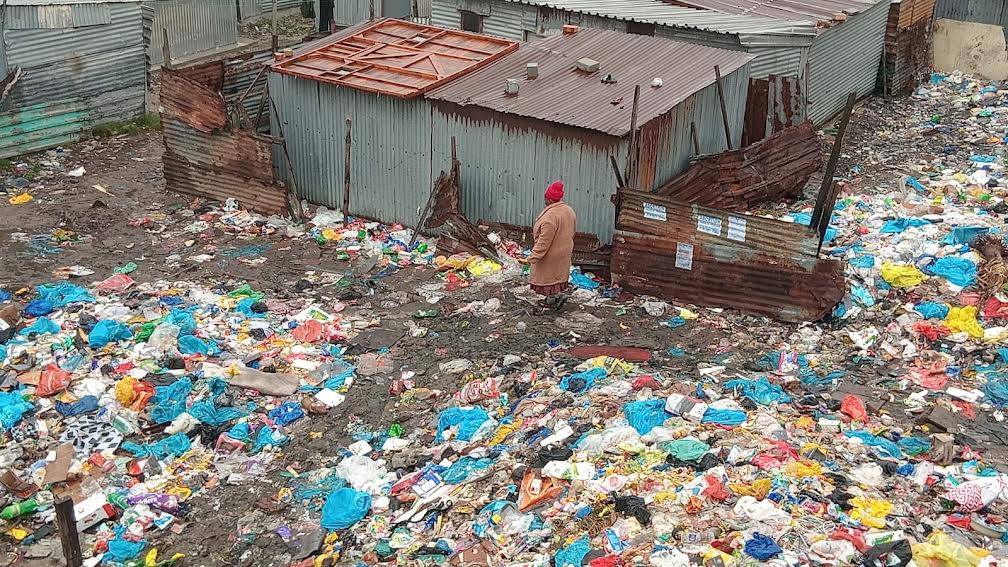
Dumping in Eyadini informal settlement in Philippi. Photo: Sandiso Phaliso
Extortion threats are affecting rubbish collection in informal settlements in Nyanga, Philippi and Samora Machel, according to the City of Cape Town.
Spokesperson Luthando Tyhalibongo told GroundUp that waste collection from shipping containers was currently affected by extortion threats directed at the contractor.
He said the contractor was only able to empty the containers three times a week, “subject to the availability of law enforcement resources, which is limited”. The City had registered a criminal case with the police.
Philippi resident Xolile Phila said people were throwing rubbish in the alleys. “Some people even throw dead dogs in these spaces. We try to encourage each other to keep our area clean, but not everyone listens,” he said.
Abongile Ntencane, who lives in Samora Machel, said people building houses often threw rubble in open spaces.

“People here throw anything and everything in open spaces. They are contributing to this dirtiness,” said Ntencane.
GroundUp saw a group of men dumping rubbish in an open space in Philippi. They said their bins were full.
“We know it is wrong to throw here, we don’t have a choice because we cannot stay with waste in our homes,” said one of them, who did not want to be identified.
The City warned that dumping in stormwater drains blocked the network and caused flooding when it rained.
The Water and Sanitation Directorate attended to 110,598 sewer blockages across its more than 9,000 km sewer pipeline network during the 2024/2025 financial year. About R137-million went towards clearing preventable blockages caused by items that should never have entered the system, the City said.
Fines for illegal dumping increased by nearly 60% from 12,825 in 2023/24 to 20,356.
“If any resident suspects dumping in their area is linked to a specific enterprise, we encourage them to engage the City so that a compliance inspection can be performed. Recognising the challenges facing small businesses, in these cases, the City will always first try to achieve compliance and prevent dumping through non-punitive measures. However, if the business refuses to comply, fines can be issued.”
Support independent journalism
Donate using Payfast

Don't miss out on the latest news
We respect your privacy, and promise we won't spam you.
Next: Farm workers march to Parliament calling for land
Previous: South Africa and Lesotho agree that IDs will be enough to cross the border
© 2026 GroundUp. This article is published under the GroundUp Republication Licence Version 1.0. Email [email protected] to request permission to republish.