
Grade 3 learners at 115 schools average 23% in mathematics
National Education Collaboration Trust presented its findings on foundation phase literacy and numeracy
 Add GroundUp on Google
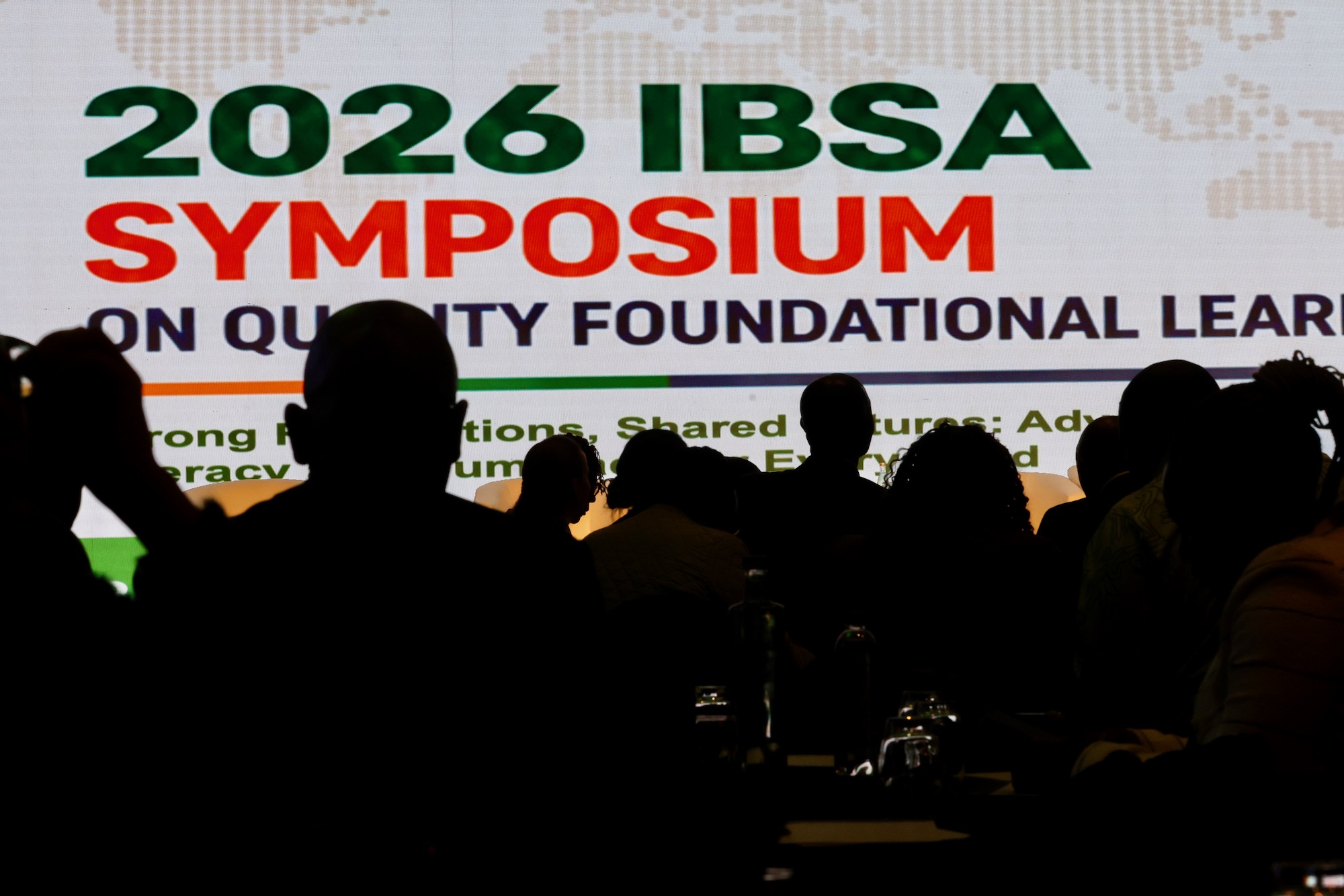
Delegates attend the India, Brazil and South Africa Symposium on quality foundational learning in Cape Town on 21 October 2026. Photo: Shelley Christians/EdDesk
South African grade 3 learners scored an average of 23% in mathematics and 34% in English First Additional Language, according to a 2026 baseline assessment presented by the National Education Collaboration Trust (NECT).
The 2026 study covered 115 primary schools across six provinces, and aimed to establish a grade 3 reading and mathematics benchmark for tracking progress and targeting interventions.
Of the learners assessed, 43% fell into the lowest maths category, described as “not achieved”, according to findings released at the India, Brazil and South Africa Symposium on Quality Foundational Learning held in Cape Town on 21 October.
Specific details on how the schools were selected were not disclosed during the presentation.
The results of a School Readiness Rapid Appraisal, conducted in 2024/25, were also presented. This appraisal examined 111 schools across six provinces to assess foundation phase readiness to implement reading and mathematics improvement plans. It involved interviews with teachers, school management teams and subject advisers.
It revealed that only 58% of subject advisers knew of government’s national strategy, while 63% of school management teams reported not purchasing any mathematics resources during the year.
Established in 2013, NECT is a non-profit trust aiming to improve education by strengthening cooperation between government, business, labour and civil society.
NECT argues that provincial governments and district education offices need to support teachers in order for schools to improve. Its Integrated District Improvement Programme aims to strengthen the ability of district offices to support schools.
Presenting the findings, NECT’s Dr Dhianaraj Chetty said, “Fixing the classroom without fixing the chain around it produces the same result the sector has seen for 30 years: pockets of progress that do not scale and do not last.”
Chetty said the study demonstrated that “capable people at school level are constrained by provincial and district systems — strategy, budgeting, structure, process, technology and people practices — that were never built to support instructional improvement.”
Hana Yoshimoto, UNICEF South Africa’s chief of education, noted that the Western Cape had sometimes moved ahead with implementing government policy while other provinces lagged.
Pointing to Brazil as an example, she suggested South Africa consider allocating more resources to districts that implement policy and show improved results.
Yoshimoto acknowledged that reform is difficult because the challenges are political as well as technical. She said sound procedures must translate into on-the-ground implementation.
The appraisal and the 2026 baseline are separate studies, and the presentations did not link their findings. The Education Desk’s reporting is based on presentations delivered at the symposium; underlying research data was not made available at the time of publication.

Support independent journalism
Donate using Payfast

Don't miss out on the latest news
We respect your privacy, and promise we won't spam you.
© 2026 GroundUp. This article is published under the GroundUp Republication Licence Version 1.0. Email [email protected] to request permission to republish.