
Faith leaders in George step in to prevent xenophobic violence
Anti-immigrant protests have already caused deaths on the Garden Route
 Add GroundUp on Google
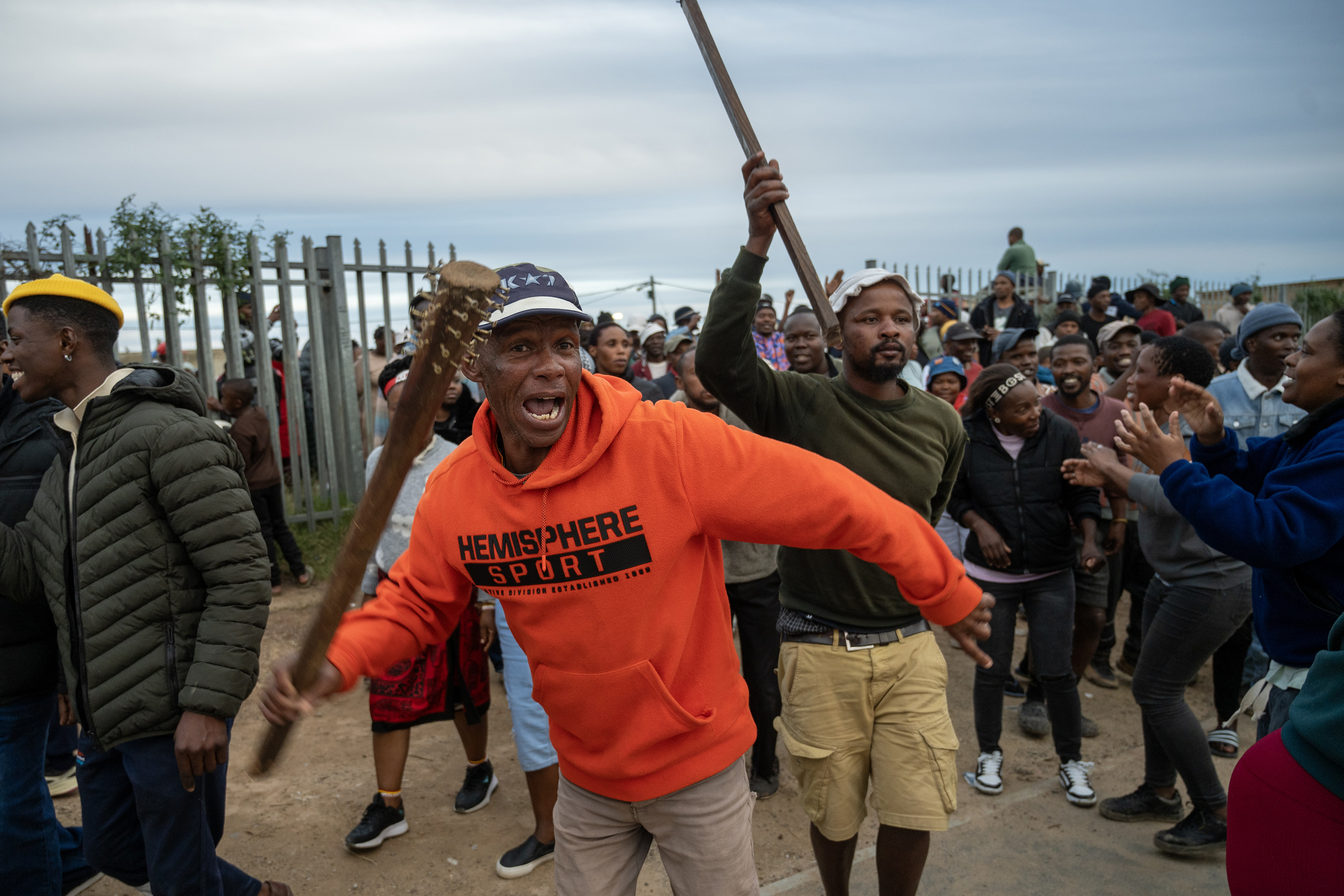

A man waves a bat with nails, warning GroundUp’s photographer not to follow the crowd. Photos by David Harrison
Last month in Mossel Bay, dozens of houses were torched and two people killed in a violent xenophobic protest.
Similar protests in the Overberg have caused hundreds of immigrants to repatriate to Malawi and Mozambique.
In the Garden Route town of George, 50km from Mossel Bay, community leaders are concerned about rising anti-immigrant sentiment and that violent attacks are imminent.
On Sunday evening, hundreds of people attended a meeting organised by a group called Qina Mhlali (strong residents), at the All Bricks community hall in Thembalethu, a township outside George. The hall was packed with people with dozens more gathered outside.
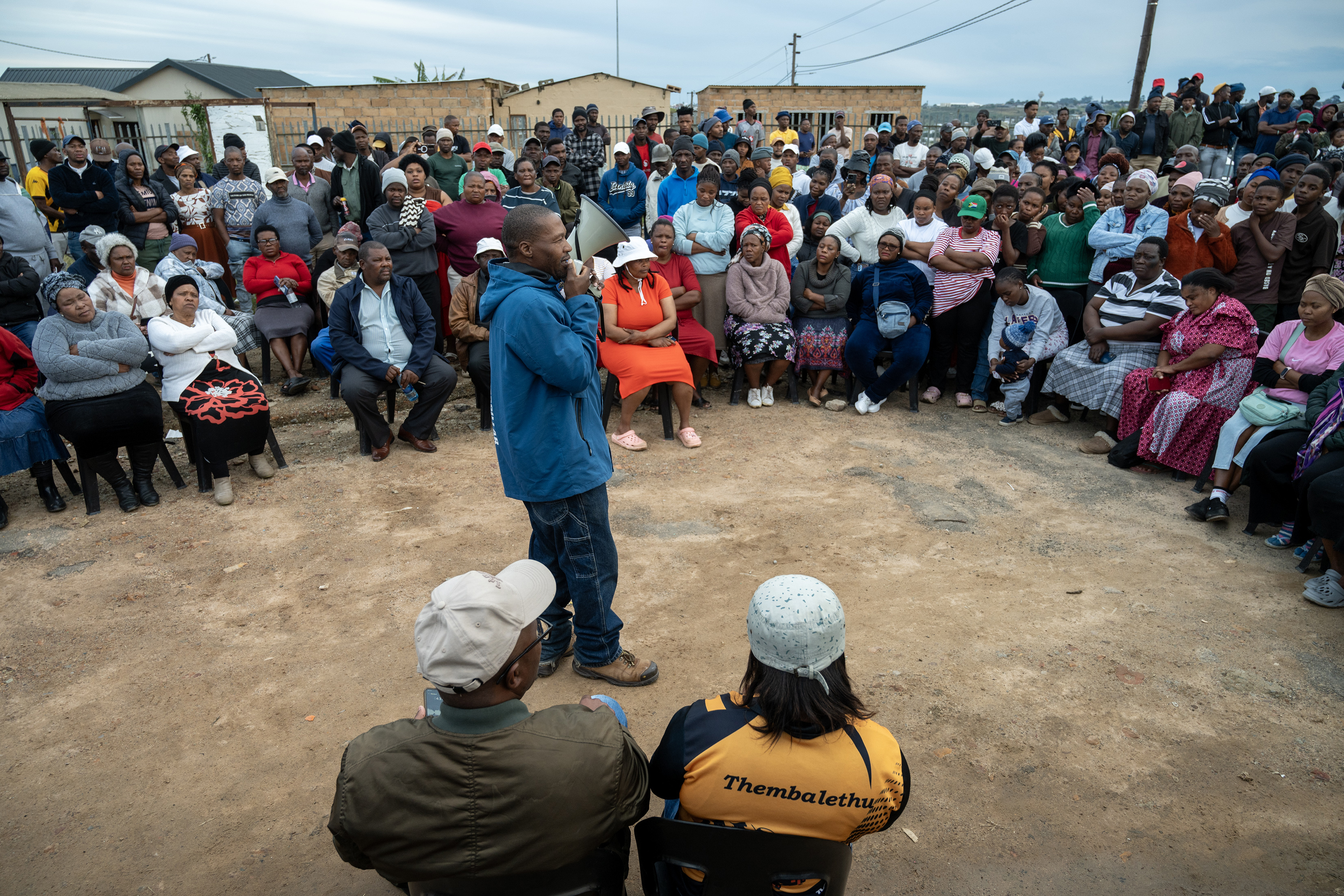
Hundreds of people gathered at the All Bricks community hall in Thembalethu on Sunday.
In the days leading up to the meeting, a poster was circulated on social media. “Mabahambe! (They must go!)”, the poster read.
In response, the Thembalethu Pastor’s Fraternal put out an open letter, calling for calm heads to prevail and denouncing violence. “Today the Lord lays a burden on us: to speak and act against xenophobia in our streets,” the open letter read.
On Friday, the fraternal’s chairperson, Pastor Boyce Saleni, called a meeting with the meeting’s organisers and George’s mayor, Browen Johnson, as well as the business chamber, and the South African National Civic Organisation (SANCO).
It was decided that Minister of Home Affairs Leon Schreiber would be invited to visit George later in the month to address the community’s concerns.
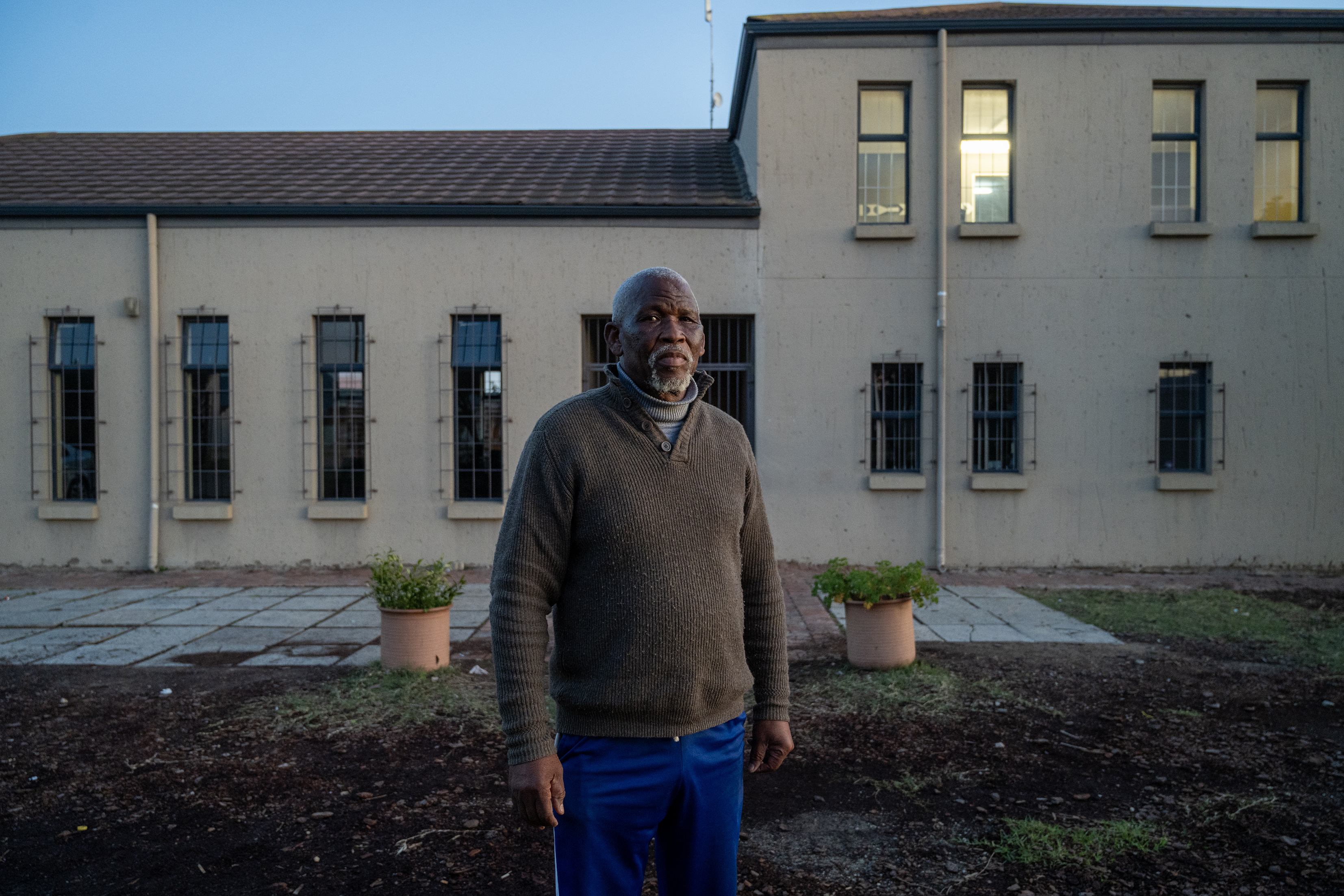
Pastor Boyce Saleni of the Thembalethu Baptist Church is the chairperson for the Pastor’s Fraternal, which has published an open letter urging residents to not attack immigrants.
“There is a lot of unemployment in the Southern Cape, and people are uncomfortable,” Saleni told GroundUp. “They feel they are losing jobs while foreign nationals are working and running businesses.”
“As the church, we have made it clear that foreign nationals must be protected. We do not want violence or bloodshed. The law must be allowed to take its course,” he said.
People GroundUp spoke to said some industries in the town have become dominated by immigrants, most of whom, they claimed, do not have permits to work in South Africa.
Two years ago, a block of flats in central George collapsed during construction, killing 34 people, at least 26 of whom were immigrants. Most of the 28 survivors were injured, many with permanent disabilities. Many did not have valid permits to work in South Africa and did not receive UIF or compensation fund payouts.
Sunday afternoon’s community meeting in Thembalethu was heated. Some men had shown up with sjamboks and knobkieries, eager to take aggressive action. An immigrant passing by was chased and threatened.
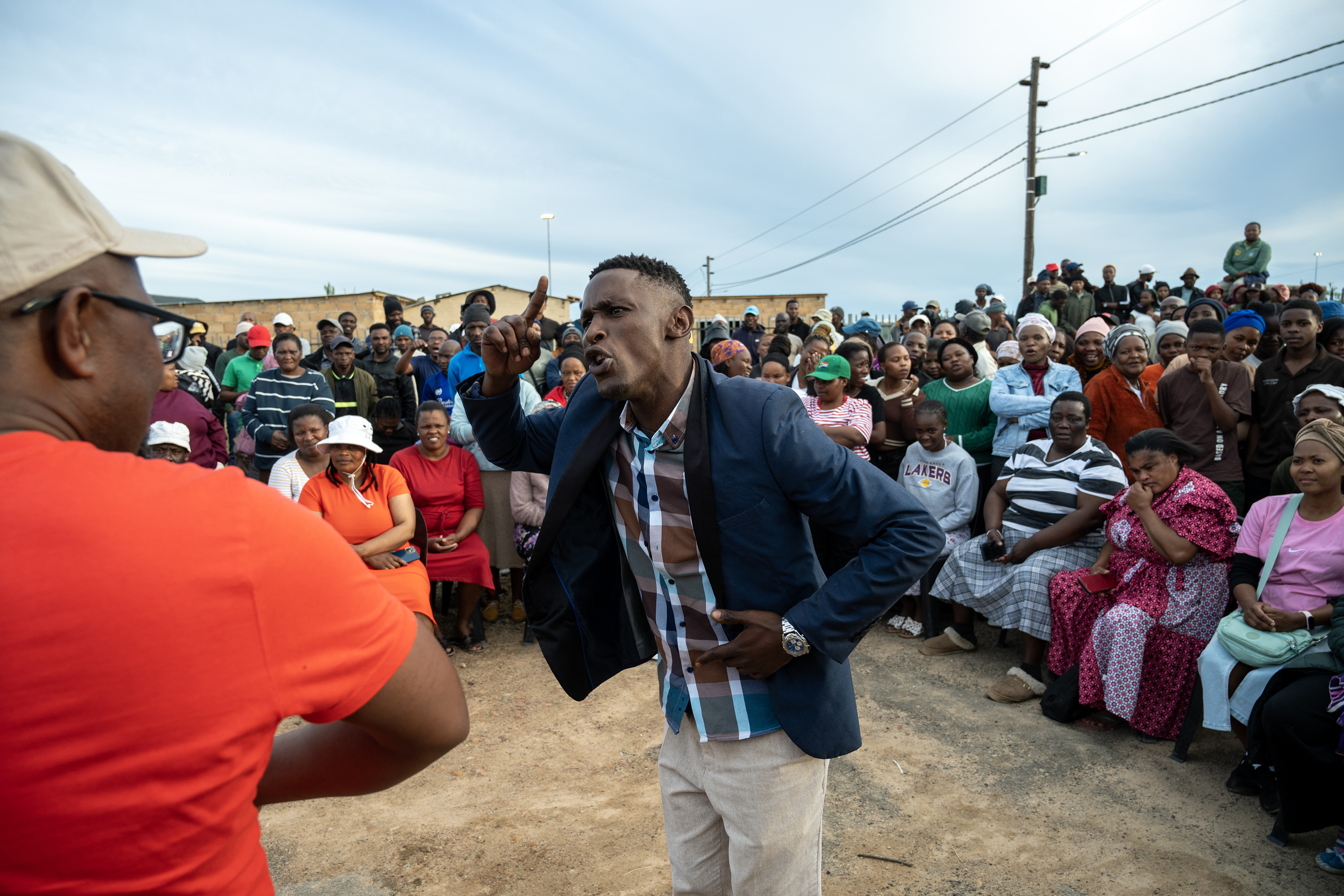
A heated exchange during the meeting on Sunday.
The march organisers calmed the crowd.
“Some community members wanted to act immediately after the meeting, but that was not the purpose of the gathering,” said Bathini Malobola, a coordinator for Qina Mhlali.
“Our agreement is that we will wait until 19 June before taking any action,” he said. Protest action might follow, he warned.
“We have given the relevant authorities an opportunity to address [our] concerns. We will abide by the law,” said Qina Mhlali’s deputy chairperson, Mandlenkosi Kopana.
Nomaphuthukezi Mditshwa, a Thembalethu resident who attended the event, claimed that her neighbour, who opened a spaza shop, was unable to compete with foreign-owned businesses that sold goods at lower prices.
“We are not fighting, but we are saying that foreign nationals should return to their countries. We will wait to hear what the minister has to say,” she said.
Others in attendance claimed that immigrants were selling drugs.
After the meeting, a group of men, some of them drunk, broke away and headed into the township. GroundUp’s photographer was warned not to follow them. One man waved a stick with nails embedded in it.
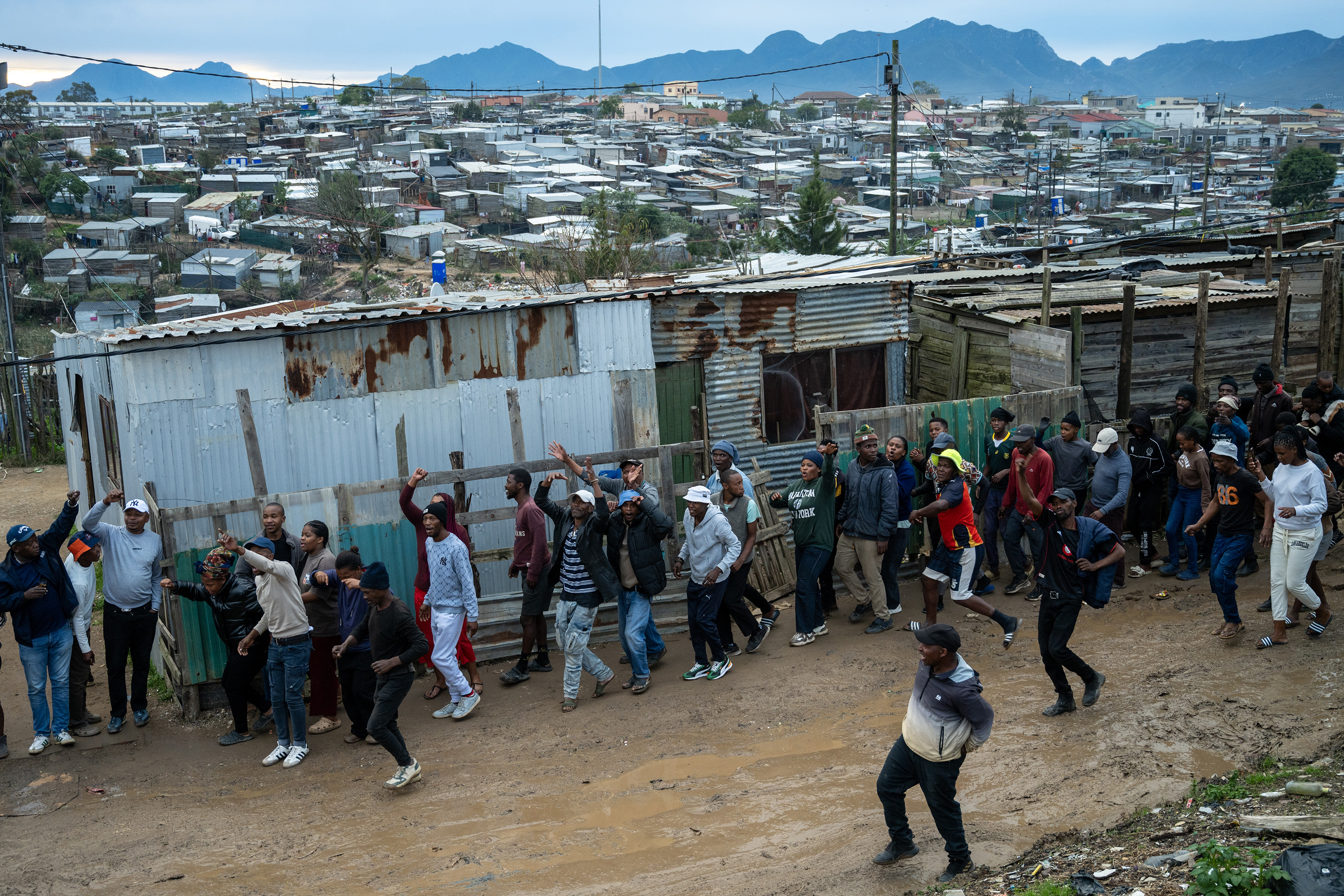
After the meeting, residents walked down the street, toyi-toying and intimidating immigrants. Police said the crowd was dispersed later that evening.
SAPS spokesperson for the Southern Cape warrant officer Christopher Spies said police dispersed a crowd that had become disruptive on Sunday evening. A public violence case was opened but no arrests made.
“The police respect the right of citizens to protest, but any acts of violence or incitement to violence will not be tolerated,” said Spies.
He said Public Order Police had been deployed and were on high alert.
Immigrants who have been living in the area for years are considering returning home, but lack the funds to do so.
“Since I arrived in South Africa, I have never had problems with the community. But now people talk differently,” said a Zimbabwean trader who asked not to be named. She said over the past two months, fewer locals have been buying from her.
She said she would close her shop early on Sunday, “because I fear what might happen.”
Jose Mabunda, from Mozambique, has lived in South Africa since 2015, but is now considering returning home. He was one of the victims of the building collapse in 2024.
“I am scared. If I had the money, I would leave today. I came here to work and support my family. I am not here to take jobs from South Africans,” he said.
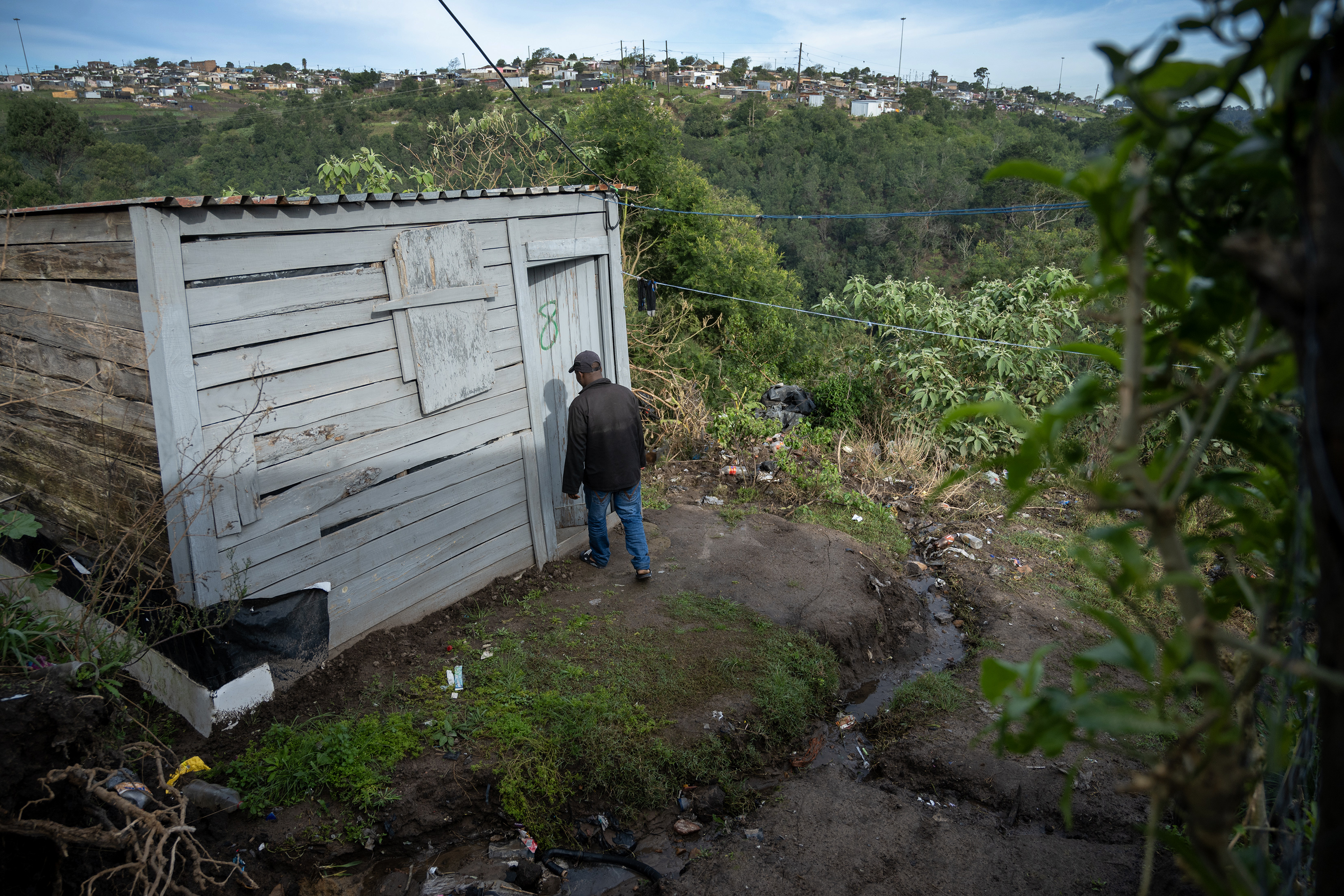
Jose Mabunda, from Mozambique, has rented this shack for 11 years. He is keen to return to Mozambique, but does not have enough money. He preferred not to have his face photographed.
Mussa Duad, from Malawi, said the uncertainty has left him worried about his future. “I have a South African wife and a six-year-old daughter. If I leave, who will take care of them?” he asked.
“We agree that if we must leave, we will leave,” said a man from Ghana, speaking anonymously. “But travelling home costs money that many of us do not have.”
SANCO regional chairperson Xolisani Booi urged residents not to take the law into their hands.
“No community member has the right to check documents or enforce immigration laws. There are people trained to do that,” he said.
He warned that some individuals could be using community frustrations for political purposes.
“My fear is that there are forces on the ground trying to push this issue because they want political positions,” he said.
The mayor of George, Browen Johnson, could not be reached for comment before publication as he was attending meetings in Cape Town.
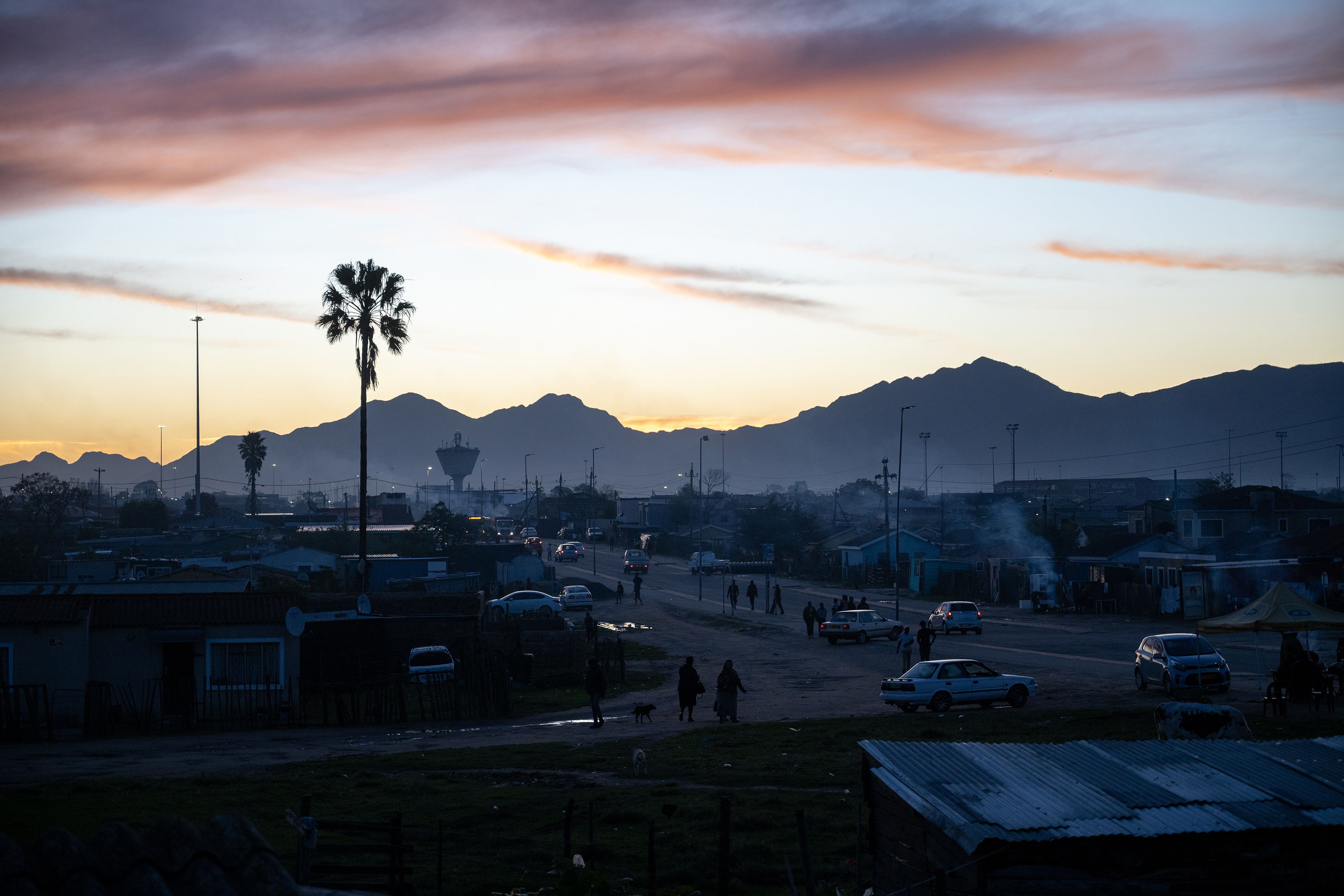
Dusk in Thembalethu, George.
Support independent journalism
Donate using Payfast

Don't miss out on the latest news
We respect your privacy, and promise we won't spam you.
© 2026 GroundUp. This article is published under the GroundUp Republication Licence Version 1.0. Email [email protected] to request permission to republish.