
South Africa’s fruit canning industry under threat as Premier Foods plans closure
Producers and labour warn that closing Tulbagh factory could leave hundreds of farmers without processing options before the November harvest
 Add GroundUp on Google
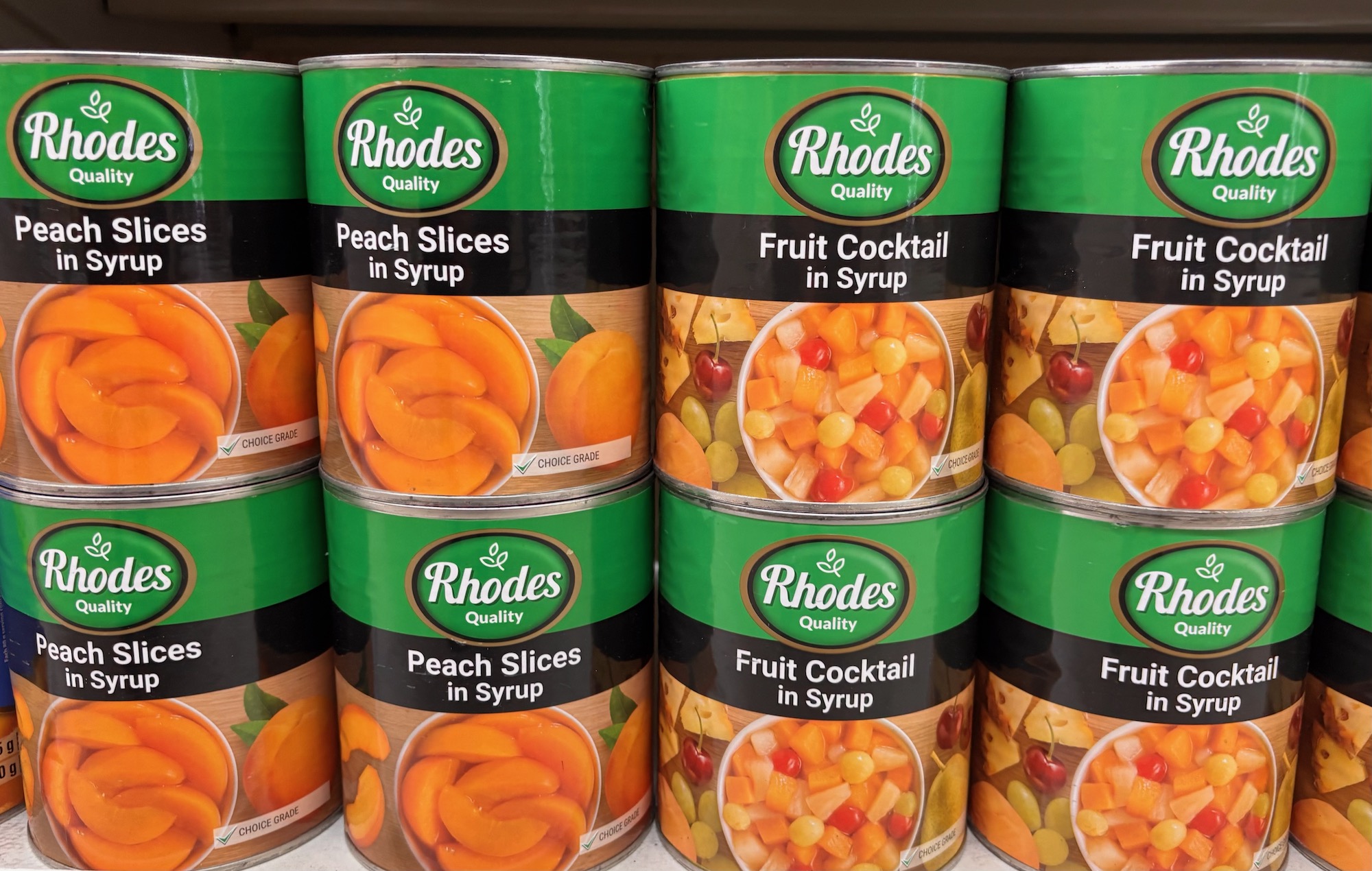
The closure of Premier Foods’ fruit processing plant in Tulbagh would remove almost half of the country’s canning capacity. Photo: Brent Meersman
- About 200 producers of deciduous fruit face possible ruin because of the prospective closure of Premier Foods’ fruit processing plant in Tulbagh.
- Farmers say they need certainty about the factory’s closure before the November harvest.
- Premier Foods says its Tulbagh fruit processing plant is no longer economically viable.
- Producers warn its closure would remove half of South Africa’s fruit canning capacity.
- COSATU wants the retrenchment process halted while business rescue plans are explored and the Competition Commission investigates.
The prospective closure of Premier Foods’ fruit processing plant in Tulbagh has raised concerns well beyond the loss of factory jobs. Producers warn it could leave hundreds of them scrambling for alternatives just months before the next harvest.
Premier has begun a Section 189 consultation process on the proposed closure of Fruit Products Western Cape (FPWC). The company says the business is no longer economically sustainable because of rising production costs and declining global demand. About 90% of the factory’s canned fruit is exported.
The company responded to GroundUp with a statement saying it is working with farmers, government, the Competition Commission and other stakeholders to minimise the impact on employees, farmers and the Tulbagh community.
Producers face uncertainty
“Basically half the capacity for the industry will disappear,” said Jacques Jordaan, chief executive of the Canning Fruit Producers’ Association (CFPA).
According to Jordaan, South Africa has two main canning facilities: the FPWC plant in Tulbagh and Langeberg Foods in Ashton. Closing Tulbagh would remove almost half of the country’s canning capacity.

The announcement comes shortly before the deciduous fruit harvesting season begins in November and producers have already incurred most of their annual production costs – pruning, fertilising, irrigating and controlling pests.
Jordaan says between 200 and 220 producers supply the Tulbagh factory, many producing fruit varieties specifically bred for canning rather than the long-shelf-life varieties required for the fresh export market.
Without the canning facility, producers will have to remove orchards and invest in alternative crops and in new packhouses and distribution infrastructure.
The association says producers operate under rolling, long-term supply agreements that provide for a two-year notice period, allowing time to adapt if processing capacity changes.
In a letter to producers, dated 29 July, the company confirmed it would pay outstanding balancing payments (“agterskotte”) for fruit supplied during the 2025/26 season at the end of October, in accordance with existing contracts.
The letter included projected final payments for apricots, peaches and pears while explaining that Premier had decided to exit the soft-fruit canning industry after deteriorating international market conditions.
“It’s not an honour to honour a contract. They have received the fruit, worked the fruit, and now they pay for it,” Jordaan said. “At this stage there have been no commitments to the future seasons. Premier had commitments. It cannot just walk away from them.”
Industry under pressure
Premier attributed its decision to global oversupply, higher United States tariffs, uncertainty surrounding the African Growth and Opportunity Act (AGOA), exchange-rate pressures, and consolidation within the canned fruit industry. It points to the closure of one of the United States’ two major fruit canning operations earlier this year.
“Canning fruit internationally is under pressure,” Jordaan agreed. But, he argues, South Africa remains internationally recognised for the quality of its canned fruit and should be competing at the premium end of the market.
The announcement has also prompted questions about why the company would close a facility that had recently benefited from substantial investment.
According to Jordaan, more than R200-million has been invested in the Tulbagh operation over the past three years, making it difficult for producers to understand why Premier now believes the plant has no viable future.
“It feels like Premier just took over and now says they are going to exit,” he said.
Earlier this year, Premier completed its acquisition of the Rhodes Food Group, adding the Tulbagh processing operation to its portfolio. Last year, Langeberg Foods took over the former Tiger Brands canning factory in Ashton. Premier says it intends to work with Langeberg Foods to process future harvests rather than continuing operations in Tulbagh.
Jordaan says shifting all processing to Langeberg Foods cannot be achieved within a few months and would create significant commercial and financial risks.
The first round of Section 189 consultations took place on Thursday.
Job losses
COSATU Western Cape provincial secretary Malvern de Bruyn said organised labour refused to engage on retrenchments during the first meeting, insisting that discussions should focus on saving jobs instead.
“Why throw in the towel right at the beginning?” De Bruyn asked.
“Our position remains that we want a halt to the Section 189 process and look for a business rescue alternative … They were able to save the Ashton factory, why can’t they do the same here?”
He said COSATU was not directly involved in negotiations but played a role through its affiliate Southern African Clothing and Textile Workers’ Union (SACTWU).
“Over 150 farms will be affected by this decision, so thousands more workers will be indirectly affected and could also lose their jobs. The farm owners will also suffer because of this inhumane decision,” he said.
“We are hopeful because we’ve got 60 days in which to find an agreement.”
The Competition Commission is also scrutinising the proposed closure.
De Bruyn said the Section 189 consultation process should be suspended while the Commission investigates whether the proposed retrenchments comply with public-interest conditions attached to Premier’s acquisition of Rhodes Food Group, including undertakings relating to employment. He said similar retrenchments following mergers had occurred elsewhere, and he cited PepsiCo’s acquisition of Pioneer Foods.
In the coming days, COSATU will consult with its national leadership on whether to seek an interdict to halt the retrenchment process.
The Commission did not respond to GroundUp’s questions.
The next round of Section 189 consultations is scheduled for 26 August. Labour must submit questions to the company by 14 August, with the company expected to respond by 21 August.
For producers, however, time is running out. With the next harvest only months away, producers say they need certainty about who will process their fruit, whether existing contracts will be honoured beyond this season, and how South Africa’s remaining canning capacity will absorb volumes previously handled by Tulbagh.
Support independent journalism
Donate using Payfast

Don't miss out on the latest news
We respect your privacy, and promise we won't spam you.
Next: NUMSA wins bid to block liquidation of diamond mine
Previous: Pensioners struggle after vigilantes chase away immigrant tenants
© 2026 GroundUp. This article is published under the GroundUp Republication Licence Version 1.0. Email [email protected] to request permission to republish.