
Families to return to Bishopscourt, 60 years after forced removals
Cross-subsidised development set to be completed in 2028
 Add GroundUp on Google
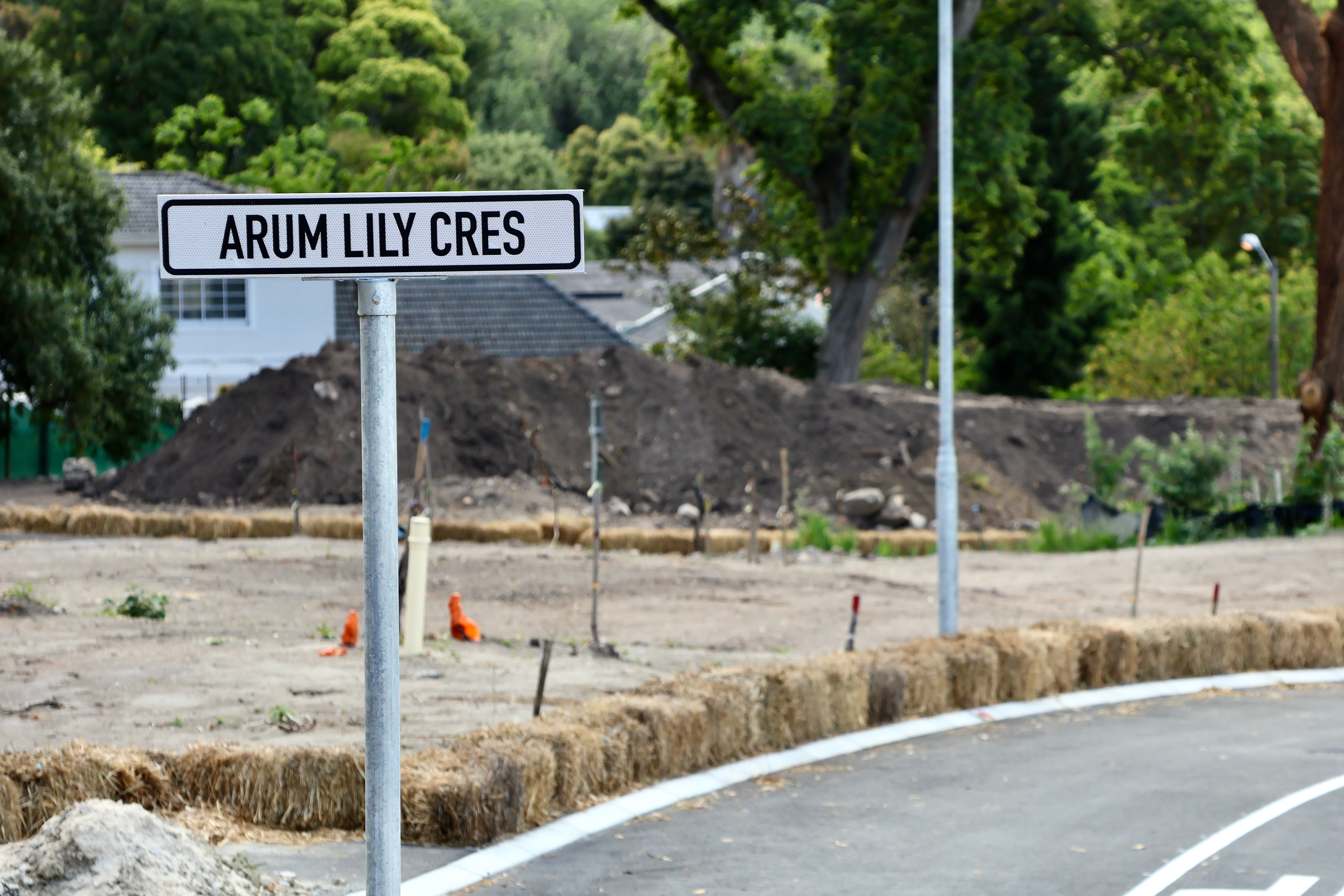
Bulk infrastructure has been completed at the Protea Village development in Bishopscourt. Photos: Matthew Hirsch
- Families forcibly removed from Protea Village in Bishopscourt now expect to move back in 2028, later than previously expected.
- Roads, water, sanitation and street lights have been installed, but building the 86 claimants’ homes will only start in March 2027.
- The homes are funded by the sale of 50 plots sold on the open market in one of Cape Town’s most expensive suburbs.
People who were forcibly removed from Protea Village in Bishopscourt, Cape Town, in the 1960s will have to wait until at least 2028 before they can move back.
Following successful land claims lodged in 1995, 86 families opted to have their rights to the land restored, while 46 families opted for financial compensation.
Bishopscourt is one of Cape Town’s most expensive suburbs, while the suburbs on the Cape Flats where the claimants were sent are battling crime, unemployment and poverty.
Land restoration was delayed by several court cases and planning appeals. Last year, ground was broken on a new development in Bishopscourt. The development will be cross-subsidised: 50 plots have been or will be sold, which will cover the costs of building homes for the 86 claimant families. The first 33 plots sold for an average of R4.5-million.
Four hectares will form a publicly accessible greenbelt along the Liesbeek River. 
The state-owned land was made available by the Department of Public Works and Infrastructure and the City of Cape Town, and in 2021, the land reform department granted R60.8-million to help fund the development. The City has invested R83-million into bulk infrastructure and other support.
The installation of new roads, water, sanitation and street lights has been completed. But construction on claimant families’ homes will only start in March 2027 and is set to be complete within the first half of 2028.
Last year, GroundUp reported that the homes would be complete by 2027. But it has taken longer than expected to get a final budget for the 86 homes and submit building plans for approval.
“I would really like to come back,” said Victor Josephus at a site visit on Monday. “I’m 85 already. I just hope that I’ll see it before I close my eyes in death.”
Josephus’s family was forcibly removed in the late 1960s. He remembers coming home one day to find a letter saying that they had been relocated to Manenberg, a place he had never heard of before.
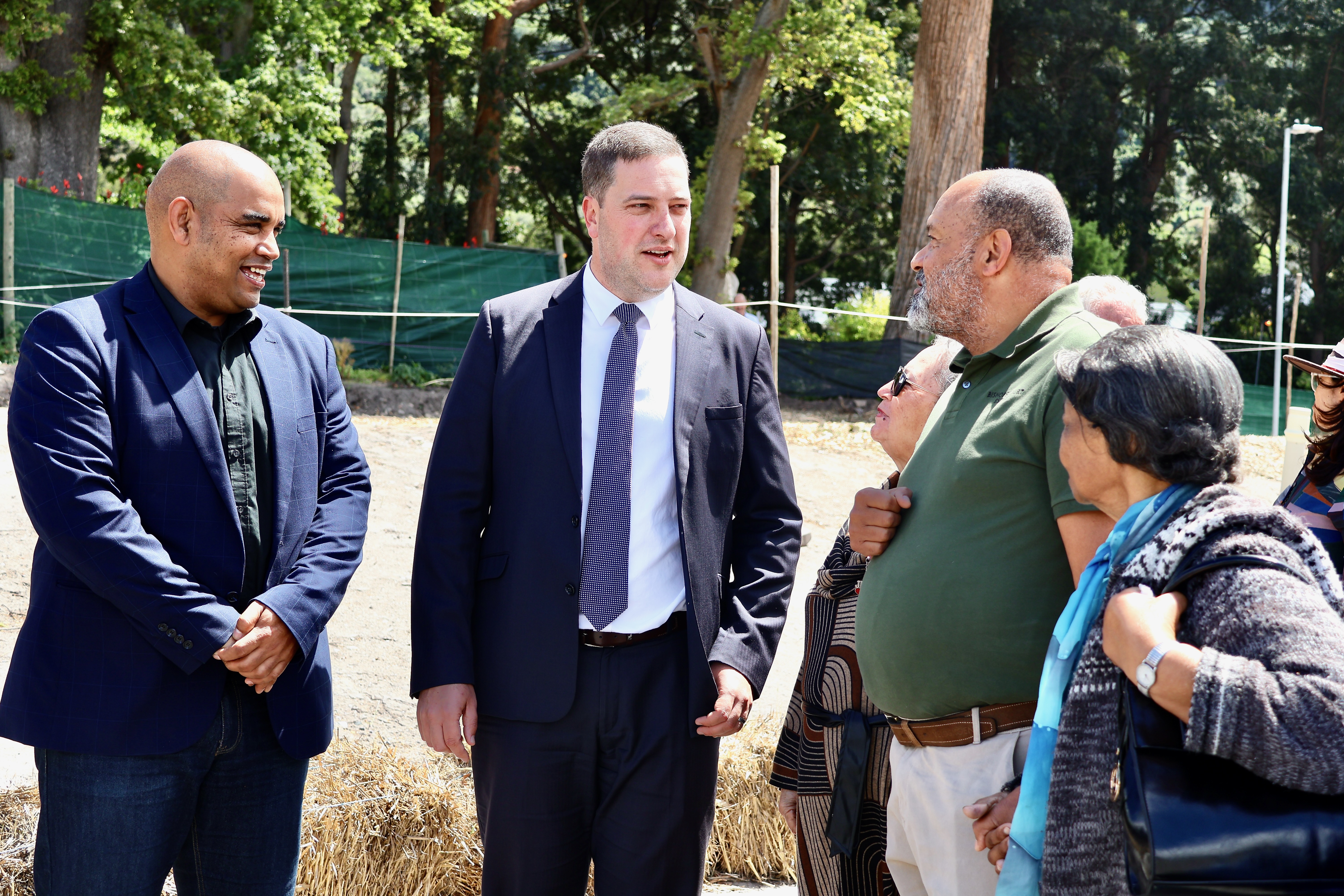
Deputy Mayor Eddie Andrews and Mayor Geordin Hill-Lewis talk to Bishopscourt land claimants during a site visit to the Protea Village development on Monday.
Andre Maxwell, chair of the Protea Village Communal Property Association (CPA), explained that building plans for the claimants’ homes were only submitted to the City earlier this month because the budget could only be confirmed once all the open-market stands had been sold.
To date, 33 stands have been transferred to the buyers, seven stands are still being transferred, and the final ten stands are reserved. Sales on these properties are expected to be finalised by next month.
“Our objective was always to have quality homes in the shortest possible period of time,” Maxwell told GroundUp.
“Most of our older folk have passed on,” said Martha Thomas at Monday’s site visit. But she said she was happy to be returning soon to the “beauty of Protea Village”, close to the church and the mountain.
“I thank all the people who have made it possible that we can come back. I am grateful,” she said.
Maxwell told those who had gathered that the event “marks another important step towards restoring our community, rebuilding homes, and renewing a legacy that spans generations.
“This occasion is a testament to resilience, perseverance, and the unwavering commitment of community members, partners, government stakeholders, and all those who have worked tirelessly to bring us to this point,” he said.
Wayne Alexander, chief director of the Regional Land Claims Commission in the Western Cape, said: “For the millions of South Africans forcibly removed from their homes under apartheid, this milestone carries … hope for land restitution.”
He said that while the land restitution process provided “some form of redress to thousands of families, the commission is confronted with its limitations.
“These limitations highlight the necessity of partnerships.”
Support independent journalism
Donate using Payfast

Don't miss out on the latest news
We respect your privacy, and promise we won't spam you.
Next: No water, no vote, say residents of this Limpopo township
Previous: Only choose candidates who will fix your city, Joburg voters told
© 2026 GroundUp. This article is published under the GroundUp Republication Licence Version 1.0. Email [email protected] to request permission to republish.