
Giant data centres get the first green light from Cape Town tribunal
Two massive water-hungry and energy-hungry data centres are proposed next to the airport
 Add GroundUp on Google
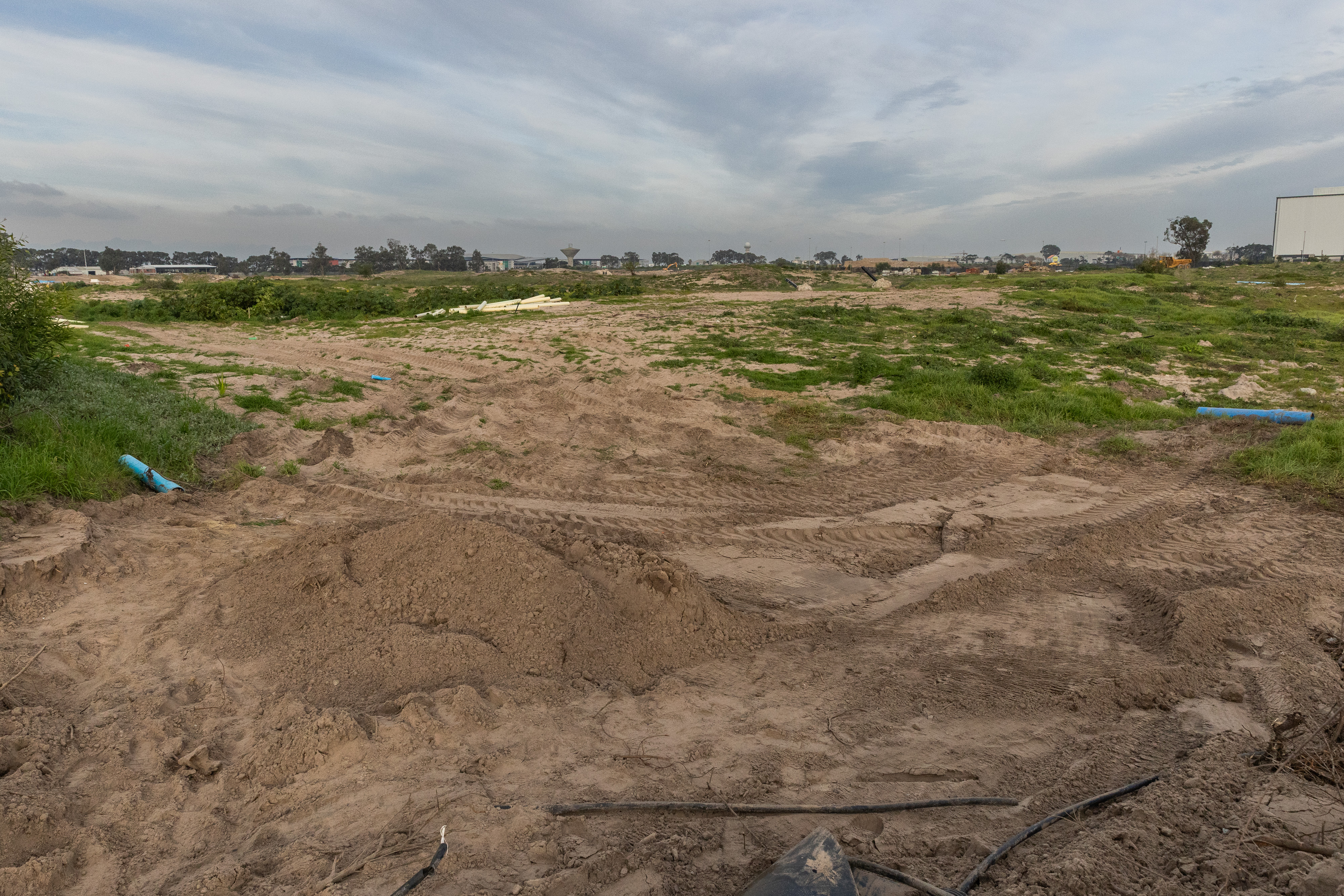
The Cape Town Municipal Planning Tribunal has approved an application by land owner King David Country Club that paves the way for the development of two huge data centres near the airport. Photo: Ashraf Hendricks
- The Cape Town Municipal Planning Tribunal on Tuesday approved an application by land owner King David Country Club that paves the way for the development of two new data centres.
- The data centres will cover an area equivalent to about 14 rugby fields and require more than 170MW of power.
- How much water the data centres will need for cooling, and what their greenhouse gas emissions will be, were not included in the land use application.
- The applicant argues these details will be included in the later Site Development Plan.
An application that paves the way for two new data centres totalling more than 120,000 square metres in Cape Town’s airport industrial area has been approved by the Municipal Planning Tribunal.
The land use, subdivision and consolidation application by King David Country Club, which owns the area known as King Air Industria, makes no mention of how much water the giant data centres will use, nor does it detail energy supply and demand.
The lack of information on this, and on backup diesel generation, fuel storage, air pollution, noise, and related health impacts, formed the basis for opposition to the application by Cape Town-based social movement, the Housing Assembly, and UK-based tech justice non-profit organisation Foxglove, which received advice from the Legal Resource Centre.
Presenting to the Tribunal on Tuesday, Legal Resource Centre attorney Kimal Harvey said their research revealed that for every 1MW of electricity needed, a data centre using traditional cooling techniques used about 25.5-million litres of water per year. The proposed data centres at King Air Industria, to be built by American multi-national company Equinix, would have an electrical demand of about 174MW. This equated to about 4.4-billion litres of water per year.
This amount of electricity could power about 130,000 homes.

The lack of this information in the land use application was a “critical” gap, stated Foxglove in their press release, and was “particularly troubling”.
Harvey said the Housing Assembly had pointed out that Cape Town had suffered serious historic problems with water scarcity, “with their members literally watching taps run dry during the ‘Day Zero’ crisis in the previous decade”.
“The failure of Equinix to provide any kind of substantive detail on the new data centre’s water consumption in their land use application not only renders it impossible for it to be properly considered by the City of Cape Town but is also arguably a serious insult to everyone who has suffered through this water scarcity in the recent past.”
The application by King David Country Club involves three erven, two of which are zoned as General Industry, and one as Mixed Use. The landowner sought to have all three zoned as General Industry in order to have the zoning uniformity required by Equinix. The application also sought to consolidate the three erven into one, and amend the condition of approval granted in 2019 restricting floor space to less than 300,000 square metres.
A small land swap with the City, involving a substation, is also part of the application.
Harvey argued the application was mischaracterised as “only a technical change” to the land use rights.
He said a data centre was defined within the Municipal Planning Amendment By-law as “a building or dedicated space within a building or a group of buildings used to store computer systems and associated components, such as telecommunication and storage systems”. But this definition was only created in the amendment in 2025, before the original application.
“Therefore, the inclusion of data centres in the definitions for business premises and warehouses cannot be retrospectively applied”, and a new application was necessary, he argued.
The mischaracterisation also existed in the applicant’s minimisation of the impact a data centre has on the surrounding areas and communities, which related to its electricity and water usage.
Tribunal member Wally Johnstone agreed that the current definition for a data centre was “wholly inadequate” and “simplistic”, and there was no recognition that there was a significant change to the use of the land.
Johnstone said Cape Town’s water systems were under pressure, and noted a recent march in Khayelitsha over lack of access to water.
“The concern is real and should not be ignored.”
He said the lack of greenhouse gas emission figures was also a concern, particularly given the impact of global heating on Cape Town’s water future, and high electricity use was a concern given recent load shedding and the impact on grid stability.
“I’m obliged to conclude most of us don’t know what is required in terms of water and electricity demand in an application we’re asked to approve,” he said, adding that the lack of information meant he was unable to support the application.
However, the other four Tribunal members, including chair Sydney Holden, were of the view that details on water and electricity demand, along with other concerns, would be addressed in the Site Development Plan, which would still need to be approved.
They were in general agreement with the applicant that this was merely a technical amendment to the land use rights.
In granting the application, Holden said a data centre would promote the city “as a global, competitive, and innovation-driven hub”, create downstream employment and contribute to “improved digital infrastructure” serving a variety of industries.
He said the Site Development Plan would have to be closely scrutinised, as well as the building plan, should the Site Development Plan be approved.
Support independent journalism
Donate using Payfast

Don't miss out on the latest news
We respect your privacy, and promise we won't spam you.
Next: Union and hostel residents quarrel over R3-million electricity bill
Previous: Labour court rules against racist owner of a dog called “Hitler”
Letters
Dear Editor
Worth reading this decision alongside the City's proposed amendments to its Municipal Planning By-law, open for public comment until this Friday, 17 July. The fit is uncomfortably neat.
One tribunal member said on record that the tribunal didn't know what water and electricity this development needs - and the majority approved it anyway. Under the current by-law, that is exactly the kind of defect the City can still fix: an approval granted without considering something it arguably had to consider, with the gap recorded in the tribunal's own proceedings. An affected person can formally ask the City to revoke or amend such an approval, and the City can do it.
The proposed amendments take that away. The City would only be able to correct a defective approval with the written consent of the approval-holder, and the only way to challenge it is an expensive high court case. Residents' requests become "complaints" that the City can dismiss without giving reasons.
In other words, approvals granted on insufficient information are then nearly impossible to undo. This decision is a concrete example of what the amendments would lock in - and it landed three days before the comment deadline.
(The draft and the comment page are on the City's website under "Have your say")
Dear Editor
Would there be any grounds to contest the public participation process that was done on this specific application? Given the public backlash, I would argue that a wider net of community inputs needs to be gathered before an informed and truly democratic decision can be made.
Not to conflate issues, but I am concerned about the independence of the Tribunal as it has recently come to light that some members may have been granted indefinite positions thereon - perhaps something to consider.
© 2026 GroundUp. This article is published under the GroundUp Republication Licence Version 1.0. Email [email protected] to request permission to republish.