
Cape Town Airbnb hosts could pay triple rates
Short-term letting properties may be subject to commercial rates
 Add GroundUp on Google
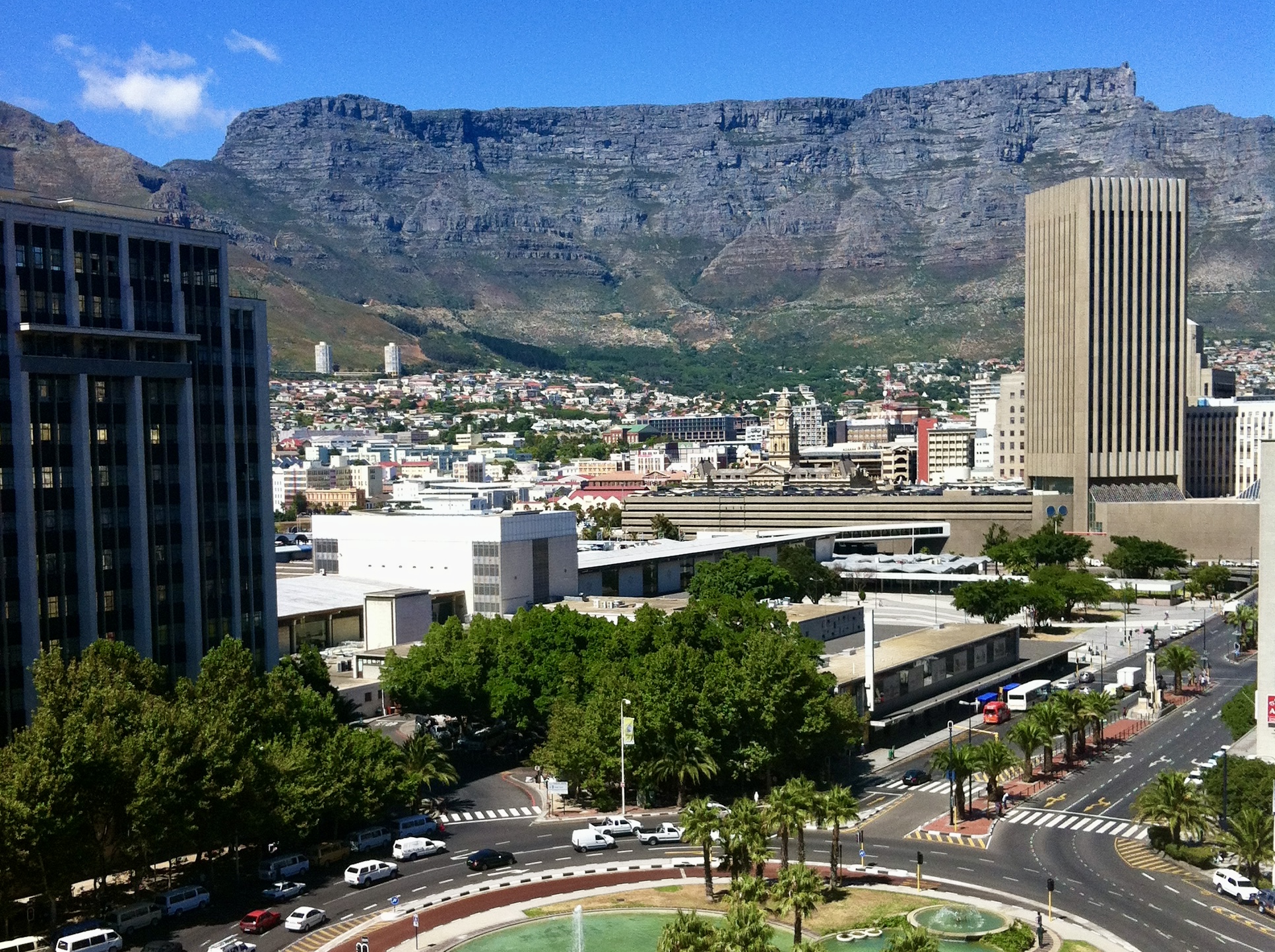
The City of Cape Town has drafted a new by-law to apply commercial property rates to all properties available for short-term letting for more than half the year. Archive photo: Brent Meersman
- Under a new draft by-law, all Cape Town properties used for short-term letting must be registered.
- Properties available on short-term rentals for more than half the year will be subject to commercial property rates, which could be three times higher than residential rates.
- Cape Town has more than 27,000 listed short-term rentals on Airbnb alone, with almost 6,000 of these in the inner city.
A new by-law seeks to regulate short-term rentals in Cape Town by enforcing registration and imposing commercial rates on properties that are available to be let out on a short-term basis for 183 days or more per year.
Objections and comments on the proposed by-law can be submitted via the City’s website until 5 October.
The draft Short-Term Letting By-law states that all properties in the city listed on booking platforms, such as Airbnb, LekkeSlaap or Booking.com, must be registered with the municipality. No property in the city may be listed without obtaining a registration number, which must be displayed on the listing.
If the listing is available to be rented out for more than 50% of nights per year (183 nights), then the property will be deemed commercial rather than residential.
The City will then calculate the property rates on a commercial basis, in line with the rates charged for hotels and guesthouses.
Properties or parts of them, such as a granny flat, that are rented out without being listed on short-term letting platforms will not be affected and will not require a registration number.
While the exact commercial rates bill would vary from property to property, it could be more than three times higher than the residential rates.
As an example, using the City’s own rates calculator for an inner-city residential property valued at R2.8-million, the current monthly rates bill is R1,274. For an inner-city commercial property valued at the same amount, the monthly rates bill is R3,945.
While the by-law remains open to public comment until 5 October, its main provisions are already baked into the City’s latest rates policy adopted on 29 June which defines “commercial accommodation” as “a property used for the purposes of providing accommodation … where a primary place of residence is used or available to be used for short-term letting for more than 50% of the total annual room nights”.
Additionally, residential property is defined as a “property used or available to be used for short-term letting for 50% or less of the total annual room nights”.
Levelling the hospitality field
Announcing the draft by-law, finance mayco member Siseko Mbandezi stated changes to properties’ rating category would come into effect from 1 July 2027, “based on data from the proposed registration system”.
Mbandezi said the City has been working to identify properties used for commercial accommodation, but which have “incorrectly” been levied with residential rates.
“The proposed by-law ensures fairness in the commercial accommodation sector,” he said.
But he said the City continued to support the tourist economy “in the strongest terms” and regards short-term letting “as an important sector for servicing diverse tourist needs”.
“However, the City believes that the playing fields for businesses should be equal, with all those using a property for commercial accommodation paying the correct rates.”
According to a report by the Federated Hospitality Association of Southern Africa (FEDHASA), Mayor Geordin Hill-Lewis told the association during a meeting in April that the proposed short-term rental by-law was intended to create a fairer environment within the hospitality sector.
Hill-Lewis reportedly told the association the new rules would “address large commercial operators running multiple apartments as ‘decentralised’ hotel businesses while continuing to pay residential rates”.
The move was linked to concerns by hotel investors who were finding it difficult to justify new hospitality developments in the face of short-term rental operators competing on a large scale while only being subject to residential rates.
Reportedly, Hill-Lewis said this imbalance was discouraging investment in new hotels, despite continued growth in the number of tourists.
Short-term rental impact on housing
The City has not presented the new by-law as a measure to reduce the impact of short-term letting on the local housing market.
But the City’s own Inner City Local Spatial Development Framework (LSDF) states 70% of the city centre’s residential units are used for commercial short-term accommodation. This effectively removes them from the local housing market.
The Inner City LSDF, which was approved by council on 30 October last year, states that only 30% of apartments or houses in the inner city are available for long-term leases, or occupied by their owners. The remainder “are either hotel managed or Airbnb”.
The Inner City LSDF covers the Foreshore and central business district up to Orange Street, and from Tennant Street on the southeast District Six side to Buitengracht on the northwest Bo-Kaap side. It also includes De Waterkant. This is predominantly ward 115.
According to the LSDF, there were 8,327 “residential dwelling units” (apartments) in this area in 2018. The City planners calculated there would be a potential 11,815 units in 2024. The exact current number is not known.
Currently, Inside Airbnb shows that of the more than 27,000 listings in Cape Town on Airbnb, 5,931 of them are in ward 115.
The income from these listings is not being spread among an equivalent number of apartment owners. Rather, the income is going to a relatively small number of individuals or companies that own multiple apartments.
Inside Airbnb shows only 1,777 of the inner-city listings belong to hosts with a single listing, and more than 40% of listings belong to hosts with ten or more units. One host has 147 apartments or entire homes in the inner city listed on Airbnb.
This loss of potential housing units for Capetonians has been a bone of contention for a number of years, and has been blamed for worsening the lack of supply, pushing rental and purchase prices beyond the reach of middle-class residents.
Many new developments in the inner city focus on building micro-apartments which are unsuitable for families or permanent accommodation.
In 2024, housing activist organisation Ndifuna Ukwazi (NU) objected to a micro-apartment development on the corner of Bree and Prestwich streets in the inner city.
Objecting to the proposed 40-storey development that was to include 442 apartments between 15 and 30 square metres in size, attorney Jonty Cogger noted that while the city suffers from a lack of affordable housing, almost all new development in central areas was catering to short-term rentals by providing “very small micro-apartments”.
“Given average household sizes, these apartments will never be able to accommodate normal families. So not only is Airbnb strangling our housing supply, but it is also reshaping our urban fabric in an inappropriate manner,” stated Cogger.
NU’s argument is that allowing micro-apartments without stringent conditions for affordable housing threatens to deepen the current housing crisis by leaving residents with limited options for stable long-term housing.
Support independent journalism
Donate using Payfast

Don't miss out on the latest news
We respect your privacy, and promise we won't spam you.
Next: “We were never consulted” – Cape Town residents challenge Equinix data centre
Previous: Fun and games unite teens and adults in crime-ridden Philippi
© 2026 GroundUp. This article is published under the GroundUp Republication Licence Version 1.0. Email [email protected] to request permission to republish.