
Hidden hunters of the Kalahari: Why small carnivores hold big ecological answers
A landmark study at Tswalu Kalahari Reserve is poised to spotlight the vital role medium-sized carnivores play in the Savanna ecosystem
 Add GroundUp on Google
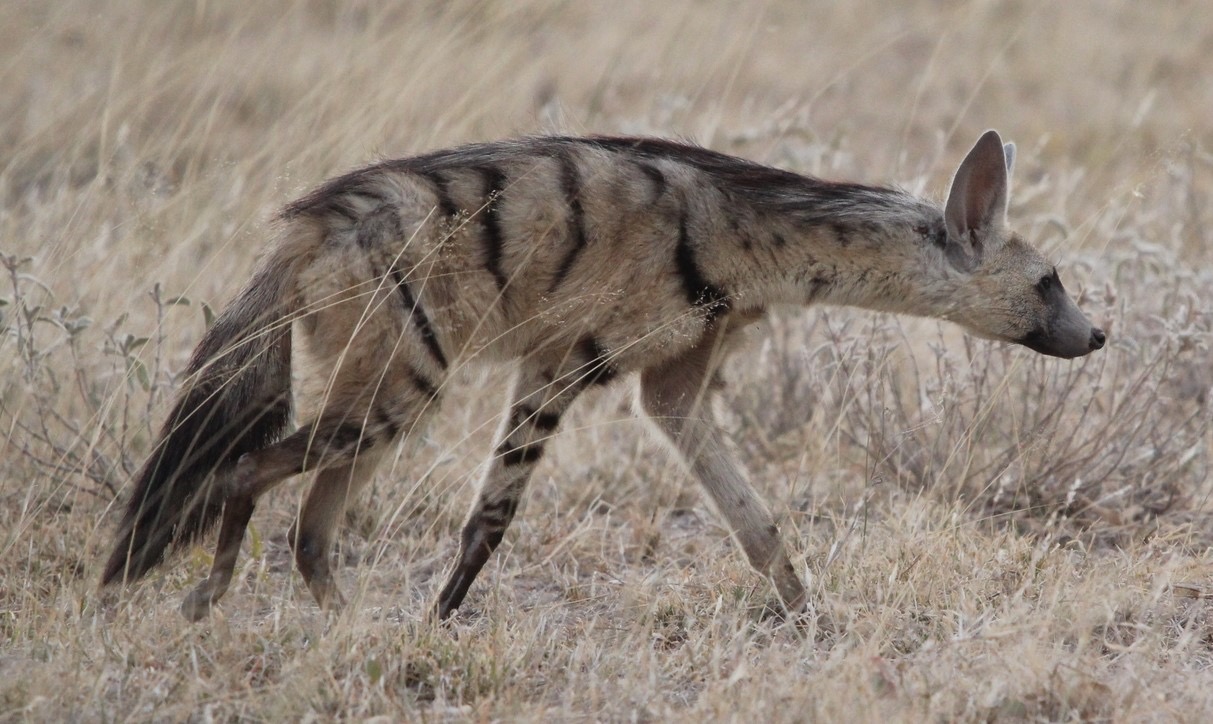
The insect-eating aardwolf is a specialist termite predator. At Tswalu Kalahari Reserve, it is one of several medium-sized nocturnal carnivores now being studied to fill key gaps in ecological understanding. Photo: Stefan Haag Wikimedia commons
Cape fox, brown hyena, and other middleweights of the carnivore world are major drivers of ecological health but are relegated to the undercard of research. A landmark long-term study at Tswalu Kalahari Reserve is now poised to change this.
To understand the African savanna, look past the elephants and lions, and look down. In a typical savanna, the total biomass of termites is actually larger than that of elephants. Termites are massive ecosystem drivers — and the aardwolf is a highly specialised predator of them. Yet, in reserves where lions rule as top predators, the insect-eating aardwolf is often rarely seen.
“I haven’t missed a visit to Kruger National Park in 50 years,” says zoologist Ara Monadjem. “But I have never seen an aardwolf in Kruger. And I’ve seen dozens of them everywhere else.”

Monadjem suspects the aardwolf’s scarcity in the Kruger may not only be linked to the abundance of lions, but also an absence of suitable open grasslands.
Monadjem, who heads the University of Pretoria’s zoology and entomology department, and Prof Michael Somers, who leads the wildlife management and conservation programme at the Mammal Research Institute at the University of Pretoria, have a new long-term, Oppenheimer Generations grant to study several of Tswalu Kalahari Reserve’s medium-sized, nocturnal carnivores. It is primarily focused on the brown hyena, aardwolf, bat-eared fox and Cape fox.
The reserve, now the largest privately protected area in South Africa at roughly 118,000 hectares, is situated in the Northern Cape, at the foot of the Korannaberg Mountains. The nearest town is Kuruman.
Its core objective has been ecological rehabilitation: removing internal fences, reintroducing indigenous wildlife, and rebuilding a functioning Kalahari ecosystem after decades of agricultural use. In this sense, the reserve is a privately funded, long-term conservation initiative to rebuild a Kalahari ecosystem — supported through conservation-based tourism.
For the researchers, Tswalu offers a perfect living laboratory. A fence divides the reserve. One part of the property has lions; the other does not. By studying the medium-sized carnivores in both areas, researchers hope to tease apart the cascading effects of top predators on the rest of the food web.
The core question
The central question Monadjem and Somers seek to answer is what does it mean for the ecology of a landscape when apex predators chase away or outcompete vital medium-sized carnivores?
Monadjem notes that when people talk about restoring African savannas to their natural state, they often envisage lions as the top predators. But it is not clear that lions were always the top predators everywhere.
“Some of these medium-sized carnivores are prey, some compete directly with lions for access to food. And others, they just chase away and don’t allow them to get to burrows or to carcasses,” he says.
What this means for the broader ecology, however, remains unknown.
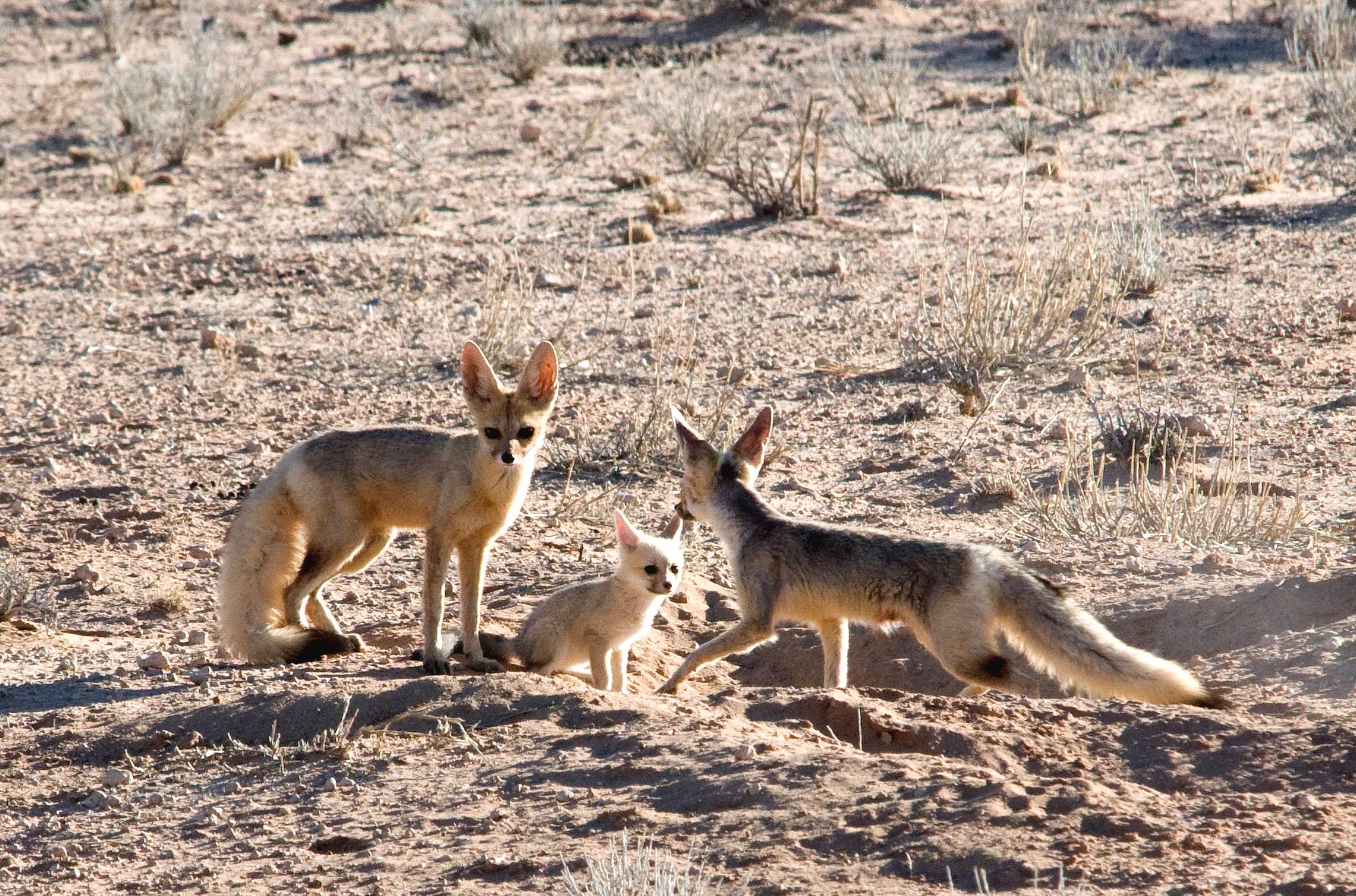
Adult Cape foxes with cub are rarely captured up close on camera. One of South Africa’s smallest foxes, this elusive species is most often seen in brief family groupings like this. (Photo: Wikimedia Commons)
Why small carnivores matter
For decades, ecological monitoring has been obsessed with large, charismatic megafauna, says Somers. This creates a severe biodiversity counting bias. When reserves focus solely on large herbivores and top predators, it is at the expense of vegetation and small mammal and birds.
“They all start to disappear,” says Monadjem. “And they disappear very quickly and very dramatically”.
Because medium-sized carnivores have shorter lifespans, they have a higher population turnover, making them highly effective ‘sentinels’ that can reveal these environmental shifts much quicker than long-lived species, says Somers.
Despite their importance, science knows little about how these animals interact, or the species above and below them in the food web, like the bat-eared fox, which uses its massive ears to listen for grubs and beetles moving beneath the soil.
If you remove them from the landscape, no one actually knows what happens to the ecology of the system, says Monadjem.
Race against the dung beetle
To figure out what carnivores are eating, researchers collect scats (droppings) in the field. This requires waking up early to scour the reserve before the Kalahari’s dung beetles steal the evidence.
The researchers plan to use advanced molecular DNA analysis to identify the specific species of insects, plants, and rodents the carnivores have consumed.
They will then compare these findings against the populations of live rodents they catch, weigh, and release using Sherman traps — small box traps that allow animals to be captured unharmed and returned to the wild.
They also plan to fit the carnivores with satellite collars to monitor their movements. The team will also rely on motion-sensitive camera traps.
Assisted by postgraduate students, they hope to establish a monitoring baseline that can last 20 years or more.
Support independent journalism
Donate using Payfast

Don't miss out on the latest news
We respect your privacy, and promise we won't spam you.
Next: Gauteng cuts funding for non-South African social workers
Previous: PRASA rail theft trial bogged down in argument over virtual testimony
© 2026 GroundUp. This article is published under the GroundUp Republication Licence Version 1.0. Email [email protected] to request permission to republish.