
Housing activists celebrate landmark court victory
ConCourt ruling finds government is obligated to provide affordable housing
 Add GroundUp on Google
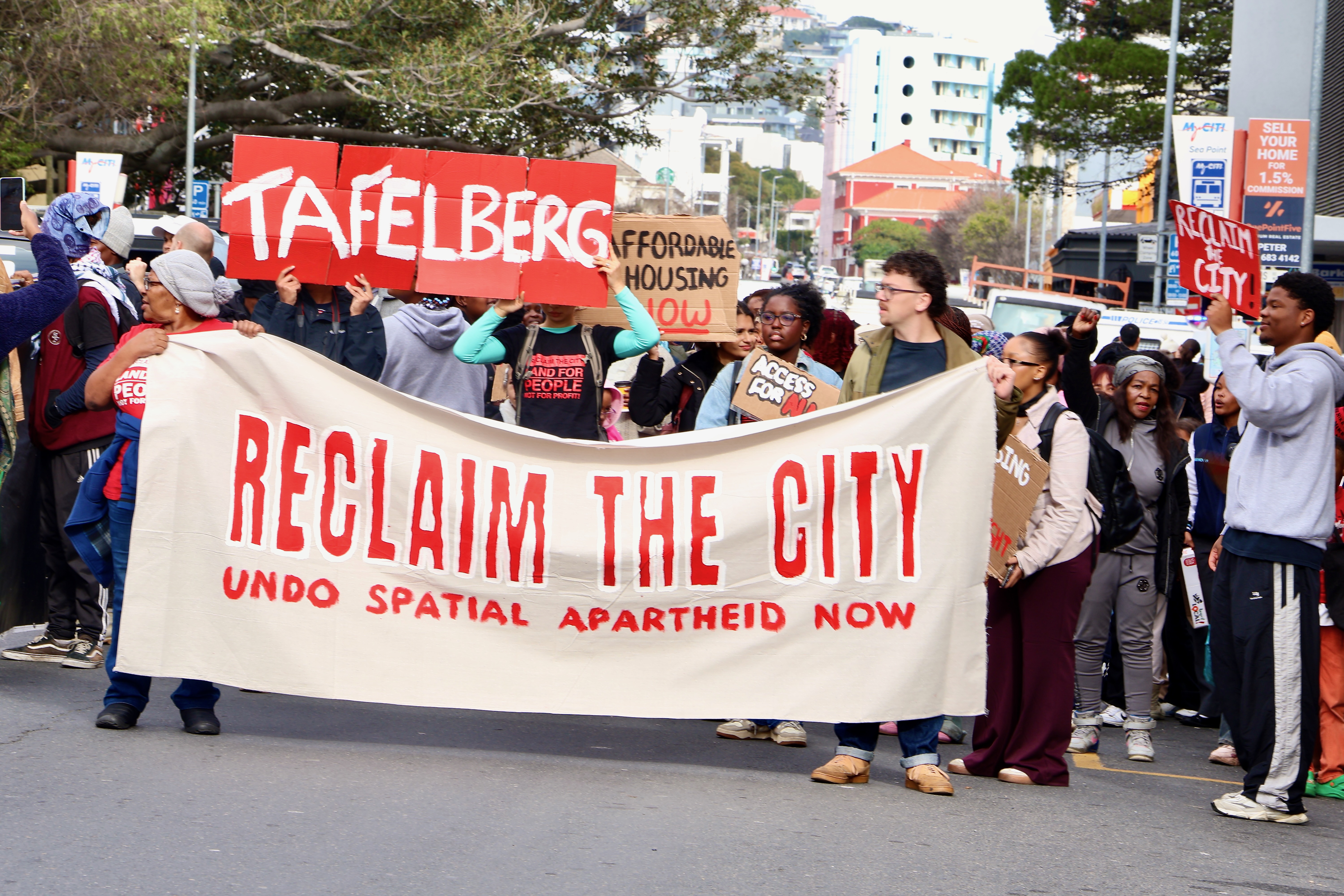
Housing activists celebrate on Sea Point main road after the Constitutional Court handed down a ruling in their favour on Thursday. Photo: Matthew Hirsch
There were hugs and tears of joy at a gathering of housing activists in Cape Town when the Constitutional Court handed down its judgment in the Tafelberg case.
The court found that the City of Cape Town and the Western Cape government were constitutionally obligated to provide affordable housing in and near the city centre.
The group of activists from Ndifuna Ukwazi (NU) and Reclaim the City had gathered at the Sea Point Methodist Church to watch a livestream of the judgment.

The judgment comes after a decade-long campaign by NU and Reclaim the City, challenging the provincial government’s sale of the former Tafelberg School site in Sea Point. The sale has since been cancelled, and the site is earmarked to be used for government services and social housing for households earning between R3,500 and R22,000 a month.
Buhle Booi, head of political organisation at NU, thanked all the activists who had been involved in the case over the last decade.
The group made their way down the main road to the Tafelberg site, which is less than a kilometre away. They held placards that read “Reclaim the City” and “Land 4 people not for profit”. They sang, “My mother was a kitchen girl”, a song that has become an anthem for Reclaim the City.
“Whether we are poor, black, coloured … we belong in the CBD. We can’t be pushed out to the periphery,” Sheila Madikana, one of the women leading the battle for affordable housing in Cape Town, told the crowd.
Madikana currently stays in Helen Bowden Nurses Home, which, along with the old Woodstock Hospital, was occupied to protest against the original decision to sell Tafelberg.
“We need to live here where we wake up next to our jobs … We fought this battle, and we won,” said Madikana. “This land belongs to us. We will live here. This is our home.”
Disha Govender, former head of the Ndifuna Ukwazi Law Centre, said it was a significant victory for housing, not just in Cape Town but across the country.
“They [the Province and City] have not fulfilled their obligations to ensure spatial justice, to ensure equitable access to land and, in this case in particular, affordable housing in well-located areas, which is what we have been calling for for long,” she said.
Brett Herron, the GOOD party’s secretary general described the judgement as “momentous” and “affirming the obligations of City and Provincial governments to oversee the progressive realisation of rights conferred by the Constitution”.
“We note the judgment and are currently studying it in detail,” said Tertuis Simmers, MEC for infrastructure. “A comprehensive media statement setting out our response and the implications of the judgment will be issued in due course.”
The City of Cape Town said in a statement that “the City has made significant progress on affordable housing in this term of office, and welcomes the opportunity to file a report about this.”
“The ConCourt acknowledged that the case record is eight years out of date regarding Western Cape Government and City efforts to meet affordable housing obligations, ruling that fresh reports be filed to update the court record.”
Support independent journalism
Donate using Payfast

Don't miss out on the latest news
We respect your privacy, and promise we won't spam you.
Next: 10-year-old golfer swings for gold. But he needs help to get there
Previous: MPs slam Limpopo education department over missed deadline to fix school toilets
© 2026 GroundUp. This article is published under the GroundUp Republication Licence Version 1.0. Email [email protected] to request permission to republish.