
Hundreds protest new land occupation law in Durban and Joburg
Activists fear amendment bill will criminalise poor and landless people, and those who help them
 Add GroundUp on Google

About 800 supporters of Abahlali baseMjondolo marched in Durban on Friday. Photo: Joseph Bracken
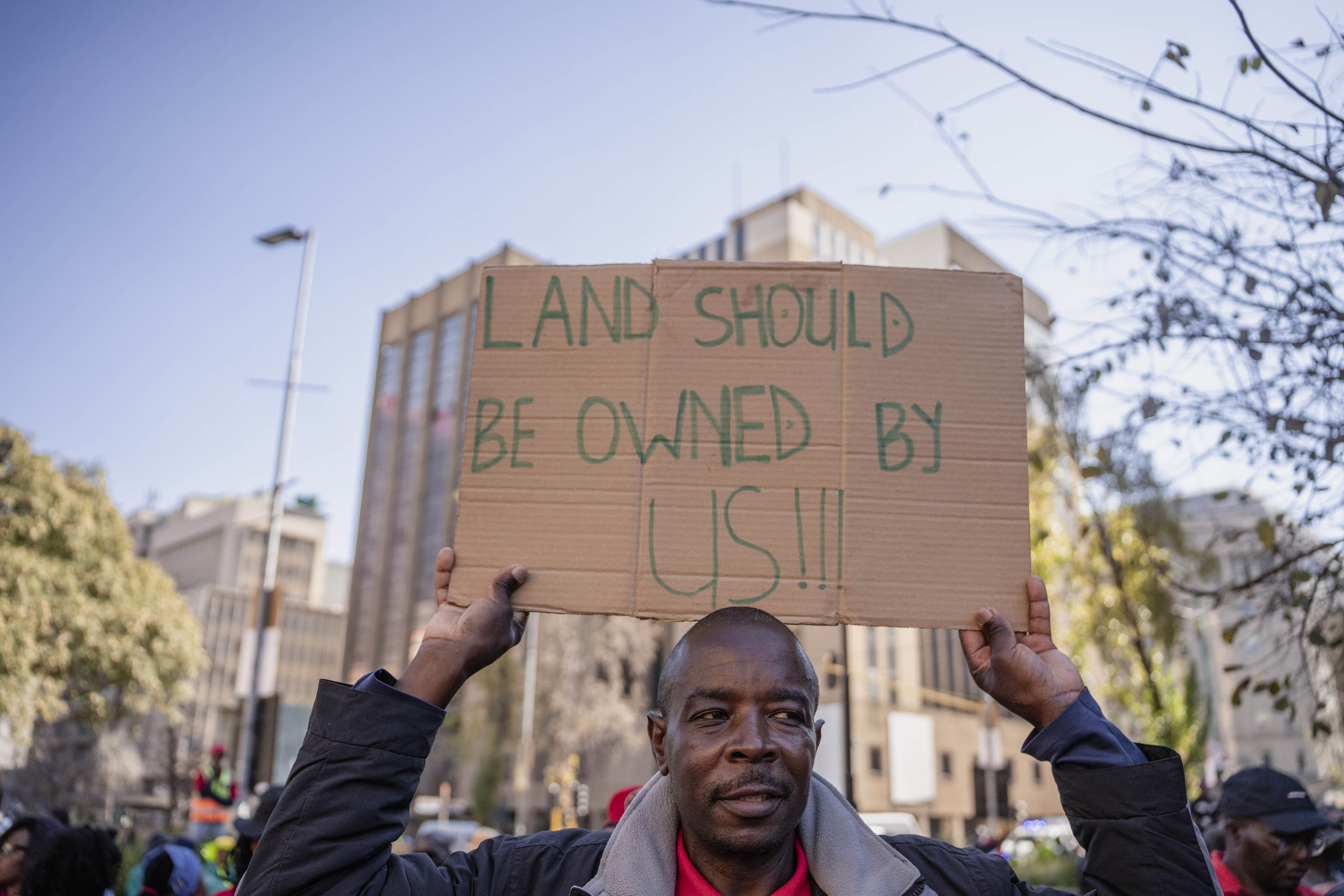
Hundreds of land activists took to the streets in Durban and Johannesburg on Friday to protest a proposed anti-land occupation law.
Supporters of shack dweller movement Abahlali baseMjondolo (ABM) marched to the Gauteng Provincial Legislature and the Durban City Hall, arguing that the new bill threatens constitutional protections for poor and landless communities.
ABM has vowed to fight the amendments in court if needed. They handed memoranda to the Gauteng legislature in Johannesburg and human settlements director-general Nana Mhlongo in Durban.

About 300 people protested in Johannesburg on Friday. Photo: Ihsaan Haffejee
The draft amendment to the Prevention of Illegal Eviction from and Unlawful Occupation of Land (PIE) amendment bill was published for public comment in April.
The PIE Act was originally passed in 1998 to repeal apartheid era laws. Activists are concerned that the amendment bill rolls back hard-won constitutional protections.
Under the amendment bill, anyone who occupies land or allows the occupation of land without the owner’s permission could be liable for a fine of R2-million or two years in prison. The bill will also allow courts to grant eviction orders without having to ensure alternative accommodation is provided.
Researchers at the Centre for Applied Legal Studies (CALS) have argued that this is unconstitutional, as the Constitutional Court has previously ruled the state must provide alternative accommodation to anyone who would otherwise be left homeless, regardless of whether their occupation was lawful.
Protesters marched from a park in Jeppestown through central Johannesburg, carrying placards and singing songs. Photo: Ihsaan Haffejee

ABM’s general secretary Thapelo Mohapi told GroundUp that the bill will criminalise their organisation’s work, which is focused on assisting people who face evictions. People will be rendered homeless, he said.
“It’s unfortunate that the government of national unity is considering putting private property ahead of people’s lives,” said Mohapi.
Human settlements minister Thembi Simelane has said the bill “seeks to empower municipalities, state entities and private property owners to respond more decisively to illegal occupations and evictions.”

Abahlali baseMjondolo wants the government to focus on policies that address homelessness, expand access to housing, and support vulnerable communities. Photo: Ihsaan Haffejee
Support independent journalism
Donate using Payfast

Don't miss out on the latest news
We respect your privacy, and promise we won't spam you.
Next: Only one police van is operational in this Sundays River Valley town
Previous: City plans to auction Cape Town farmers’ market site
Letters
Dear Editor
Whether you steal sweets from a shop, money from your grandmother, or land from its owner. Stealing is against the law, even though politicians and thieves with power seldom get prosecuted in this country. The amendment corrects a fatal flaw in how the law was previously set up. Nobody has the right to take that which someone else has bought and paid for.
Dear Editor
Criminal property hijacking syndicates are operating all over Gauteng, specifically targeting unoccupied homes and deceased estates. Unfortunately, the PIE Act contains loopholes that enable these criminals to act with impunity. They take over properties illegally, set up multiple rooms, and rent them out for cash. Furthermore, they violently evict tenants who cannot pay. The money they collect is neither used to maintain the properties nor to pay the City of Johannesburg for water and electricity. As a result, many of these properties have become severely overcrowded health risks because municipal services have been disconnected due to non-payment. Currently, the only recourse for property owners is to pursue High Court evictions, which cost well over R100,000. I think amendments must be made to the PIE Act to halt these criminal syndicates and protect property owners
© 2026 GroundUp. This article is published under the GroundUp Republication Licence Version 1.0. Email [email protected] to request permission to republish.