
In photos: Annual horse race in Lesotho celebrates a proud heritage
And it is an economic injection for the region
 Add GroundUp on Google
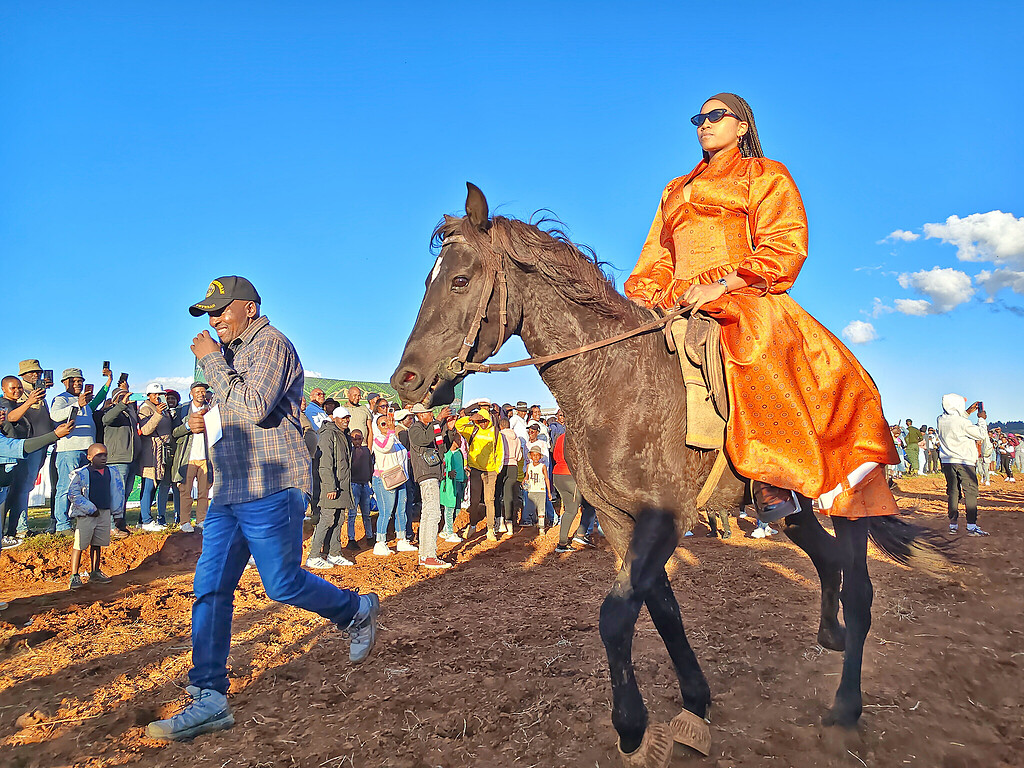
Princess Senate Mohato Seeiso, eldest daughter of King Letsie III, rides past the crowd at the close of the annual horse race in Peka, Leribe, northern Lesotho. Photos: Sechaba Mokhethi
It’s dawn at the horse racing track in Peka, Leribe. Long before the first race on Saturday, 18 April, smoke rises from open fires as vendors prepare food for riders and those who spent the night tending to their horses.
By mid-morning, the muddy field is transformed into a marketplace. Meat sizzles on grills, fruit is piled high in the back of vans, and women stir large pots of pap as well as motoho, a popular fermented, Basotho sorghum porridge.
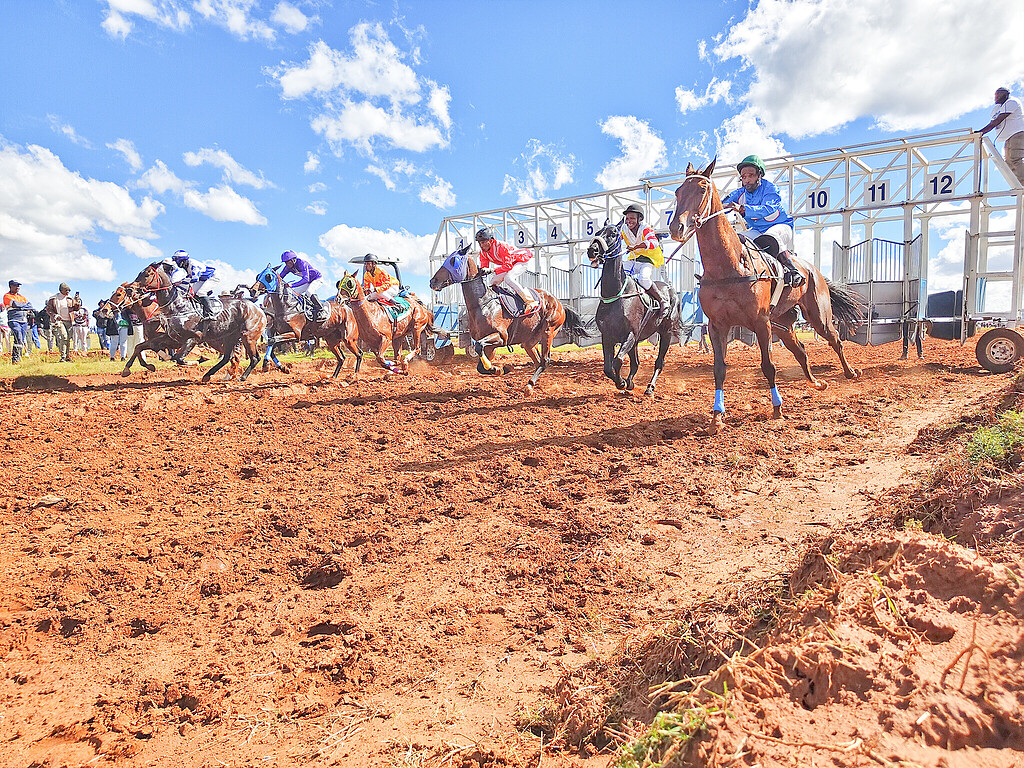
The starting gates swing open and the horses surge forward, kicking up mud as the race starts.
This annual horse racing event, organised under the Ramela Foundation as part of Moshoeshoe Day commemorations, has become a vital, albeit fleeting, part of the local economy. The event sustains families, supports small businesses, and celebrates Basotho identity rooted in horsemanship.

With sponsorship now exceeding M2.5-million (M1=R1), the event is being positioned as a driver of tourism and employment.
The event is of great cultural importance: horses have long been central to Basotho identity as modes of transport, resilience and status in the mountainous terrain and this event honours the founder of the Basotho nation, King Moshoeshoe I.
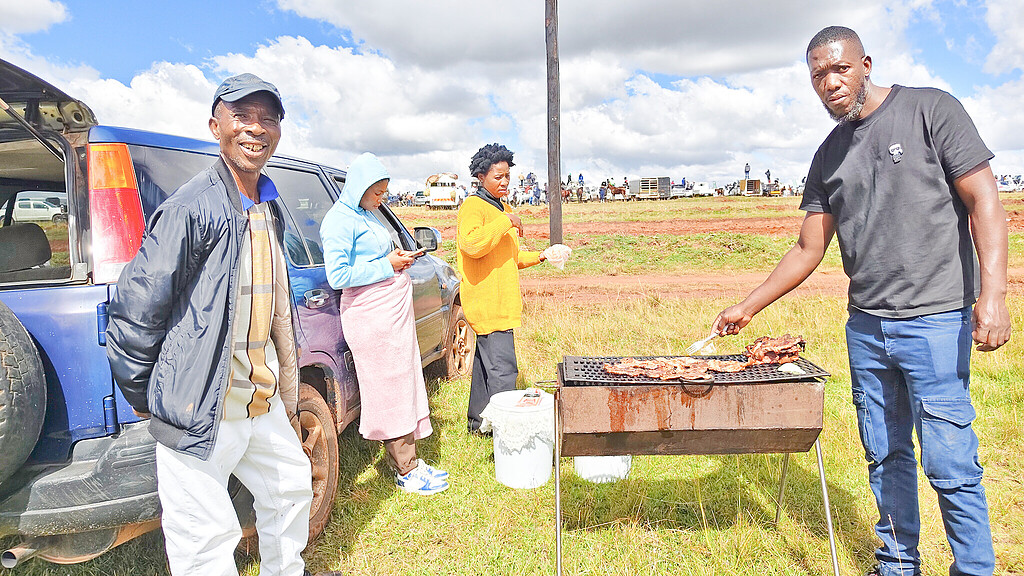
Patrick Ramphoko, his son Tumelo and two daughters, Mathapelo and Mabafokeng grill meat for racegoers.
Patrick Ramphoko from Maputsoe keeps pigs. His family used to sell pork to the race vendors. “Now we do it ourselves,” he says.
Ramphoko’s son, Tumelo, explains that they decided to become vendors themselves when they noticed how much money circulated during race days.
“This is our first time selling here,” he says. “We realised people are making money, so we decided to try for ourselves.”
The pigs they rear have funded school fees, weddings, and even supported Ramphoko’s child, now living in the United Kingdom. What was once subsistence farming has become a livelihood tied to events like this one.
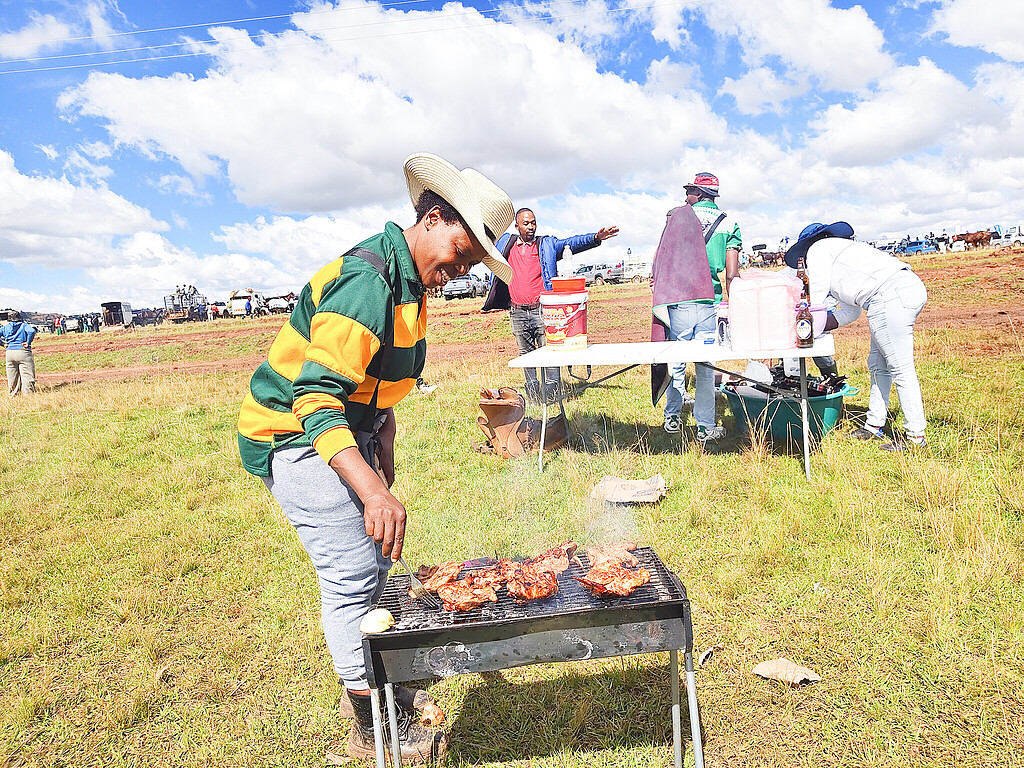
Mapakalitha Mafomane braais chicken while others set up makeshift stalls.
Mapakalitha Mafomane arrived at 4am determined to catch early customers. “Most of the men you see here don’t bring food,” she says. “They rely on us. You find that one horse comes with a jockey, the owner and supporters, and that group would come and pay for food for 14 people at a go.”
Mafomane sells pap, chicken, vegetables, beverages and motoho. “We also sell beer. The bottles are kept in laundry tubs in ice water. The first tub is finished, and the second tub is about to finish.”
On an ordinary day in her village, she says she may earn about M250. But on Saturday, Mafomane, who has sold at this race since 2024, says she expected to make about M3,000.
“This event is important for us. It helps us grow,” she says. “You see others improving their setups and dishes, and you learn and come back better the following year.”
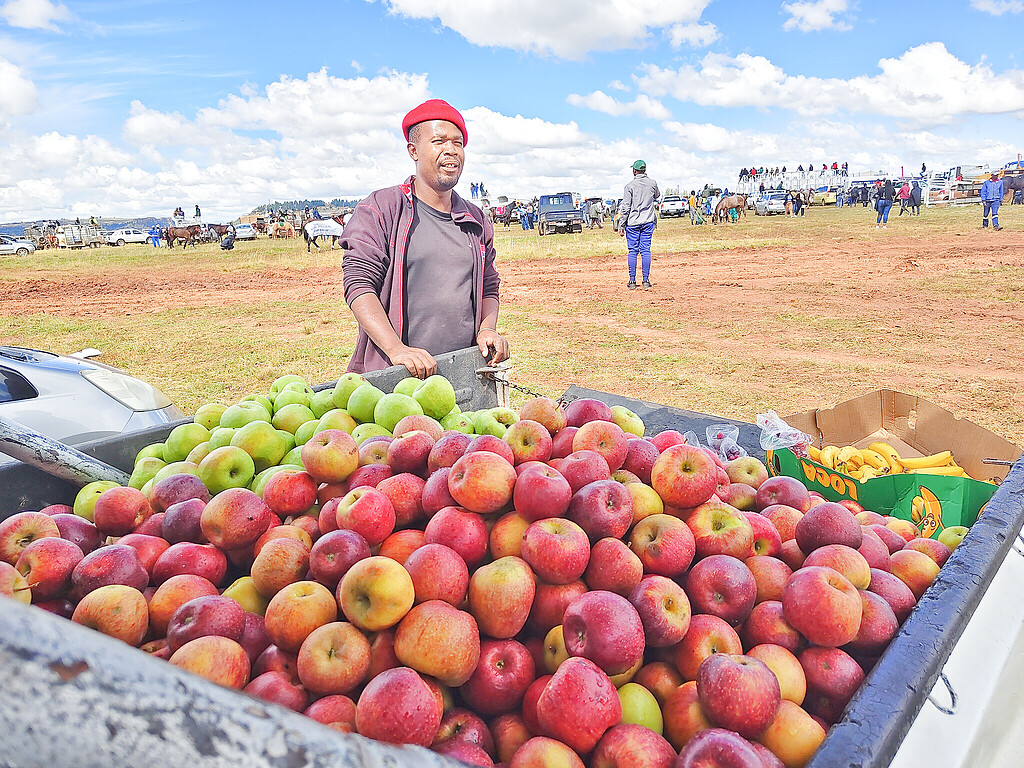
Tankiso Lebenya sells apples and bananas from the back of a bakkie.
It was Tankiso Lebenya’s first time trading at the race. Based in Maputsoe, he sells fruit from farms in Bethlehem (Free State), across the border in South Africa.
“In just two hours, I have made more than M300,” he says. “That doesn’t happen in town.”
He has shifted from packaged fruits that he sells in Maputsoe to selling singles, adapting to the needs of racegoers.
“At this rate, I will go home with more than M1,000.”
He had to restock the fruit in South Africa and only arrived at 10am.
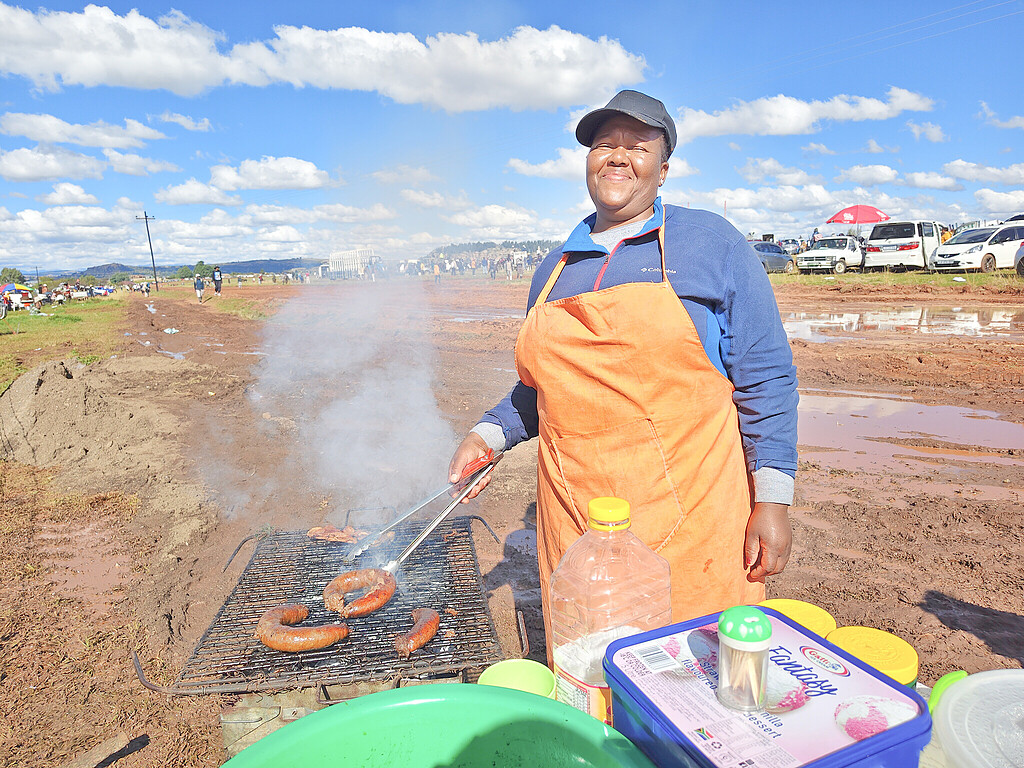
Masake Mahanetsa, grills sausages beside the track.
For Masake Mahanetsa from Hotse Lisemeng, the race is both an opportunity and a challenge.
She arrived early but had to carry her supplies nearly a kilometre due to muddy roads. This year, for the first time, vendors have to pay for selling space, up to M500 for premium spots. That’s a lot for her, so she paid M50 for a less crowded spot.
Still, it’s worth it. She can make up to M2,000, which is ten times what she earns selling near her village clinic. “This race helps me pay for my daughter’s school fees, school bus and lunchbox,” she says.
Beyond the stalls, the race draws competitors from across Lesotho and neighbouring South African provinces: Mpumalanga, Free State, KwaZulu-Natal and the Eastern Cape.
And they’re off …
“I’m George Shabalala,” says the chairperson of Imizamo Yabakibeli Rural Horse Riders from Mpumalanga. “We came here with four horses, two in B grade and two in the main race.”
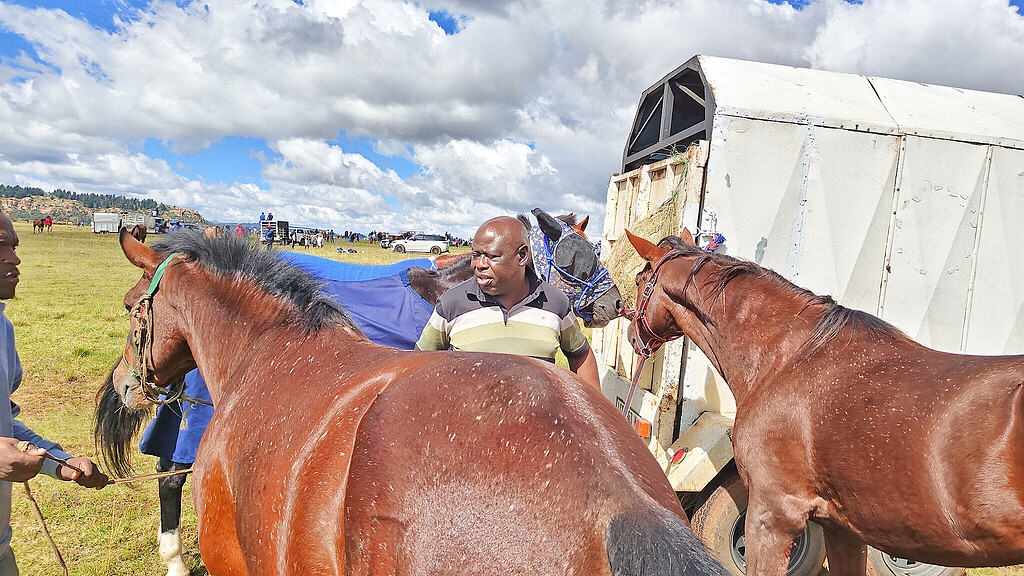
George Shabalala oversees final preparations of his horses before they race.
Returning for a second year, Shabalala says they came better prepared and brought their champions from Mpumalanga. “We are here for position one,” he says confidently.
Later his horses came second and third in the races they ran. “We are happy, even if we wanted more,” he says.
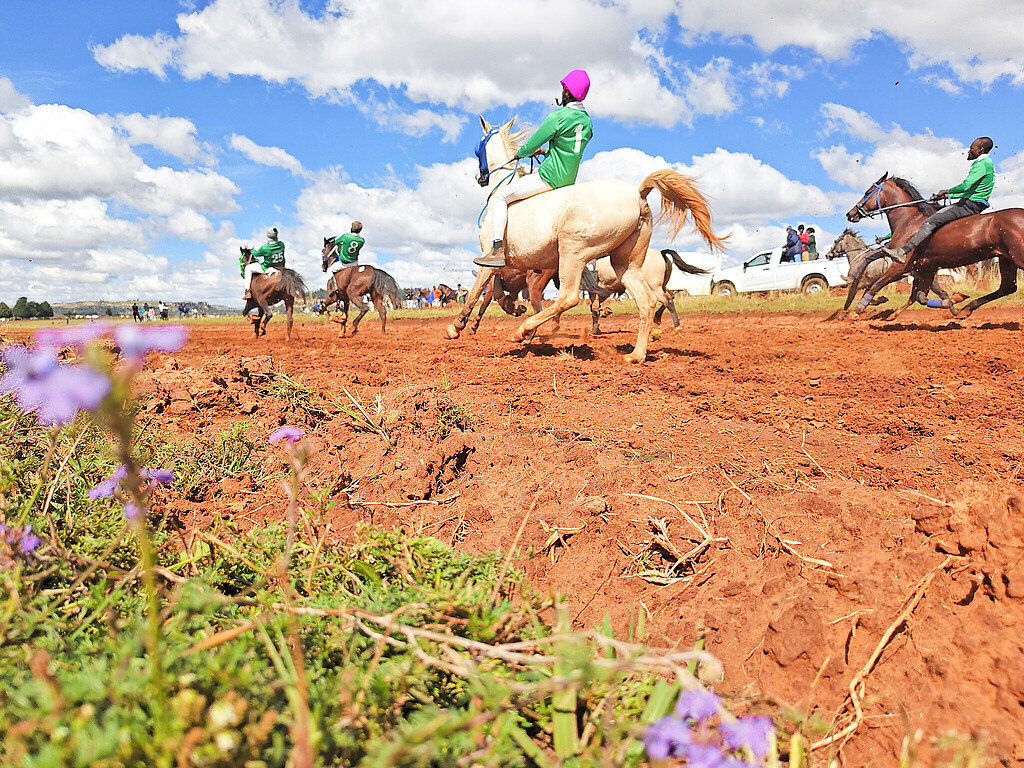
The Grade E race, which was won by Pilato, owned by Masupha Ramoloko.
Local horse owners invest heavily in the sport.
“I brought 11 horses here,” says Masupha Ramoloko from Mokhotlong who also has over 40 more horses at home. “Eight of the 11 are competing.”
One of his horses took first place in E Grade.
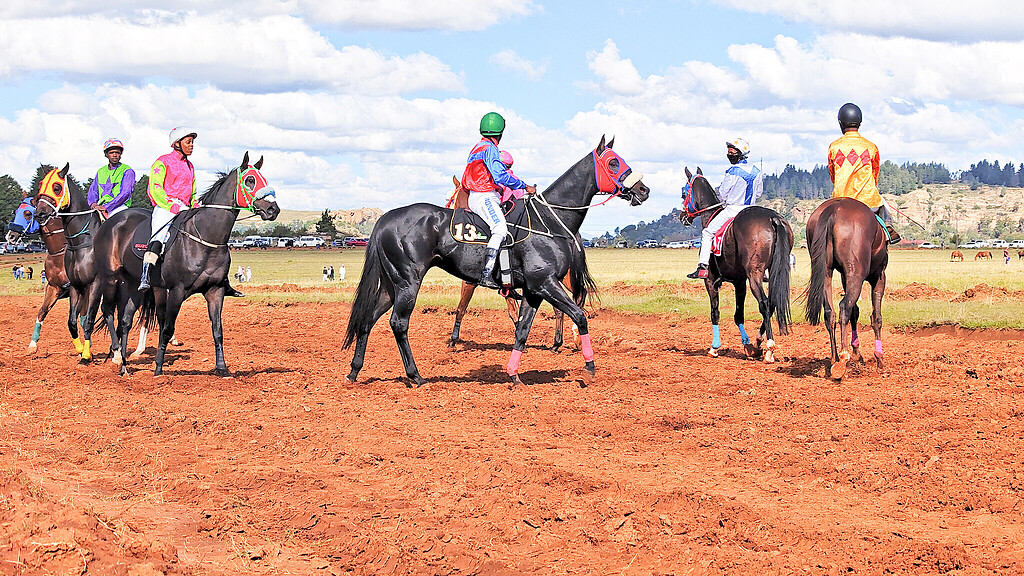
Gedion Lesia (green helmet) on Shangaraii joins other riders in the final moments before the start of the 12-mile race.
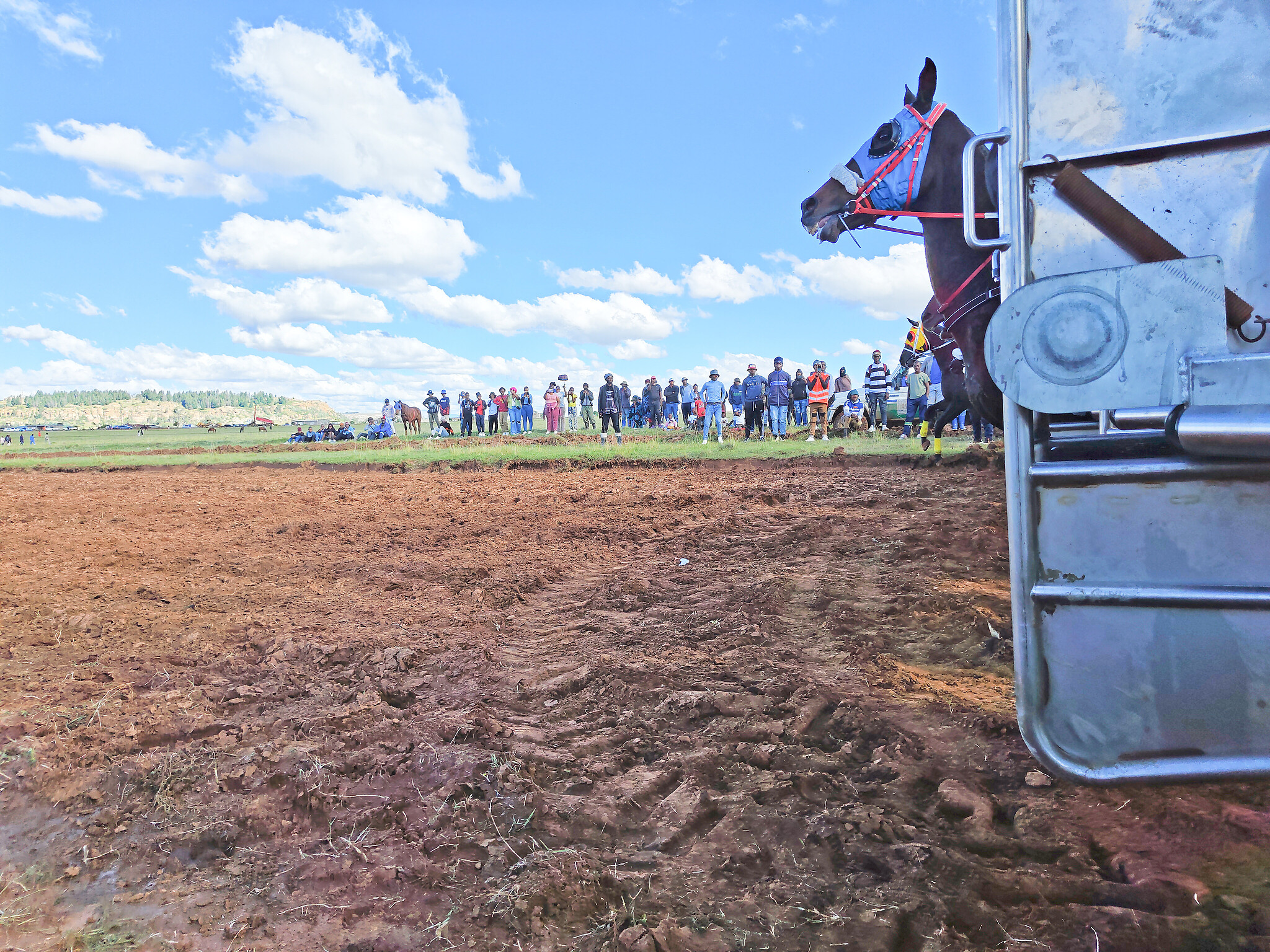
The gates open and the race begins, with spectators lining the track as horses surge forward at the start of the 12-mile race.
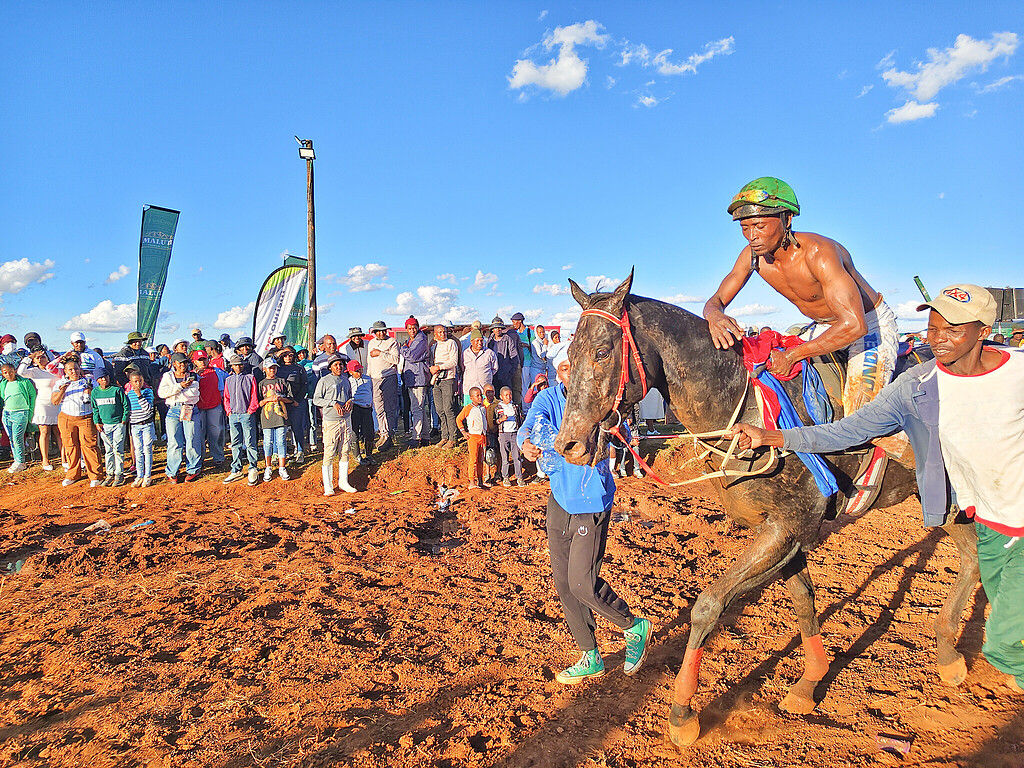
Winner of both the 12-mile and 18-mile races, sweat-soaked and triumphant Gedion Lesia, is admired by onlookers at the end of the 18-mile race.
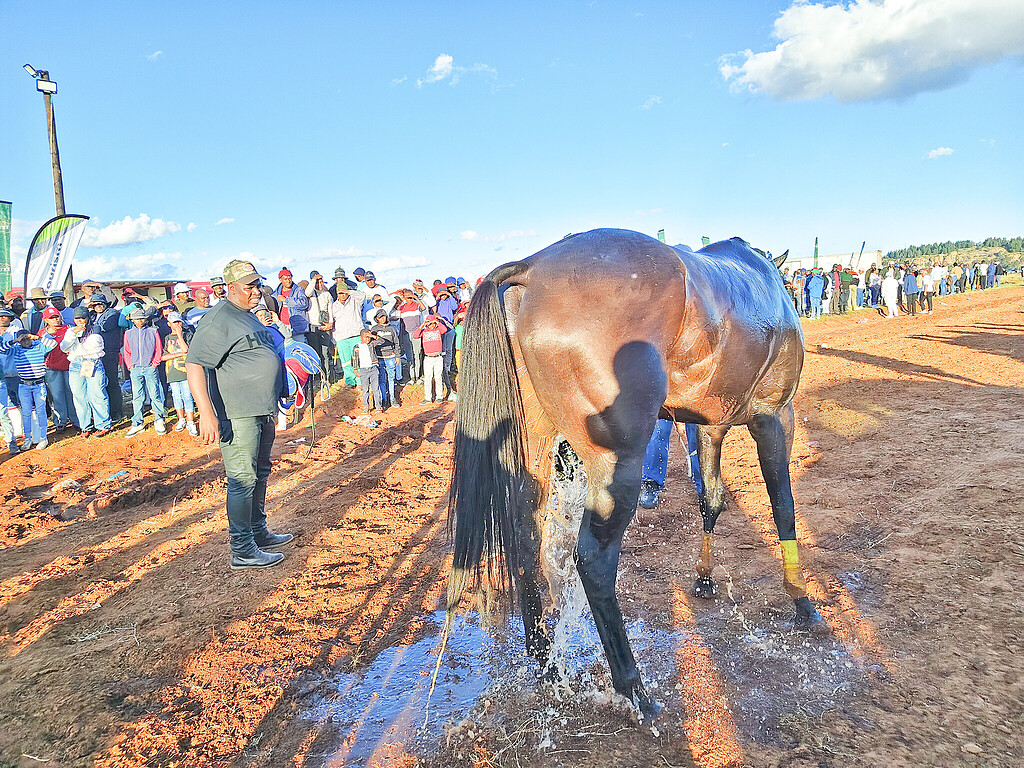
Exhaustion shows at the finish, as one of the horses from Eastern Cape is cooled down.
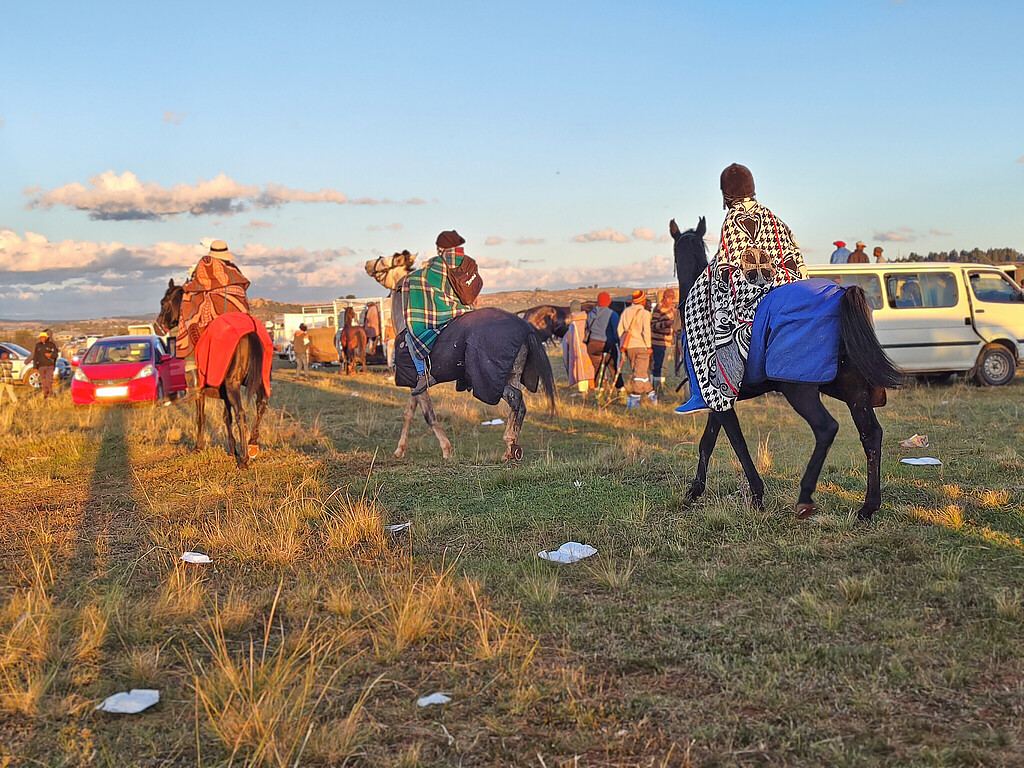
Wrapped in Basotho blankets, riders head home at sunset, their horses stepping slowly across the veld. Unlike many South African horses transported by vehicles, these Basotho horses carry their jockeys to and from the race.
Support independent journalism
Donate using Payfast

Don't miss out on the latest news
We respect your privacy, and promise we won't spam you.
Next: Pit toilets: Eastern Cape parents take matters into their own hands
Previous: Fisantekraal community plant indigenous trees to rehabilitate river
© 2026 GroundUp. This article is published under the GroundUp Republication Licence Version 1.0. Email [email protected] to request permission to republish.