
Life as an asylum seeker in SA’s broken immigration system
For years seeking asylum has been near impossible
 Add GroundUp on Google
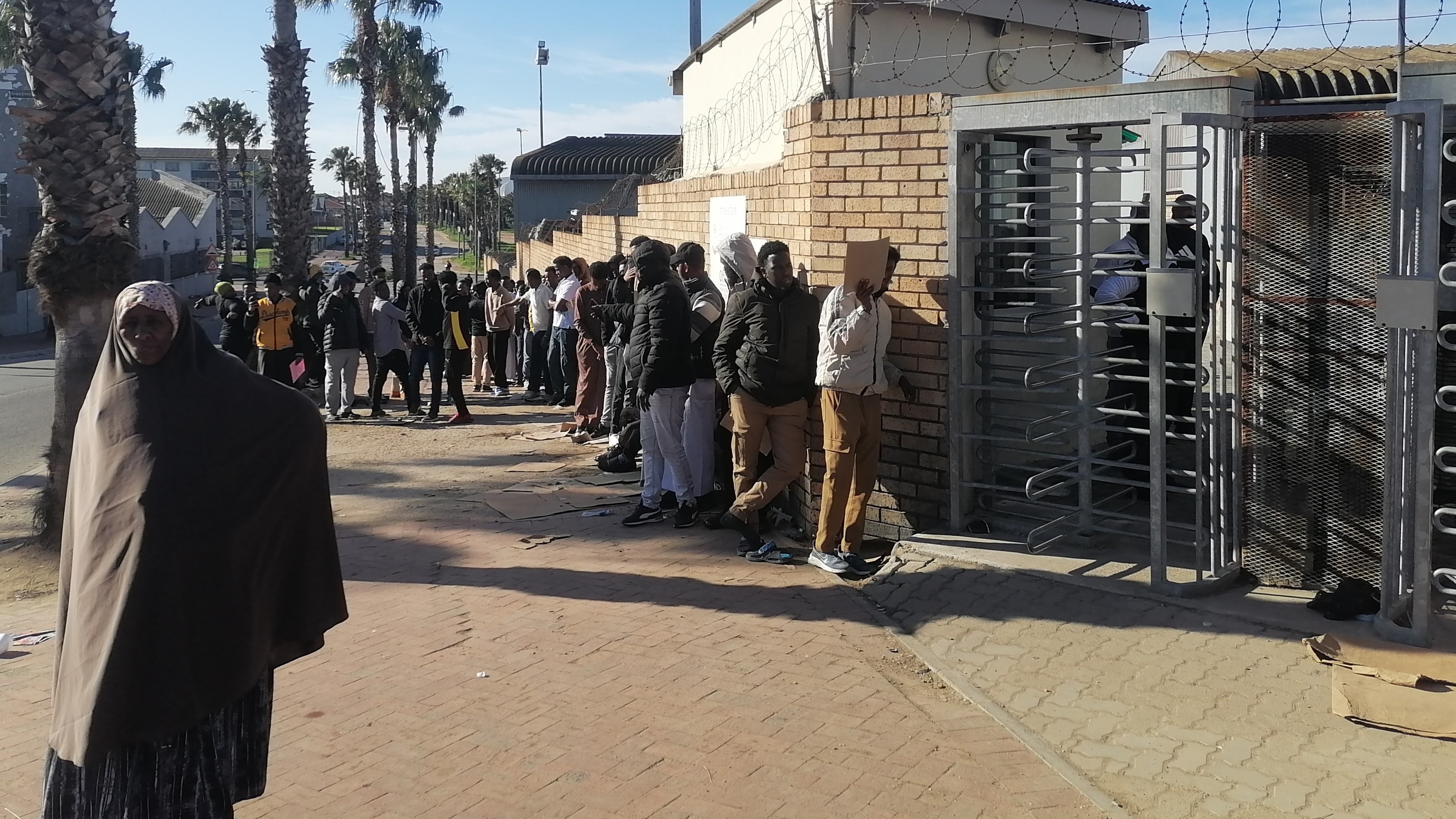
Asylum seekers queue outside the Refugee Reception Office in Gqeberha in October, shortly after Home Affairs announced offices would reopen. The decision was reversed days later after anti-immigrant protests and violence. Photo: Joseph Chirume
Coming from Zimbabwe was like jumping from the frying pan into the fire, said Brian, who asked that his surname not be published.
He came to South Africa in 2022. He was earning R8,000 a month working as a bartender in Summerstrand, Gqeberha, but in June, in the wake of the anti-immigrant group March and March’s campaign, his boss demanded a valid permit. He has been unemployed since. He lives in Kamvelihle with his wife, who works two days a week, earning about R2,400 a month.
Brian believes he qualifies for asylum because he “ran away from torture and possible arrest by Zimbabwean government officials who were grabbing land from legally resettled farmers”.
“They don’t give reasons for the evictions, nor do they have court orders. Settlers are not given notice or time to prepare to leave. Senior politicians take the land for themselves. They use the army to beat people and demolish houses,” Brian said.
He said those who resist are imprisoned on trumped-up charges.
In practice, there is no legal way for Brian to live and work in the country, other than to claim asylum and attempt to become a refugee. Work visas are aimed at skilled workers: a general work visa requires the employer to show that no suitably qualified South African citizen or permanent resident could be found for the job, and a critical skills visa is limited to occupations on a government list. Bartender is not one of them.
Once Brian applies for asylum, he should be issued with an asylum seeker permit that lets him stay in the country until, ultimately, a refugee status determination officer at Home Affairs decides whether he has a well-founded fear of being persecuted in Zimbabwe based on race, tribe, religion, gender, nationality, political opinion, or membership of a particular social group; or whether he fled events seriously disturbing public order.
But he hasn’t even been able to get to that point. The asylum system has effectively been closed to new applicants since January 2020, mainly because of amendments to the Refugees Act that allowed immigration officers to turn away asylum seekers who did not at the time have papers to be in the country.
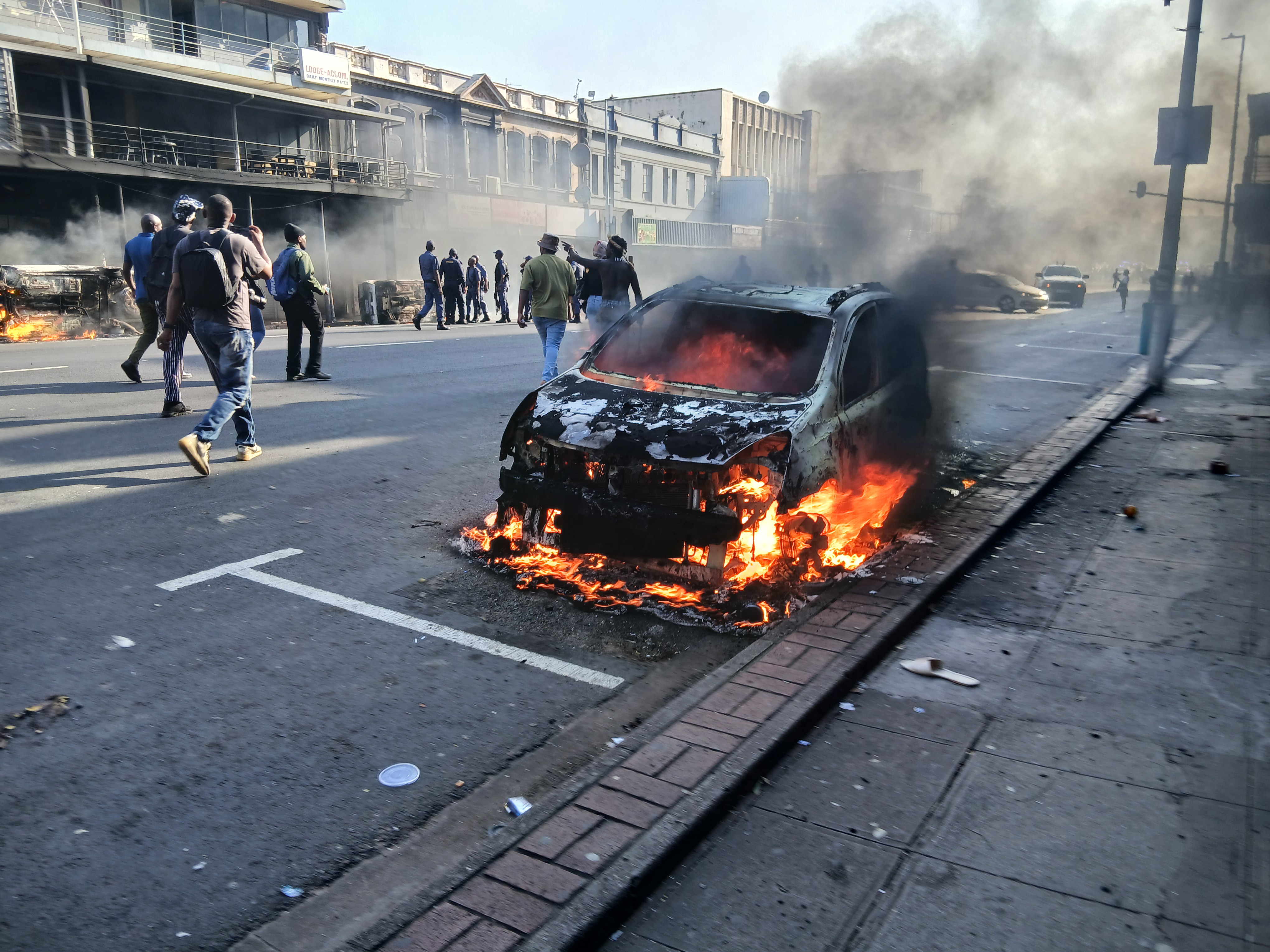
A decision by Home Affairs to reopen the asylum system in October was met with violent protest in Durban. Several cars were torched. Archive photo: Tsoanelo Sefoloko
João fled political violence in Mozambique after the October 2024 election. He now lives in Motherwell, Gqeberha, and works with a team of fellow Mozambicans painting houses and churches.
“I was a teacher in Tete province before the unrest, earning a decent salary and living in a good home. My children attended good schools. But all that ended after violence broke out due to the general elections,” he told GroundUp.
“Several houses, businesses and hospitals were burnt. Hundreds were killed. Some are still missing. So I left my wife there and travelled to South Africa using a valid passport.”
Mozambicans can enter South Africa for up to 30 days without a visa.
“When the days expired, I tried to get an asylum document but failed because Refugee Reception Offices were closed.”
He believes the recent harassment of asylum seekers is related to the upcoming local government elections on 4 November.
“It is ironic that I ran away from my country because of violence caused by an election, and I am now facing the same violence in South Africa because of elections,” João said.
“We try to explain that we are not taking the jobs of South Africans because we do piece jobs. We even train locals how to paint, but the hatred seems to worsen.”
Because the country’s five refugee reception offices are closed to newcomers, asylum seekers like João and Brian can’t get papers and face arrest and deportation.
In September 2024, the Scalabrini Centre of Cape Town won an interim order stopping the government from deporting people who had said they intended to apply for asylum, even if they didn’t have a permit. And on 7 July this year, the Constitutional Court confirmed a 2025 High Court ruling that the new laws were unconstitutional as they risked sending people back to danger in their countries.
Brian carries with him a “letter of intention to apply for asylum”, a document created by Scalabrini that summarises the court orders, which he can show to government officials if he is threatened with arrest and deportation.
A decision by the Department of Home Affairs on 28 September to comply with the court order and open refugee reception offices led to long queues across the country. Anti-immigrant protesters, some organised by March and March and Operation Dudula, harassed and assaulted asylum seekers. About 25 people have been charged over the violence in Durban.
Online posts falsely claimed the 7 July ConCourt ruling gave asylum seekers citizenship or the vote. Home Affairs called this an “apparent coordinated disinformation campaign”, and an analysis of about 98,000 posts on X traced the earliest high-engagement posts to March and March leader Jacinta Ngobese-Zuma.
Home Affairs then shut the offices again, citing “unintended consequences”.
GroundUp spoke to a man from Somalia who asked not to be named. He arrived in 2024 after living for years in a refugee camp in Kenya.
“I could have continued to reside in Kenya, where most Somali refugees live, but the situation in the camps is little different from the war we ran away from in Somalia,” he said.
“Factional fights always erupt. There is hunger and inadequate services. So we travelled as a group to South Africa through Tanzania and Mozambique, where we risked getting caught in war.”
He arrived in Gqeberha with the help of family members who had settled there earlier.
“It is not easy to live in South Africa either because of the high crime rate and rising xenophobia. South Africa also has one of the highest asylum rejection rates in the world,” he said.
A 2019 Amnesty International report found an asylum rejection rate of 96%.
“But the pull factor is that in South Africa asylum seekers live in communities with locals and look after themselves. Unlike in Kenya, you can rise economically here if you work hard,” he said.
Sharon Ekambaram, head of Lawyers for Human Rights’ Refugee and Migrant Rights Programme, said all three people we spoke to have a case for refugee protection. Refugee status determination officers must consider various factors including the relevant country of origin information published by the UN refugee agency (UNHCR) and the period during which the person fled their country.
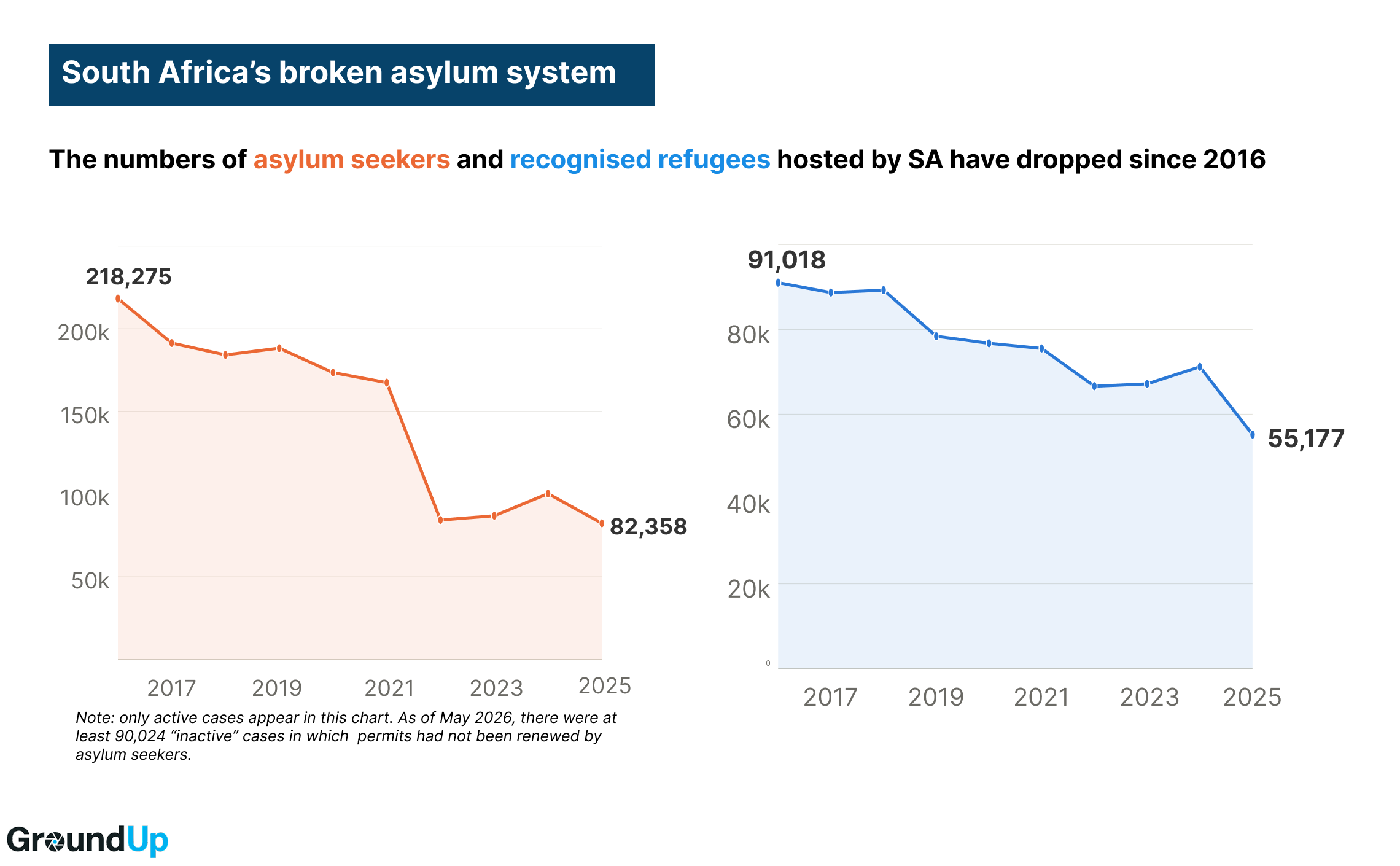
But South Africa has a high rejection rate – close to 100% at Musina, which is on the Zimbabwean border – and the number of recognised refugees in South Africa has dropped. In 2016, South Africa hosted 91,018 recognised refugees and 218,275 asylum seekers. In 2025, there were 55,177 recognised refugees and 82,358 asylum seekers, according to the UNHCR. This is despite an increase in displacement across the African continent, said Ekambaram.
Nasir Mohamed Moalin, who leads the Somali Association of South Africa, said his organisation helps look after new arrivals who have no shelter or food.
“We try to register them with Home Affairs as soon as they arrive. We face challenges because the refugee offices have been closed for a long time. We often get arrested and pay hefty fines if found housing people without valid papers,” he said.
“Do we have to throw them into the streets when we know they qualify for asylum under UN regulations, of which South Africa is a signatory? These people are coming from war zones.”
Moalin said the recent forced closure of Refugee Reception Offices by vigilante groups was concerning.
Justice minister Mmamoloko Kubayi announced on 11 October that the Department of Home Affairs aims to launch an online application system on 10 November. Asylum seekers will be able to book appointments online for a physical appointment at a refugee reception office.
“Assisted registration will be available at every Refugee Reception Office and, on request, for a person in police or immigration detention through officials, legal representatives and civil society partners,” said Kubayi.
Kubayi said an appointment receipt would protect asylum seekers from arrest. She said border management officials, police and other law enforcement authorities will be informed that someone who holds a receipt should not be arrested or deported for being in the country illegally pending a final determination.
Support independent journalism
Donate using Payfast

Don't miss out on the latest news
We respect your privacy, and promise we won't spam you.
© 2026 GroundUp. This article is published under the GroundUp Republication Licence Version 1.0. Email [email protected] to request permission to republish.