
Rural community wins court battle for access road
Ehesini’s impassable road in the Eastern Cape cut off villagers, left children struggling to access schools and ambulances unable to reach villages
 Add GroundUp on Google
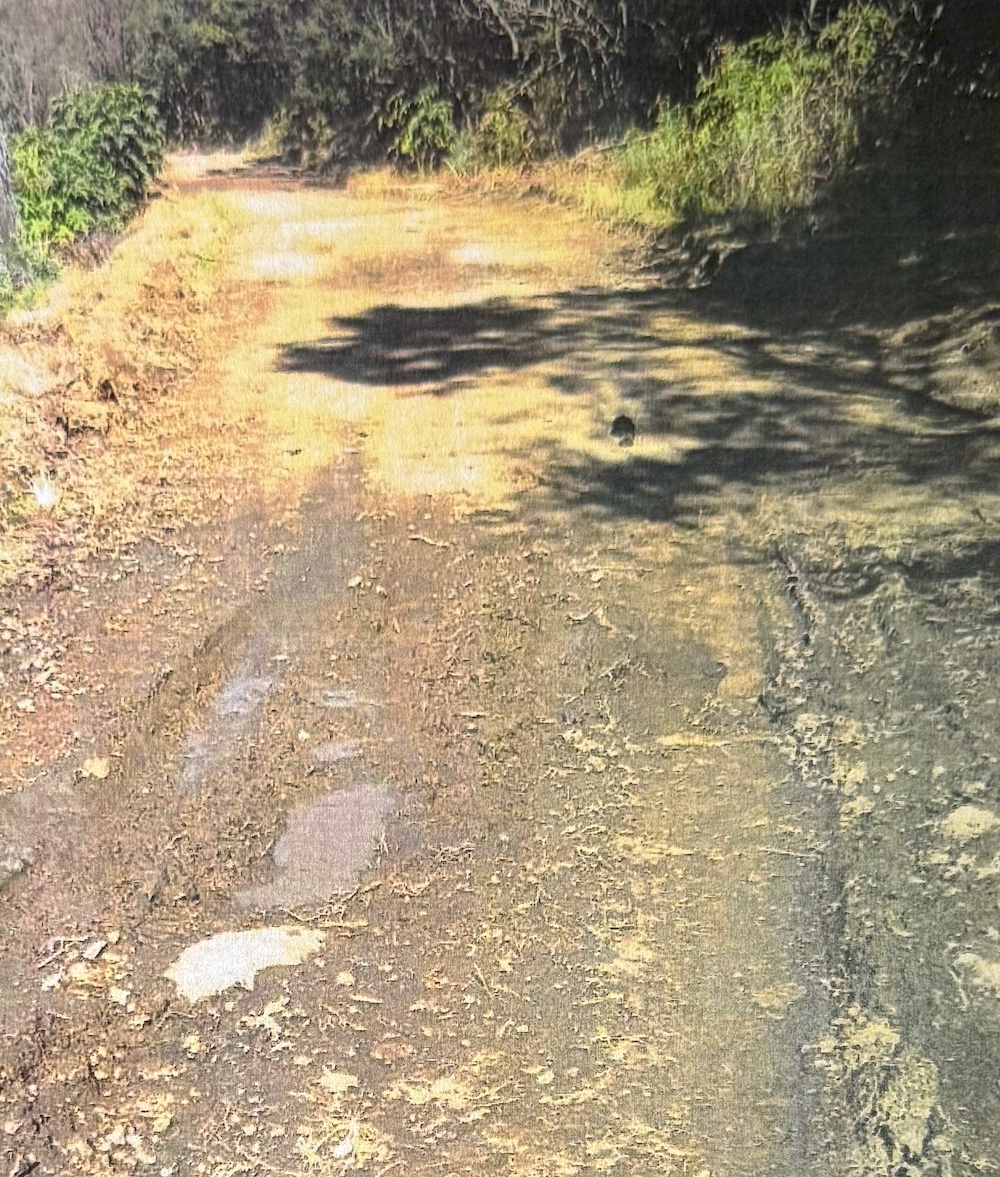
“It is no longer proper to call it a road as it is no longer functional,” said Nomtha Thwane in her affidavit, describing this 10km stretch of road to Ehesini in the Eastern Cape, 50kms from Ngcobo. Photo taken from court documents.
- The Eastern Cape High Court has ordered the Dr AB Xuma Municipality to fix a 10km access road for the Ehesini community.
- The court rejected the municipality’s reliance on budget constraints. It said belated patching did not cure years of constitutional rights violations.
- Residents say they walk kilometres to a neighbouring village with usable roads and once tried to repair the road themselves to access schools, clinics, jobs and services.

A rural Eastern Cape community has won a court case, compelling the Dr AB Xuma Local Municipality to build them a road so they can access schools, clinics and jobs at the nearest town.
The residents of Ehesini say the current “road” is little more than a potholed footpath, which they have had to endure since before the dawn of democracy.
On 18 August in the Eastern Cape High Court in Mthatha, Judge Nolubabalo Cengani-Mbakaza (acting judge at the time she heard the matter) granted an order declaring that the municipality and municipal manager had breached their constitutional and statutory obligations by failing to reasonably maintain, repair and resurface Ehesini’s access road.
The court ordered the municipality to assess and fix the road, budget for ongoing maintenance and report back within 90 days.
The judge also ordered that all rehabilitation work be completed within 180 days, and that the municipality file a second report to the court within 200 days.
The municipality was ordered to pay the costs of the application.
In her affidavit, Nomtha Thwane, who describes herself as the headwoman of Ehesini and KwaNomyayi Locality Upper Mnyolo Administrative area, said the community was fed up with the situation.
She said the 10km road was their only access but even bakkies struggled. In the summer rains, residents had no choice but to walk kilometres to a village with better roads.
“It is no longer proper to call it a road,” she said.
Apart from potholes and dongas, which one could not dodge without hitting another pothole, the road was so slippery it was in places better to drive “off-road” than on it. While this was dangerous, it was less treacherous.
She said the community had “limited amenities and had to access Ngcobo town (55kms away) for government and other services”.
According to her affidavit, children could not access schools on certain days, ambulances could not get to the villages, and police did not respond to emergency calls when it was raining. People struggled to get to work, do their shopping and access government services.
At one stage, the community attempted to fix the road themselves using their own money. “Our lives are literally being cut off from sources of income and other amenities and that is unbearable,” Thwane said.
She said their pleas were largely ignored. In January 2024, the community gave statutory notice of their intention to go to court. In February, the municipality asked them to hold off and undertook to revert by March. But it never did.
The municipality opposed the application, saying the community had not exhausted its internal remedies and had failed to participate in its consultation process for an Integrated Development Plan.
It also relied on budgetary constraints and service delivery backlogs.
The council claimed that, since the application had been launched, it had commenced work on the road.
The judge said belated patching, which took place in April and May 2024, did not cure the years of breaching the community’s rights. Instead, it confirmed their rights were breached and the municipality was able to make funds available.
Judge Cengani-Mbakaza said, “It is inconceivable that a community in such desperate circumstances would refuse an invitation [by the municipality] or even fail to engage on an issue so central to its life.”
“The converse is true. The applicants have been ignored despite their urgent need.”
The judge said no evidence had been placed before the court regarding budgetary constraints or the extent of any backlog.
“The respondents have given no undertaking that they will continue to maintain the road. This fact, including the very fact that they only acted after the launching of this application, demonstrates a real risk that the breach will recur.
“Absent an order of this court, the community will be left at the mercy of ad hoc reactive patching only when litigation is threatened,” said Cengani-Mbakaza.
Support independent journalism
Donate using Payfast

Don't miss out on the latest news
We respect your privacy, and promise we won't spam you.
Next: March and March “aftershock” floods Joburg court in asylum cases
Previous: Soweto housing fraud case back in court
© 2026 GroundUp. This article is published under the GroundUp Republication Licence Version 1.0. Email [email protected] to request permission to republish.