
The mystery of the Chinese trawlers arrested at sea
Four offences seem to have been committed but only one fine was imposed by the fisheries department
 Add GroundUp on Google
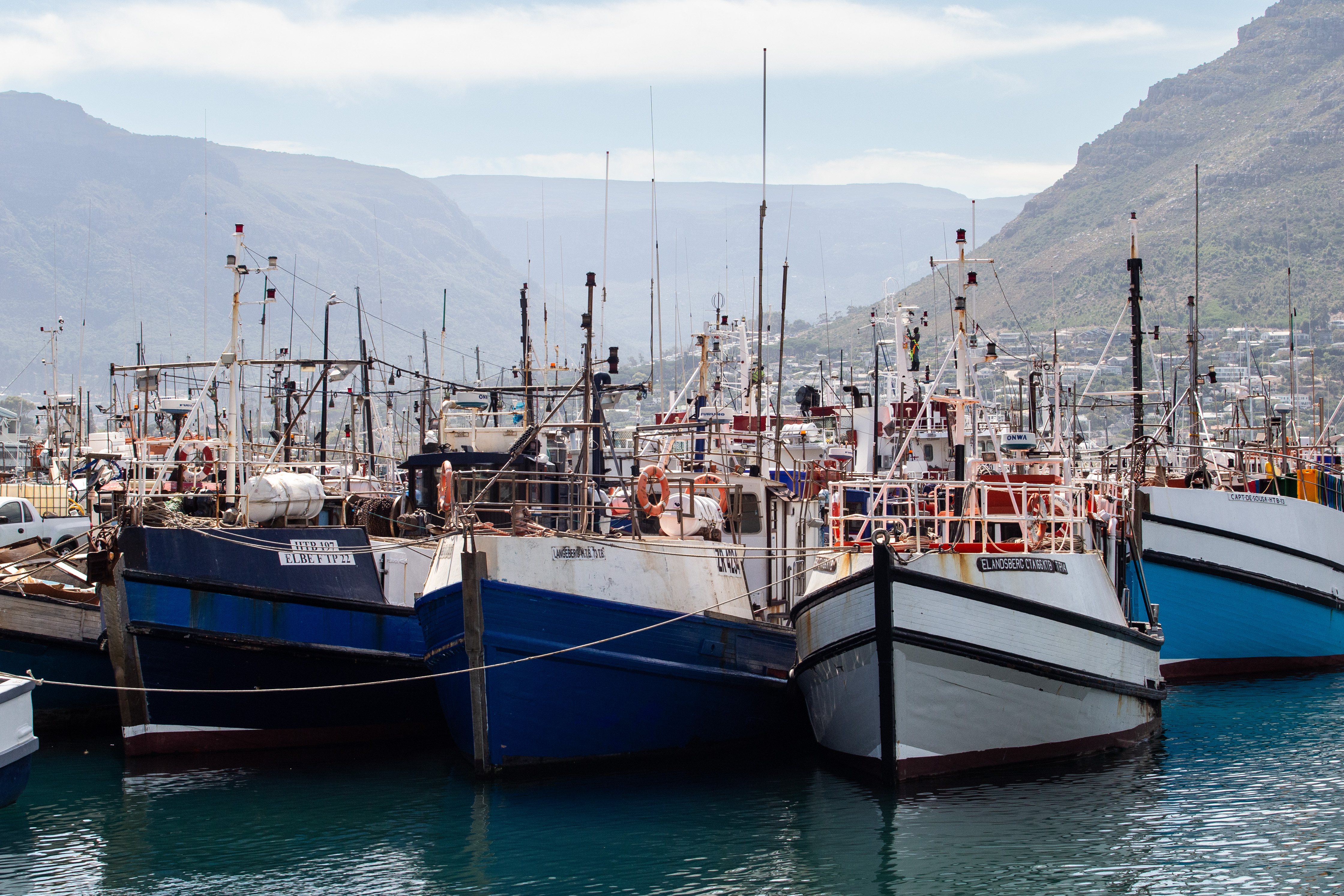
Foreign trawlers compete with South African fishing, often illegally. Archive photo: Ashraf Hendricks
- A Chinese fishing company was fined R400,000 last month when four of its trawlers violated their conditions of passage through South African waters.
- But the vessels seem to have committed several other offences, including apparently fishing for days in Algoa Bay before they were arrested.
- One trawler also seems to have engaged in fishing activity in SA waters after being fined.
- Researchers say not enough is being done to protect our waters from foreign and local illegal fishing.
Four Chinese-flagged fishing trawlers were fined by South African authorities last month for contravening their authorisation to sail through national waters. But that is only one of several offences the trawlers seem to have committed.
All four vessels also appear to have fished in Algoa Bay before being fined and released by authorities. Yet the Department of Forestry, Fisheries and the Environment (DFFE) says no fish were found in any of their holds.
One of the vessels appeared to also have fished off the west coast, on their way out of South African waters after being released.
On 12 March the DFFE stated that Chinese-flagged trawlers Zhongyang 231, Zhongyang 232, Zhongyang 233, and Zhongyang 239 had been “placed under guard by SAPS Tactical Team members and Fishery Control Officers at the Port of Cape Town”.
This was “while compliance processes were finalised between DFFE and the vessel owner, Shenzhen Shuiwan Pelagic Fisheries”.

In response to questions from GroundUp, DFFE spokesperson Zolile Nqayi said the vessels — all 46-metre fishing trawlers — had applied for, and been granted, “innocent passage” through South Africa’s Exclusive Economic Zone (EEZ) on 23 February, with an exit date of 3 March.
According to a statement by Minister Willie Aucamp, the vessels were detected on 27 February about 12 nautical miles off the KwaZulu-Natal coast. They were repeatedly switching off their Automatic Identification System (a required tracking device), which is illegal.
“Based on the available evidence, there were reasonable grounds to suspect non-compliance with the Marine Living Resources Act,” stated Aucamp.
“The Masters of the vessels were charged and an administrative penalty of R400,000 was imposed. The vessel owner subsequently paid the fine, after which the vessels were released and have departed South African waters,” stated Aucamp.
Nqayi said the violation was entering internal waters, which was not part of their “innocent passage” authorisation.
Nqayi said the trawlers had been intercepted at about 6.30pm on 3 March between 15 and 20 nautical miles off Hout Bay and were under guard from 3 to 5 March. He said the vessels were inspected and no fish were found on board.
Fishing activity
But the publicly accessible Global Fishing Watch site, run as an international non-profit organisation that tracks fishing activity, shows all four vessels had spent almost four days in what what appeared to be fishing activity in Algoa Bay, from 27 February to 2 March.
Additionally, on 28 February, Zhongyang 231 and Zhongyang 233 had what is termed an “encounter event” from midnight until 8am. These usually indicate transshipments, when cargo or fuel is transferred from one ship to another. Authorisation for transshipments, which is highly regulated, is normally required within an EEZ and a violation carries a fine of up to R2-million.
Furthermore, the Global Fishing Watch tracker shows that after Zhongyang 231 was released from the Port of Cape Town on 5 March, it was engaged in apparent fishing activity for three hours on 6 March before exiting South African waters in the early morning of 7 March, along with the other three vessels.
The DFFE has its own vessel surveillance tool, which it states “serves as a cornerstone of South Africa’s maritime security and environmental protection strategies … empowering South Africa to take full control of its maritime domain.” The tool is reserved for government departments such as law enforcement and security agencies, and “approved stakeholders”.
But neither the DFFE’s statement, nor its presentation to Parliament on 17 March after the vessels had left South African waters, made any mention of apparent fishing activity or transshipment, nor that the Zhongyang 231 appeared to have engaged in apparent fishing activity after being fined and released.
When Parliamentary Portfolio Committee chairperson Nqabisa Gantsho asked whether the R400,000 penalty was an effective deterrent, or was simply treated by vessel owners as “a cost of doing business”, DFFE director general Nomfundo Tshabalala said the fine was considered sufficient, as no repeat offences had been observed “to date”.
Only one recorded incident in ten years
There was a spate of interceptions and prosecutions of foreign vessels operating illegally in South Africa’s EEZ in 2016.
In May that year nine Chinese trawlers were intercepted but then split in different directions. One of them, the Lu Huang Yuan Yu 186, was caught, found guilty of entering the EEZ without a valid permit and fined R200,000.
In June 2016 three Chinese-flagged trawlers were given fines totalling R1.95-million for not having the necessary fishing gear permits. In September that year the Taiwanese trawler Chin Jen Wen was arrested on suspicion of not being authorised to be in national waters, and found to be in contravention of prevention of pollution regulations.
But a search of DFFE statements shows only one incident of foreign vessels being detained for entering the EEZ without permission over the next ten years. In April 2020, six Chinese vessels were detained and fined, but the fine amount is not stated.
This is despite an Institute for Security Studies report in 2020 noting “a drastic increase in illegal activities and an increase in the number of tip-offs by the public for the financial year 2017/18”.
Local vessels also guilty
“Every now and then (the DFFE) do these operations and say we’re doing our job, but they’re not,” says Mossel Bay-based Oceans Research director Enrico Gennari.
Gennari said not only foreign vessels but also South African fishing boats were routinely violating regulations, including fishing in Marine Protected Areas (MPAs).
He said Oceans Research had routinely tracked South African fishing vessels in multiple MPAs, with one vessel seen operating in an MPA at least 30 times.
In May 2019 the White Rose, operated by Unathi-Wena Fishing company, was found fishing in the De Hoop MPA. The company was fined R150,000 plus R2-million, of which R1-million was suspended, according to a DFFE statement released when the company was sentenced in 2024.
Gennari said on the few occasions vessels were caught, the fines handed out were wholly insufficient and generally a fraction of the worth of their catch. He suggested foreign vessels that had been fined should also be closely monitored until they had left the EEZ, and be banned from coming back, and local vessels should be stripped of their permits.
With platforms available using a combination of AI, Automatic Identification Systems, and satellite imagery to offer high resolution, real time tracking and monitoring of vessels, he said the DFFE and related enforcement agencies should be able to monitor illegal fishing operations.
He said there is a lot of support available to the government to combat illegal fishing, but “it’s about willingness”.
Support independent journalism
Donate using Payfast

Don't miss out on the latest news
We respect your privacy, and promise we won't spam you.
Next: New centre to support whistleblowers
Previous: Women weavers: The backbone of Lesotho’s textile legacy
© 2026 GroundUp. This article is published under the GroundUp Republication Licence Version 1.0. Email [email protected] to request permission to republish.