
Why proudly South African clothes are being made in “sweatshops”
92% of clothing manufacturers in Newcastle do not comply with Bargaining Council rules, says the council’s lawyer
 Add GroundUp on Google
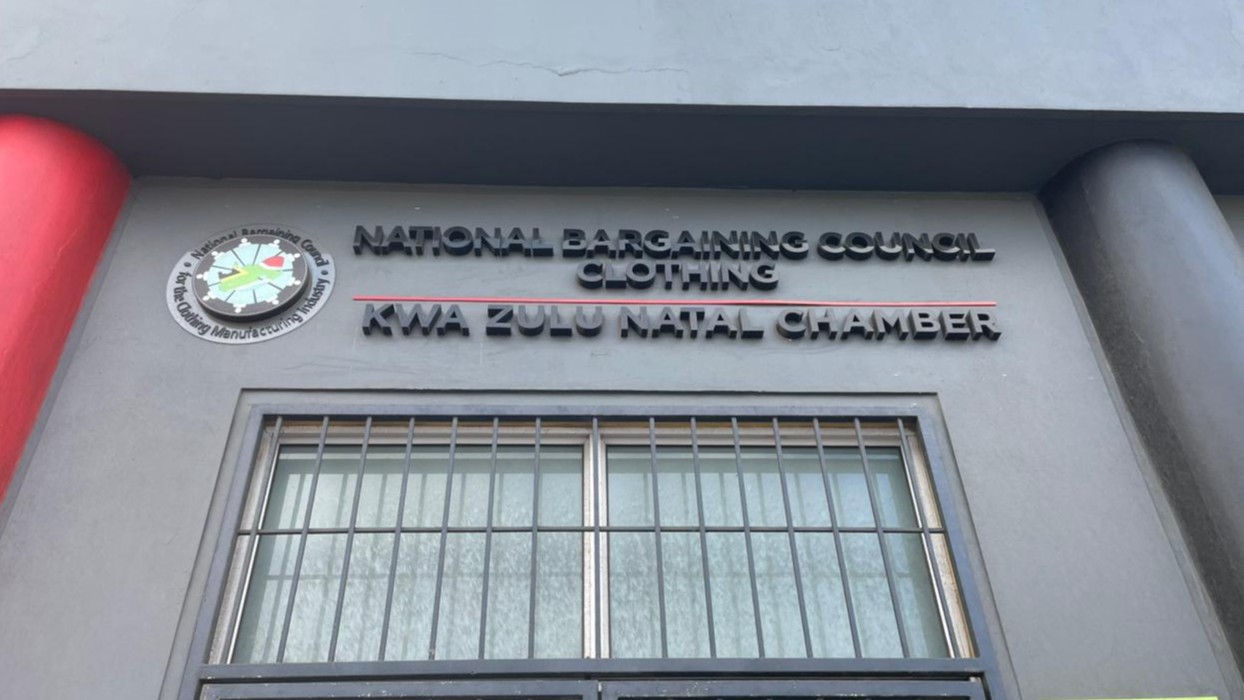
The National Bargaining Council for the Clothing Manufacturing Industry has brought two court cases against design houses it alleges to be using non-compliant sweatshops to manufacture clothes in KwaZulu-Natal. Photo: Joseph Bracken
February 6 this year was a disruptive day for South Africa’s clothing sector.
In Pietermaritzburg, Chantal Naidoo, in her capacity as Secretary General of the National Bargaining Council for the Clothing Manufacturing Industry, filed an affidavit with the high court, alleging that a company called Drake Clothing has been using sweatshops, exploiting workers and paying below minimum wage.
Naidoo wants the company to be liquidated. The case also names several top South African clothing retailers that have placed orders with Drake, including Mr Price Group, Pep, and The Foschini Group, as respondents. One legal expert familiar with the case described it as “a bit ambitious” because it seeks the dissolution of the company rather than improved compliance. The case sent waves of concern through the sector. GroundUp reported on this, as well as on Drake’s rejection of the allegations.
On the same day, 170 kilometres away in the clothing hub of Newcastle, Patriotic Alliance Member of Parliament Juliet Basson was on a parliamentary oversight visit. She posted a video from inside what she said was a “Sjinese [Chinese] sweatshop”, where she claimed workers are paid R8 an hour for 19-hour shifts.
“Most people in South Africa assume clothes produced in this way are destined for the informal market,” said Basson. But she picked up several items with Pick n Pay and Jet labels on them. “Factories like this one,” she said, “are in high demand because our retailers are buying from them. Pick n Pay is buying from them.” Basson later told GroundUp that the factory in question “was the best of all those we visited”, and that the owner “was the most open to talking with us, explaining how everything works”. The damage was done, however. The video went viral.

In some of the other factories inspected that day, garments bearing labels from other major retailers, including Mr Price Group, Pepkor and Ackermans, were found.
The MPs, accompanying inspectors from the departments of labour and home affairs, noted several violations, including undocumented workers living on site in squalid conditions, unregistered steam generators and widespread failure to comply with the Unemployment Insurance Act and the Compensation for Occupational Injuries and Diseases Act.
Lawyer for the bargaining council, Richard Erasmus, told GroundUp that 300 clothing manufacturers are operating in Newcastle, some independently and others as cooperatives, and that 92% of these are non-compliant, meaning they are not in possession of a Certificate of Compliance from the bargaining council. GroundUp has not been able to independently verify these figures.
Department of Labour and Employment spokesperson Teboho Thejane told GroundUp that the department has, at a ministerial level, only taken note of non-compliance in Newcastle’s Clothing Sector from 2024. But during inspections by the bargaining council before 2024, most employers were found to be non-compliant, Thejane said.
Several business owners were arrested in the course of the parliamentary oversight inspections, and two were reportedly charged with immigration-related offences. One factory, Qing Xiu Clothing, was issued a prohibition notice, effectively shutting down its operations with immediate effect.
Labour minister Nomakhosazana Meth later announced that the department was claiming R6-million from six Newcastle textile companies, for amounts they owed to the Unemployment Insurance Fund and the Compensation Fund.
Retailers depend on these factories
The two events – the case against Drake Clothing and the factory inspections in Newcastle – are connected in the sense that Drake, and most of the other suppliers of clothing to South Africa’s major retailers, place orders with Newcastle factories.
“Most of the local manufacturing capacity for simple garments like T-shirts is based in Newcastle, I don’t think you will find a retailer that isn’t stocking clothes made here,” said Ferdie Alberts, former director of economic development at Newcastle municipality.
Retailers do not work directly with clothing factories, which are known in the industry as Cut Make and Trim (CMT) suppliers. Instead, retailers work with design houses like Drake Clothing, which source all the materials necessary to make a clothes order, and place the order with a CMT factory.
“In this way, the retailers somewhat limit their exposure to any issues at the factory level,” Alberts explained.
In her affidavit, Naidoo names 11 allegedly non-compliant manufacturers with which she claims Drake does business, ten of which are based in Newcastle.
In an opposing affidavit, Roger Drake says his company had a contractual relationship with only one of the companies listed by Naidoo. He says the CMT manufacturers Drake works with are all required to sign annual compliance declarations and that the company cannot be held responsible for the internal employment practices of “independent manufacturers”.
Speaking on condition of anonymity, a compliance officer working for a major retailer told GroundUp that Drake had been unfairly singled out.
“Virtually all CMTs in Newcastle are on a spectrum of non-compliance, and all of us [retailers] source clothes there because the demand for local production exceeds the capacity of the compliant manufacturers operating in the country,” said the source.
On 11 May, the Bargaining Council opened another case against a second design house, Gemelli (PTY) Ltd, accusing Gemelli of “knowingly and deliberately” flouting labour laws. Once again, several of the country’s major clothing retailers are named.
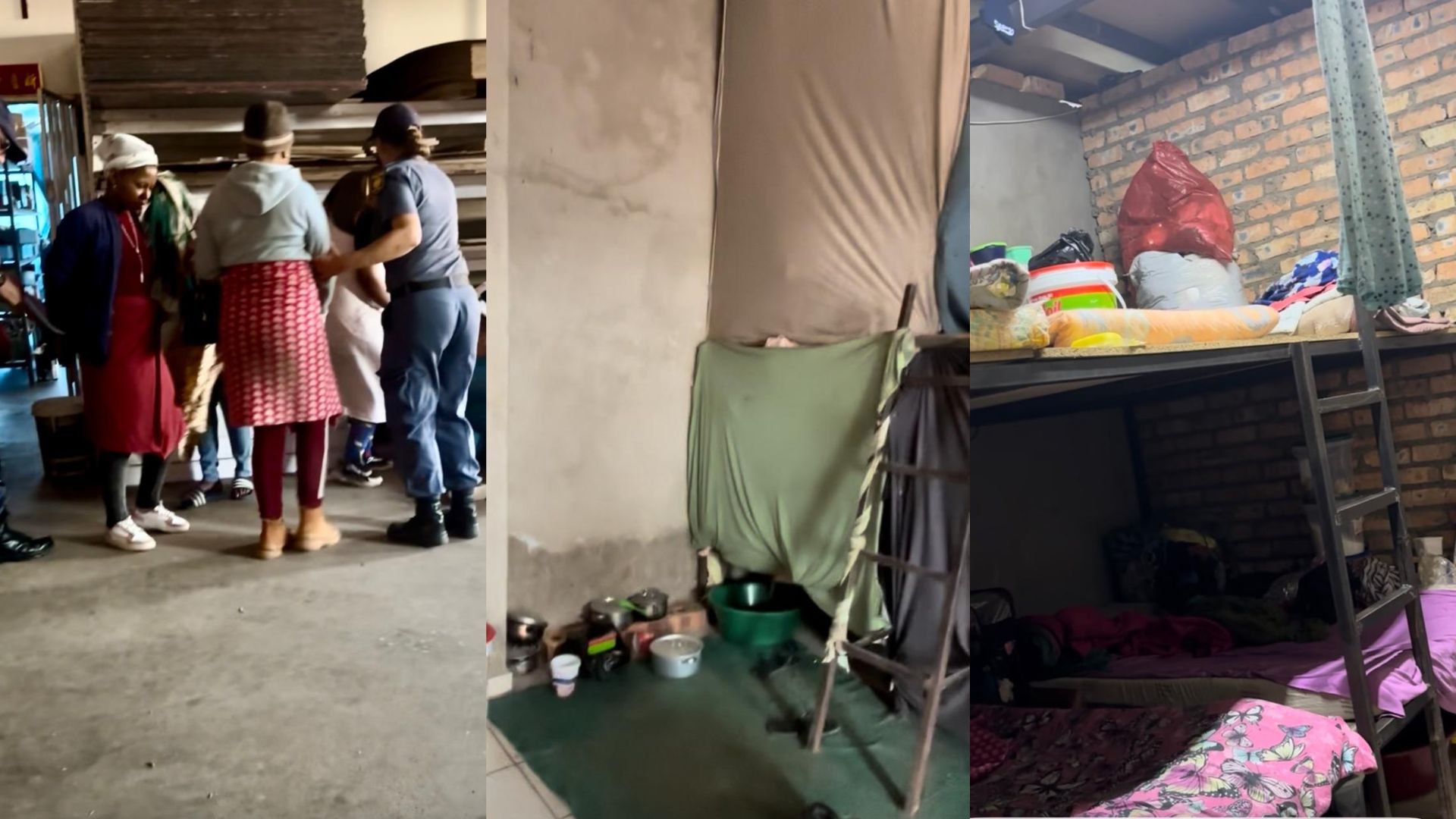
Images supplied by the bargaining council of KwaZulu-Natal’s “sweatshops”.
Not so proudly South African
In recent years, several retailers have promoted their investment in local production.
Alberts maintains, however, that South African retailers “didn’t suddenly become altruistic and proudly South African”.
“Retailers look for well-priced items that are affordable to their customers. Where they source it from, they don’t give a shit,” he said.
Speaking to GroundUp on condition of anonymity, a senior procurement officer working for a major retailer said the shift to local sourcing happened for “strictly economic reasons”.
“Delivery on an order from a South African factory will take between 30 and 45 days if all the necessary materials are available, whereas garments produced in China take 90 days. There’s a huge focus to reduce our dependence on China and India, especially after the supply chain chaos that ensued during the covid-19 pandemic. At times, the exchange rate has been another reason to source locally,” said the source, adding that the number of CMT factories operating in Newcastle “has surged in recent years to meet the increased demand”.
There is no reliable data for CMT factories in Newcastle (the municipality says liaising with the sector is difficult, due to language barriers and a culture of secrecy). But Alex Liu, the former chairperson of the town’s Chinese Chamber of Commerce, said the number of CMT factories had risen from “around twenty” in the period 2000-2005 “to over two hundred” in 2021, and now stands at between 120-140. He disputes the Bargaining Council’s claim that there are 300 CMT factories in Newcastle.
As the number of CMT factories rose, competition for orders intensified, leading to a flattening of the fees paid to factories, Alberts explained.
Factories are offered a specific price to make a particular garment, which is called the CMT price. Retailers do not set the CMT price; design houses do. But Alberts says the prices paid to factories are determined by the prices retailers pay their design houses.
“I am constantly on at the big retailers to pay their suppliers a bit more, so that the CMT price can come up,” said Alberts, who has encouraged factory owners to agree on a minimum unit price per item.
“We facilitated the establishment of Taiwanese and Chinese business chambers, but no agreement on minimum prices was ever reached because the Chinese factory owners are just too competitive,” said Alberts, adding that suppliers consequently “treat Newcastle like a big hunting ground for bargain basement prices”.
“They get a quote from one factory and take it to the next and ask them to do better. By the time they’ve shopped around, the lowest quote is often sub-economic, and you find the factory owner has only taken it so that they can keep the lights on,” he said.
One factory owner, who did not wish to be named out of fear that his customers would withdraw business, told GroundUp that in some cases, the CMT prices being paid for T-shirts are lower than in 2015.
“For a simple T-shirt retailing for R80, retailers will pay the supplier [design house] between R30-40, and the supplier will pay the factory a CMT price of about R3.50,” said the source, adding that the ANC placed a direct order of 1.5 million T-shirts with a Newcastle factory ahead of the 2021 municipal elections, paying a CMT price of just R2.85 per shirt.
“The factory had to pay for the cotton. They had to cut, they had to sew, clean up and press the garment - everything for just R2.85. I’m not trying to defend factory non-compliance, but I must say there’s always a reason for this kind of thing: businesses always try to find a way to survive. And if they are squeezed on the CMT [price], then it will flow down to the wages that are paid to the workers,” the source said.
GroundUp attempted to get the ANC’s comment on this allegation, but received no response.
Liu, who is also a factory owner, bemoaned the rising costs of doing business.
“Cotton thread has to be imported, and prices depend on the dollar exchange rate. In 2018, the exchange rate was R13.25 to the dollar. Today it is R16 to R17, and we find ourselves paying 50% more for cotton threads. Meantime all the other input costs are rising, too, like electricity,” he explained.
Typically, the labour bill in CMT factories is 50% of the total cost of operations. Given the rising input costs and the low CMT prices that are paid, most factory owners GroundUp spoke to said they are unable to pay the minimum wages set by the National Bargaining Council for the Clothing Manufacturing Industry.
“The public narrative about Newcastle is one of terrible labour abuses, Chinese sweatshops and so on, and yes there are issues -– the employment of undocumented workers is very much a reality in Newcastle — but you hear nothing about the very real market pressures that lie behind it all,” Alberts says.
Fallout
Following the parliamentary oversight visit in Newcastle, South Africa’s major retailers contacted their design houses and urged them to urgently account for conditions at the factory level. As a result of these probes, Pepkor told GroundUp it blacklisted one factory, The Foschini Group said it issued a penalty against a third-party supplier, and Pick n Pay said that after finding a design house guilty of using an unapproved CMT, “the relationship was immediately terminated. The product was also not released for sale”.
According to Alberts, several Newcastle factory owners have shut up shop since February, and several more are actively looking to relocate their factories to Eswatini and Lesotho.
“The wages paid in these countries are much lower, and suppliers and retailers can bring clothes into South Africa free of charge, because these countries are part of the customs union,” he said.
Support independent journalism
Donate using Payfast

Don't miss out on the latest news
We respect your privacy, and promise we won't spam you.
Letters
Dear Editor
If we force the closure of the factories, then tens of thousands of locals will be out of work. At least now they are earning some money, albeit under terrible conditions. If we force the factories to abide by the law, then the prices of the clothes rise substantially, resulting in fewer sales and the factories closing down. It is a lose-lose situation.
© 2026 GroundUp. This article is published under the GroundUp Republication Licence Version 1.0. Email [email protected] to request permission to republish.